

Ruflo: a coordination layer for agent teams
ruvnet/ruflo · 73,247★ · 8,696 forks
Everything you need to know about ruvnet/ruflo: an agent harness that adds memory, swarm coordination, MCP, plugins, and controls to work with Claude Code and Codex.
What Ruflo is
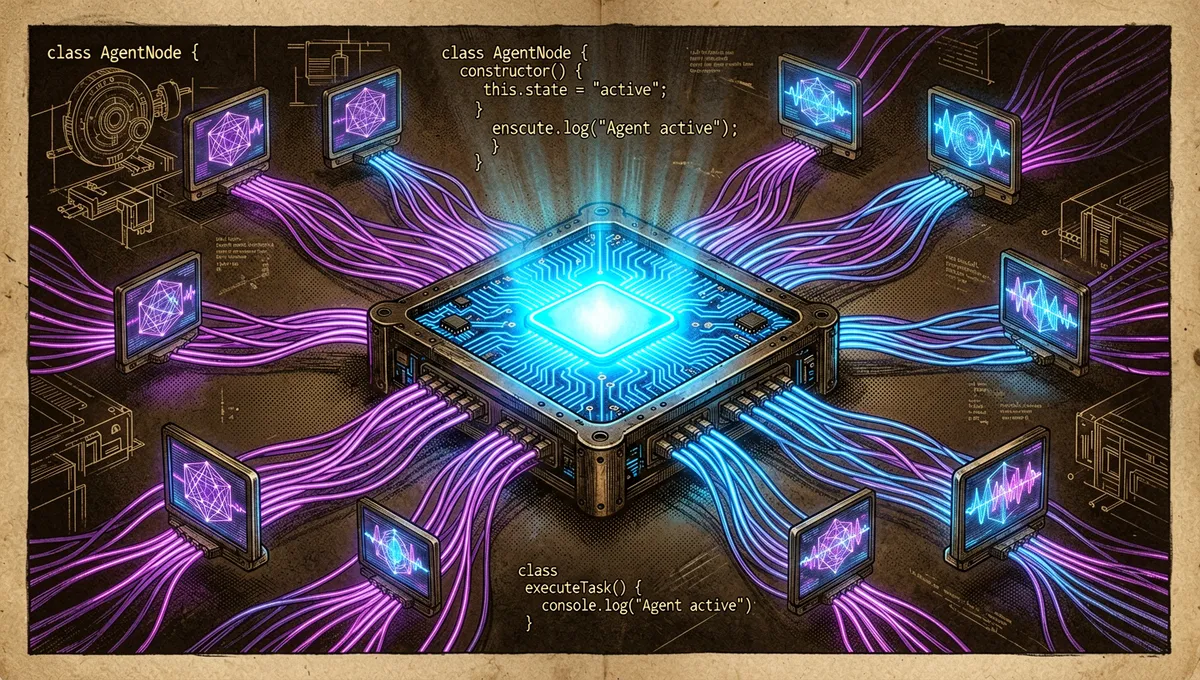
Ruflo is a TypeScript project presented as a “meta-harness” for agents. It doesn’t replace the model or Claude Code or Codex: it places an execution layer around them to orchestrate specialized agents, keep memory across sessions, trigger background workers, and expose tools through an MCP server.
The README distinguishes two surfaces. Installing the Claude Code plugins adds slash commands, agent definitions, and a few skills; a full initialization with npx ruflo@latest init creates the project configuration, registers MCP, installs hooks, and enables the full cycle. According to the repository’s documentation, the goal is that, after that initialization, the user can keep using the agent normally while the hooks route tasks and coordinate background work.
The origin: from Claude Flow to Ruflo
The GitHub API dates the repository’s creation to June 2, 2025. The visible primary author is the account ruvnet, whose profile identifies the name as rUv, links Cognitum.One, and had 199 public repositories at the time of measurement. The naming history is documented by the README itself: “Claude Flow” was renamed to Ruflo; the text attributes the name to rUv, explaining “Ru” as a reference to rUv and “flo” as an allusion to working late into the night.
That change explains an important practical tension: the documentation and some contribution links still use the Claude Flow name and ruvnet/claude-flow paths, while the distribution, the current repository, and the executable are announced as ruflo. For a new install, it’s best to follow the current ruvnet/ruflo paths and confirm the installed version with ruflo --version.
Philosophy and principles
The proposal starts from an explicit separation: “agent = model + harness.” For Ruflo, the model generates responses, while the harness contributes tools, memory, loops, isolated environments, and controls. Four observable principles follow from that in its documentation:
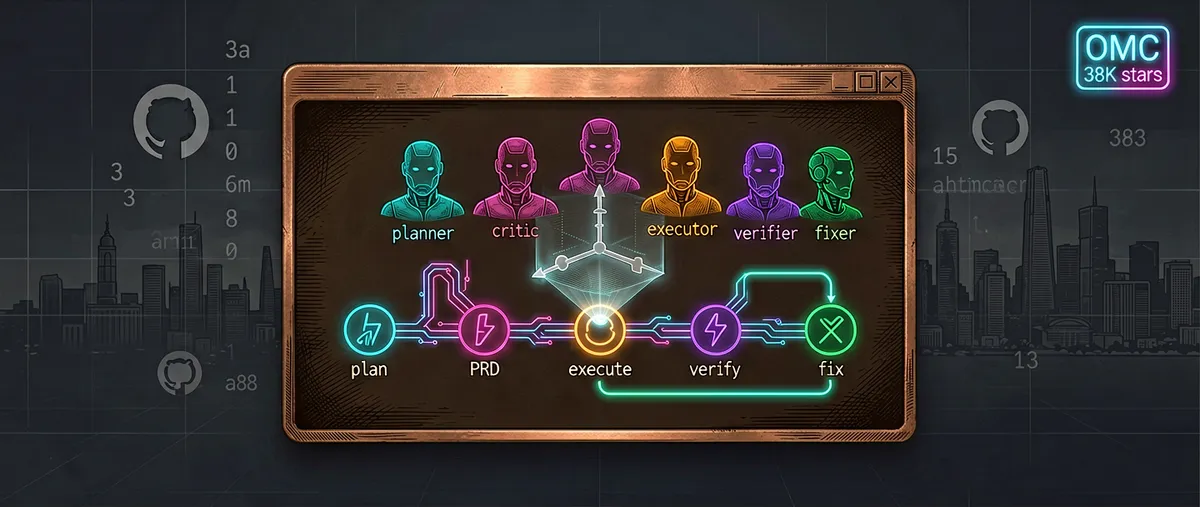
- Coordination before an isolated session: it groups workers into hierarchical, mesh, or adaptive topologies and accounts for consensus.
- Persistent memory and learning: it uses AgentDB with HNSW indexes; the README claims SONA patterns, ReasoningBank, and trajectory learning.
- Automation with traceability: it combines CLI, MCP, hooks, and background processes; its guides include cryptographic verification of installed artifacts.
- Security as an operational constraint: it documents zero-trust federation, authentication, PII removal, and auditing. These are capabilities declared by the project, not an external certification.

The philosophy also has a relevant limit: the system considerably expands an agent’s surface area. The README itself lists more than a hundred agents, MCP tools, and plugins; the automation promise, therefore, requires the team to review which hooks, permissions, servers, and background processes it accepts.

How it works
The documented technical path is as follows:
- Install via
npx ruflo@latest init wizard,npx ruflo@latest init, ornpm install -g ruflo@latest. - For Claude Code, register the server with
claude mcp add ruflo -- npx ruflo@latest mcp start. - Create and run a swarm through the
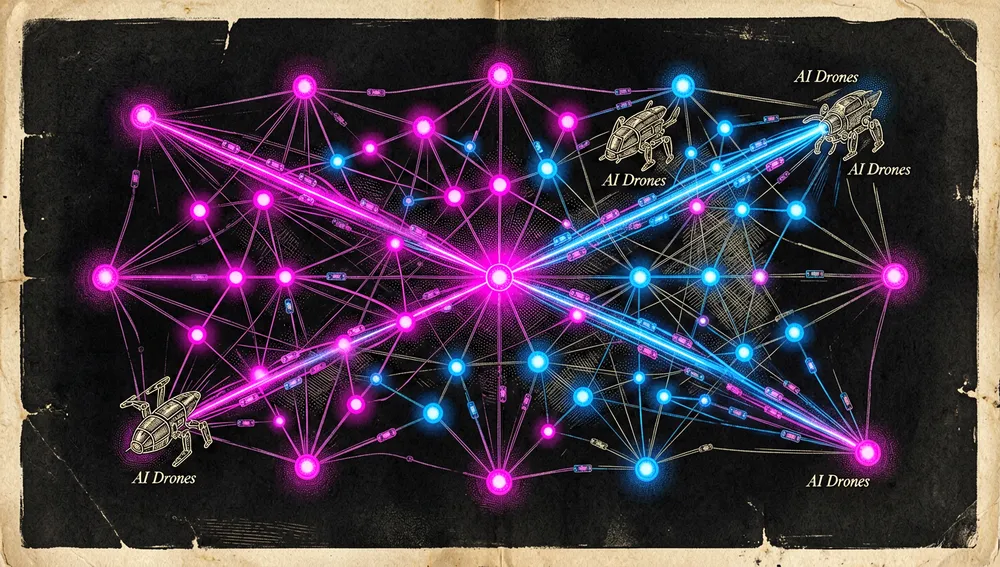
swarm, agent, and memory commands; the README’s diagram summarizes the flow as CLI/MCP → router → swarm → agents → memory → model providers. - Choose plugins for coordination, memory/RAG, testing, security, observability, cost, or domain. The README’s list includes
ruflo-swarm,ruflo-rag-memory,ruflo-agentdb,ruflo-testgen,ruflo-security-audit, andruflo-cost-tracker, among others.

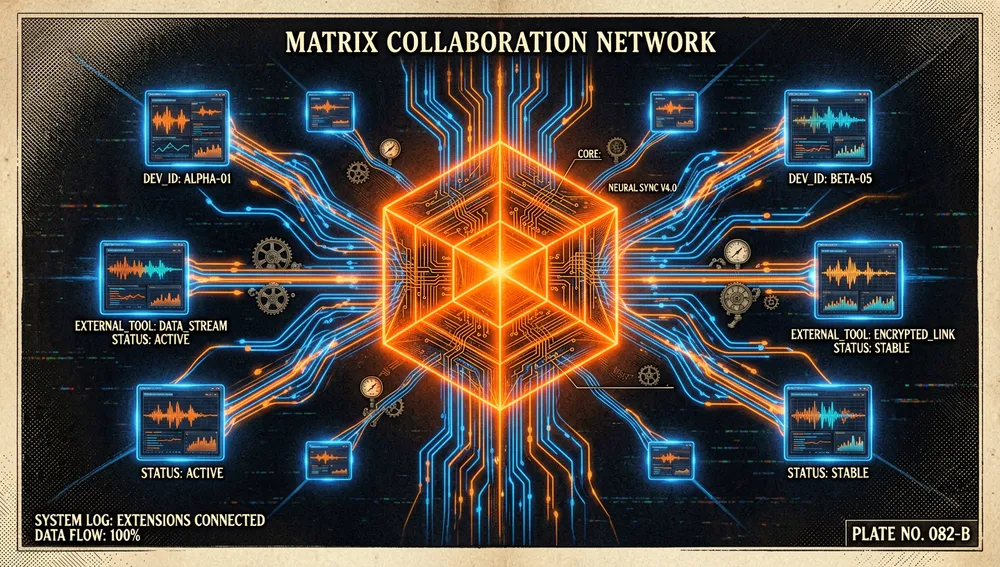
The full edition adds 98 agents, more than 60 commands, 30 skills, an MCP server, hooks, and a daemon, according to the quick-start table. To limit MCP context, the documentation shows ruflo mcp start --tools memory,swarm,hooks. The project also offers a beta web interface at flo.ruv.io and a GOAP planner at goal.ruv.io; the README claims both are self-hostable, but that claim comes from the author, not from an independent audit.
The most recent stable release retrieved was v3.34.0, published July 31, 2026. Its notes announce optional integration with AGNTCY/Outshift, commands such as ruflo transport use slim, ruflo agent publish, and ruflo swarm join <namespace>, and a CASA authorization policy with deny-by-default. The same note states that the integration is removable and that the core operates without those packages.
Official and semi-official status
Ruflo is official with respect to its own plugin marketplace: the README instructs users to add ruvnet/ruflo as a Claude Code marketplace and to install packages such as ruflo-core@ruflo. No source from Anthropic, OpenAI, or GitHub was retrieved declaring it an official plugin of their providers. It should therefore not be presented as validated, certified, or maintained by those companies.
Declared compatibility with Claude Code and Codex does exist, and the repository publishes an npm package and an MCP interface. In practice, its 66,876 stars and 7,973 forks show de facto visibility in the agent-harness niche; they don’t amount to a formal standard, nor do they by themselves prove reliability or production adoption.
The ecosystem
The author’s repositories and products
Research into the ruvnet account identified related components, with GitHub API star counts from August 3, 2026:
ruvnet/RuVectorappears linked from Ruflo’s README as the vector search and RAG base; Ruflo uses it through theruflo-ruvectorplugin. No figure is added here because it wasn’t retrieved in the same API response as the inventory.ruvnet/metaharness: 540 stars. Generates specialized harnesses and can evaluate configurations; Ruflo includes theruflo-metaharnessplugin and theruflo ejectcommand to extract a standalone kit.ruvnet/rvm: 125 stars. Described as a virtual machine for the agent era, written in Rust; Ruflo’s README mentions it when describing isolated environments.ruvnet/rufield: 25 stars. Part of the author’s portfolio, though the retrieved source doesn’t demonstrate a direct technical dependency with Ruflo.- The hosted apps
flo.ruv.ioandgoal.ruv.ioare linked as a chat interface and a GOAP planner respectively; the interface code is declared to live within the repository itself.
Plugins, extensions, and community derivatives
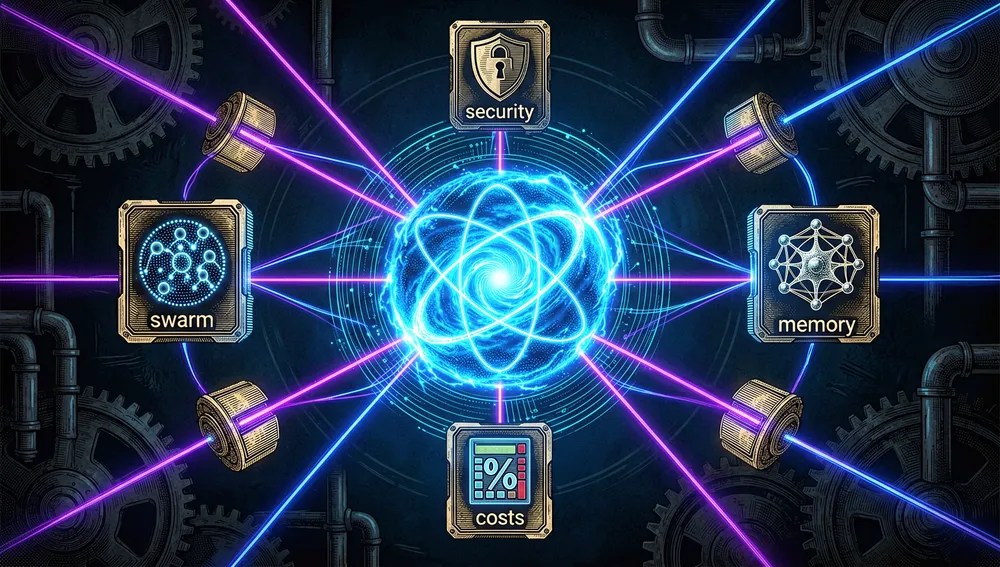
The repository brings a family of plugins, not just a list of compatible tools: orchestration (ruflo-swarm, ruflo-autopilot, ruflo-workflows, ruflo-federation), memory (ruflo-agentdb, ruflo-rag-memory, ruflo-rvf, ruflo-knowledge-graph), quality (ruflo-testgen, ruflo-browser, ruflo-docs), security (ruflo-security-audit, ruflo-aidefence), and domain (ruflo-iot-cognitum, ruflo-neural-trader).
The retrieved GitHub searches surface concrete external extensions:
marcuspat/turbo-flow(166 stars): an environment for DevPods and Codespaces claiming Ruflo orchestration, MCP tools, and agents.ai-genius-automations/openflow: a dashboard for managing Claude Code sessions with Ruflo; it appeared on Hacker News.pacphi/agentic-kit(26 stars): an installer claiming to integrate Ruflo/Claude Flow, Agentic QE, and RuvNet Brain across several hosts.jazz-max/ruflo-hub(4 stars): a container for centralizing a Ruflo MCP server with PostgreSQL/RuVector.mamalisk/copilot-flow(4 stars): described as a port of Ruflo/Claude Flow for GitHub Copilot.aleksander-del/ruflo(9 stars): a declared fork ofruvnet/ruflo.
No non-English translation of Ruflo explicitly identified as such was retrieved. Name-match results, such as henryalouf/ruflow, should also not be confused with a verified port or derivative.
Repo numbers
Measured: August 3, 2026, GitHub API.
| Metric | Value |
|---|---|
| Stars | 66,876 |
| Forks | 7,973 |
| Real subscribers | 428 |
| Commits | 7,302 |
| Open issues reported by the API | 765 |
| Primary language | TypeScript |
| License | MIT |
| Created | June 2, 2025 |
| Latest repository push | August 2, 2026 |
| Latest metadata update | August 3, 2026 |
| Latest stable release retrieved | v3.34.0, July 31, 2026 |
The total of 7,302 commits comes from the final pagination link of the commits API. The top contributors returned by the API were ruvnet (6,853 contributions), claude (50), alexx-ftw (7), proffesor-for-testing (5), and tommy-ca (4). GitHub duplicates the stars in watchers_count; that’s why subscribers_count is reported here as real subscribers. The open_issues_count field may include open pull requests, so 765 is not necessarily an issues-only count.
How to contribute
CONTRIBUTING.md keeps a short, verifiable flow: open an issue or discussion, create a fork and feature branch, run npm test, and submit a pull request with a clear description. For development it asks for Node.js 20 or higher and npm 9 or higher; it then suggests npm install and npm run build. It also routes agent-guided workflows to CLAUDE.md and architecture decisions to docs/adr/.
The coexistence of the previous name in the contribution document makes it worth checking the target path of the pull request before opening it. Recent changes show the project maintains regression tests and releases with install checks, but that doesn’t replace running the tests on the specific fork.
How the community received it
The retrieved external reception is limited and should be read with caution. There are signs of interest and declared use, but no broad thread from which to infer consensus:
- On Hacker News 49051072, ms7892 submitted the repository on July 25, 2026. It reached 3 points and 0 comments: it evidences discovery, not community appraisal.
- On Hacker News 47943679, chunpaiyang asked whether anyone was using it; the submission ended at 1 point and 1 comment. The submitter himself said the idea seemed interesting and that he used it to reduce interruptions during AI-assisted coding; it’s a personal experience, not proof of results.
- In a comment by adithyaharish within Hacker News 48473845, he said he had been using it for more than three months, recommended it for orchestration, and said it worked well for him. It is concrete, attributable praise, but no independent evaluation of its cost or results was retrieved.
- akarshhedge2002, on Hacker News 48463808, recommended Ruflo alongside Superpowers and said it greatly reduced his context usage. This too is an individual testimonial, with no published methodology.
- As a technical counterpoint, issue #2047, opened by
ruvnet, documented that a scheduled verification found 95 missing artifacts and two hash deviations in manifests across three platforms; it was closed on July 9, 2026. Another release note, v3.32.40, acknowledges that invalid values for certainruflo security scanflags could produce a clean report and exit code 0 before the fix. These are problems documented by the project, not external attacks; they serve as a reason to update and verify an installation before relying on security automation.
Ruflo versus other proposals
| Proposal | Verifiable overlap | Verifiable difference |
|---|---|---|
| Claude Code without Ruflo | Both can run AI-assisted coding work. | Ruflo’s README adds MCP, persistent memory, swarms, hooks, and background workers; native Claude Code is not an independent competing repository, but the host that Ruflo extends. |
| Codex without Ruflo | Both serve as a code-agent environment. | Ruflo declares a dual install for Claude Code and Codex, with a common coordination layer; the source doesn’t characterize Codex as a swarm system. |
obra/superpowers | Both are mentioned in the HN 48463808 conversation as ways of structuring Claude Code usage. | The retrieved source only establishes that mention: it doesn’t support claiming technical equivalence. Ruflo explicitly documents MCP, memory, federation, and plugins; Superpowers should be evaluated separately. |
mamalisk/copilot-flow | Its description presents it as a port of Ruflo/Claude Flow for GitHub Copilot. | It’s a community adaptation for another host, not a verified independent replacement. |
The reasonable choice depends on scope: Ruflo makes sense when you need coordination, persistent state, and plugins around an agent; if all you want is an instruction flow, loading the whole infrastructure can be disproportionate. This last conclusion is analysis based on the documented breadth of components, not a comparative measurement.
Use cases and who this repository can help
- Teams working with Claude Code or Codex on repositories with parallel tasks can use
swarm, specialized agents, and coordination topology to split research, implementation, testing, review, or documentation while keeping shared memory. - People responsible for automation with cross-session context can use
ruflo-agentdb,ruflo-rag-memory, and the MCP server to store and retrieve project information, always reviewing what data enters the store and what tools stay exposed. - Teams with budget or governance constraints can use
ruflo-cost-tracker,ruflo-security-audit,ruflo-aidefence, logs, and artifact verification as pieces of a control process; the documented issues and fixes show they need to update and validate the set, not assume a clean output is enough. - Organizations with agents across different teams or machines can evaluate
ruflo-federationwhen they need discovery, authentication, PII controls, and auditing. This is especially relevant if they can test the trust model in a non-production environment before transferring real data. - People who want to try features gradually can install just the Claude Code plugins; those who need MCP, memory, and hooks need the full initialization and must accept its extra files and processes in the workspace.

Resources
- Repository: https://github.com/ruvnet/ruflo
- Documentation and installation: https://github.com/ruvnet/ruflo/blob/main/docs/USERGUIDE.md
- Official project plugins: https://github.com/ruvnet/ruflo/tree/main/plugins
- Project plugin marketplace: https://github.com/ruvnet/ruflo
- npm package: https://www.npmjs.com/package/ruflo
- Releases and versions: https://github.com/ruvnet/ruflo/releases
- Reviews and conversations: https://news.ycombinator.com/item?id=49051072, https://news.ycombinator.com/item?id=47943679, https://news.ycombinator.com/item?id=48473845, https://news.ycombinator.com/item?id=48463808
- Discord community: https://discord.com/invite/dfxmpwkG2D
Note: this article combines the README, contribution and release documents for Ruflo, the GitHub API, repository searches, and Hacker News, retrieved on August 3, 2026. Figures change over time; capabilities and results declared by the project are not an independent audit.


Comments