

Antigravity Awesome Skills: from instruction collection to local control plane
sickn33/agentic-awesome-skills · 46,901★ · 6,833 forks
Everything worth knowing about sickn33/antigravity-awesome-skills, the historical queue identity that now redirects to the canonical repository sickn33/agentic-awesome-skills: a catalog of skills for coding assistants with an installer, plugins, a local MCP server, and planning tools.
What Antigravity Awesome Skills is
The queue entry keeps the name Antigravity Awesome Skills, but the GitHub API redirects that path to the canonical repository sickn33/agentic-awesome-skills. The rename reflects a broadening of scope: the project is no longer limited to Antigravity, and instead distributes skills for Claude Code, Codex CLI, Cursor, Gemini CLI, Kiro, OpenCode, Copilot, and other hosts.
Its current product is called AAS Core. It does not choose skills on the user’s behalf, nor does it analyze the repository by itself: an agent — today Codex or Claude on the Core path — inspects the project and searches the local catalog; AAS keeps the selected identifiers in a manifest, validates its structure, and generates a reproducible plan before writing anything into the project. At the same time it maintains the catalog of more than 2,003 SKILL.md files, the npm installer, specialized plugins, starter packages, and ordered workflows.
The origin: a collection to avoid manual installs
GitHub records the repository’s creation on January 14, 2026. Its main author is sickn33, whose public profile identifies as Nick. The available history does not include a verifiable independent launch post; the closest account comes from a Reddit post in the Antigravity community: the author explains that they were gathering skills from separate repositories to stop cloning and installing them one at a time, organized them by role, and credited their sources.
That starting point explains the project’s tension: a large library is useful for discovering procedures, but loading it whole can saturate an agent’s context. Current documentation acknowledges this explicitly for Antigravity: an installation without selectors can slow startup, truncate context, or trigger a failure loop. AAS Core is the most recent response: pick a concrete set through local search, save it as a reviewable state, and plan before applying changes.
Philosophy and principles
The README and the AAS Core guide lay out clear principles:
- Agent selection, human control: Codex or Claude decides which identifiers fit; AAS does not score, recommend, exclude, or declare a skill suitable.
- Complete, inspectable catalog: skills remain available to search and read, even when their metadata is incomplete.
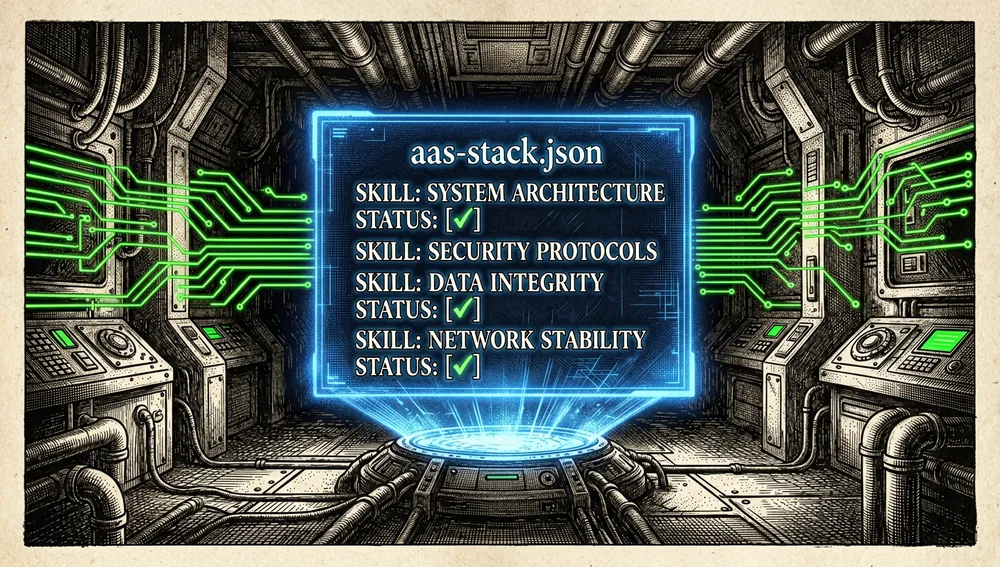
- Review before writing: the durable artifact is
aas-stack.json, and the plan is immutable; the supported path stops after it is reviewed.
- Explicit trust boundaries: structural validation does not certify semantic fit, compatibility, operational safety, or safety to apply.
- Graduated distribution: a specialized plugin, a package, or a subset of skills is preferable to enabling the whole collection by default when the work has a clear domain.
How it works
The AAS Core path is local and read-only up to the planning step:
- Codex or Claude inspects the project and searches the local catalog via MCP.
- The agent compares skills with
search_skillsandget_skill, and callscompose_stackwith exact identifiers. - The client or CLI persists the result to
aas-stack.json; it may optionally addaas-selection-evidence.jsonwith the search trail. aas stack validatechecks the manifest, andaas stack plangenerates a plan for a specific target.- A person reviews that plan.
stack applyandstack recoverremain experimental and require explicit activation.
The local MCP server exposes search_skills, get_skill, compose_stack, inspect_stack, diff_stack, and evidence tools. The manifest supports up to 128 skills. Beyond Core, direct distribution copies skills into the directory each host expects; plugins bundle sets for areas such as web applications, authorized security, data analytics, documents, DevOps, QA, accessibility, APIs, and agents/MCP.
Official and semi-official status
The README itself is explicit: this is an independent community project, with no affiliation, sponsorship, authorization, or endorsement from Google. So the appearance of the names Google, Antigravity, or Gemini expresses compatibility and installability, not vendor approval.
There is documented integration with the formats used by Claude Code, Codex, Cursor, Gemini CLI, Antigravity, Kiro, OpenCode, and Copilot.
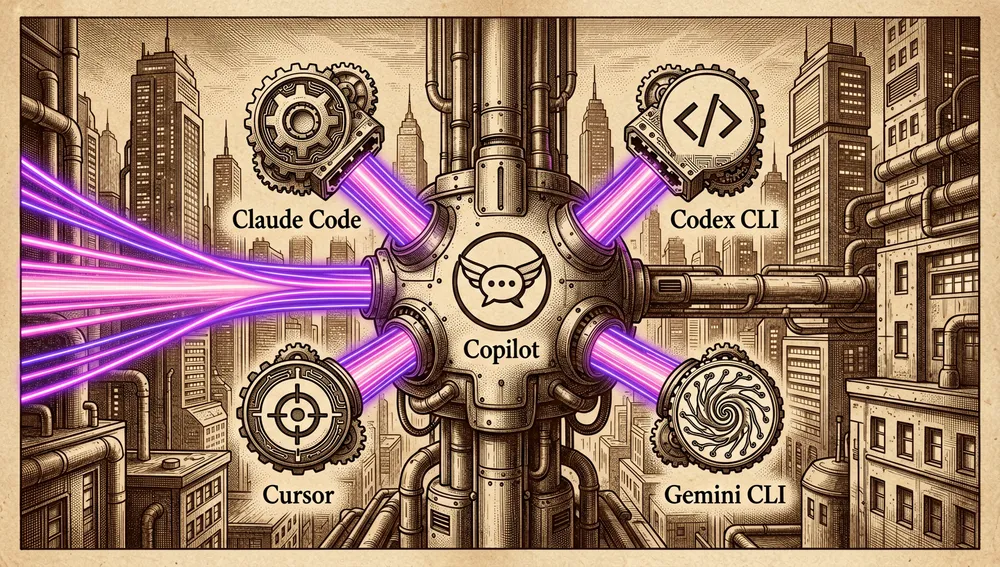
For Copilot it uses the gh skill preview; for Claude Code and Codex, plugins and local MCP configuration are documented. No evidence was retrieved that AAS is listed as an accepted product in an official Google, Anthropic, or OpenAI store. Its practical relevance comes from cross-platform distribution, not a formal standard status.
The ecosystem
Official project surfaces
sickn33/agentic-awesome-skillsis the canonical repository: catalog, installer, AAS Core, local MCP, schemas, plugins, and Workbench.- AAS Core lives inside the repository, at
tools/lib/aas-v1, and is exposed through theaasCLI and theaas-mcpserver. - Skill Workbench, on GitHub Pages, is a complementary surface: it imports manifests and plans into the browser’s memory for review; it does not access the filesystem or install skills.

sickn33/antigravity-skills-browseris a sibling repository from Nick: an extension for Antigravity and VS Code derivatives, with a sidebar, search, favorites, and details in Portuguese and English; it had 1 star at the time of the query.- The repository includes its own documentation in
docs_zh-CNanddocs/vietnamese. These are localizations contained within the project, not independent community ports.
Forks and derivatives observed
The GitHub forks query identified Dev-moe-kyawaung/antigravity-awesome-skills as a fork, with 25 stars. Its description keeps the earlier version of the 1,400+ skill catalog; it should not be interpreted as a distinct product or an officially maintained port.
GitHub search returned 128 results for the historical name, but did not establish other ports, translations, or extensions with independent technical identity. For that reason, repositories that could simply be mirrors are not named as such. The README credits source collections and authors, but that credit does not demonstrate a current dependency, support relationship, or functional equivalence.
Repo numbers
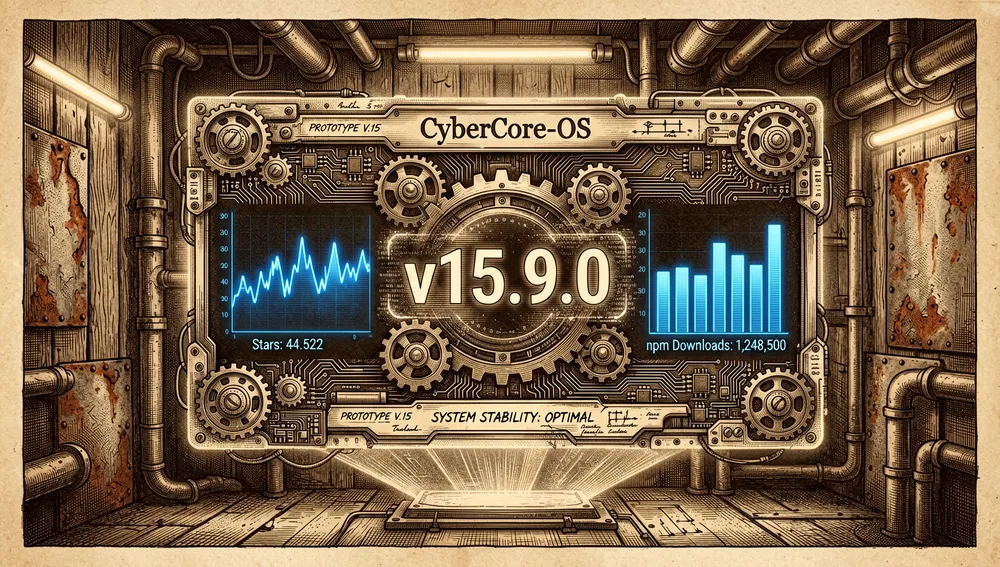
Measured: August 5, 2026, GitHub API and npm registry. These metrics correspond to the canonical repository sickn33/agentic-awesome-skills.
| Metric | Value |
|---|---|
| Stars | 44,522 |
| Forks | 6,537 |
| Real subscribers | 314 |
| Commits | 2,464 |
| Open issues reported by the API | 1 |
| Primary language | Python |
| License | MIT |
| Created | January 14, 2026 |
| Last metadata update | August 5, 2026 |
| Latest release | v15.9.0, August 4, 2026 |
| npm downloads, latest available week | 2,452, July 29 to August 4, 2026 |
The top contributors returned by the API were sickn33 (709 contributions), github-actions[bot] (669), sck000 (465), munir-abbasi (34), and Mohammad-Faiz-Cloud-Engineer (33). The commit total comes from the last page of the API’s pagination link. open_issues_count may include open pull requests; it should not be treated as a pure issue count. watchers_count mirrors the star count in GitHub’s general response, which is why the 314 from subscribers_count is reported here as the real subscriber figure.
The latest published npm version was likewise 15.9.0. The version sequence from 15.2.0 to 15.9.0 between July 21 and August 4 shows rapid iteration, but that alone is not a measure of quality.
How to contribute
The repository documents a full process. Fork it, clone it, run npm install, create skills/<name>/SKILL.md from docs/contributors/skill-template.md, and validate with npm run validate. For a skill involving terminal instructions, network access, credentials, or mutations, add npm run security:docs; for documentation, workflow, or infrastructure changes, also run npm run validate:references and npm test.
Community submissions must contain sources, not generated artifacts: CATALOG.md, skills_index.json, and data/*.json are not included. GitHub runs skill-review on changes to SKILL.md, but the guide requires a manual review of logic, risks, and failure modes.
![A cybernetic contributor forging a new SKILL.md file on an anvil of code, with github-actions[bot] robotic arms assisting and a validation shield with a checkmark surrounding the new file.](/images/dispatches/039-sickn33-agentic-awesome-skills-inline-09.webp)
Contributors should open the pull request using the standard template and allow maintainer edits to make conflict resolution easier.
Quick usage guide
Installation and first run
For Antigravity, the documentation recommends previewing a concrete selection before writing anything:
npx agentic-awesome-skills --antigravity --skills brainstorming,systematic-debugging --dry-run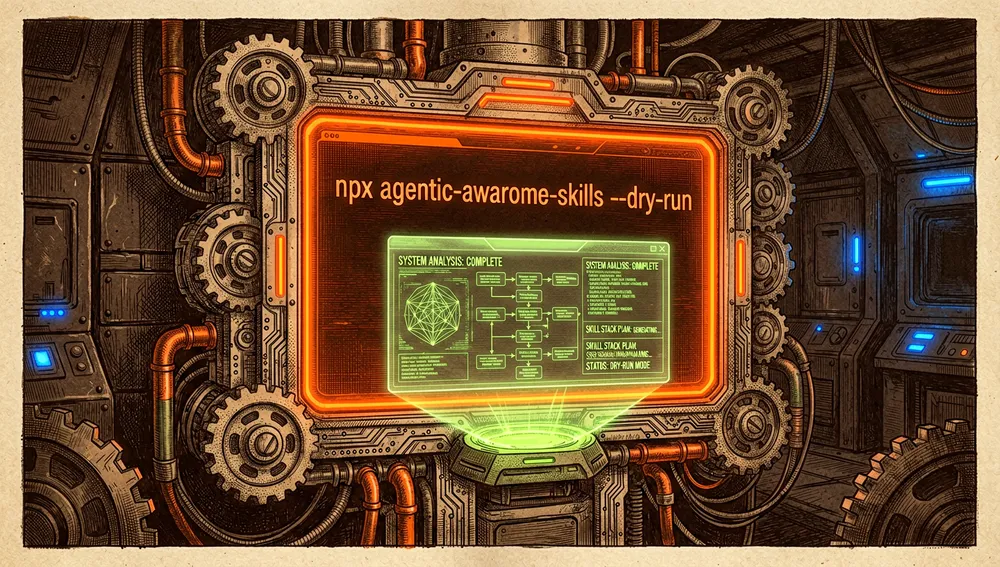
After reviewing the plan, the command is repeated without --dry-run. The default installation uses a shallow clone pinned to the published version; --tag main only makes sense if the repository’s bleeding edge is deliberately wanted. For the Antigravity CLI (agy), the documented command is:
npx agentic-awesome-skills --agyFor Codex or Claude on the Core path, the MCP server is configured first with an exact version. The first command is a preview that returns an approval summary and does not change the configuration:
npm exec --yes --ignore-scripts --package=agentic-awesome-skills@15.9.0 -- aas mcp configure \
  --host codex \
  --scope user \
  --config /absolute/path/to/codex/config.toml \
  --cache-root /absolute/path/to/aas-cache
After reviewing the summary, the command is repeated with --approve <approval-digest>. For Claude, --host codex is replaced with --host claude and its own MCP configuration path is used. Restarting the host may be necessary.
Common workflows
- Plan a feature in Cursor: install with
npx agentic-awesome-skills --cursorand ask@brainstorming help me plan a feature. - Audit two skills before installing them:
npx agentic-awesome-skills audit --skills brainstorming,backend-dev-guidelines; then preview withnpx agentic-awesome-skills --skills brainstorming,backend-dev-guidelines --dry-run. - Create a reproducible set for Codex or Claude: ask the agent to inspect the project and compose the stack, save
aas-stack.json, runaas stack validate --manifest /absolute/path/to/aas-stack.json, and generate the plan withaas stack planusing explicit manifest, target, root, cache, integrity, and--outvalues. - Install a single skill for Copilot:
gh skill preview sickn33/agentic-awesome-skills skills/brainstorming/SKILL.md; after reviewing it,gh skill install sickn33/agentic-awesome-skills skills/brainstorming/SKILL.md --agent github-copilot --scope user --pin v14.2.0.
Essential configuration
aas-stack.json: the desired state, with a pinned catalog, target, and the skill identifiers selected by the agent.aas-selection-evidence.json: an optional side file linking the selection to the search trail; it does not certify that the choices are correct.--cache-root: the absolute directory for the AAS Core runtime.--config: the absolute path to the host’s MCP configuration, for example Codex’s.--skills,--category,--risk, and--tags: selectors used to narrow a direct installation down to a reviewable subset.
Frequent pitfalls and fixes
- Installing everything in Antigravity: the documentation itself warns of context exhaustion, truncation, slowdowns, or failure loops. Use
--skills, a metadata filter, or--allonly with explicit consent; prefer--dry-runfirst. - Confusing validation with security or quality:
aas stack validatechecks structure and identity, not semantic fit, compatibility, or execution safety. Review the skills and the plan before applying. - Updating without pinning a version: the Core guide requires a Core-capable version, since 14.6.0 predates that feature. Use a specific, reviewed version, such as
15.9.0in the retrieved examples. - Including generated indexes in a contribution: community submissions must be source-only; exclude
CATALOG.md,skills_index.json, and the JSON files underdata/. - Exposing sensitive information in MCP searches: the evidence trail literally stores
search_skillsqueries; do not include secrets, credentials, or private repository text.
Integrations and migration
The project connects to Claude Code and Codex through local MCP; for other hosts, it distributes SKILL.md files into the paths those hosts watch. For OpenCode, the README offers npx agentic-awesome-skills --path .agents/skills --category development,backend --risk safe,none; for Kiro IDE, npx agentic-awesome-skills --path ~/.kiro/skills. The Workbench complements the integration by reviewing JSON in the browser, without disk access.
The documented migration from historical Antigravity usage is conservative: moving from installing the full catalog to selecting concrete identifiers, previewing, and pinning the version. No separate automatic migration tool for other catalogs was retrieved.
How the community received it
The external evidence retrieved is limited and mixed, and should be read cautiously:
- On Reddit, u/Fickle_Guitar7417 posted in r/google_antigravity that they had aggregated 58 skills into a single collection to avoid manually searching for and installing repositories; the retrieved result showed 384 points and 89 comments. This supports the initial idea of a collection, not an independent evaluation of AAS Core.
- In the same community, u/nivasbaskaran asked whether anyone had used Antigravity Awesome Skills, with 11 points and 16 comments; the post described it as a 28,000-star repository and asked for experiences. The retrieved source did not allow verification of the replies’ content, so no conclusion is attributed to them.
- In r/GoogleAntigravityIDE, u/nivasbaskaran posted an entry about prompt engineering, workflows, and skills, with 6 points and 7 comments. The search result did not allow a verifiable permalink to be retrieved; the finding evidences community conversation, not a conclusive review.
- Hacker News did not return a direct thread about the repository. It did retrieve a comment from daniel-payne, ID 47935228, which, after two days of reading, described the historical collection as “declarative programming on steroids.” The associated root item was not available through the API, so no points or comment counts are reported for the thread, and the phrase stands as an individual impression, not a consensus.
There are also criticisms and limits documented by the project itself: skills are untrusted content, the installer’s signal analysis is not a security certificate, and Core does not guarantee that a selection is appropriate. The absence of a broad direct discussion on Hacker News, a verifiable Product Hunt review, and retrievable video data prevents turning the star count into a claim of general acceptance.
Antigravity Awesome Skills versus other proposals
| Proposal | Verifiable overlap | Verifiable difference |
|---|---|---|
sickn33/awesome-claude-code | A sibling repository with resources about Claude Code. | Its description presents it as a resource list; AAS adds an installer, catalog, plugins, MCP, manifests, and planning. |
lilhawk7077/claude-code-resources | AAS’s README links it as Vexilo’s companion repository. | Vexilo is described as a visual index of Claude Code primitives; AAS presents itself as a distributable catalog and selection control plane. |
Fork Dev-moe-kyawaung/antigravity-awesome-skills | Keeps the historical collection and an installable-library description. | It is a GitHub fork and shows an older catalog of 1,400+ skills, while the canonical repository declares 2,003+ and AAS Core. |
The most important comparison is one of scope: an index helps discover resources; AAS additionally attempts to deliver, pin, validate, and review a selected set. None of the retrieved sources offers an independent comparative test that would support a claim of superiority in performance, code quality, or security.
Use cases and who this repository can help
- Teams using Codex or Claude across repositories with varied requirements can turn an agent’s selection into
aas-stack.json, review the evidence, and get an immutable plan before touching the project. - People working with Antigravity, Cursor, Gemini, Kiro, or OpenCode can install a subset targeted by
--skills, category, tags, or risk, instead of loading a full library that affects the assistant’s context. - Security, QA, DevOps, accessibility, documentation, or web development leads can start with a specialized plugin instead of browsing thousands of instructions; the selection should still be reviewed, since metadata is not a guarantee of suitability.
- Maintainers of skill catalogs can reuse the canonical template, validations,
skill-review, and sensitive-documentation analysis to receive traceable contributions without generated indexes mixed into submissions.
Resources
- Canonical repository: https://github.com/sickn33/agentic-awesome-skills
- Historical queue path: https://github.com/sickn33/antigravity-awesome-skills
- Documentation and catalog: https://sickn33.github.io/agentic-awesome-skills/
- Official AAS Core guide: https://github.com/sickn33/agentic-awesome-skills/blob/main/docs/users/aas-core.md
- Installation and hosts: https://github.com/sickn33/agentic-awesome-skills#installation
- How to contribute: https://github.com/sickn33/agentic-awesome-skills/blob/main/CONTRIBUTING.md
- npm package: https://www.npmjs.com/package/agentic-awesome-skills
- Official X profile: https://x.com/AASkills_
- Community and discussions: https://www.reddit.com/r/google_antigravity/, HN comment https://news.ycombinator.com/item?id=47935228
Note: this article combines the official README, documentation, and contribution guides, the GitHub API, npm, GitHub Pages, X, Hacker News, and Reddit results retrieved on August 5, 2026. Figures change over time.


Comments