

CodeGraph: a local code index for agents
colbymchenry/codegraph · 72,073★ · 4,624 forks
Everything worth knowing about colbymchenry/codegraph: a local tool that turns a repository into a queryable graph via CLI, library, and MCP for coding agents.
What CodeGraph is
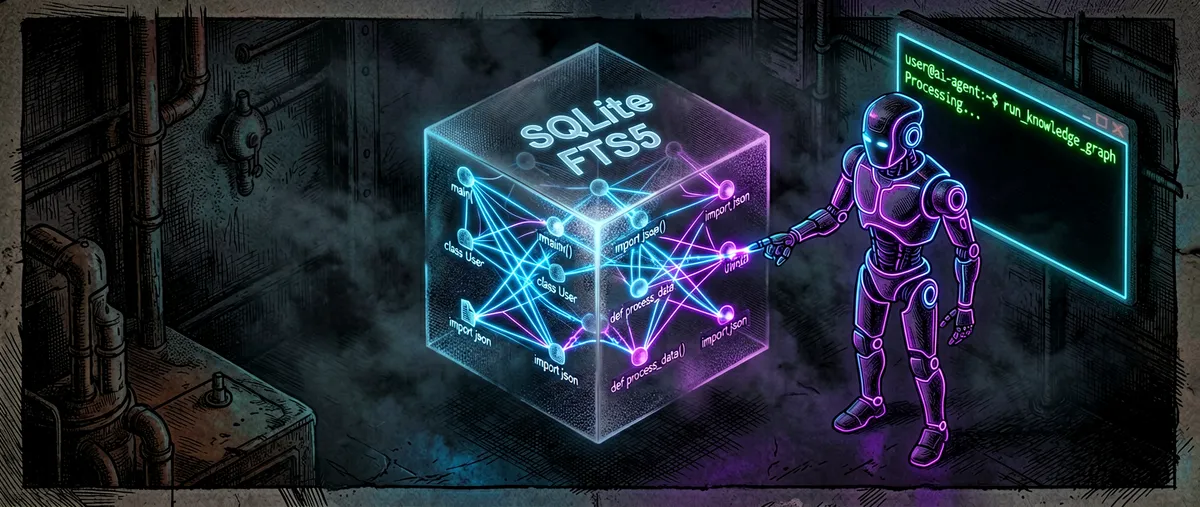
CodeGraph builds a pre-indexed knowledge graph of a repository: symbols, files, calls, imports, inheritance, and other relationships. It stores this locally in SQLite with FTS5 search and exposes it to an agent through an MCP server, plus a command-line interface and a Node.js API. According to the README and the official documentation, its purpose is to let an agent retrieve structural context and the scope of a change without reconstructing the architecture through many searches and file reads.
The tool declares support for Claude Code, Codex CLI, Cursor, OpenCode, Hermes Agent, Gemini CLI, Antigravity, and Kiro. It also states that it needs no API keys and that the graph stays on the machine. That is a product property documented by its author, not an independent privacy audit.
The origin: a solo project from 2026
GitHub’s API dates the repository’s creation to January 18, 2026. Its author and top contributor is Colby Mchenry (colbymchenry); his GitHub profile describes him as a professional with more than fifteen years building software. The npm package appeared the same day, according to its publication history.
The tension the project raises is concrete: an agent that needs to understand a codebase typically uses text search and file reads to infer call paths and dependencies. CodeGraph proposes inverting that order: build the index before the query, keep it in sync, and hand the agent a set of relevant symbols, code, and relationships. The README acknowledges an important limit: its lower-token and lower-cost figures measure processing and calls, but its dense responses can leave more context resident during long sessions.
Philosophy and principles
- Local first: the
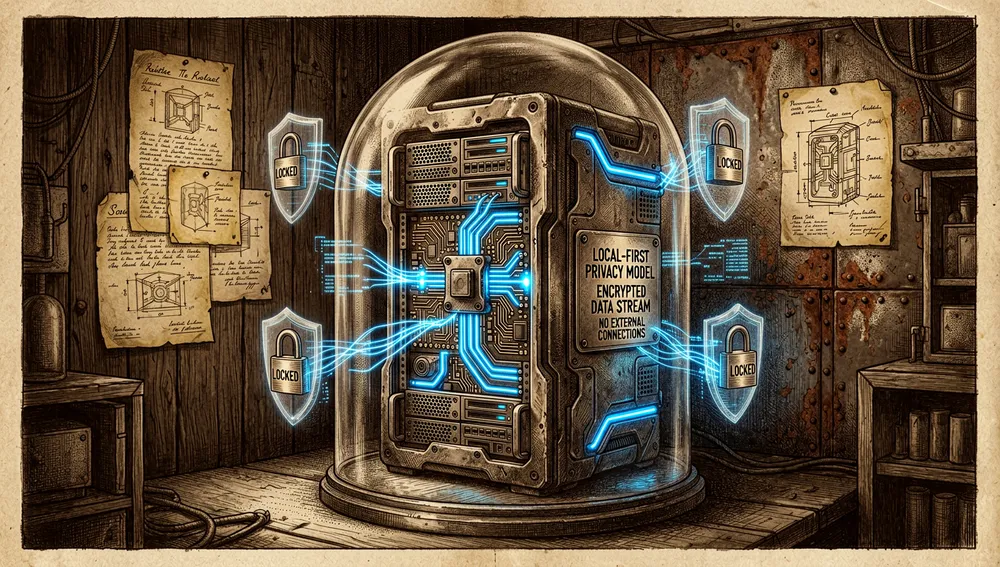
.codegraph/codegraph.dbstore and the index live inside the project; the README states it sends no code or queries to an external service.
- Structural context before manual exploration: a query can return code, call paths, and impact radius, instead of leaving the agent to reconstruct the structure itself.
- Incremental updates: the MCP server watches operating-system changes and syncs the index per file after a debounce window.

- A single entry point for the agent: the README leaves
codegraph_exploreas the default visible MCP tool; the narrower tools remain available but must be enabled explicitly.
- Verifiable distribution: since July 2026 the project has documented npm provenance and signed attestations for the files in its GitHub releases.
How it works
The documented technical flow has four phases:
- A native Rust core parses a portion of the supported languages using Tree-sitter grammars; portable paths and files that can’t use the precompiled binary fall back to the alternate engine.
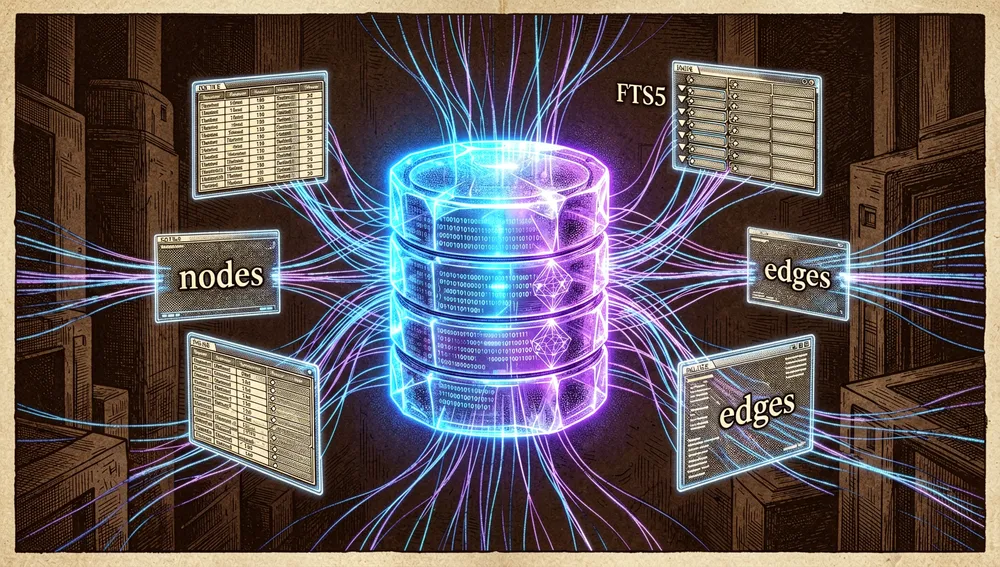
- Extraction saves nodes and edges to
.codegraph/codegraph.db, an SQLite database with FTS5.
- The resolver links calls to definitions, imports to files, inheritance, and web-framework patterns; the README lists routes for, among others, Django, FastAPI, Express, NestJS, Rails, Spring, Laravel, and several Go and Rust frameworks.
- When the MCP server runs, a file watcher syncs changes. The documentation states a default debounce of two seconds, configurable via
CODEGRAPH_WATCH_DEBOUNCE_MS; during that window, the response may note that a pending file should be read directly.
Version v1.5.0, released on July 21, 2026, added the Rust core for twenty languages along with adaptive worker and memory tuning. Its release notes claim sub-second sync on test repositories, but those are the project’s own measurements.
Official and semi-official status
No evidence was found of inclusion in an official marketplace from Claude, OpenAI, Cursor, or another provider. The integration is semi-official in a technical sense, not a commercial one: codegraph install detects configurations of the supported agents and registers the MCP server in them. That does not equate to certification, endorsement, or support from those providers.
The package is published on the official npm registry as @colbymchenry/codegraph. The documentation also links to a Homebrew repository from the same author, colbymchenry/homebrew-codegraph, but no official Homebrew formula was found, and its availability in the main catalog should not be inferred.
The ecosystem
Author repositories and related components
colbymchenry/homebrew-codegraph(0 stars at query time): a repository described as a Homebrew repository for CodeGraph.colbymchenry/shopify-graphql-admin-mcp(22 stars): another MCP server by the author, for connecting Claude to a Shopify store. It is a sibling project, not a CodeGraph dependency.colbymchenry/frontend-audit-skill(19 stars): a visual-regression audit skill; also not a confirmed component of CodeGraph.- The repository itself contains
codegraph-kernel,telemetry-dashboard, andtelemetry-worker. These are directories inside the monorepo, not independent public repositories.
Forks, ports, and extensions
The forks API shows derivatives with explicit changes, as opposed to many mirrors that keep the original description:
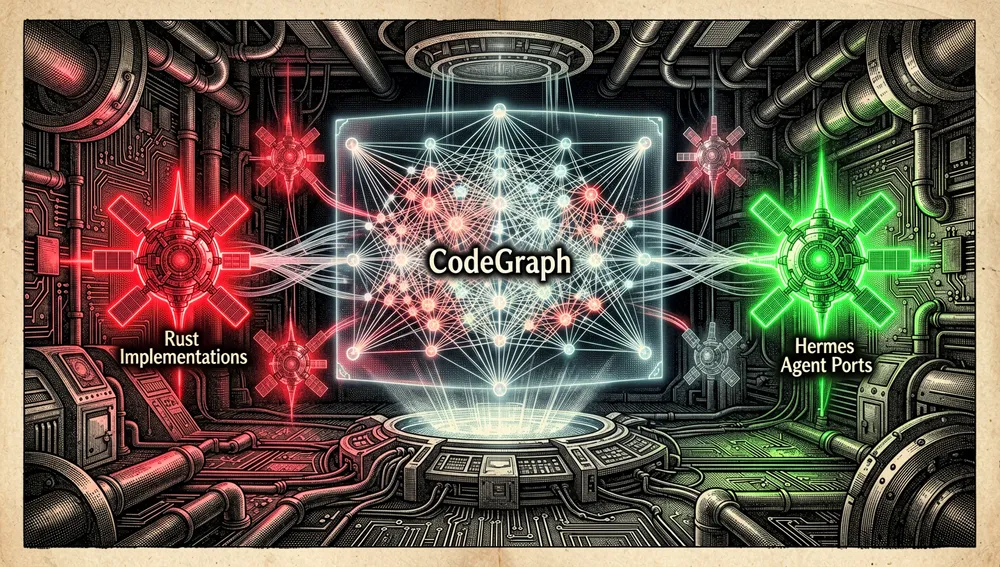
Cleboost/codegraph-rs(42 stars) describes itself as a low-overhead Rust implementation.ingeniousfrog/CodeDelta(26 stars) states it visualizes structural changes and traces issue origins across commits.nanofatdog/codegraph_hermes(9 stars) keeps the local-graph approach and mentions Hermes Agent.IppearPeng/codegraphFD(2 stars) states it adds Fortran support.zybk1003/codegraph(1 star) keeps a description translated into Chinese; it is a community fork, not a verified official translation.
The GitHub search also turned up projects in the same category, though not dependencies: CodeGraphContext/CodeGraphContext (4,054 stars) and Jakedismo/codegraph-rust (860 stars). The search found no affiliation with colbymchenry/codegraph.
Repository numbers
Measured: August 6, 2026, GitHub API and npm API.
| Metric | Value |
|---|---|
| Stars | 64,908 |
| Forks | 4,078 |
| Real subscribers | 147 |
| Commits | 825 |
| Open issues per the API | 393 |
| Primary language per GitHub | C |
| License | MIT |
| Created | January 18, 2026 |
| Last metadata update | August 6, 2026 |
| Latest release | v1.5.0, July 21, 2026 |
| npm downloads, last 7 days available | 75,949 |
| npm downloads, last 30 days available | 336,711 |
The top contributors returned by the API were colbymchenry (731 contributions), github-actions[bot] (26), omonien (16), andreinknv (7), and MO2k4 (4). The commit count of 825 comes from the last page of the API’s pagination link. open_issues_count may include open pull requests. The general response’s watchers_count field duplicates the star count, so subscribers_count is reported here as real subscribers.
How to contribute
No CONTRIBUTING.md or pull-request template was found in the public paths checked. There are tests (__tests__), a Vitest configuration, and GitHub workflows, but the retrieved sources don’t document a contribution flow, a target branch, or review requirements. So no process should be assumed: before contributing changes, it’s worth opening an issue or checking the repository for the current criteria.
How the community received it
The recoverable external evidence is limited and should be kept separate from the project’s own claims:
- The direct Hacker News submission 49054696, titled with the project’s name and submitted by handfuloflight on July 26, 2026, had 5 points and 0 comments. That shows reach, not a review or community enthusiasm.
- In thread 48994388, with 2 points and 1 comment, user pankaj4u4m, the self-described maintainer of LemonCrow, posted a comparison. They claimed that across their 35 runs, CodeGraph cut total cost by 16.3%, less than the token reduction they discussed. They also claimed a lower MRR figure than their own product. The comment’s author themselves notes this isn’t an independent review and says they asked for a configuration review, so these are attributed results, not a confirmed benchmark.
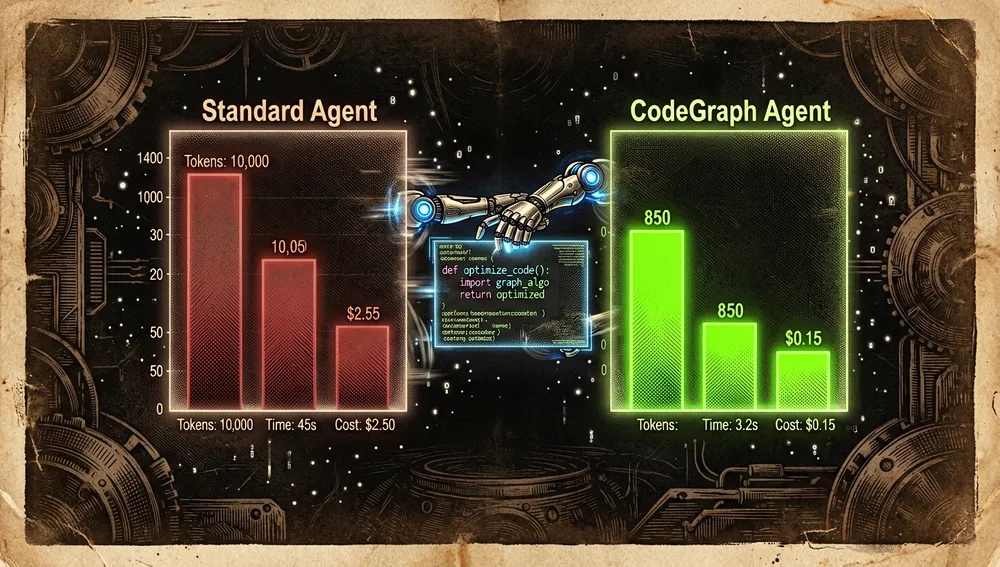
- The README publishes its own benchmark, re-measured on August 5, 2026 across seven repositories, claiming 88% fewer calls, 53% less time, 62% fewer tokens, and 44% lower cost at the median. Its methodology and repositories are described in the README, but no external replication was found; these should be read as the project’s own results.
Reddit searches in the requested subreddits returned no content retrievable past the site’s automated protection. Queries on X, Product Hunt, and YouTube likewise produced no verifiable post, launch page, or video for this project. DEV Community showed a search page, with no identifiable article about the repository. No verifiable mention in newsletters or podcasts was found, nor a verifiable inclusion in an awesome-* list.
CodeGraph versus other proposals
| Proposal | Verifiable overlap | Verifiable difference |
|---|---|---|
CodeGraphContext/CodeGraphContext | An MCP server and CLI that indexes local code into a graph for AI assistants. | Its public description talks about a graph database; CodeGraph documents SQLite, FTS5, and an installer for several agents. |
Jakedismo/codegraph-rust | A code graph and agent tooling via MCP. | Its description mentions SurrealDB, AST analysis, and FastML; it is not a confirmed port of CodeGraph. |
optave/ops-codegraph-tool | A local code-intelligence CLI with MCP and change impact. | It declares 34 MCP tools and architecture/CI controls, while CodeGraph leaves a single MCP tool visible by default. |
LemonCrow | Both are presented as tools for optimizing agent context and cost. | The retrieved performance comparison comes from LemonCrow’s maintainer and is not an independent measurement. |
Quick usage guide
Installation and first run
On macOS or Linux, the README points to this standalone installer; on Windows it offers the PowerShell equivalent:
curl -fsSL https://raw.githubusercontent.com/colbymchenry/codegraph/main/install.sh | sh
# In a new terminal:
codegraph install
cd your-project
codegraph init
It can also be installed via npm:
npm i -g @colbymchenry/codegraph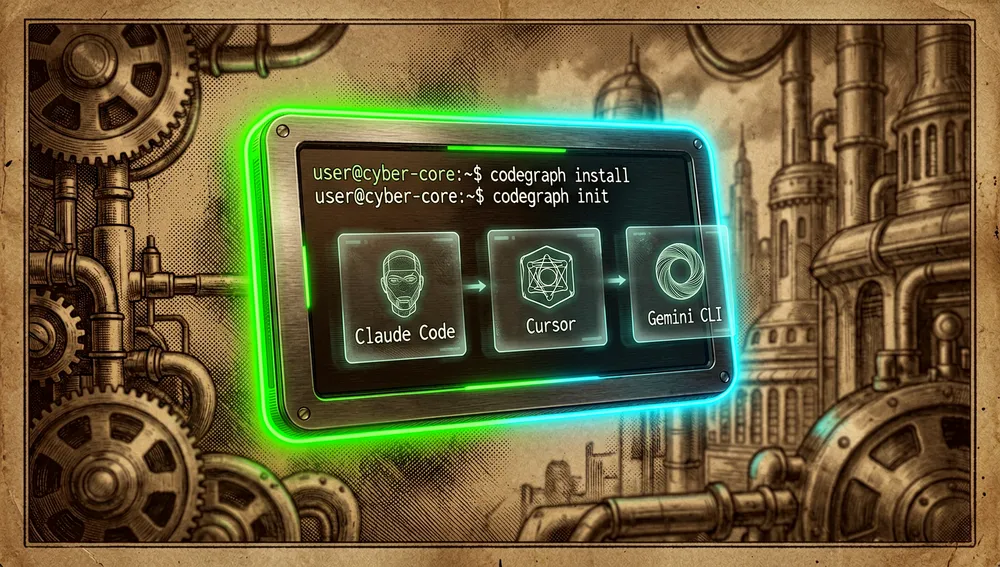
The installer bundles its own runtime, so the README states that neither the CLI nor MCP requires Node.js. codegraph install configures the detected agents but does not index any project; codegraph init creates .codegraph/ and builds the index. After installing, a new terminal must be opened for the executable’s path to become available.
Common workflows
- To get context for a task, run
codegraph explore "how does X reach Y"; it returns symbols, code, call paths, and an impact-radius summary. - To evaluate a change before editing, use
codegraph impact <symbol>; to see potentially affected tests,codegraph affected <files...>. - For a one-off query, use
codegraph query <search>;codegraph callers <symbol>andcodegraph callees <symbol>walk the direct relationships. - The index updates automatically while working through MCP. If the watcher is disabled or automation runs outside an agent session, run
codegraph sync [path];codegraph status [path]shows the state and any pending files.
Essential configuration
.codegraph/: a per-project directory; it holds the local index and can be removed withcodegraph uninit.codegraph.json: an optional file forexclude,include, andincludeIgnored; it’s used to tune what code enters the index..gitignore: respected by default; a negation like!vendor/can reintroduce an excluded path where the tool supports it.CODEGRAPH_WATCH_DEBOUNCE_MS: adjusts the maximum wait before syncing changes; the README caps it between 100 ms and 60 s.CODEGRAPH_MCP_TOOLS: re-exposes additional MCP tools, for exampleexplore,node,search,callers.
Common pitfalls and fixes
- Installing is not the same as indexing: if the agent can’t find the project, run
codegraph initfrom the root;installonly wires up agents. - The command doesn’t show up in the same console: open a new terminal after running the installer.
- A stale lock blocks indexing: use
codegraph unlock [path]per the CLI reference. - A freshly edited file may not be in the graph yet: during the debounce window, read it directly or check
codegraph status; for automation without a watcher, usecodegraph sync. - Too much or too little gets indexed: review
.gitignoreandcodegraph.json. Dependency, build, and cache directories, along with files larger than 1 MB, are excluded by default.
Integrations and migration
codegraph install registers the MCP server for the detected supported agents; the intended integration is MCP, not an editor-exclusive plugin. To undo it, codegraph uninstall removes configurations and the CLI; codegraph uninstall --keep-cli keeps the executable. Project indexes are not removed by that command and are removed separately with codegraph uninit. The documentation does not describe an automatic migration from CodeGraphContext, LemonCrow, or another comparable tool.
To embed it as a library, install it from npm and use Node 22.5 or later; the README offers CodeGraph.init('/path/to/project'), indexAll(), searchNodes(), getCallers(), and getImpactRadius().
Use cases and who this repository can help
- People adding agents to an existing repository can initialize the graph and ask about a path, symbol, or flow, getting code and relationships back instead of starting with file-by-file text search.
- Teams reviewing changes with propagation risk can use
impact,callers,callees, andaffectedto investigate dependencies and tests the change might reach; actual coverage depends on the languages, frameworks, and patterns the documentation lists. - Polyglot repositories, or ones with a web layer and a native layer, can benefit from multi-language extraction and the relationships the project claims for framework routes, Swift/Objective-C bridges, and React Native/Expo. It’s worth validating coverage against your own code, especially for unsupported syntax.
- Teams that want to keep analysis inside their own environment can use the local SQLite database and MCP configuration without API keys, while keeping in mind the optional telemetry: it can be disabled with
codegraph telemetry off,CODEGRAPH_TELEMETRY=0, orDO_NOT_TRACK=1.
Resources
- Repository: https://github.com/colbymchenry/codegraph
- Official documentation: https://colbymchenry.github.io/codegraph/
- Installation and CLI reference: https://github.com/colbymchenry/codegraph#quick-start
- Changes and releases: https://github.com/colbymchenry/codegraph/releases and https://github.com/colbymchenry/codegraph/blob/main/CHANGELOG.md
- npm package: https://www.npmjs.com/package/@colbymchenry/codegraph
- Core code and tests: https://github.com/colbymchenry/codegraph/tree/main/codegraph-kernel and https://github.com/colbymchenry/codegraph/tree/main/__tests__
- Discussions and comparisons: https://news.ycombinator.com/item?id=49054696 and https://news.ycombinator.com/item?id=48994388
- Community/Discord: no verifiable official link was found.
Note: this article combines CodeGraph’s README, documentation, and releases, the GitHub API, the npm registry and downloads API, and Hacker News, all checked on August 6, 2026. Figures change over time.


Comments