

Hermes Agent: An agent that preserves and converts experience into procedures
NousResearch/hermes-agent · 248,878★ · 52,727 forks
Everything you need to know about NousResearch/hermes-agent: an autonomous code and task agent that combines tools, persistent memory, reusable skills, and presence across multiple channels.
What is Hermes Agent?
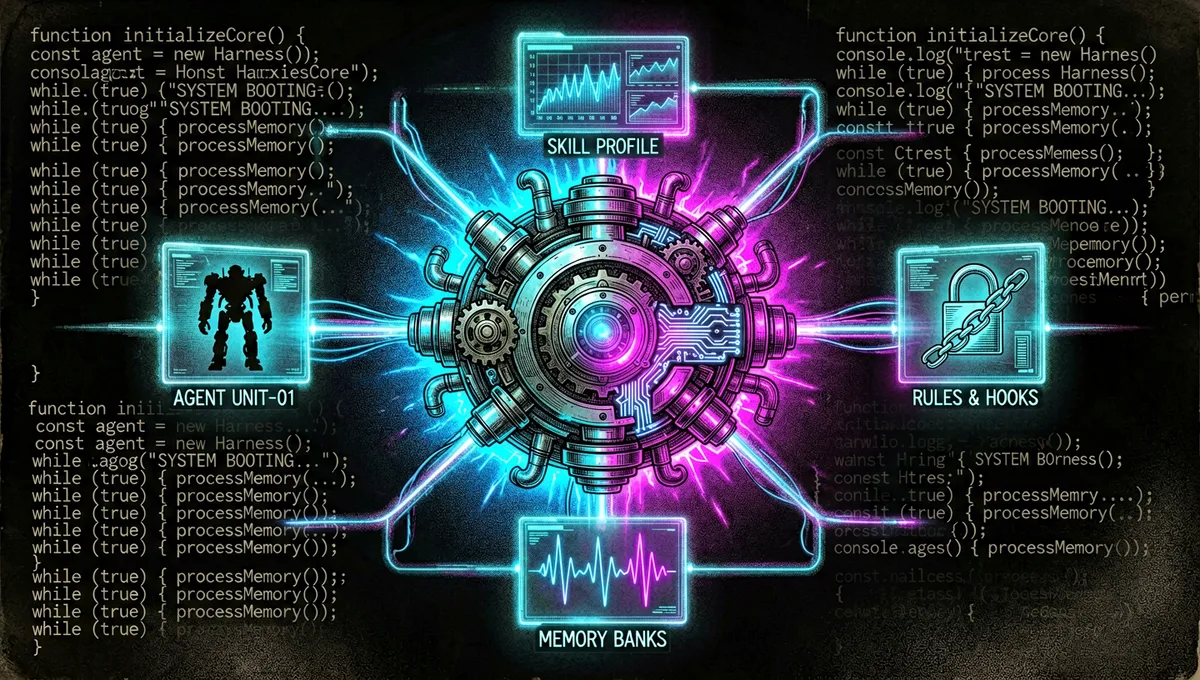
Hermes Agent is the open-source project from Nous Research for running AI agents from a terminal, desktop application, web panel, and messaging platforms. Its description on GitHub presents it as an agent that grows with the user; the official documentation clarifies this idea: preserving memory between sessions, creating and improving skills based on experience, and maintaining a user model that deepens with use.
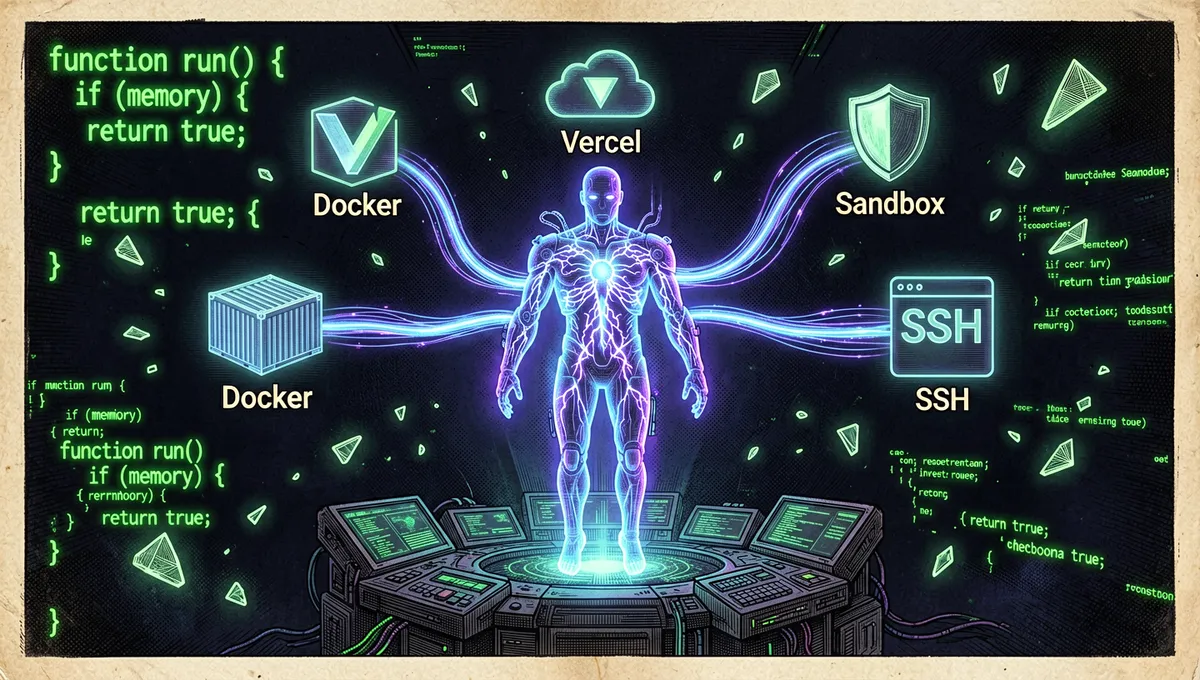
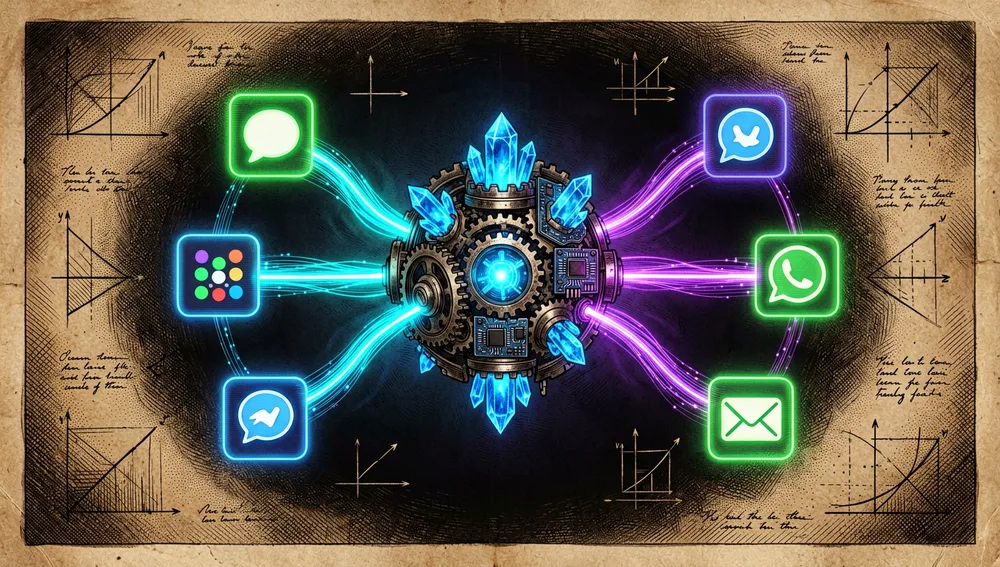
It is not limited to being just an editor copilot. The README documents a terminal interface, a unique messaging process for Telegram, Discord, Slack, WhatsApp, Signal, and other channels, scheduled tasks, delegation of sub-agents, and seven execution environments: local, Docker, SSH, Singularity, Modal, Daytona, and Vercel Sandbox. It also supports Nous Portal, OpenRouter, OpenAI, and other providers, so switching models is presented as a configuration change rather than a code change.
The origin: from Nous Research to a persistent agent
The GitHub API records the creation of the repository on July 22, 2025. The README and documentation identify Nous Research as the creator; no launch announcement was found during this research that would allow for a rigorous attribution of a different public presentation date, a single author, or a founding anecdote. Therefore, none of these are inferred.
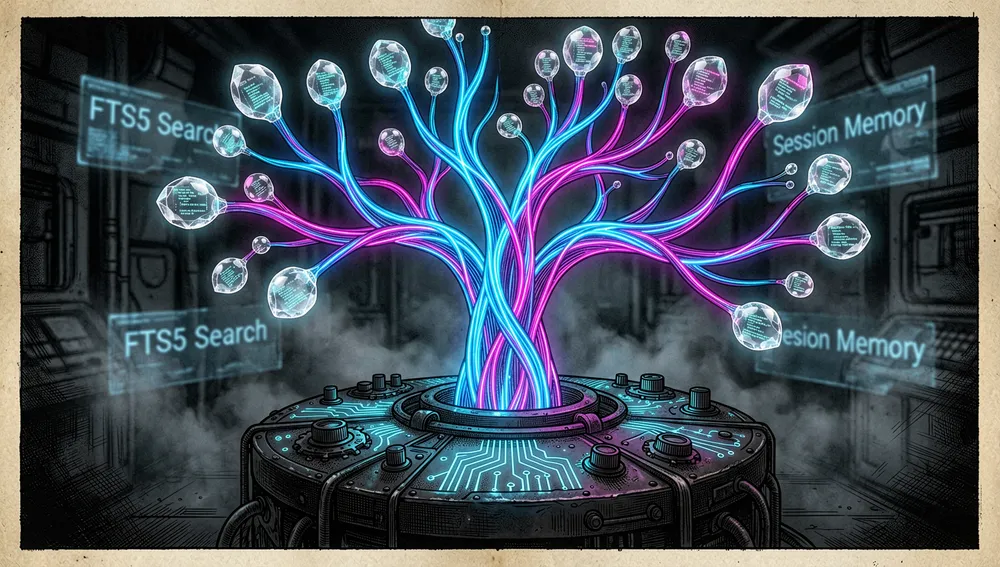
The verifiable account of the product starts from a practical tension: an isolated conversation does not necessarily preserve the procedure that worked before. Hermes attempts to solve it with curated memory, FTS5 search of sessions, skills in files, and reminders to persist knowledge. There is another tension with existing messaging agents: the project itself offers hermes claw migrate to import configuration, memories, skills, allowed keys, and settings from OpenClaw, instead of requiring a complete manual migration.
Philosophy and principles
The official proposal can be summarized in four operating principles:
- Persistent learning, not a disposable session: complex experiences can become skills, and these are reviewed during use.
- Separate secrets from configuration: the documentation distinguishes keys in an environment file from settings in configuration; the README also documents external secret sources in recent versions.
- Choose provider and execution environment: the agent is not tied to a single model or a single team.
- Automation with human traceability: cron, sub-agents, and tools allow for running prolonged work, while approvals and permission configurations are part of the product.
These are principles and capabilities declared by the project, not an independent demonstration that any flow is secure or better than another.
How it works
The official installation for Linux, macOS, WSL2, and Termux is curl -fsSL https://hermes-agent.nousresearch.com/install.sh | bash; a PowerShell installer is documented for native Windows. Afterwards, the basic flow is to start hermes, choose a model with hermes model, run the setup assistant with hermes setup, and check the system with hermes doctor.
The usage patterns that the README documents include:
- Conversation and configuration:
hermes,hermes model,hermes tools,hermes config set, andhermes config get. - Remote channels:
hermes gateway setupandhermes gateway start; within a conversation, commands such as/new,/model,/skills,/compress, and/usageare shared. - Reusable knowledge: skills describe procedures and are stored to load relevant context in subsequent turns; the documentation declares compatibility with the open standard Agent Skills.
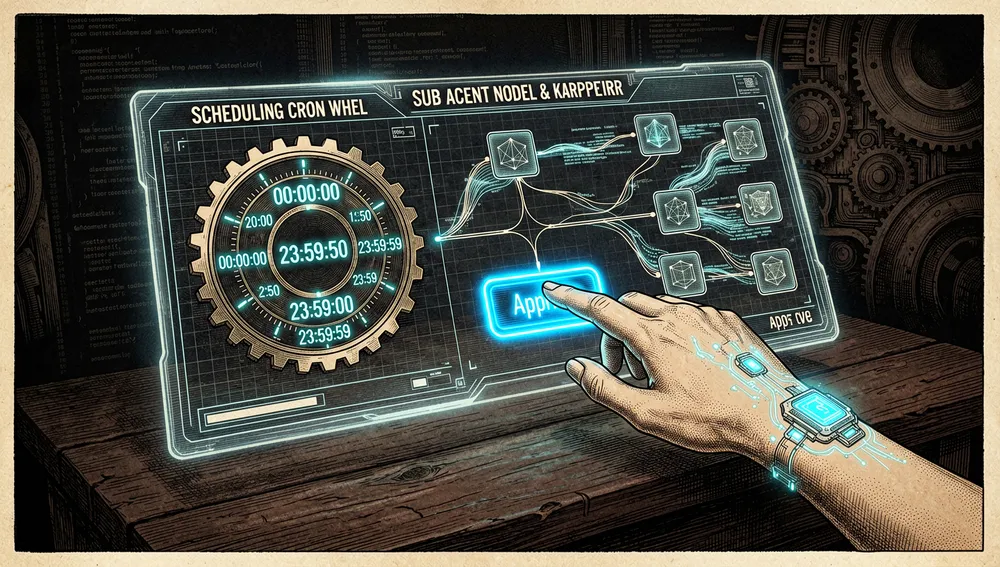
- Automation and parallelism: the internal scheduler executes tasks with delivery to platforms, and delegation creates isolated sub-agents for parallel workflows.
- Extension: it can connect to MCP servers and select tools or toolsets; the README links a security guide for command approvals, message matching, and container isolation.

Official and semi-official status
Hermes Agent is the official repository of Nous Research: both the README and the hermes-agent.nousresearch.com website present it as a product of the lab. The official documentation claims compatibility with Agent Skills and MCP servers; this compatibility does not mean that the organizations of these standards certify each skill or integration.
No evidence was found that the complete agent has been accepted into an official plugin market from an external provider, nor is there a formal designation as a standard. Therefore, such acceptance is not claimed. Its semi-official nature comes from the integrations and guides maintained by Nous Research, not from third-party certification. In practice, the 223,359 stars and community adapters suggest visible adoption, but do not replace a guarantee of security, support, or compatibility.

The ecosystem
Nous Research repositories
The query to the organization’s API retrieved these related projects, with their figures on the measurement date:
NousResearch/hermes-agent-self-evolution: evolutionary optimization of skills, instructions, and code with DSPy and GEPA; 4,876 stars and 562 forks.NousResearch/hermes-paperclip-adapter: adapter to run Hermes as a managed employee in Paperclip; 1,771 stars and 359 forks.NousResearch/autonovel: autonomous novel writing channel based on Hermes Agent; 1,366 stars and 271 forks.NousResearch/atropos: framework for collecting and evaluating model trajectories through reinforcement learning environments; 1,342 stars and 396 forks. The README of Hermes cites it to generate trajectories and train tool usage models.NousResearch/Hermes-Function-Calling: repository of function calls; 1,432 stars and 209 forks.NousResearch/tinker-atropos: independent integration of Atropos with the Tinker API; 95 stars and 26 forks.NousResearch/hermes-compression-eval: offline evaluation harness for the context compressor; 16 stars and 9 forks.NousResearch/hermes-example-plugins: reference implementations and documentation of plugins, not included in the core; 30 stars and 18 forks.
Community ports, translations, and extensions
The main repository incorporates official versions of the README in simplified Chinese, Urdu, and Spanish. The GitHub search also retrieved unofficial derivatives and related tools:
bookunt3d/hermes-agent-fa, complete translation of documentation into Persian: 64 stars and 1 fork.timoncool/hermes-ru-locale, Russian localization for the desktop application: 23 stars and 3 forks.HughesCuit/hermes-agent-cluster, extension for task coordination between nodes, planning according to capabilities, fault tolerance, and metrics: 7 stars and 3 forks.hermeum/hermes-agent-operator, Kubernetes operator to manage Hermes instances declaratively: 13 stars and 1 fork.avifenesh/computer-use-linux, Linux desktop control MCP server linked by the official README; uses accessibility trees, Wayland or X11 input, and captures.AaronWong1999/hermesclaw, community bridge of WeChat that the README links to use Hermes Agent and OpenClaw in the same account.
These projects are not automatically products of Nous Research nor an audit of their quality. The figures above come from the GitHub API and describe popularity, not current compatibility.
Repository numbers
Measurement: July 31, 2026, API and GitHub page.
| Metric | Value |
|---|---|
| Stars | 223,359 |
| Forks | 42,982 |
| Actual subscribers | 843 |
| Commits | 19,747 |
| Open issues indicated by the API | 26,224 |
| Main language | Python |
| License | MIT |
| Repository creation | July 22, 2025 |
| Last metadata update | July 31, 2026 |
| Last release | v2026.7.30, July 30, 2026 |
The latest release is titled Hermes Agent v0.19.1 and groups changes after v0.19.0. The main contributors that the API returned by number of contributions were teknium1 (7,465), OutThisLife (2,593), kshitijk4poor (1,067), benbarclay (382), and ethernet8023 (365). The total number of commits comes from the final page indicated by the pagination header of the API. watchers_count from the general GitHub response replicates the stars; therefore, subscribers_count is reported as subscribers. The open_issues_count field may sum open pull requests, so it is not an exclusive count of issues.
How to contribute
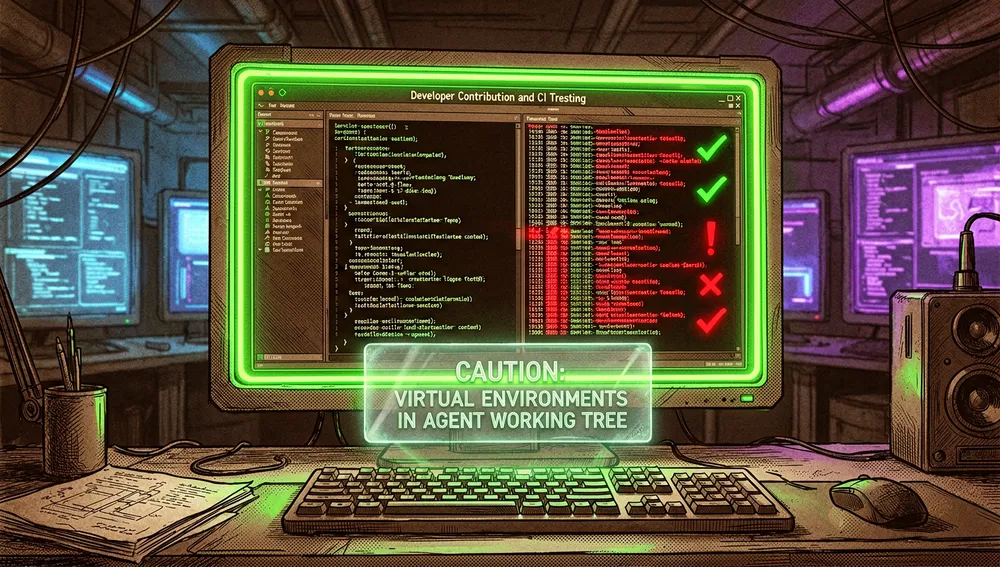
The README refers to the official contribution guide and provides a verifiable flow: run the installer, work on the managed copy of $HERMES_HOME/hermes-agent, install development dependencies with uv pip install -e ".[all,dev]" and launch scripts/run_tests.sh. For a temporary copy or CI, it documents a virtual environment outside the source tree and the same test command.
The specific warning is relevant: do not place a virtual environment inside the tree on which the agent works, because a relative path command could delete the running environment. Pull requests and style guides refer to the contribution guide; this research did not retrieve a specific pull request template, so none is attributed.
How the community received it
The conversation on Hacker News offers both concrete use cases and clear reservations:
- In thread 48419000, posted by SeriousM, the entry reached 52 points and 42 comments. apexalpha explained that he replaced OpenClaw with Hermes at home, using it as an administrator of his home lab with a read-only MCP server to review Kubernetes and session-approved SSH access. His specific praise was receiving daily status reports on backups and pods; he also indicated that GitOps allows for reverting changes. It is an individual testimony, not a general performance test.
- In the same thread, eranation asked for a first-impression comparison between Hermes, Paperclip, Pi, OpenCode, OpenClaw, NanoClaw, and Gastown, and questioned whether the different frameworks are only marginal improvements compared to building on Claude Code, Codex, or Cursor. The objection does not deny a specific function; it questions differentiation and asks for comparative evidence.
- KennyBlanken, also in thread 48419000, objects to the use of Telegram as a communication channel and raises a privacy concern. It is a criticism of an optional integration, not a validated claim about all of Hermes’ platforms.
- Thread 48882162, posted by piotrbednarsalt, had 3 points and 1 comment. The author himself described the project as unresponsive, unintuitive, and insecure, and advised against using it with confidential information. The thread provides a direct criticism but without technical evidence in the retrieved comment; it should be read as an opinion attributed to that user, not as a conclusion of this research.
Hermes Agent versus other proposals
| Proposal | Verifiable coincidence | Verifiable difference |
|---|---|---|
| OpenClaw | Both appear as agents that can preserve configuration, memory, and skills. | Hermes documents a migration from OpenClaw using hermes claw migrate; therefore, the source treats it as a source from which to import data, not as part of the core. |
| Paperclip | The retrieved source places it as an environment for Paperclip’s managed employee. | NousResearch/hermes-paperclip-adapter presents Hermes as a managed employee within a Paperclip company; Hermes Agent by itself offers terminal, messaging, skills, and automation. |
| OpenCode | It was mentioned by eranation in thread 48419000 within a set of frameworks that the user wanted to compare. | The retrieved source does not provide sufficient technical evaluation to claim superiority or equivalence; it is kept as a market reference, not as a comparison of functionalities. |
The most useful verifiable comparison is of scope: Hermes integrates memory, skills, messaging, and automation into a single product; an adapter like the one for Paperclip inserts it into another organizational layer. There is no independent evidence in the retrieved sources to order their results against these proposals.
Use cases and who this repository can help
- People who want to operate an agent from a terminal, desktop, web, or messaging application can use the same Hermes configuration to converse and execute tasks from these channels, with memory and session search between conversations.
- Operators of a home lab or service with limited access can schedule tasks, delegate sub-agents, and connect MCP tools; the cited case of Kubernetes uses a read-only MCP server, session-approved SSH, and reversible GitOps. Permissions, secrets, and tools must be reviewed before enabling any access.
- Authors and teams that repeat research or writing workflows can transform a working pattern into a reusable skill, locate previous sessions, and transfer that context between assignments.
NousResearch/autonovelillustrates an application built on Hermes, whilehermes-agent-self-evolutionexplores the optimization of skills and instructions.
Resources
- Repository: https://github.com/NousResearch/hermes-agent
- Documentation: https://hermes-agent.nousresearch.com/docs/
- Installation: https://hermes-agent.nousresearch.com/docs/getting-started/installation
- Official skills: https://hermes-agent.nousresearch.com/docs/user-guide/features/skills
- How to contribute: https://hermes-agent.nousresearch.com/docs/developer-guide/contributing
- Evaluation and evolution: https://github.com/NousResearch/hermes-compression-eval and https://github.com/NousResearch/hermes-agent-self-evolution
- Discord community: https://discord.gg/NousResearch
- Conversations: https://news.ycombinator.com/item?id=48419000 and https://news.ycombinator.com/item?id=48882162
Note: this article combines the README, documentation, and release notes of Hermes Agent, the GitHub API, and Hacker News conversations consulted on July 31, 2026. The figures change over time.


Comments