


Andrej Karpathy Skills: Four Rules for Setting Boundaries for a Code Agent
multica-ai/andrej-karpathy-skills · 215,089★ · 21,733 forks
Everything you need to know about multica-ai/andrej-karpathy-skills: a behavior guide distributed as an instruction file, Claude Code plugin, and Cursor rule.
What is Andrej Karpathy Skills?
andrej-karpathy-skills is not a model or an executable code library. It’s a very small package of instructions for coding agents. Its core is CLAUDE.md; the repository also includes a Claude Code plugin definition, a Cursor rule, and a skill compatible with the skills format called karpathy-guidelines.
The README states that it stems from Andrej Karpathy’s observations about three recurring model failures when programming: assuming without checking, overcomplicating designs, and modifying context unrelated to the task. The project’s response is four rules: think before coding, prioritize simplicity, make surgical changes, and execute against verifiable success criteria.
The inspiration should not be confused with authorship or endorsement. The README attributes the observations to Karpathy but does not provide a statement that Karpathy wrote, maintains, or approves of this repository.

The Origin: From a 65-Line Guide to a Multica Repository
The GitHub API dates the creation of multica-ai/andrej-karpathy-skills on January 27, 2026. The path still used in the README and installation command, forrestchang/andrej-karpathy-skills, redirects to the current Multica repository in the API. The list of contributors places forrestchang first, with 17 contributions; therefore, it is evidence of primary participation, not sufficient proof to attribute sole editorial authorship or explain a transfer of ownership.
The earliest located Hacker News submission, 46788844, appeared on the same day, January 27th, submitted by sdoering: it received 2 points and no comments. In April, a commit by Jiayuan Zhang incorporated links to Multica and his public profile into the README. The GitHub page identifies multica-ai as an organization; its API lists five public repositories and describes multica-ai/multica as an open platform for managing agents with reusable skills.
The clearest piece of context is Michiel’s article, “65 lines of Markdown - a Claude Code sensation”, published on February 11, 2026. Its author recounts seeing the project go from 3,500 to 3,900 stars in a day at an AI workshop. Upon inspecting it, he characterized it as a 65-line Markdown file packaged for Claude Code. This observation illustrates both the appeal of the format and the underlying tension: a brief instruction can condition a complex tool, but does not constitute proof of better software quality on its own.
Philosophy and Principles
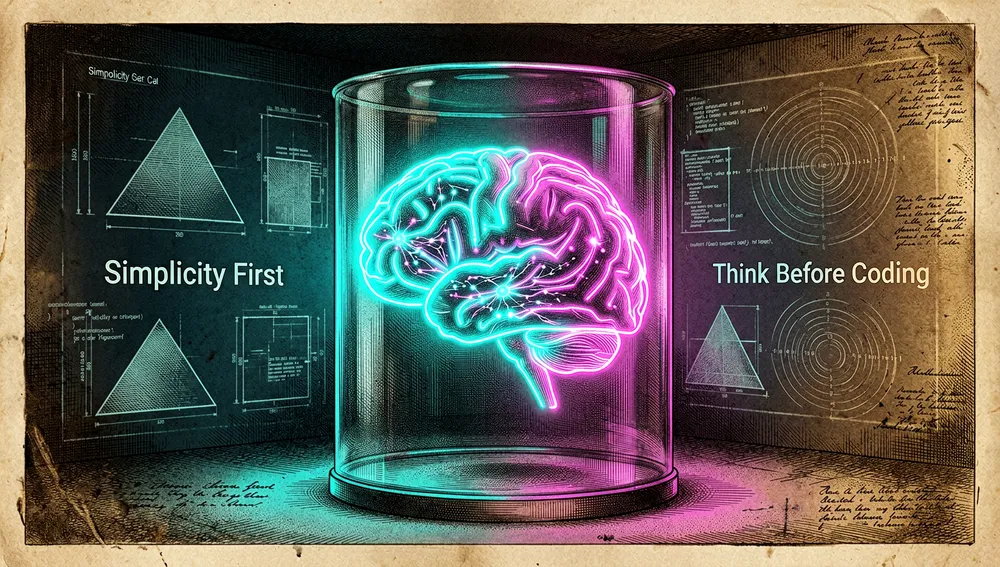
The four documented rules are these:
- Think before coding: make assumptions explicit, show alternatives, and ask for clarification instead of silently choosing an ambiguous interpretation.
- Simplicity first: solve the minimum required task; avoid speculative features, abstractions, configuration, and error handling.
- Surgical changes: limit the diff to what is requested, respect existing style, and remove only unused elements caused by the change itself.
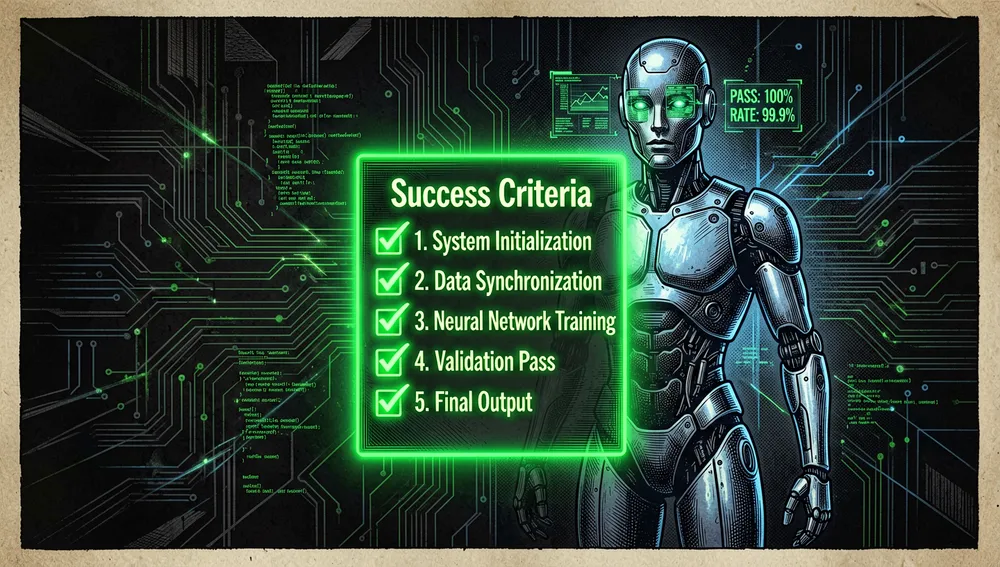
- Execution guided by objectives: turn vague orders into verifiable criteria, for example, reproduce an error with a test and make it pass.
The philosophy is deliberately restrictive. The README acknowledges its counterpart: it favors caution over speed and does not intend to apply all of this rigor to trivial or obvious one-line operations.
How It Works
There are three documented ways to apply the same guide:
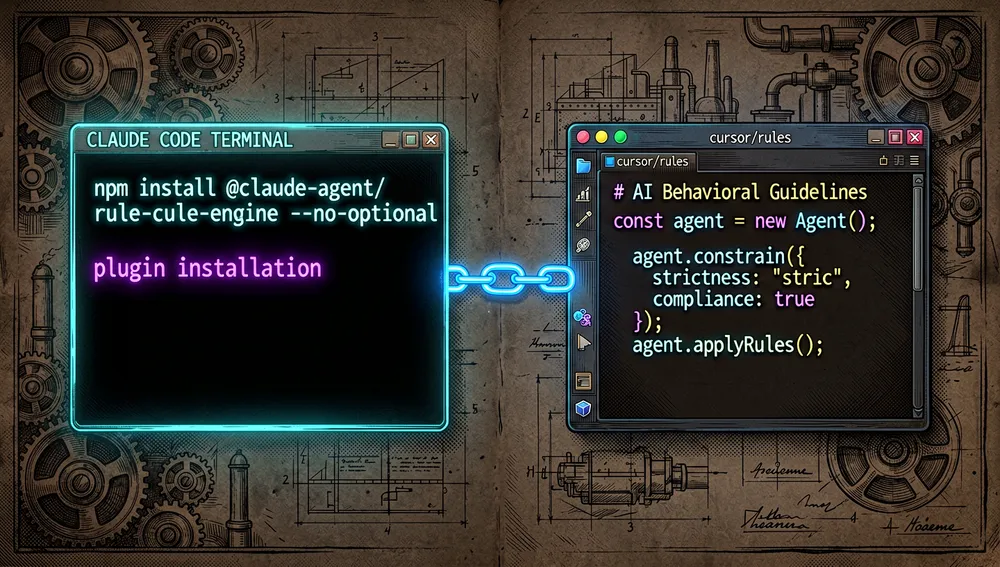
- Claude Code Plugin: within Claude Code, execute
/plugin marketplace add forrestchang/andrej-karpathy-skillsand then/plugin install andrej-karpathy-skills@karpathy-skills. The README states that this makes the skill available for all projects. - Project Instruction: download
CLAUDE.mdas a project file or append it to an existing one. The content can be combined with specific rules, such as using strict mode in TypeScript or requiring tests for an API. - Cursor: the repository includes
.cursor/rules/karpathy-guidelines.mdc;CURSOR.mdexplains how to move the rule to other projects.

In a multi-step task, the proposed pattern is brief: list each step and its associated check. For a correction, the pattern is to write a test that reproduces the problem, apply the change, and verify it. There is no test runner, CI, evaluator, or command of its own: execution and checks remain the responsibility of the agent, user, and host project.
Official and Semi-Official Status
The project declares an installation mechanism through the Claude Code plugin system, but the retrieved source does not identify it as part of an official Anthropic marketplace nor provide endorsement from Anthropic, OpenAI, Cursor, or Andrej Karpathy. No formal standard designation was found either.
Its practical status is community-driven: it packages a guide in formats that Claude Code and Cursor can consume. The 198,203 stars registered by the API and the number of ports show visible adoption, but do not equate to vendor certification or empirical validation that the rules improve all outcomes.
The Ecosystem
Multica Repositories
The GitHub API for multica-ai returned these public companions on July 31, 2026:
multica-ai/multica: open platform of managed agents and reusable skills; 42,960 stars and 5,431 forks.multica-ai/homebrew-tap: Homebrew formula for the Multica CLI; 15 stars and 7 forks.multica-ai/multica-cli: skill to operate Multica through its local CLI; 17 stars and 4 forks.
The visible relationship is distribution and management of agents: the guide’s own README promotes Multica. No source was retrieved establishing that these repositories share code or a joint roadmap.
Community Ports, Translations, and Derivatives
A search of GitHub repositories found derivatives explicitly presented as guides or ports of these rules. These are independent projects; their descriptions do not prove support from the primary maintainer.
0xwilliamortiz/andrej-karpathy-skills, behavioral boundaries guide for Claude Code: 545 stars, 94 forks.vtroisWhite/andrej-karpathy-skills, derivative whose description links to a Chinese translation: 396 stars, 69 forks.mbeijen/andrej-karpathy-skills-cursor-vscode, packaged for Cursor or VS Code: 268 stars, 32 forks.duolahypercho/andrej-karpathy-skills, conversion oriented first to Codex: 183 stars, 22 forks.swarmclawai/andrej-karpathy-skills, package for multiple agent environments: 33 stars, 4 forks.interfluve-wav/andrej-karpathy-skills-hermes, port for Hermes withSKILL.mdand examples: 23 stars, 3 forks.Yangleduo00337788/Karpathy-Guidelines-MCP-Server, adaptation that claims to wrap the guide as an MCP tool: no stars or forks in the search response.
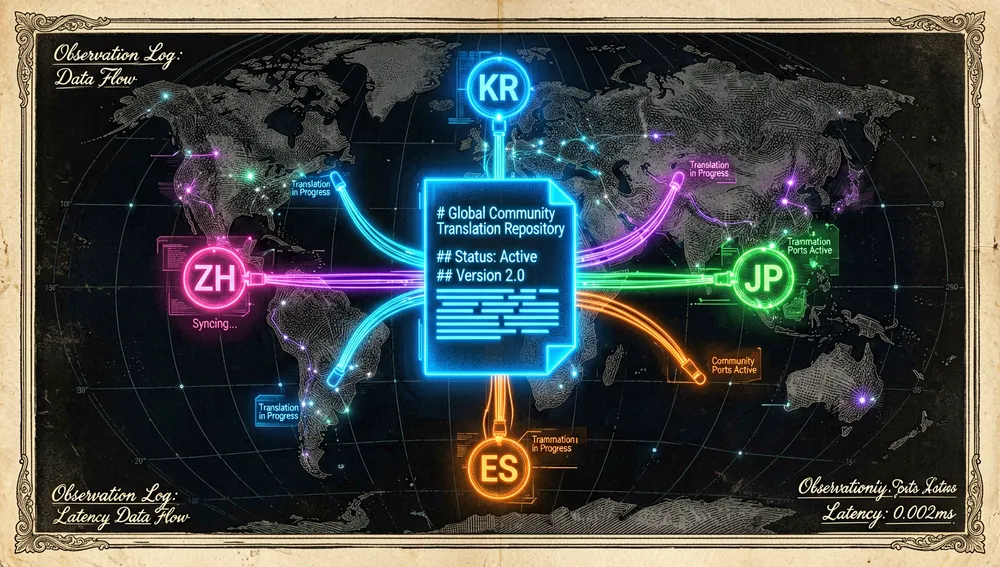
The main repository contains README.zh.md, a simplified Chinese translation. In addition, open pull requests #124, by junijaei, and #142, by sscodeai, propose Korean and Japanese versions respectively; they were not integrated into the main branch at the time of consultation. This documents demand for translations, not official support for those languages.
As comparable projects of greater scope, the API retrieved identifies mattpocock/skills (197,741 stars, 17,021 forks), described by its author as skills from his .agents directory, and affaan-m/ECC (236,621 stars, 35,983 forks), which is described as an agent harness optimization system for multiple environments. Both are library or harness alternatives, not implementations of the four-rule file.
Repository Numbers
Measurement: July 31, 2026, GitHub API.
| Metric | Value |
|---|---|
| Stars | 198,203 |
| Forks | 20,384 |
| Real subscribers | 1,138 |
| Commits visible on the page | 28 |
| Open pull requests visible | 97 |
open_issues_count from the API | 126 |
| Branches | 5 |
| Issues and publications | 0 / no publications |
| License declared by the API | None |
| Main language declared by the API | None |
| Creation | January 27, 2026 |
| Last commit | April 20, 2026 |
| Metadata update | July 31, 2026 |
The main contributors by number of contributions in the API were forrestchang (17), back1ply (5), herobrine19 (2), and azakharko, josepha-mayo, szkocot, and TomBener (1 each). The general GitHub response replicates the stars in watchers_count; therefore, subscribers_count is reported as real subscribers. open_issues_count may include open pull requests, so it does not equate to pure issues. The page shows 28 commits; a total cannot be inferred from API pagination.

How to Contribute
No contribution guide or pull request template was found in the main branch. The repository itself receives contributions: open pull requests propose translations, metadata for Codex, and ports for other agents. For example, proposal #104 by CezarDrumea documents validating skill metadata for Codex and keeping common text synchronized; however, it remains open and cannot be treated as an approved process.
In the absence of instructions from the maintainer, the verifiable path is to create a fork, open a pull request, and explain how the format was verified. It is advisable not to assume that a proposed change will be accepted.
How the Community Received It
The documented reception combines rapid interest, perceived utility, and verifiable skepticism:
- The Hacker News thread 46986001, submitted by
roywashere, linked to Michiel’s review and received 90 points and 66 comments. The article celebrates that custom rules can help AI editing tools and records the growth from 3,500 to 3,900 stars in a day. This is a sign of curiosity and dissemination, not proof of effectiveness. - In that same thread,
ciconiaobjected that expecting solid engineering process from vague instructions for a stochastic model was a ridiculous premise. This is a criticism of the project’s central assumption: a brief guide does not eliminate the need for specification, review, and external controls. - The review itself provides a specific experimental reservation: after testing a refactoring, Michiel noted that the agent seemed reluctant to change code, but concluded that he could not know if the result was better due to the non-deterministic nature of the model. This is evaluation criticism, not a conclusive disqualification.
- A pull request by
popey, #25, expresses enthusiasm: it states that the rules are accurate and proposes improving the skill description so that it activates more accurately. The proponent claims to work at Tessl and presents percentages from an internal evaluation; since neither the harness nor its data was retrieved, these percentages cannot be taken as independent validation.
No direct evidence of Karpathy’s endorsement was found. A mention by gauravvij137 on Hacker News, retrieved in the search, emphasizes that Karpathy did not write or endorse the file and that the same guide circulated in parallel under the name Multica. This distinction is especially relevant given the repository’s name.
Andrej Karpathy Skills vs. Other Proposals
| Proposal | Verifiable Match | Verifiable Difference |
|---|---|---|
mattpocock/skills | Both distribute operational knowledge for agents through skill files. | The API describes mattpocock/skills as a collection output from .agents; this proposal focuses on four behavioral rules and an instruction file. |
affaan-m/ECC | Both aim to improve the behavior of code agents. | ECC is described as an agent harness optimization system with skills, memory, security, and pre-investigation for multiple environments; this guide does not provide these components or an executable harness. |
mbeijen/andrej-karpathy-skills-cursor-vscode | Transports the same ideas to VS Code-based editors. | It is an independent package for Cursor or VS Code, while the main one already offers a Cursor rule in Markdown. |
duolahypercho/andrej-karpathy-skills | Shares the goal of imposing behavioral limits on the agent. | It is presented as a conversion focused first on Codex; the README of the main one documents Claude Code and Cursor first. |
The comparison should not be reduced to stars. This repository is appropriate when looking for a short, easily auditable standard; a large library or harness may be more suitable if memory, automation, security, or evaluation are needed, but it also introduces more operational surface area.
Use Cases and Who This Repository Can Help
- Developers using Claude Code or Cursor who want a minimal common guideline can install the plugin, add
CLAUDE.mdto the project, or move the Cursor rule to ask the agent to make assumptions explicit, prefer simple solutions, and limit the diff to the task. - Reviewers of small fixes and limited changes can use the four rules as a checklist: define success criteria, reproduce an error with a test when appropriate, and not declare the change complete without verifying it. The repository does not provide CI, permissions, or integration tests; these controls remain external.
- Teams that maintain versioned instructions per repository can take the 65-line file as a base and combine it with their own rules for types, tests, or APIs, instead of repeating them in each conversation. It is a behavior guide, not proof of deterministic improvement or a substitute for human review.
Resources
- Repository: https://github.com/multica-ai/andrej-karpathy-skills
- Documentation and installation: https://github.com/multica-ai/andrej-karpathy-skills#install
- Instruction file: https://github.com/multica-ai/andrej-karpathy-skills/blob/main/CLAUDE.md
- Official skill in the repository: https://github.com/multica-ai/andrej-karpathy-skills/tree/main/skills/karpathy-guidelines
- Cursor rule: https://github.com/multica-ai/andrej-karpathy-skills/tree/main/.cursor/rules
- Multica project: https://github.com/multica-ai/multica
- Review: https://tildeweb.nl/~michiel/65-lines-of-markdown-a-claude-code-sensation.html
- Community: https://news.ycombinator.com/item?id=46986001
Note: This article combines the README, history, and GitHub API, open pull requests, an external review, and Hacker News consulted on July 31, 2026. The figures change over time.



Comments