

OpenClaw: A Personal Assistant That Lives on Your Own Infrastructure
openclaw/openclaw · 390,478★ · 82,148 forks
Everything you need to know about openclaw/openclaw: a self-hosted personal agent, controlled via messaging apps and extensible with tools, channels, and skills.
What is OpenClaw?
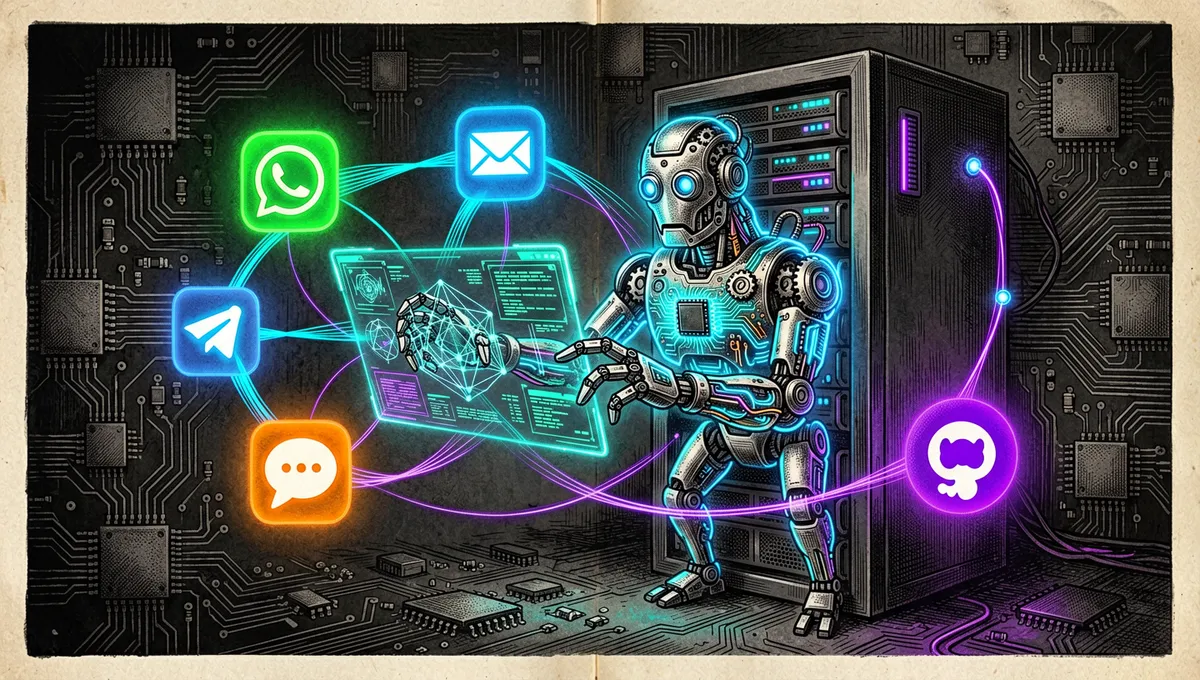
OpenClaw is an artificial intelligence personal assistant that runs on the devices chosen by the user. Its README presents it as software openly developed by the OpenClaw Foundation, a non-profit organization. The product is not just a chat interface: a Gateway acts as a control plane and connects the assistant to model providers, tools, memory, applications, and channels.
The proposal is to interact with the agent from already used applications, including WhatsApp, Telegram, Slack, Discord, Google Chat, Signal, iMessage, SMS, IRC, Microsoft Teams, Matrix, Feishu, LINE, Mattermost, and Twitch. It also offers voice support on macOS, iOS, and Android, and a Canvas interface. The introductory documentation states that the Gateway, provider authentication, and an initial conversation can be configured using an onboarding assistant.
It is not equivalent to a language model nor does it eliminate the need to choose a provider, credentials, and controls. It is a personal execution layer for combining these components.
The Origin: From a WhatsApp Relay to Three Names
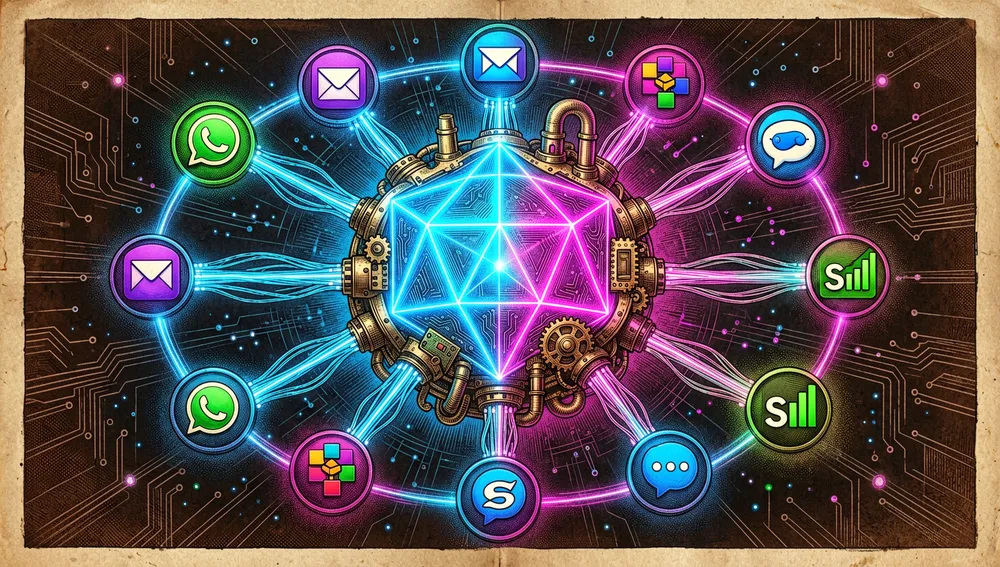
The verifiable timeline has two layers. The repository was created on GitHub on November 24, 2025; a commit from that date attributes work to Peter Steinberger (steipete). In his announcement on January 29, 2026, Steinberger explains that two months prior, he had created an experiment called “WhatsApp Relay” during a weekend, and the project reached over 100,000 stars and two million visitors in one week.
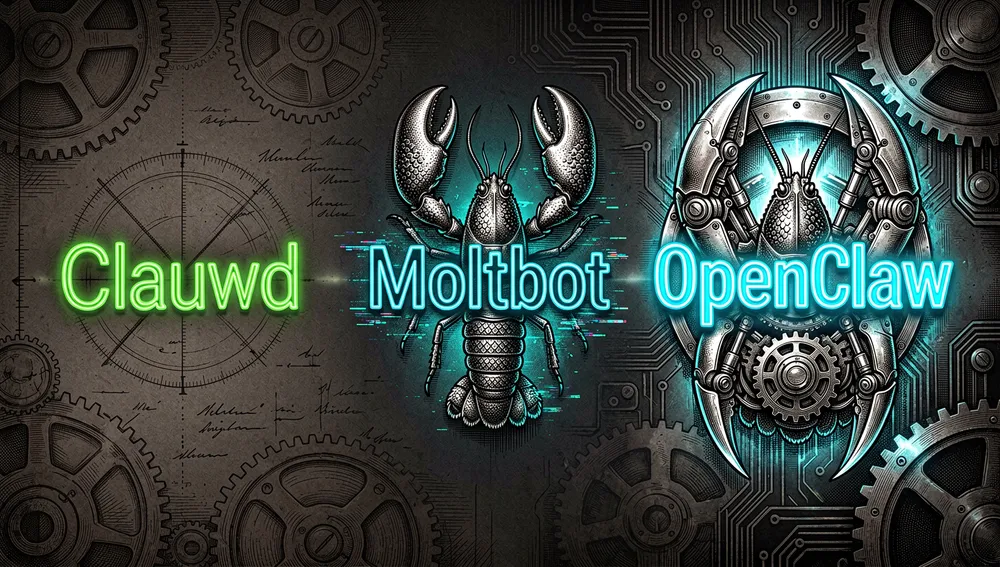
The project was first named Clawd, a play on words with Claude and a claw. According to Steinberger, Anthropic kindly asked him to reconsider that name. Then, the community chose Moltbot in a Discord brainstorming session at five in the morning; the lobster’s molt symbolized growth, but the author says the name was not comfortable to pronounce. The relaunch as OpenClaw incorporated trademark searches, domain purchases, and code migration before being announced.
This story exposes a concrete tension with an external platform: the origin of Clawd alluded to Claude, but the final name avoids presenting the assistant as an official Anthropic product. The announcement itself identifies security as a priority and acknowledges that prompt injection remains an unresolved problem in the industry.
Philosophy and Principles
The practical motto of the announcement is: the assistant, the machine, and the rules belong to the user. In contrast to a software-as-a-service assistant, the project proposes hosting the system on a laptop, home lab, or virtual server, with data, keys, and infrastructure under the control of the operator.
Four principles can be derived from official sources:
- First local and personal: the assistant should live where its owner chooses it to, not require a single central server.
- Existing channels: messaging is the surface of use; it is not limited to its own website.
- Open extensibility: plugins, skills, and tools allow expanding the agent, but require reviewing their origin and permissions.
- Security as an operational condition: the announcement asks to use strong models and follow security practices; it does not claim that the risk of injection is resolved.

How It Works
The documented starting route requires Node.js 22.22.3+, 24.15+ or 25.9+; the page recommends Node 26. On macOS or Linux, an installer is offered, and then the typical flow is:
curl -fsSL https://openclaw.ai/install.sh | bash
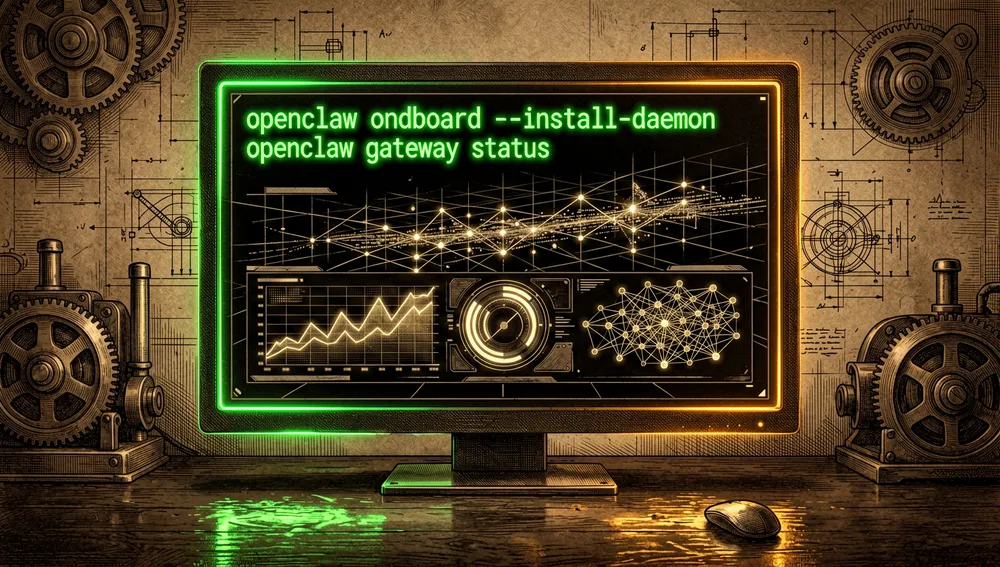
openclaw onboard --install-daemon
openclaw gateway status
openclaw dashboard
The command openclaw onboard --install-daemon selects a model provider, requests a key, and configures the Gateway. openclaw gateway status verifies that the process is listening, usually on port 18789; openclaw dashboard opens the panel. The documentation also refers to configuration of models, tools, isolated spaces, plugins, skills, and channel pairing to control who can contact the agent.
The architecture observable in the repository is extensive: directories for applications, extensions, configuration, deployment, skills, tests, interface, and packages. The main language declared by the API is TypeScript. This is not sufficient evidence to promise uniform compatibility of each channel, model, or extension; these must be verified against the documentation of the specific integration.
Official and Semi-Official Status
The verifiable official status is that of the project itself: the README attributes open development to the OpenClaw Foundation, and openclaw/clawhub is described on GitHub as its skill and plugin registry. Therefore, ClawHub is infrastructure for the OpenClaw ecosystem, not a store from a model provider.
No source was found to demonstrate that Anthropic, OpenAI, Google, or Microsoft have accepted OpenClaw as a product in an official market of those providers. Nor should it be confused that the agent can be configured with multiple providers with a certification or endorsement from those providers.
If there are third-party integrations with manufacturer status: the GitHub search describes larksuite/openclaw-lark as an official plugin for Feishu/Lark, DingTalk-Real-AI/dingtalk-openclaw-connector as an official connector for DingTalk, and WecomTeam/wecom-openclaw-plugin as an official plugin for WeCom. This means that these repositories are presented as maintained by their respective teams, not that OpenClaw as a whole is endorsed by all those companies.
The Ecosystem
Organization Repositories
The openclaw organization is no longer limited to the core. These projects and figures come from the GitHub API consulted on July 31, 2026:
openclaw/clawhub: skill and plugin registry; 9,251 stars and 1,434 forks.openclaw/gogcli: command-line interface for Google Workspace; 8,239 and 662.openclaw/acpx: stateless ACP client with a graphical user interface; 3,082 and 314.openclaw/wacli: synchronizes, searches, and sends WhatsApp messages; 2,671 and 331.openclaw/clawsweeper: weekly reviews issues and pull requests to suggest closures; 1,954 and 286.openclaw/lobster: local engine for typed macros that converts skills and tools into composable flows; 1,259 and 283.openclaw/crabbox: prepares a box, synchronizes differences, and runs the test suite; 1,240 and 149.openclaw/agent-skills: collection of skills for agents; 1,028 and 81.openclaw/openclaw-ansible: hardened installation with Tailscale, UFW firewall, Docker, and Ansible; 597 and 247.openclaw/shellbench: test bench that scores a harness set, configuration, and model; 133 and 27.
There are also pieces of operation and compatibility: openclaw/clawpatch for reviewing code, fixing bugs, and preparing pull requests; openclaw/crabfleet for controlling agent executions; openclaw/plugin-inspector for simulating and testing plugins; and openclaw/crabpot as a community plugin compatibility bank. Their descriptions were retrieved from the organization’s API.
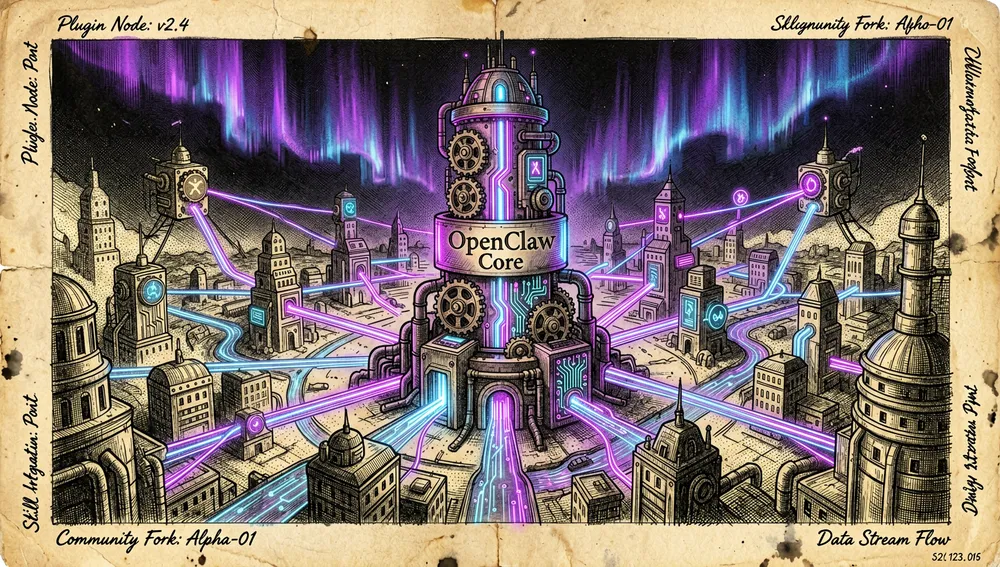
Community, Adaptations, and Translations
The GitHub repository search shows a large and heterogeneous ecosystem. These are third-party extensions or resources; they are not attributed official support unless their own description states it:
VoltAgent/awesome-openclaw-skills: community index of over 5,400 skills filtered from the official registry; 51,638 stars, 4,980 forks.hesamsheikh/awesome-openclaw-usecases: community collection of use cases; 31,661 and 2,722.Gen-Verse/OpenClaw-RL: training agents by conversing with them; 5,617 and 608.xianyu110/awesome-openclaw-tutorial: tutorial in Chinese for installation, configuration, and practical cases; 4,538 and 682.AlexAnys/awesome-openclaw-usecases-zh: use cases in Chinese with local adaptations; 4,402 and 461.1186258278/OpenClawChineseTranslation: translation into Chinese, panel, and deployment guide; 3,816 and 482.BytePioneer-AI/openclaw-china: Chinese integration for Feishu, DingTalk, QQ, WeCom, and WeChat; 3,960 and 345.TianyiDataScience/openclaw-control-center: local control center; 4,000 and 618.abhi1693/openclaw-mission-control: panel for orchestrating and collaborating agents on the Gateway; 4,101 and 825.FreedomIntelligence/OpenClaw-Medical-Skills: library of medical skills; 2,899 and 407.slowmist/openclaw-security-practice-guide: hardening guide focused on the agent itself; 2,859 and 195.comet-ml/opik-openclaw: plugin that exports traces, cost, tokens, and errors to Opik; 705 and 88.paperclipinc/openclaw-operator: Kubernetes operator for instances with security, observability, and lifecycle; 392 and 69.
The entries in Chinese are described here in Spanish to keep the document readable; repository names are preserved because they are technical identifiers. The search does not demonstrate that they are direct forks of the core: the API classifies them as their own repositories, not as fork of the main repository.
Repository Numbers
Measurement: July 31, 2026, API and GitHub page.
| Metric | Value |
|---|---|
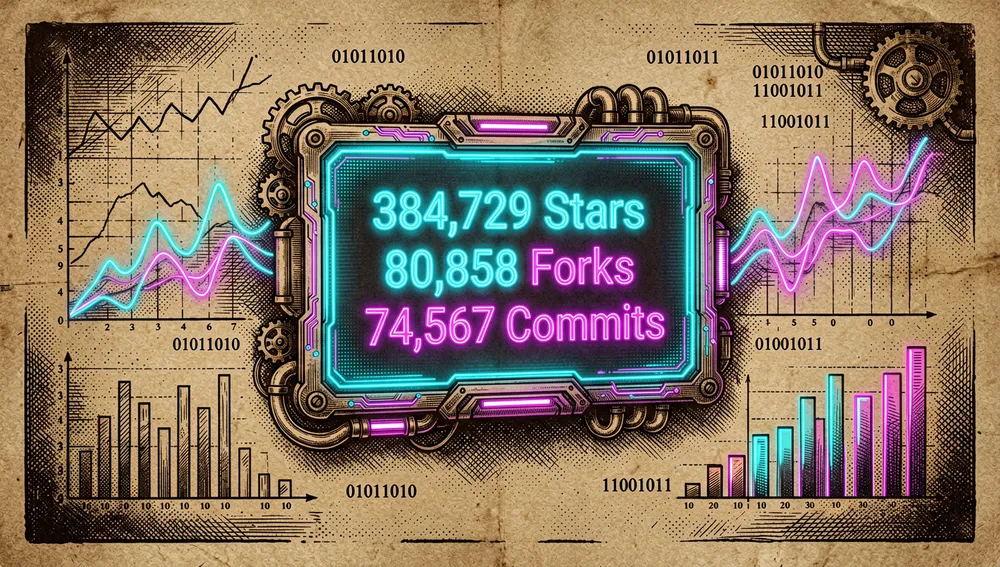
| Stars | 384,729 |
| Forks | 80,858 |
| Actual subscribers | 1,762 |
| Commits | 74,567 |
| Open issues indicated by the API | 5,754 |
| Main language | TypeScript |
| Repository creation | November 24, 2025 |
| Last metadata update | July 31, 2026 |
| Last visible commit | July 31, 2026: fix(telegram): bound ingress worker shutdown (#116978) |
| Last release | v2026.7.2-beta.5, July 28, 2026 |
The repository page showed 74,567 commits. The largest contributors returned by the API for contributions were steipete (37,847), vincentkoc (11,691), shakkernerd (3,965), obviyus (1,863), and github-actions[bot] (1,051). The watchers_count field of the general GitHub response replicates the stars; therefore, subscribers_count is reported as subscribers. open_issues_count may mix issues and pull requests, so it does not necessarily equate to exclusive issues.
The API classified the license as NOASSERTION, although the README shows a MIT badge. This discrepancy is made explicit: no definitive license is claimed without resolving it against the current license text.
How to Contribute
The repository documents a particularly strict process due to its volume of contributions:
- For bugs and small fixes, open a pull request; for features or architecture, first open an issue or consult Discord.
- Do not submit changes that are only refactoring or exclusive test/CI changes for failures that already exist in
main, unless expressly requested by maintenance. - In non-trivial work or AI-generated work, create or reuse an issue and link it from the pull request.
- Explain the problem, impact on users, and evidence of validation; use the pull request template.
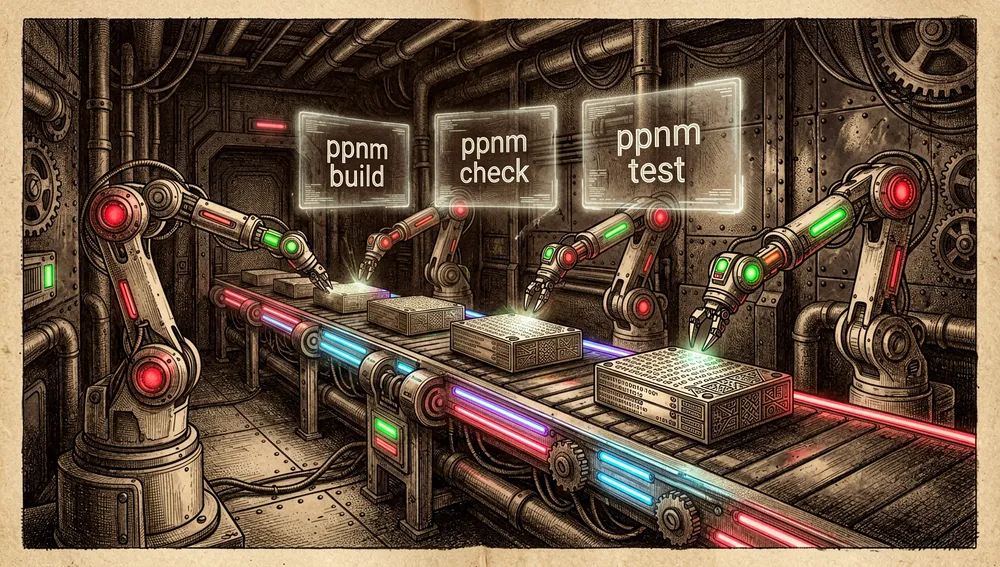
- Test with a local instance and run
pnpm build && pnpm check && pnpm test; for extensions, use the extension test lanes and corresponding contracts. - Keep requests focused, with correct CI, and, if they are visual, before-and-after captures.
The limit is 20 open requests per author; exceeding it automatically labels and closes the requests. AI-based changes are accepted if they are marked as AI-assisted, include evidence, and, when available, run the autoreview skill. New skills go to ClawHub. This is a contribution policy, not a guarantee that all proposals will be accepted.
How the Community Received It
The reception is extraordinarily visible but not unanimously optimistic. There are specific cases and documented objections:
- The name change announcement on Hacker News, thread 46820783, was posted by ed and reached 667 points and 382 comments. The linked source is Steinberger’s announcement and confirms that the change responded to Anthropic’s request regarding the name Clawd.
- Thread 46931805, posted by novoreorx, had 340 points and 513 comments under the title “OpenClaw is changing my life.” In the discussion, RealityVoid said that he sees utility in using these systems to start tasks, explore unknown code, and maintain consistency in details; he presented it as value conditional on knowing how to drive and isolate the tasks. TheAceOfHearts valued being able to describe system restrictions and obtain a functional environment to begin iterating.
- In that same thread, aeldidi objected that models work for repetitive or local tasks but fail in difficult development without instructions and intensive supervision; he recounted tests in a C# and TypeScript monorepository. This is a criticism of the reliability of agents, not a controlled measurement of OpenClaw.
- Thread 47479962, posted by fs_software, obtained 397 points and 297 comments and critically raised security risks. The warning should not be read as a specific vulnerability demonstrated by the thread; it confirms that security, permissions, and Gateway exposure are central concerns in public conversation.
- The tension with providers was also a major topic: thread 47633396, published by firloop, reached 1,099 points and 827 comments about Anthropic’s restrictions on the use of Claude Code subscriptions with OpenClaw. This is evidence of a debate about provider terms of use, not a claim that OpenClaw had official endorsement from Anthropic.
OpenClaw vs. Other Proposals
| Proposal | Verifiable Match | Verifiable Difference |
|---|---|---|
HKUDS/nanobot | Personal agent framework, self-hosted, open source, with tools, memory, MCP, multi-agent flows, and chat applications. | Its GitHub API describes it as ultra-lightweight and written primarily in Python; OpenClaw declares TypeScript and a platform with Gateway, applications, and a very extensive catalog of channels. |
composio-community/secure-openclaw | Permanent personal assistant for messaging platforms with memory, reminders, and integrations. | Its own description presents it as “like OpenClaw” and announces more than 500 integrations; the retrieved source does not demonstrate that it is a port of the core or that it shares its Gateway. |
clawdotnet/openclaw.net | Personal AI runtime self-hosted inspired by the same problem space. | The GitHub description defines it as a .NET runtime compatible with NativeAOT; it is not the TypeScript repository of the Foundation. |
The choice depends less on stars than on deployment: OpenClaw concentrates channels, Gateway, applications, and its own skill registry; Nanobot declares a lighter alternative in Python. The other two comparisons are limited to their retrieved descriptions and do not prove complete functional equivalence.
Use Cases and Who This Repository Can Help
- People who want a self-hosted assistant on their own devices or server can configure the Gateway, a model provider, and the channels they already use—such as WhatsApp, Telegram, Slack, or Discord—and check the service with
openclaw gateway statusand the panel. - Administrators who need to deploy and observe the agent in a reproducible way can evaluate the pieces of the ecosystem such as
openclaw/openclaw-ansible,paperclipinc/openclaw-operator,openclaw/crabbox,openclaw/shellbench, andcomet-ml/opik-openclawfor hardening, Kubernetes, testing, evaluation, and traces. They do not replace network segmentation, secret management, or permission review, and prompt injection remains a recognized risk by the project. - Those who automate personal tasks or publication flows from messaging can create or install skills and plugins using ClawHub and activate them from a persistent channel. Each skill must be reviewed, receive only the necessary tools, and produce outputs that are validated before being sent or published.
Resources
- Repository: https://github.com/openclaw/openclaw
- Documentation and installation: https://docs.openclaw.ai/start/getting-started
- Launch and name change announcement: https://openclaw.ai/blog/introducing-openclaw
- Foundation: https://openclaw.org
- Official skills and plugins: https://github.com/openclaw/clawhub
- Contribution guide: https://github.com/openclaw/openclaw/blob/main/CONTRIBUTING.md
- Discord community: https://discord.gg/clawd
- Reviews and debate: https://news.ycombinator.com/item?id=46820783, https://news.ycombinator.com/item?id=46931805, https://news.ycombinator.com/item?id=47479962, https://news.ycombinator.com/item?id=47633396
Note: This article combines the README, documentation, the OpenClaw announcement, the contribution guide, the GitHub API and page, and Hacker News results consulted on July 31, 2026. The figures change over time.
Comments