

vibe-coding-cn: the Chinese vibe-coding guide its own issues accuse of being a copy
2025Emma/vibe-coding-cn · 22,991★ · 2,420 forks
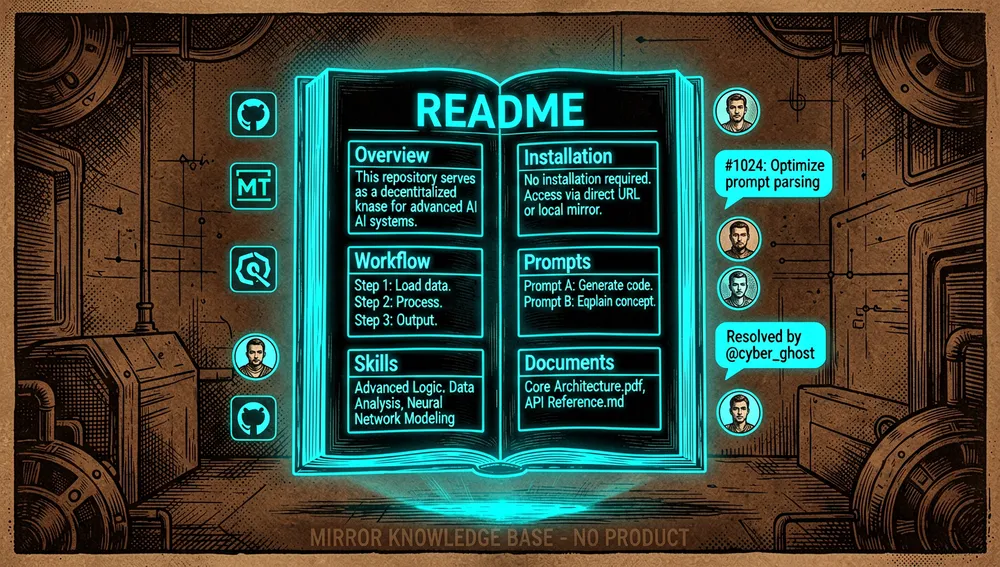
2025Emma/vibe-coding-cn is a Chinese-language knowledge base titled “Vibe Coding 指南” (Vibe Coding Guide): a repository bundling a methodology for AI-paired programming, hundreds of organized prompts, a set of skills, and a small prompt-conversion tool. It isn’t an installable product, a server, or a public library: its value sits in readable content (methodology, prompts, skills, documentation) and a single executable script for managing the prompt library. What defines this repository isn’t its technical content — which comes from elsewhere — but its provenance: it’s a copy of the Chinese version maintained by tukuaiai (now tradecatlabs), and that circumstance explains both its 22,000+ stars and the open criticism it draws in its own issues.
Origin
This repository’s content wasn’t born here — it traces back to an English-language guide:
EnzeD/vibe-coding— “Ultimate Guide to Vibe Coding V1.2.2,” created by Nicolas Zullo (@NicolasZu) on March 12, 2025. It’s the original English-language work (4,782 stars and 2,064 forks, measured September 10, 2026). Its README explicitly states Zullo’s authorship and creation date.tradecatlabs/vibe-coding-cn(formerlytukuaiai/vibe-coding-cn, id 1102195393) — the Chinese adaptation and expansion, created November 23, 2025 as a fork of the original guide. It shows 16,149 stars and 1,618 forks; its landing page links tox.com/123olpand its README credits the project to tukuaiai, Nicolas Zullo, and 123olp.2025Emma/vibe-coding-cn(this repository) — created on December 17, 2025 by account2025Emma(account opened January 23, 2025, 103 followers, 10 public repositories, no name or bio). It’s a copy oftukuaiai’s version: all 130 of its commits are signed bytukuaiai, the first being “Initial commit: Synchronize local state with remote” (December 13, 2025). The README still links contributor badges, issues, and images totukuaiai/vibe-coding-cn, and repeats the same trio of authors (tukuaiai, Nicolas Zullo, 123olp).
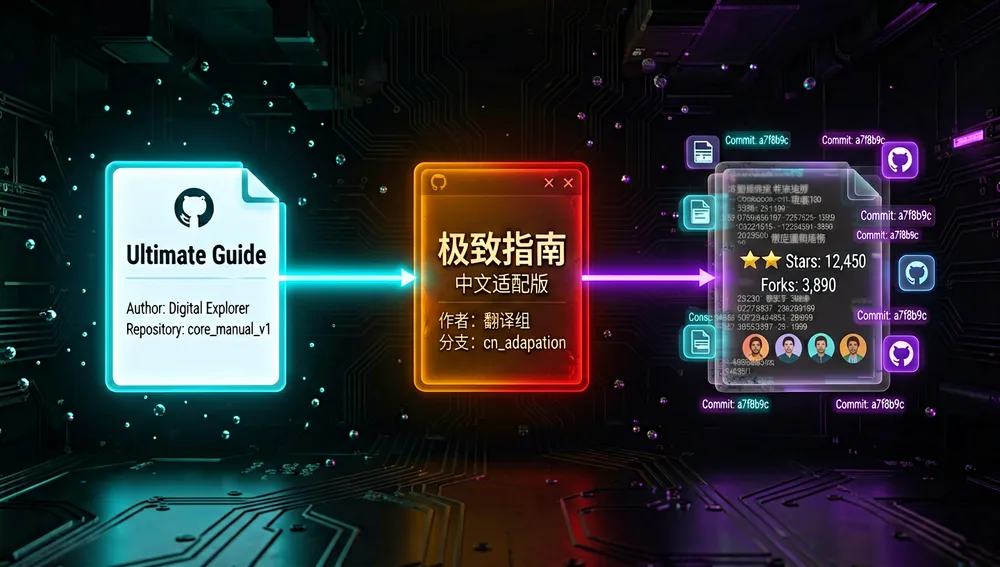
The README itself states it plainly at the bottom of its “Getting Started” section: that installation section is “from the original author, I didn’t write it; I only updated it to what I believe is the best model.” The guide has evolved across model versions: its README documents the progression Grok 3 → Gemini 2.5 Pro → Claude / Codex. In short, this repository is a re-hosted mirror of a translation, not the method’s source.
Philosophy and principles
The README distills its philosophy into a central maxim and a four-tier framework:
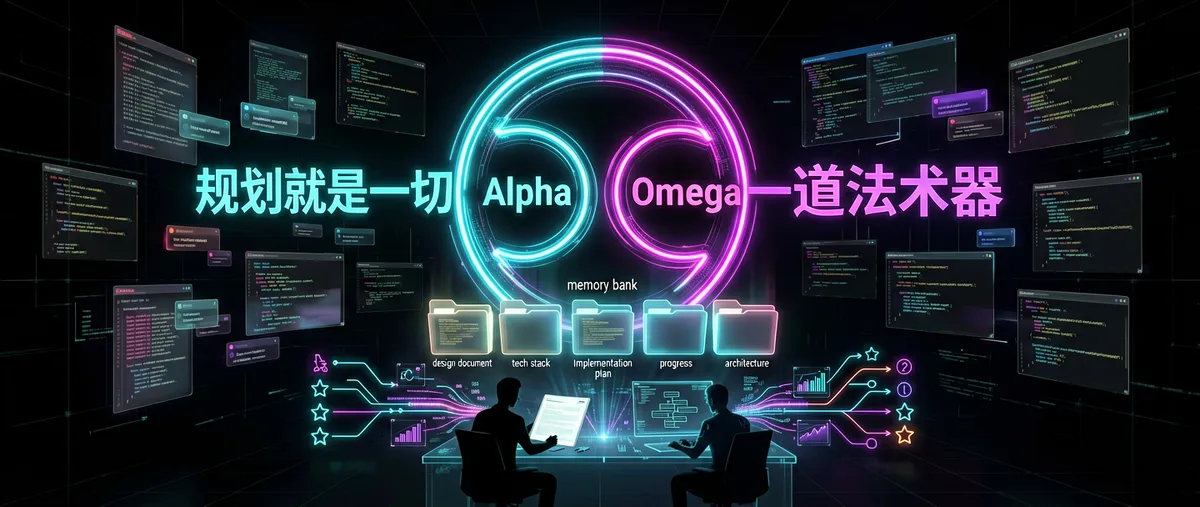
- Maxim: “规划就是一切” (Planning is everything). Don’t let the AI plan autonomously, or the code will become an unmanageable mess. The repo’s operational definition is: Vibe Coding = planning by design + fixed context + AI-paired execution.
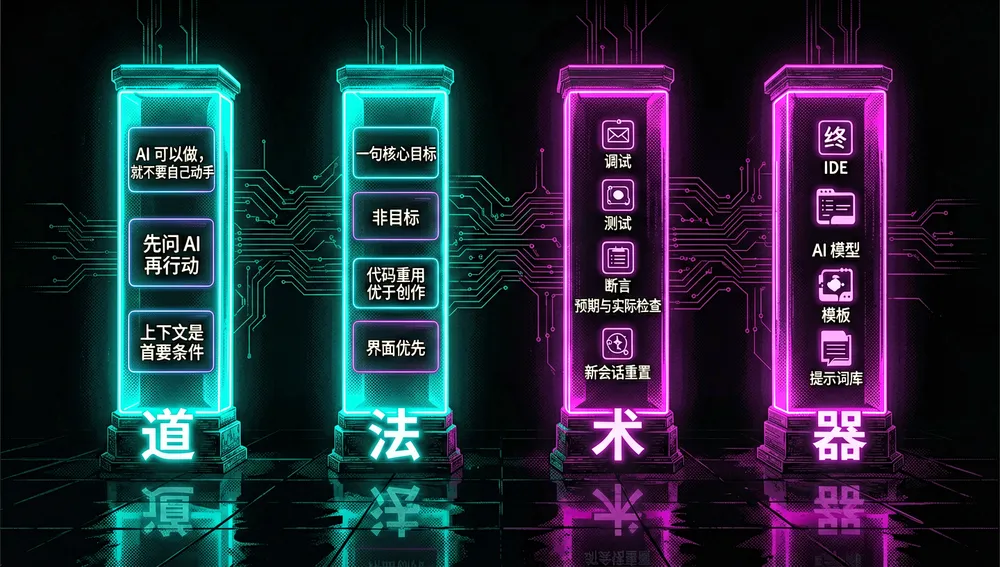
- The 道法术器 (Dao–Fa–Shu–Qi) framework, borrowed from classical Chinese structure:
- 道 (Way) — principles: “if the AI can do it, don’t do it by hand”; “ask the AI about every problem”; context is the top-priority element (garbage in, garbage out); structure before code; Occam’s razor; the Pareto principle (the important 20%).
- 法 (Method): a one-sentence objective + non-goals; “if it can be copied, don’t write it” (reuse existing repos); read the official docs first and hand them to the AI; divide by responsibility; interface first, implementation second; touch one module at a time; documentation is the context.
- 术 (Technique): be explicit about what can and can’t change; debug only with “expected vs. actual + minimal reproduction”; tests can be written by the AI but assertions are reviewed by the human; open a new session when the code grows.
- 器 (Tools): IDE/terminal, AI models, dev tools, and templates.
- The α/Ω methodology (recursive self-optimization): a generative “mother” prompt (α) and an optimizer (Ω) form a recursive loop: Ω optimizes α, α generates the target prompts, and the result feeds back in for the next iteration. The repo links an internal document titled “A Formalization of Recursive Self-Optimizing Generative Systems.”
- Model hierarchy: the README ranks models into three tiers and recommends using only the top one for complex tasks (in its reading:
codex-5.1-max-xhigh,claude-opus-4.5-xhigh,gpt-5.2-xhigh).
The README also warns that “the following experiences aren’t universally applicable; adopt them dialectically according to context.”
How it works
The documented flow (a mirror of the original guide) is a planned, auditable cycle:
- Design document (GDD) or PRD: ask the AI for a
game-design-document.md(or a PRD for an app) in Markdown; review it and keep it deliberately simple. - Tech stack + rules (
CLAUDE.md/AGENTS.md): ask for the “simplest but robust” stack and savetech-stack.md; use/initin Claude Code or Codex CLI to generate the rules; review them and mark critical rules as “Always” (e.g., “always readmemory-bank/architecture.mdand the design document before writing code”). - Implementation plan: with the GDD and stack, generate a Markdown plan of small, concrete steps; each step includes a verification test; no code, just instructions; focus on the base game first.
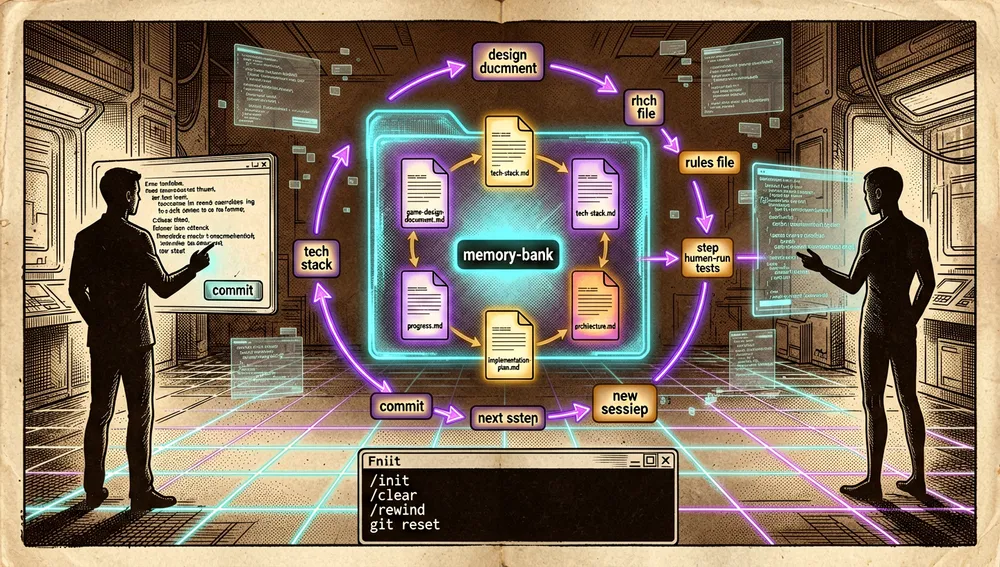
- Memory bank (
memory-bank): a project folder with five files:game-design-document.md,tech-stack.md,implementation-plan.md,progress.md(empty, for logging finished steps), andarchitecture.md(empty, for noting each file’s role).
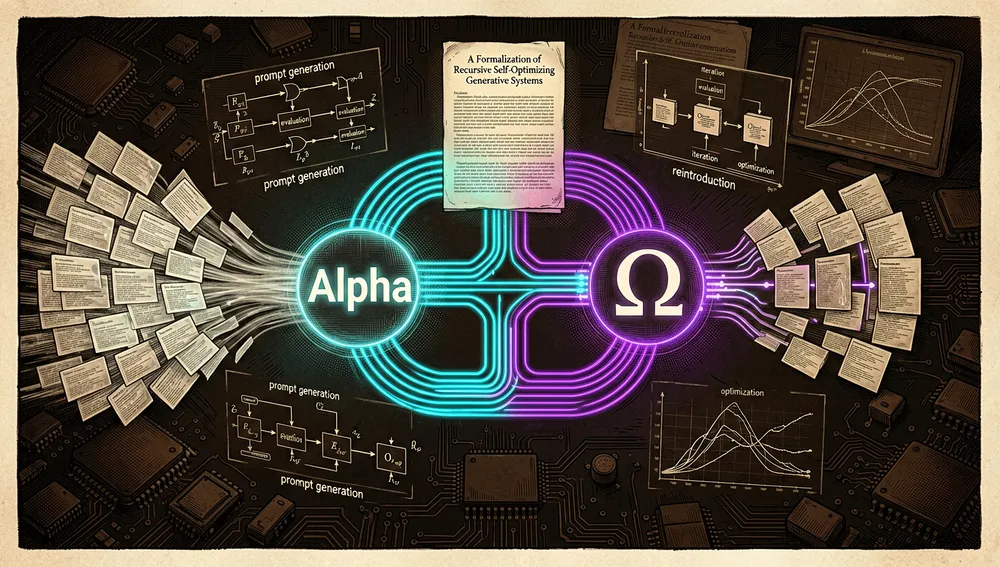
- Coding step by step: read the full
memory-bank, ask for clarification (the AI usually asks 9–10 questions), execute step 1; the human runs the tests; once validated, commit, open a new chat (/clearor/new), and continue with step 2; repeat until the plan is exhausted. - Adding detail: for every significant feature, create a
feature-implementation.mdwith short steps and tests. - Fixing errors and getting unstuck:
/rewindin Claude Code (orgit resetin Codex); paste the browser console error (F12); for serious blockers, compress the whole repo with RepoPrompt/uithub and ask the AI for help. - Tricks: thinking-effort levels
think < think hard < think harder < ultrathink;/compactto shorten context; and, at your own risk,--yolo/--dangerously-skip-permissionsto disable confirmations.
The repo’s actual content is organized under i18n/zh/prompts/ (subfolders system_prompts, coding_prompts, assistant_prompts, user_prompts), i18n/zh/skills/ (including a claude-skills meta-skill that generates skills), i18n/zh/documents/ (methodology, templates, and tutorials), and libs/ (the prompt tool and the localization tool).
The ecosystem
This repository’s “ecosystem” is mostly its lineage and internal tooling, not a plugin community around it:
EnzeD/vibe-coding(Nicolas Zullo) — the original English work; 4,782 stars, 2,064 forks.tradecatlabs/vibe-coding-cn(formerlytukuaiai/vibe-coding-cn) — the Chinese version this repo copies from; 16,149 stars, 1,618 forks.2025Emma/vibe-coding-cn(this repository) — 22,972 stars, 2,416 forks.- Notable forks of this repo:
MaoTouHU/vibecodingcn(303 stars, the most visible); plus dozens of 1-star forks (e.g.Miranda-2000/vibe-coding-cn,zhanggan0607-blip/vibe-coding-cn,viasyllable/vibe-coding-cn, among others). - Internal repo tools (same project):
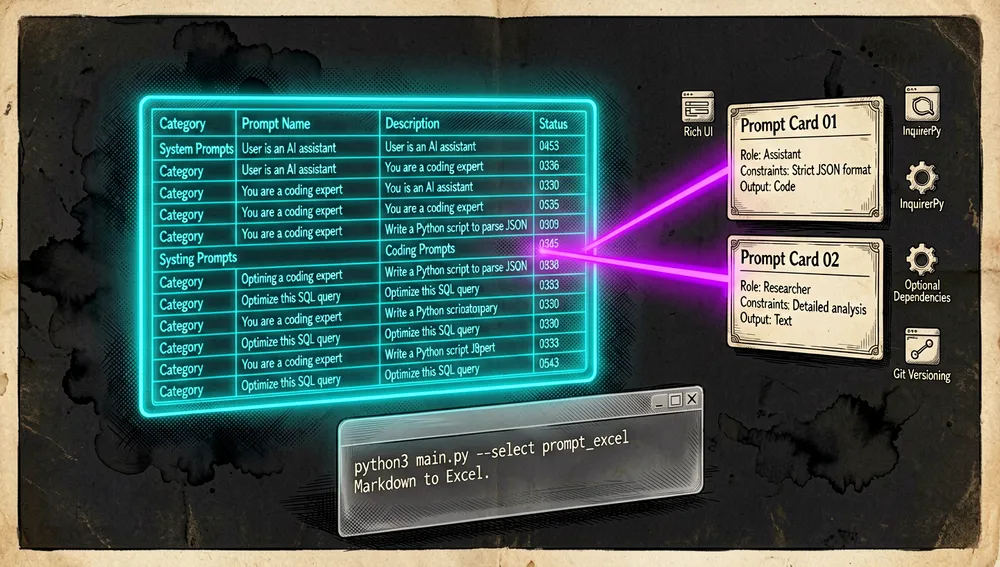
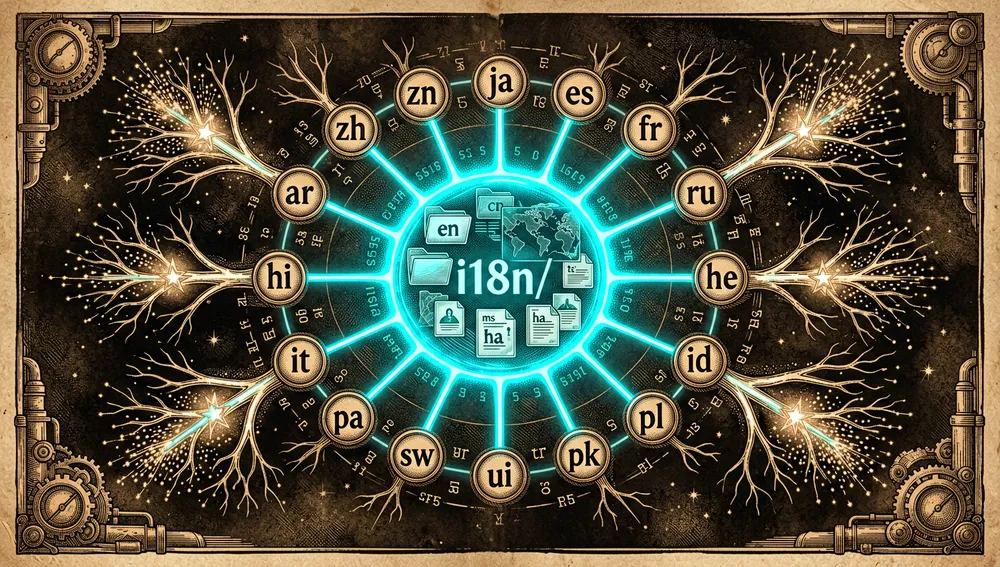
libs/external/prompts-library/— a prompt converter between Excel (.xlsx) and Markdown; andlibs/external/l10n-tool/(mentioned in commit history) — translation maps between languages. - Localization: the repo maintains 27 language directories under
i18n/(zh, en, ja, ko, es, fr, de, ru, ar, bn, fa, he, hi, id, it, ms, nl, pl, pt, sw, ta, th, tr, uk, ur, vi, ha).
- External repos and tools linked by the README:
x1xhlol/system-prompts-and-models-of-ai-tools(a library of system prompts from other products) andyusufkaraaslan/Skill_Seekers(a skill generator); also products like Superwhisper, BrowserTools, RepoPrompt, uithub, and Zread. (Star counts for these two linked repos weren’t measured in this research.) - Online prompt library: a Google Sheets spreadsheet with hundreds of copy-paste-ready prompts (linked from the README).
Official and semi-official status
None. This repository hasn’t entered any official marketplace, has no vendor backing, and isn’t a de facto standard: it’s a community knowledge base under the MIT license, with no releases, no blog, no package-registry channel, and an empty GitHub description. The “canonical” reference for the method is, in fact, Nicolas Zullo’s original English guide (EnzeD/vibe-coding) and its Chinese adaptation by tukuaiai/tradecatlabs; the 2025Emma copy has no official status of its own, and its own documentation keeps deferring to tukuaiai’s issues and contributors.
Quick-start guide
Installation and first run
- It’s a “read-first” repo. There’s no
pip installor binary to install: you clone it or read it online. Online reading is available at https://zread.ai/tukuaiai/vibe-coding-cn/1-overview (AI-assisted reading of the repo); the source lives ati18n/zh/. - To apply the method you need one of the two agents the flow recommends installed: Claude Code (
npm i -g @anthropic-ai/claude-code) or Codex CLI (npm i -g @openai/codex) — both commands come from the original English guide this repo replicates. The flow works the same in VSCode extensions as in the terminal. - The only executable component is the prompt converter. In the repository:
Requirements: Python 3;cd libs/external/prompts-library python3 main.py # interactive mode: choose the source python3 main.py --select "prompt_excel/<file>.xlsx" # Excel → Markdown python3 main.py --select "prompt_docs/<directory>" # Markdown → ExcelrichandInquirerPyare optional (fall back to a text interface if absent).
Common workflows
- Start a project: ask the AI for a
game-design-document.md(orPRD.mdfor apps) → ask fortech-stack.md→/initto generateCLAUDE.md/AGENTS.md→ implementation plan → create thememory-bankfolder with the five files. Everything stays as Markdown versioned in Git. - Execute a step: “read the whole
memory-bank, do step N; I’ll run the tests; don’t start step N+1 until I validate it”; once validated, commit and/clear; log the result inprogress.mdand architecture updates inarchitecture.md. - Manage the prompt library: use
python3 main.py --select …to convert the collection between Excel and Markdown (e.g., to version-control in Git a corpus kept in a spreadsheet). - Debug: if a prompt breaks the project,
/rewindin Claude Code orgit resetin Codex; copy the console error (F12) and paste it; if stuck,RepoPrompt/uithubto compact the repo and ask the AI for help.
Essential configuration
memory-bank/— the five files that anchor long-lived context (design, stack, plan, progress, architecture); the method’s central piece.CLAUDE.md/AGENTS.md— the rules the agent must read; critical ones are marked “Always.”i18n/zh/prompts/system_prompts/— system prompts that constrain the agent’s behavior.i18n/zh/prompts/coding_prompts/— workflow-chain prompts (requirements, plan, execution).libs/external/prompts-library/scripts/config.yaml— converter configuration (source/destination folders and format mapping).
Common pitfalls and fixes
- Confusing provenance: every commit is signed by
tukuaiaieven though the repo lives under2025Emma, and the README links issues/badges totukuaiai. → Before citing or relying on the repo, verify which is the canonical source (EnzeD/vibe-codingandtradecatlabs/vibe-coding-cn). - Outdated content: issue #4 flags missing recent tools (Claude Code, Codex, Antigravity). → Cross-check the recommended model version against current reality before copying it.
- A game tutorial disguised as a general guide: the original flow is game-oriented (GDD); for apps, the GDD must be replaced with a PRD (the README’s own FAQ clarifies this).
- Mixed voices: the README blends the original author’s text with the translator’s additions (the repo itself acknowledges this). → Don’t assume all content is from the same author.
- Issue spam: issue #4 contains a comment promoting a Cursor licensing service. → Don’t treat the issue log as a reliable technical source.
- No description or releases: the GitHub description is empty and there are no tags; the only status signal is the commit history.
Integrations and migration
- Agents: the method integrates with Claude Code and Codex CLI (CLI and VSCode extensions); the README also cites Cursor, Gemini CLI, Kiro, Antigravity, Copilot, Qwen, GLM, and Kimi K2 as model/service alternatives.
- MCP: the README documents configuring Augment MCP (
auggie-mcp), Augment’s context engine, in the tutorials folder. - Migrating from the original English version (
EnzeD/vibe-coding): since this repo is its translation/expansion, “migrating” to it just means readingi18n/zh/; to go back to the canonical version, readi18n/en/or cloneEnzeD/vibe-codingdirectly. - Adjacent tools: Zread (repo reading), NotebookLM (material summarization), RepoPrompt/uithub (compacting a repo into a single file to ask the AI for help).
Current metrics
Measured: September 10, 2026, GitHub API.
| Metric | Value |
|---|---|
| Stars | 22,972 |
| Forks | 2,416 |
| Subscribers (real watchers) | 104 |
| Commits | 130 |
| Open issues per the API | 8 |
| Primary language | Python (34,941), Shell (28,256), Makefile (842) |
| License | MIT |
| Default branch | main |
| Created | December 17, 2025 |
| Last push | December 17, 2025 |
| Last metadata update | September 10, 2026 |
| Latest release | None (no tags/releases) |
Caveats: the API’s watchers_count field mirrors the stars, so subscribers_count (104) is reported separately as the real watchers. The 130-commit count was obtained from the API’s link pagination header (last page). The API exposes open_issues_count (8), which may include open pull requests and isn’t an issues-only count; the first page of the issue list shows 10 items between issues and PRs. The commits API’s author field signs all 130 commits on main as tukuaiai and none as 2025Emma; the contributors endpoint (unanonymized) attributes 34 contributions to tukuaiai.
Community reception
The documented reception is predominantly critical, and it appears explicitly in the repository’s own issue log:
- Issue #8 “哗众取宠,污染数据” (closed): little-KaoKao argues that “the project plagiarizes, it’s chaotic, it rides domestic social-media trending topics for traffic, it stacks up useless stars, and it pollutes the open-source ecosystem.” Another user, potato-vita, asks them to state their opinion without leaning on AI.
- Issue #5 “直接copy?” (direct copy?) (open): whx156580 asks “so which one is the original?”; zivonx writes “this copy has even more stars 😂”; Felyx-Fu replies ”???”
- Issue #2 “建议加一下原作者的链接” (suggestion: add a link to the original author) (open): bgzo recounts “today I got totally confused, I thought the author forced a revert, and it turns out they’re two different people… and this one has even more stars, unbelievable 😂”; LynPtl adds “that’s why this repo is so painful to read, I spent a long time not understanding the thread and the README is a mess”; dkpress concludes “that’s why it looks so weird, turns out it steals from others, disgusting.”
- Issue #4 “There are more new tools, like Claude Code, Codex, Antigravity, etc.” (open): a complaint that the content is outdated; the thread also contains a spam comment promoting a Cursor licensing service.
- Issue #7 (open): “add a description to improve discoverability” — a sign the repo lacks a description.
As broader context (not attributable to this repo): the concept of “vibe coding” generated large Hacker News threads (e.g., Simon Willison, “Vibe coding and agentic engineering are getting closer than I’d like,” 787 points / 885 comments, item 48037128; and “The cult of vibe coding is dogfooding run amok,” 616 points / 512 comments, item 47664912). Neither thread references this repository, so no reception for 2025Emma/vibe-coding-cn is inferred from them.
No Product Hunt launch, vendor endorsement, or verifiable Reddit thread was detected (the Reddit API returned a 403 block during this research, so its total absence isn’t asserted — only that no specific thread could be confirmed).
Comparison with similar projects
| Project | Verifiable overlap | Verifiable difference |
|---|---|---|
EnzeD/vibe-coding (original, Nicolas Zullo) | Same planning methodology (GDD/PRD → stack → plan → memory-bank → tested steps). | It’s the original English-language source (4,782 stars); the Chinese version copies and expands this content. |
tradecatlabs/vibe-coding-cn (formerly tukuaiai/vibe-coding-cn) | It’s the Chinese version this repo replicates; same credits (tukuaiai, Nicolas Zullo, 123olp). | 16,149 stars; it’s the “other” version this repo’s issues flag as canonical. |
x1xhlol/system-prompts-and-models-of-ai-tools | Referenced by the README as a system-prompts library. | Collects prompts from other AI products; it’s not a workflow methodology. |
yusufkaraaslan/Skill_Seekers | Referenced by the README as a skill generator. | A tool for generating skills; this repo stores already-written skills. |
obra/superpowers (adjacent, not a direct competitor) | Both impose a disciplined process on a code agent. | Superpowers is an installable plugin with executable skills and hooks; this repo is a knowledge base of prompts and text. |
The most useful comparison is by origin legitimacy: for the canonical method, EnzeD/vibe-coding and tradecatlabs/vibe-coding-cn are better documented; 2025Emma/vibe-coding-cn’s value lies in being a mirror with more languages and a prompt corpus, not in being the source.
How to contribute
CONTRIBUTING.md documents a simple flow (and, again, links to tukuaiai’s issue tracker, not 2025Emma’s):
- Report bugs or suggestions via Issues, describing the problem in detail.
- Proposing changes (PR): (1) fork the repo; (2)
git checkout -b feature/YourAmazingFeature; (3) make the changes; (4)git commit -m 'feat: Add some AmazingFeature'; (5)git push origin feature/YourAmazingFeature; (6) open a Pull Request. - There’s a
CODE_OF_CONDUCT.mdyou’re asked to read before contributing.
No PR template or test/evaluation harness for the content was observed (it’s a documentation repository); the only real code (prompts-library) has a Makefile and requirements.txt. Since the contribution docs defer to tukuaiai, a contributor should clarify which repository their PR targets.
Use cases and who this repository can help
- Spanish- or Chinese-speaking developers looking for a planning-oriented AI-paired programming flow, with a large curated prompt library (
system/coding/assistant/user) and thememory-bankpattern for keeping context stable across long sessions. - Anyone who’d rather copy tested prompts than write them: the
i18n/zh/prompts/corpus and the online Google spreadsheet offer hundreds of prompts ready to paste into Claude Code or Codex CLI. - Teams wanting a local, forkable, MIT-licensed reference for Claude Code / Codex CLI workflows (the README documents both plus alternatives like Cursor and Gemini CLI) that they can clone and adapt without depending on an account.
- Students and researchers of the “vibe coding” methodology looking for a concrete, documented example of the 道法术器 framework and the α/Ω meta-methodology, with an architecture diagram and an observability-metrics table (prompt hit rate, turnaround time, review capacity).
- Maintainers of a prompt corpus in Excel who need to convert it to Markdown for Git versioning (or vice versa): the
prompts-librarytool (main.py) covers exactly that conversion, interactively or with the--selectflag to automate it. - A note on choosing the right source: for the canonical version of the method, Zullo’s original guide (
EnzeD/vibe-coding) and the Chinese version bytukuaiai/tradecatlabsare better documented; this repo’s specific value is as a mirror with more languages and a prompt corpus, not as the origin.
Resources
- Repository: https://github.com/2025Emma/vibe-coding-cn
- Documentation: the main README (https://github.com/2025Emma/vibe-coding-cn) and the
i18n/zh/documents/folder - Original version (English): https://github.com/EnzeD/vibe-coding
- Original Chinese version: https://github.com/tradecatlabs/vibe-coding-cn (formerly
tukuaiai/vibe-coding-cn) - Official skills (from the repo): https://github.com/2025Emma/vibe-coding-cn/tree/main/i18n/zh/skills (including the
claude-skillsmeta-skill) - Online prompt library (Google Sheets): https://docs.google.com/spreadsheets/d/1ngoQOhJqdguwNAilCl1joNwTje7FWWN9WiI2bo5VhpU/
- AI-assisted repo reading (Zread): https://zread.ai/tukuaiai/vibe-coding-cn/1-overview
- Community / Telegram: https://t.me/glue_coding (group) and https://t.me/tradecat_ai_channel (channel)
- Original author: https://x.com/NicolasZu
- Community reviews / issues (incl. #2, #4, #5, #8): https://github.com/2025Emma/vibe-coding-cn/issues
- “Vibe coding” concept context on HN (don’t reference this repo): https://news.ycombinator.com/item?id=48037128 , https://news.ycombinator.com/item?id=47664912
- Package registries: N/A (doesn’t publish on npm/PyPI/crates.io; only a local
prompts-libraryscript) - Official blog or changelog: N/A (no releases or blog detected)
Methodology note: this article draws on the repository’s README and CONTRIBUTING.md, the GitHub API (repo, commits, contributors, issues, and forks), the Hacker News/Algolia API, and issue responses, consulted on September 10, 2026. Figures change over time; content provenance (original → Chinese version → this copy) is verified from the repos and commits retrieved in this research.
Comments