

Paperclip: the control plane for agent teams
paperclipai/paperclip · 83,780★ · 15,155 forks
Everything you need to know about paperclipai/paperclip: an open-source application for organizing, supervising, and governing work carried out by multiple AI agents.
What Paperclip is
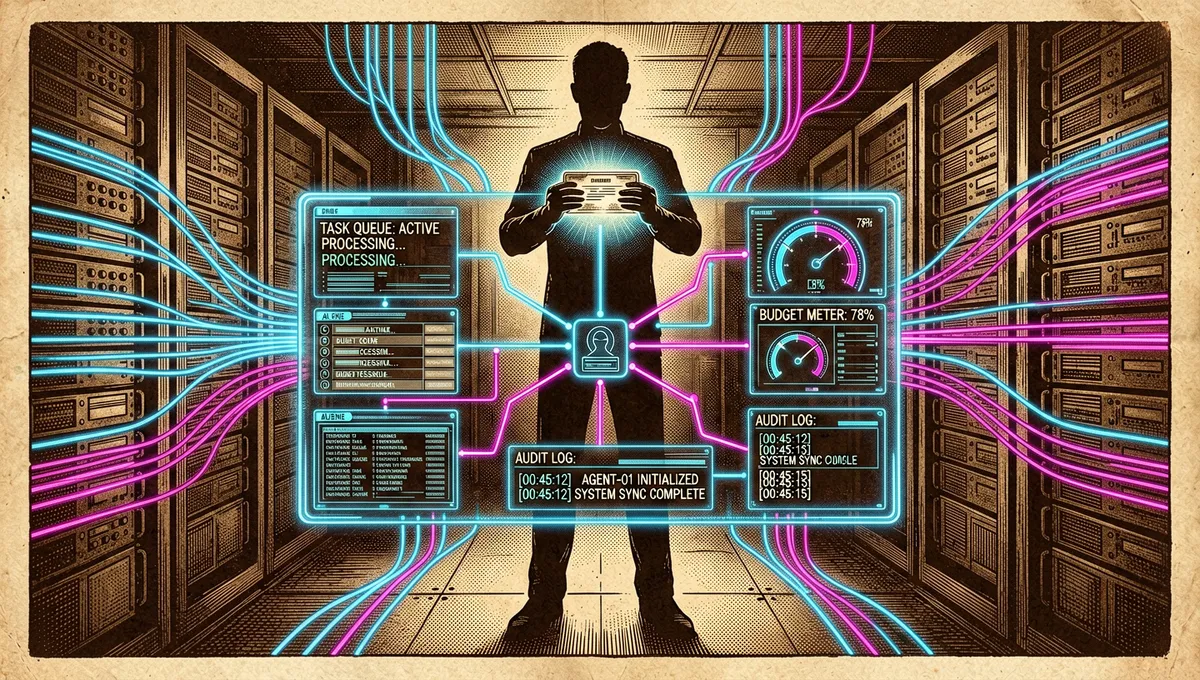
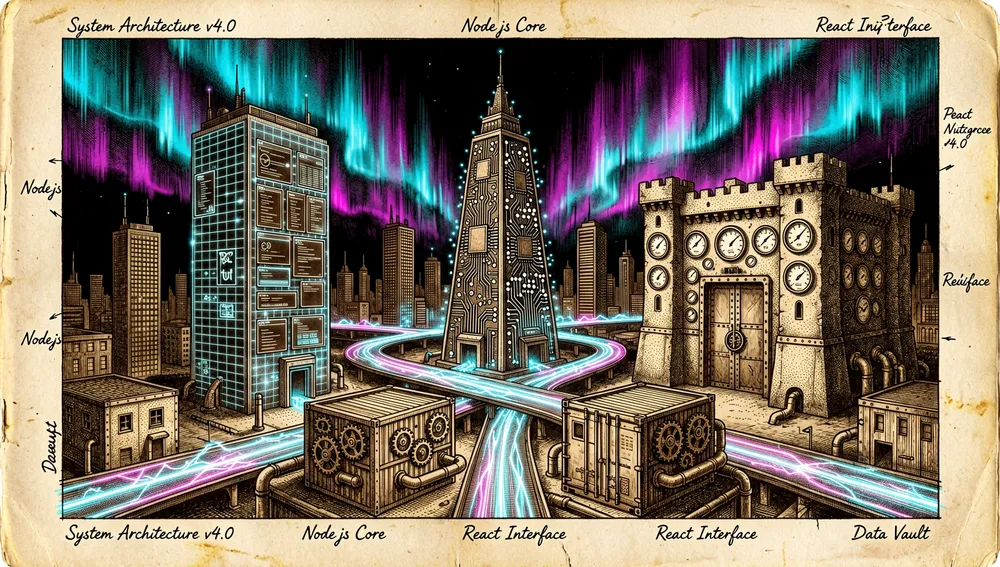
Paperclip is a Node.js server with a React interface that acts as a control plane for agent teams. It does not try to build the agent itself or replace its model: it connects agents and self-hosted environments under a shared structure of goals, roles, tasks, budgets, approvals, and audit logs.
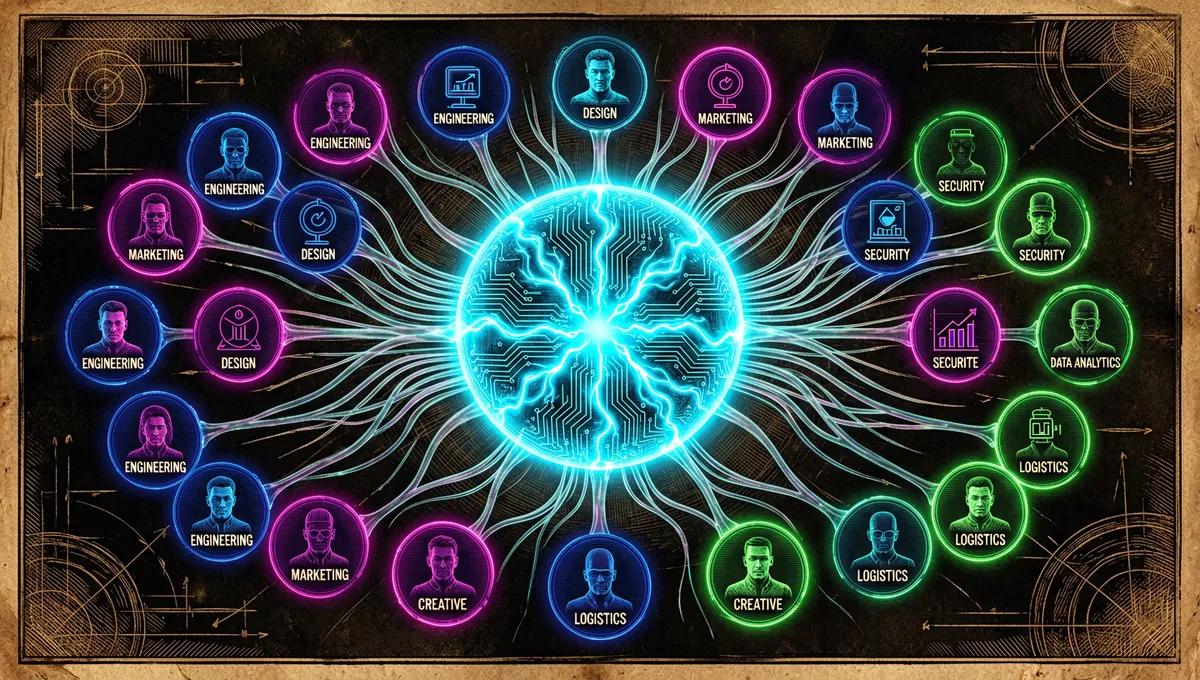
Its central metaphor is corporate: you define a goal, bring on agents with responsibilities, and review their strategy before execution. The README states it can coordinate OpenClaw, Claude Code, Codex, Cursor, console agents, and HTTP agents; the operating requirement is that they can receive a heartbeat or activation signal. The project thus sets itself apart from a chat window and from a visual flow builder: it administers an organization, not a conversation or a single agent.
The origin: from scaffolding to Paperclip Labs
The earliest recoverable commit in the history is from February 16, 2026, signed by Forgotten from the forgottendev account; it already contained the scaffolding of a pnpm monorepo, server, interface, Docker, and PostgreSQL. GitHub dates the repository’s public creation to March 2, 2026.
The clearest source on the current leadership is the GitHub profile of Dotta (cryppadotta): it presents itself as CEO of Paperclip Labs, links to paperclip.ing, and shows up as the top contributor by volume in the API. The site and the README frame the problem around a concrete friction: when a person opens many code agents in parallel, they lose state, context, cost traceability, and the ability to stop executions. Paperclip responds by introducing a hierarchy, a persistent queue, and approval controls.
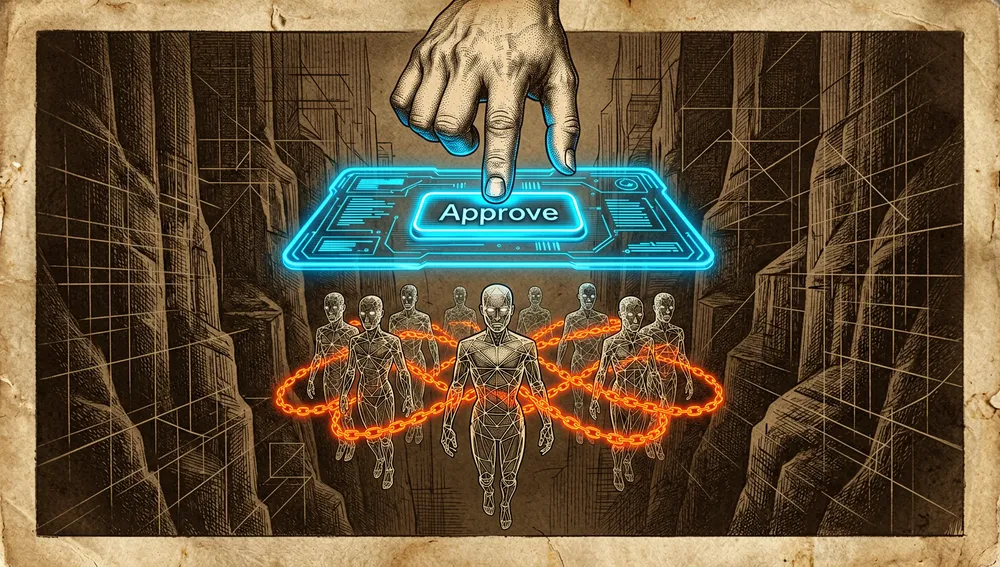
There is also a deliberate narrative tension: the project uses the image of a “company with no humans,” but its documentation insists that a person retains the authority to approve hires, revoke strategy, pause, or terminate agents. It is a proposal for supervised autonomy, not a verifiable elimination of human oversight.
Philosophy and principles
The documentation lays out four pillars:
- Agentic work with human verification: intent is declared, agents work, and the outcome is checked through diffs, screenshots, or tests.
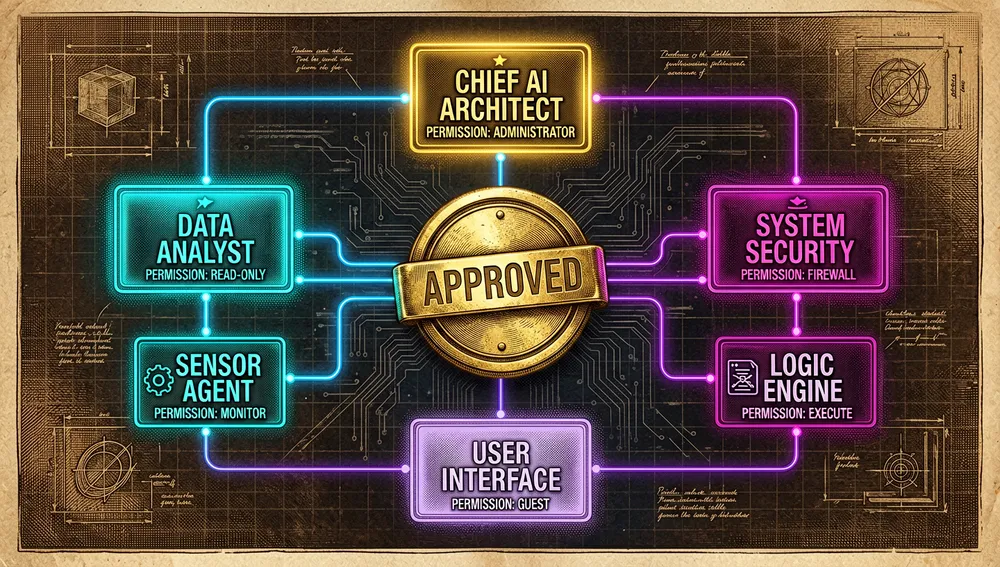
- Organization and boundaries: an org chart, roles, permissions, owners, and secrets scoped per company.
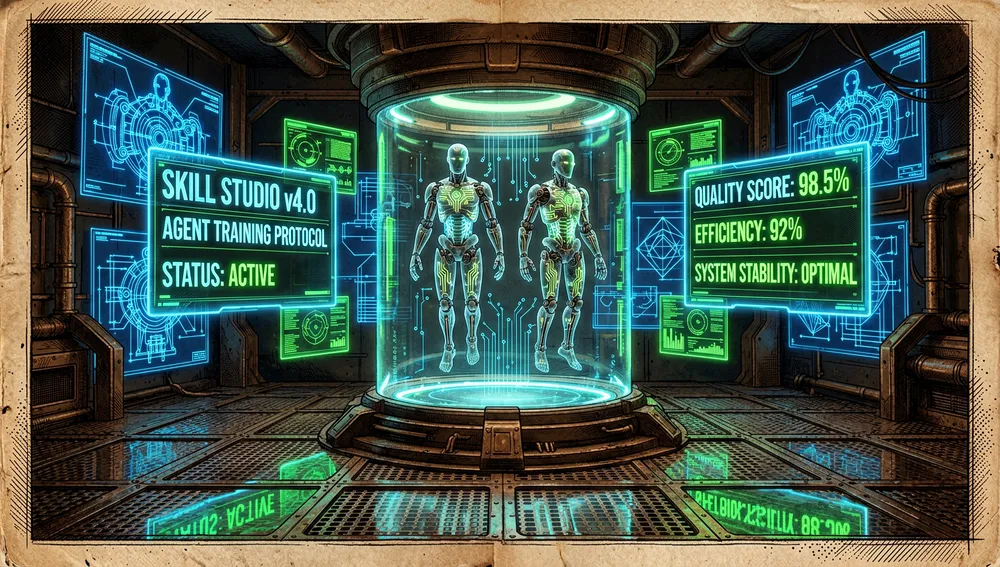
- Training and evaluation: shared skills, Skill Studio, trial runs, evaluations, and quality metrics.
- Operational infrastructure: execution environments across multiple providers, isolation, MCP tools, cost control, and internal traces.
The technical principle connecting those pillars is accountability: a task keeps its goal lineage; executions, decisions, and tool calls generate durable activity; and budgets can stop agents. This describes documented mechanisms, not a guarantee that every agent output is correct.
How it works
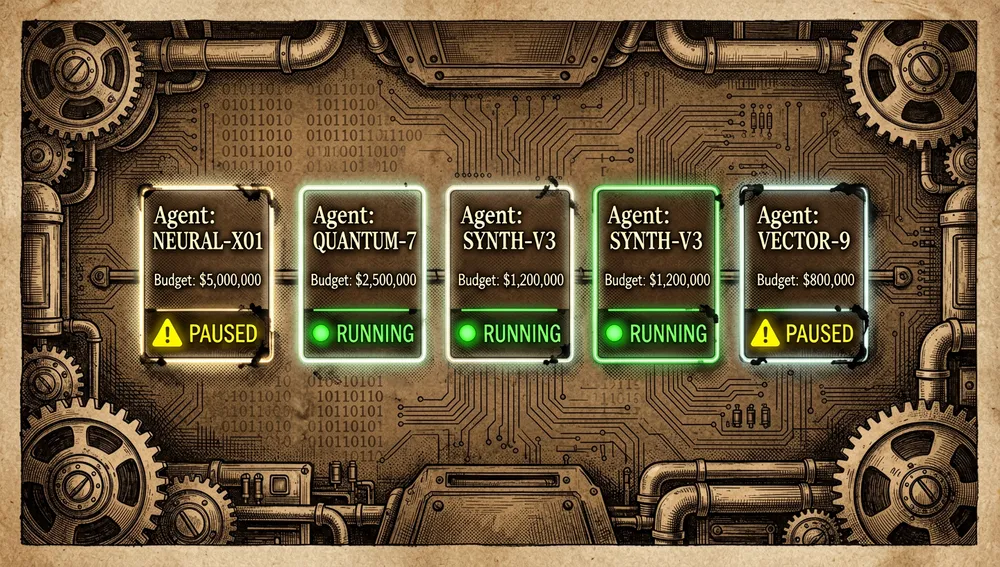
The basic flow is: define a goal → build the team → approve strategy and budgets → oversee the dashboard. A task is assigned to an agent; the assignment or a schedule wakes the agent; it receives task, project, and company context; the run leaves logs, cost, session state, and results for review.
Verifiable components and patterns:
- Tasks and org chart: issues with dependencies, comments, files, and blockers; roles with an owner, permissions, a budget, and a reporting line.
- Heartbeats and routines: a database-persisted queue, scheduled activations, triggered by assignment or by mentions; execution includes a budget check, workspace resolution, skill loading, and adapter invocation.
- Governance: approvals, execution policies, plan review, pausing, resuming, or terminating agents, and an audit log.
- Environments and security: project and isolated workspaces; instance- or company-level secrets; the README specifies that sensitive values are only projected into a scoped run that needs them.
- Extensibility: a plugin system with external processes, scoped capabilities, scheduled jobs, tools, and interfaces; the roadmap lists governed access to MCP and secret managers.

To install it, the README offers an installer and a trial run with npx --registry https://registry.npmjs.org paperclipai onboard --yes; for development it proposes pnpm install and pnpm dev. It requires Node.js 20 or later and pnpm 9.15 or later. Local mode starts the API at http://localhost:3100 and creates an embedded PostgreSQL instance; in production it allows using your own PostgreSQL.
Official and semi-official status
Paperclip is open-source software under the MIT license, attributed in the README to Paperclip Labs, Inc. The official page presents compatibility with Claude, Codex, Gemini, Cursor, Hermes, OpenClaw, Pi, and OpenCode, and the README names adapters for Claude Code, Codex, Cursor, Bash, and HTTP. That compatibility is a claim made by the project, not a certification from Anthropic, OpenAI, Google, Cursor, Nous Research, or OpenClaw.
During this research no evidence was retrieved that Paperclip has been accepted into an official marketplace from any of those vendors, nor of a formal endorsement from a manufacturer. Its practical position is that of an independent, vendor-agnostic layer; its 75 thousand stars and the existence of third-party adapters show de facto adoption, but they do not constitute a formal standard or a vendor’s approval.
The ecosystem
Paperclip Labs repositories
The organization’s GitHub API returns the following related repositories, with their stars at the time of the query:
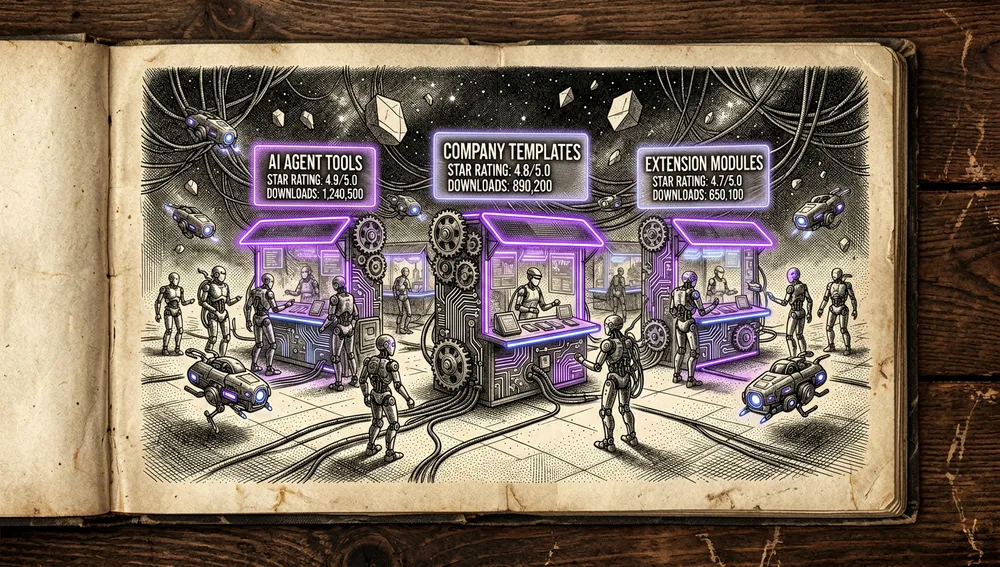
paperclipai/companies— templates or companies for Paperclip; 814 stars.paperclipai/hermes-paperclip-adapter— an adapter for running Hermes Agent as a managed employee; 25 stars. The version atNousResearch/hermes-paperclip-adapterhad reached 1,778 stars in the GitHub search consulted.paperclipai/companies-tool— thenpx companiestool; 41 stars.paperclipai/clipmart— a marketplace for buying and selling agent companies; 76 stars.paperclipai/paperclip-docsandpaperclipai/docs— documentation; 12 and 7 stars, respectively.paperclipai/pr-reviewer— a pull request triage interface; 13 stars.
The main codebase also contains evals, skills, and skills-releases/paperclip directories; the README documents Skill Studio, a skills store, and evaluations as product pieces, not as separate repositories.
Community, ports, and extensions
gsxdsm/awesome-paperclip— a community catalog of Paperclip plugins; 830 stars. It is the list linked by the README for discovering plugins.aronprins/paperclip-desktop— an unofficial Electron wrapper for macOS that packages the@paperclipai/serverserver; 559 stars. Its description lists Windows and Linux as future targets, so it should not be read as an official cross-platform client.aronprins/paperclip-company-playbook— a practical guide for setting up an agent company; 196 stars.Yesterday-AI/paperclip-plugin-company-wizard— a plugin for creating companies from modular templates; 161 stars.gcampton/Agent-Pixels— a plugin implementation with security cameras for Paperclip; 91 stars.mvanhorn/paperclip-plugin-telegram— a two-way Telegram bot with notifications, commands, approve/reject actions, and reply routing; 85 stars.penclipai/paperclip-cn— a Chinese-language fork; 68 stars. Also retrieved were the Korean translationsyong076/paperclip-ko(5 stars) andTripleHwang/paperclipKR(3 stars). These are community forks, not localizations published by Paperclip Labs.
The figures above come from the GitHub API and can change; naming a project here does not vouch for its security, maintenance, or current compatibility.
Repo numbers
Measured: August 3, 2026, GitHub API and page.
| Metric | Value |
|---|---|
| Stars | 75,464 |
| Forks | 14,054 |
| Real subscribers | 373 |
| Commits | 3,420 |
| Open issues reported by the API | 4,989 |
| Primary language | TypeScript |
| License | MIT |
| Repository created | March 2, 2026 |
| Latest release | v2026.722.0, July 22, 2026 |
The top contributors returned by the API were cryppadotta (2,359 contributions), devinfoley (319), nickyleach (107), dependabot[bot] (99), mvanhorn (30), stubbi (28), and zvictor (28). GitHub showed 3,420 commits on the history page. The watchers_count field in the general response duplicates the star count; that is why subscribers_count is reported here as the real subscriber figure. The open_issues_count field can include open pull requests, so it does not necessarily equal issues alone.
Version v2026.722.0 adds run-scoped secret access and local agents on Windows, according to its release notes. Release v2026.720.0 added Skill Studio, an attention queue, decisions, and run search and retrieval. These are changes stated by the project itself.
How to contribute
The contribution guide instructs contributors to first search for related issues and pull requests to avoid duplicates. For a small change it asks for a focused edit, tests, and green CI, use of the template, and a 5/5 Greptile score; for a large change it asks contributors to first discuss direction in the #dev channel on Discord.
Every pull request must use the template, explain the reasoning, the change, verification, risks, and the model used; it must link public issues or describe the problem within the request itself. It requires passing lint, type checks, tests, and the build. The guide also warns that uncoordinated features may be closed for roadmap consistency; it suggests building extensions through the plugin system when applicable.
How the community received it
The verifiable external evidence is limited and should be read with that limitation in mind:
- The Hacker News submission 47277096, posted by eclipxe on March 6, 2026, got 6 points and 1 comment. FeelTheAGI2 said they had used it for several days and specifically praised the interface. It is an early individual impression, not a consensus.
- On the official page, Numman Ali praises the system for covering business functions and its interface design; John Holloway highlights agent orchestration for development, content, marketing, quality control, research, and outreach. These are testimonials selected by the company, so they serve as stated usage signals but not as independent reviews.
- The concrete objection retrieved comes from thread 48578387, submitted by khelavastr after the closure of a question about OpenClaw–Paperclip integration. It got 4 points and 2 comments. theamk argued the closure made sense because the question was not related to programming languages; uberman found it ironic. The criticism concerns the fit of the support channel, not a technical evaluation of the product, but it does evidence a practical difficulty finding an appropriate forum for that query.
No extensive independent discussion was retrieved that would allow generalizing satisfaction, performance, or safety. Star counts do not substitute for that kind of evaluation either.
Paperclip versus other proposals
| Proposal | Verifiable overlap | Verifiable difference |
|---|---|---|
| OpenClaw | Paperclip states it can onboard OpenClaw as an agent. | Paperclip presents itself as the company organizing agents; OpenClaw appears as one of the employees or environments it can coordinate. |
| Claude Code and Codex | The README lists them as compatible coding agents. | They are environments or agents that execute work; Paperclip adds an org chart, tasks, budget, approval, and audit around them. |
zeenie-ai/OpenCompany | Its GitHub description presents it as a self-improving AI for running a business; both aim at agent-run companies. | The retrieved source lets us confirm that positioning, but not a detailed technical comparison; Paperclip explicitly documents adapters, budgets, audit, and plugins. |
zesthq/bizbox | It is described as open-source orchestration for AI-native companies. | The source only allows comparing the general objective; not enough documentation was retrieved to claim feature equivalence. |
A responsible comparison depends on scope: for coordinating several existing agents under administrative controls, Paperclip has explicit mechanisms. For a single agent or a one-off automation, the documentation itself states it is probably not necessary.
Use cases and who this repository can help
- People coordinating several code agents can use the org chart, tasks with persistent context, and traces to replace isolated Claude Code, Codex, or Cursor sessions with assigned, reviewable work.
- Teams running recurring work in support, content, reporting, or research can configure routines, scheduled activations, and concurrency policies; each run becomes a trackable task that wakes the responsible agent.
- Platform, security, or operations owners can benefit from hard-limit budgets, scoped secrets, approvals, pauses, auditing, isolated companies, and governed access to MCP tools.
- Organizations experimenting with different agent stacks can preserve their choice of agent and vendor while centralizing goals, permissions, and costs. Before delegating sensitive actions, reasonable use requires reviewing the adapter configuration, policies, credentials, and tests of your own environment.
Resources
- Repository: https://github.com/paperclipai/paperclip
- Documentation and installation: https://paperclip.ing/docs and https://github.com/paperclipai/paperclip/blob/master/doc/INSTALLING.md
- Official skills: https://github.com/paperclipai/paperclip/tree/master/skills
- Plugins and ecosystem: https://github.com/gsxdsm/awesome-paperclip
- Reviews and conversations: https://news.ycombinator.com/item?id=47277096 and https://news.ycombinator.com/item?id=48578387
- Community/Discord: the README and the official site link a Discord community; no verifiable public URL was retrieved during this research.
Note: this article combines the README, the contribution guide, the official page, and the release notes of Paperclip, the GitHub API and page, and the Hacker News API, retrieved on August 3, 2026. Figures change over time.
Comments