

Understand Anything: a navigable map for learning a codebase
Egonex-AI/Understand-Anything · 84,163★ · 7,103 forks
Everything you need to know about Egonex-AI/Understand-Anything: a set of agent skills that turns code, documentation, and certain knowledge bases into explorable local graphs.
What Understand Anything is
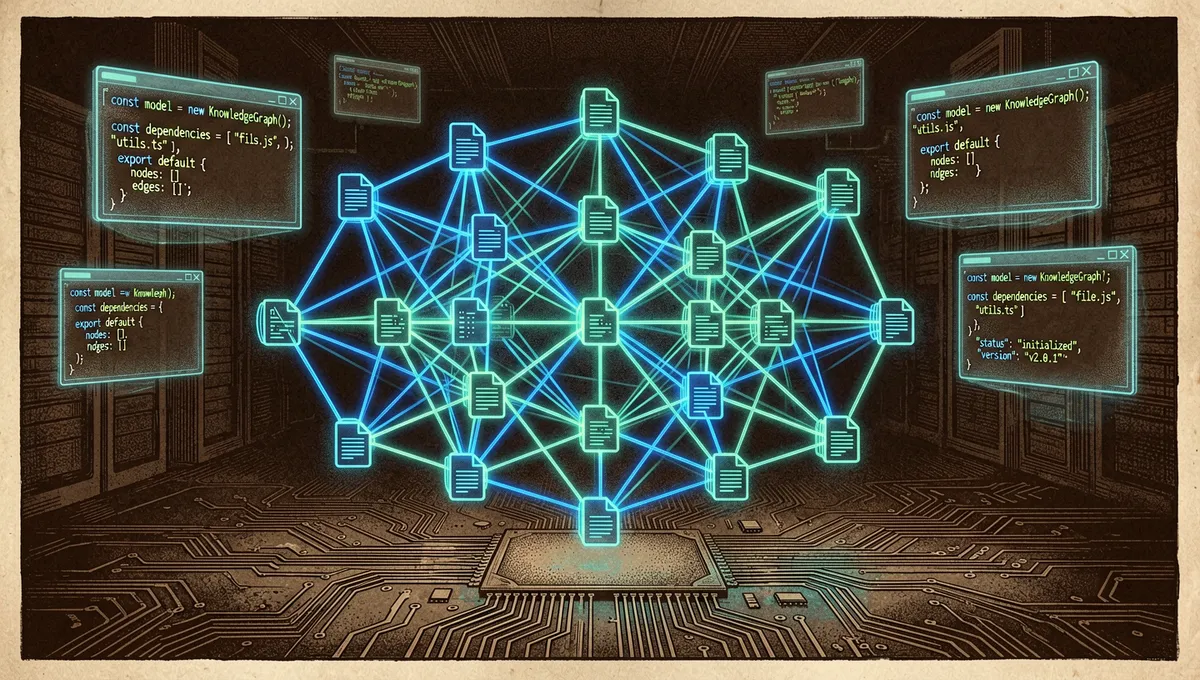
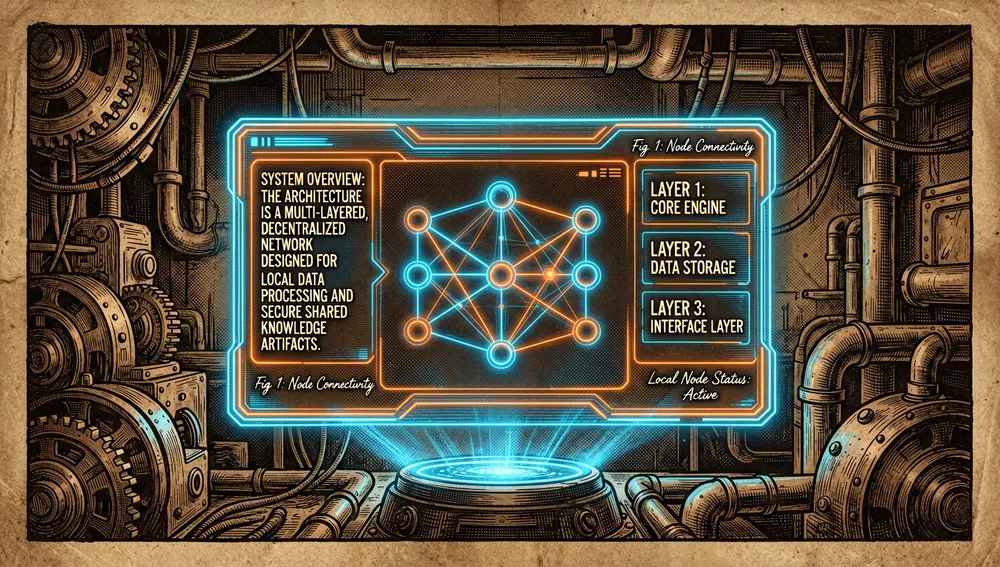
Understand Anything is an open-source project from Egonex-AI for building an interactive knowledge graph of a repository. Its explicit goal is not to impress with the complexity of a diagram, but to teach how its pieces fit together. For a codebase, it represents files, functions, classes, dependencies, and architecture layers; the dashboard lets you search, traverse nodes, view relationships, and consult explanations.
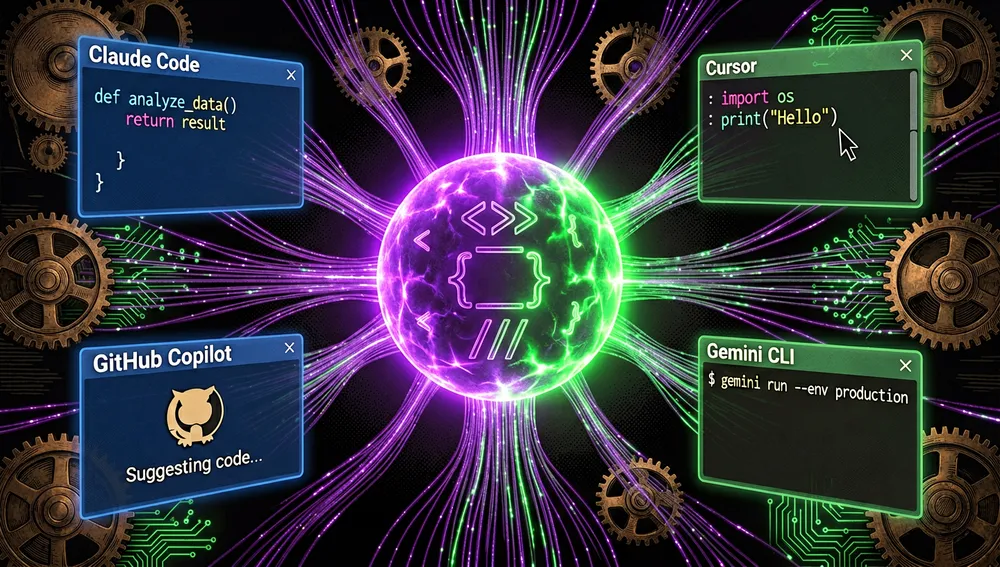
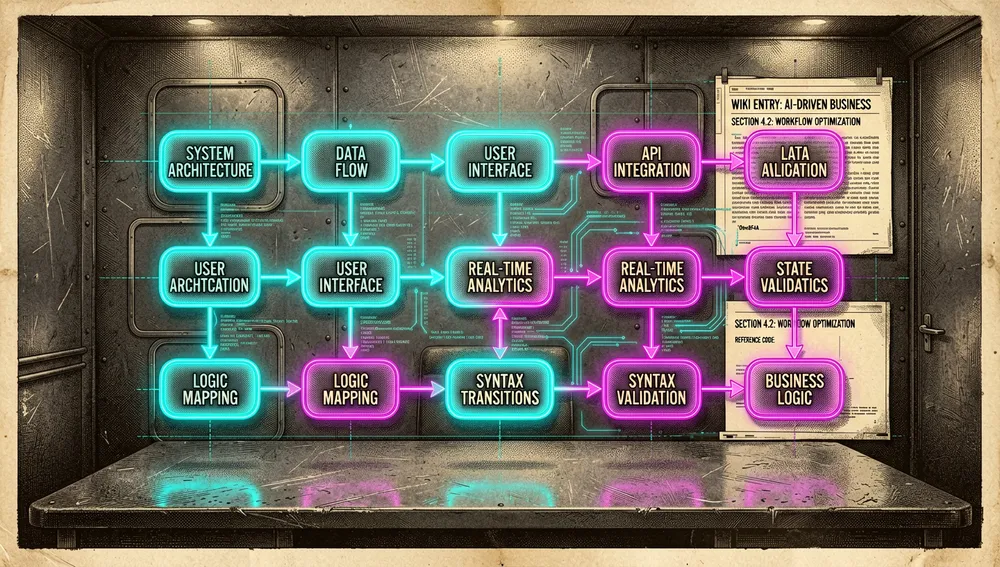
It does not by itself replace an agent or a static analyzer: it installs as skills and agents inside AI-assisted coding environments. The README declares compatibility with Claude Code, Codex, Cursor, GitHub Copilot, Gemini CLI, and other environments. It also incorporates business-domain analysis, Karpathy-pattern wiki analysis, and, since v2.9.0, Figma file analysis.
The origin: from a Claude skill to an Egonex project
The GitHub API dates the repository’s creation to March 15, 2026. The README identifies Lum1104, whose profile is that of Yuxiang Lin and is described as focused on AI agents and machine learning, as the original creator; today the repository belongs to the Egonex-AI organization. The organization’s account presents itself around the idea that AI should help people, not replace them.
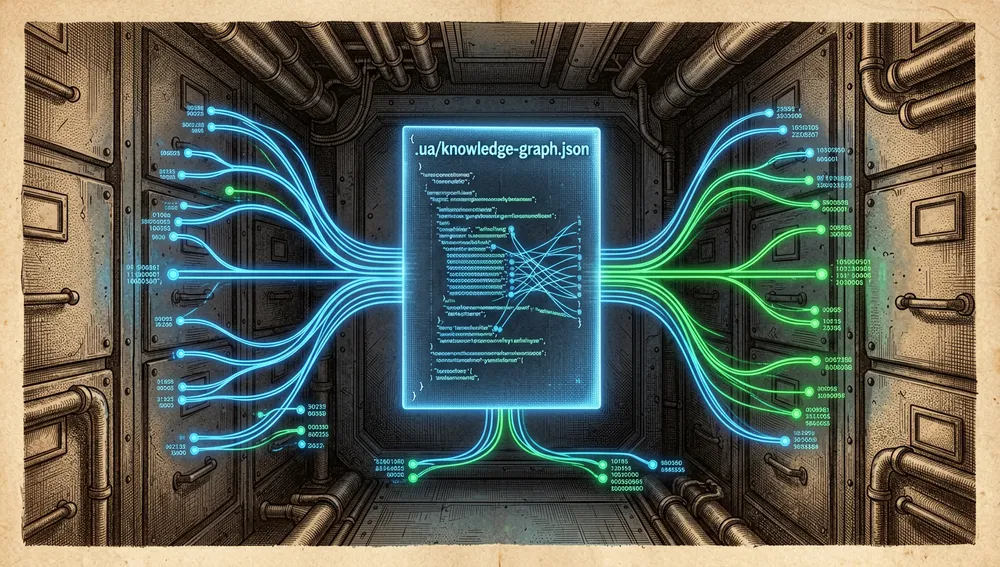
The starting point was a Claude Code plugin aimed at a recognizable scene: someone joins a team and needs to get oriented in a large codebase. The friction with an assistant’s native features is concrete: reading files and asking questions does not by itself preserve a navigable model of the architecture. The project persists the result in .ua/knowledge-graph.json and lets it be reused without paying for the full analysis again.
The narrative soon shifted from an exclusive plugin to a multi-platform skill layer. A pull request from the repository itself, #6, documents moving agent definitions into reusable templates and skills for Codex, OpenClaw, and Cursor. Later, #26 fixed an early Codex integration: a symlink to the full package did not contain a SKILL.md at the level Codex inspected, so the skills were not discovered. It is a useful example of the practical friction between a common skill format and client-specific conventions.
Philosophy and principles
The philosophy is summed up in the README’s tagline: graphs that teach before graphs that impress. From the documentation and technical design, these verifiable principles emerge:
- Context-oriented learning: guided tours ordered by dependencies, natural-language summaries, and an interface that adapts the level of detail to different profiles.
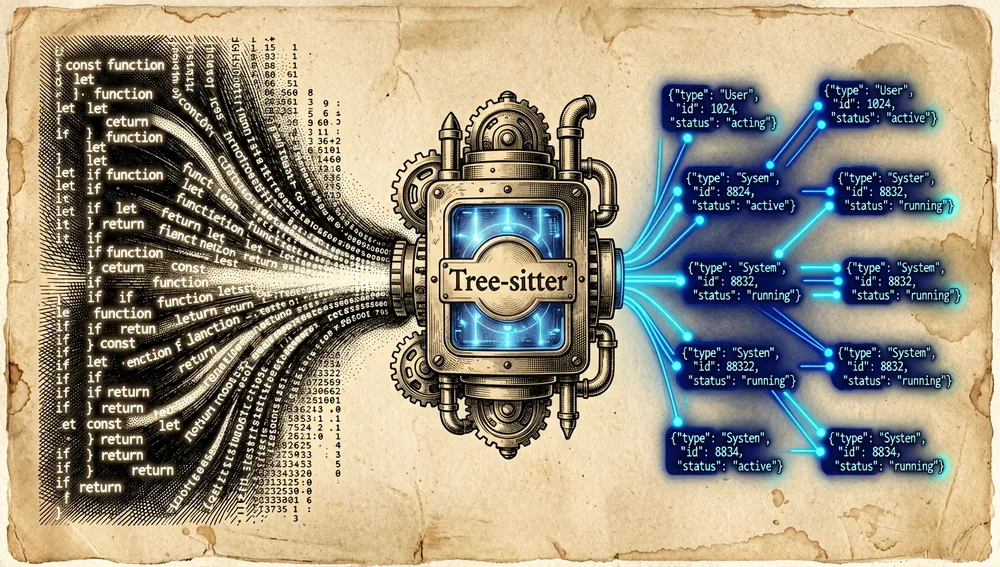
- Deterministic structure, assisted meaning: Tree-sitter extracts repeatable structural facts; a language model adds summaries, tags, layers, concepts, and business explanations.
- Shareable, local artifact: the graph is JSON. It can be versioned with the project and later opened with a local viewer, with no model or API key.
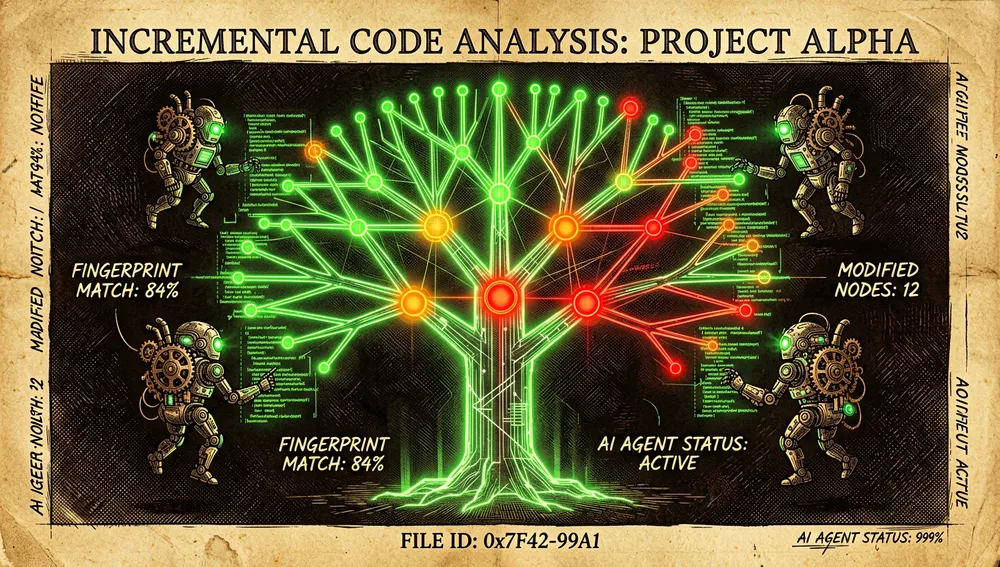
- Incremental cost, not full repetition: structural fingerprints distinguish cosmetic changes from changes that require reanalysis; later runs only review modified files.
- Practical interoperability: the same set of skills adapts to the installation and discovery mechanisms of numerous agent clients.
This combination does not eliminate the probabilistic part: syntactic relationships are reproducible, but semantic interpretations depend on the configured model.
How it works
The normal flow starts with /understand. Five specialized agents detect files and technologies, analyze files, identify layers, build tours, and review the graph’s integrity; /understand-domain adds an agent for domains, flows, and business steps. File analyzers run in parallel, up to five at a time, with batches of 20 to 30 files according to the README.
| Phase | Deterministic part | Model-assisted part |
|---|---|---|
| Exploration | Tree-sitter detects imports, exports, functions, classes, calls, and inheritance. | Detects technology context and organizes the analysis. |
| Enrichment | The import map and structural fingerprints avoid rebuilding already-known facts. | Produces summaries, tags, architectural layers, concepts, and tours. |
| Assembly | Normalizes, validates, and saves .ua/knowledge-graph.json. | A reviewer can complete the semantic review. |
| Query | The local dashboard reads the JSON, searches, and shows relationships. | The skills answer questions about the graph. |
The documented commands cover more than the first scan:
/understand-dashboardopens the navigable dashboard./understand-chat <question>queries the analyzed codebase;/understand-explain <path>digs into a file or function./understand-diffshows the impact of current changes, and/understand --auto-updateinstalls a post-commit hook to update incrementally./understand-onboardgenerates an onboarding guide;/understand src/frontendlimits scope in large repositories./understand-domain,/understand-knowledge <path>, and/understand-figma <URL or key>apply the approach to business processes, wikis, and Figma design respectively.--languagelocalizes the output. Versionv2.7.3documents the codesen,zh,zh-TW,ja,ko, andru; the README’s versions also include Spanish and Turkish as documentation translations.
The first full run can consume many tokens, a warning the README makes explicitly. For already-generated data, the distributed viewer runs on Node.js 18 or later and serves content locally and read-only.
Official and semi-official status
The situation is semi-official and client-dependent, not a vendor certification:
- For Claude Code, the README uses
/plugin marketplace add Egonex-AI/Understand-Anythingfollowed by/plugin install understand-anything. That is, it adds the marketplace published by the repository itself; the consulted source does not prove it is part of the official catalog curated by Anthropic. - For GitHub Copilot CLI, the README documents
copilot plugin install Egonex-AI/Understand-Anything:understand-anything-plugin; for VS Code with Copilot it declares autodetection from.copilot-plugin/plugin.json. - For Cursor it declares autodetection from
.cursor-plugin/plugin.jsonand manual installation from its settings. For Codex and the rest, the installer creates local links and configurations.
So there is declared integration with vendor interfaces and formats, but no source from Anthropic, OpenAI, GitHub, Cursor, or another vendor was found that endorses it as a standard, recommends its output, or certifies its security. Its 77,239 stars and 6,472 forks show visible adoption on GitHub, not an official status.
The ecosystem
Core, distributions, and project extensions
Egonex-AI has a single public repository according to the queried API: Egonex-AI/Understand-Anything. No official sibling repositories, an independent lab, a separate marketplace of its own, or a separate evaluation harness were verified.
The ecosystem does live within the monorepo: core and dashboard packages, the understand-anything-viewer viewer artifact, agents for file, architecture, domain, article, and design analysis, plus definitions for specific clients. #569 documents a native extension for OpenClaw: tools such as understand_analyze_project, understand_search, and understand_get_node, and protected dashboard routes in the gateway process. The pull request was closed without merging in the retrieved API response, so it is not presented as a shipped capability of the stable version.
The README links an interactive demo at understand-anything.com/demo/ and names a community walkthrough from Better Stack. It also proposes GoogleCloudPlatform/microservices-demo as an example of a project that keeps a generated graph in the repository; it is a usage example, not an affiliation.
Forks and translations
The API records 6,472 forks. The top ones retrieved by stars include:
SayanDey322/Understand-Anything— 10 stars.smirk-dev/Understand-Anything— 7 stars; it keeps the description of skills for Claude Code and multi-platform compatibility.abhinav-phi/Understand-Anythingandtirth8205/Understand-Anything— 5 stars each.GoodDingo/understand-anything— 4 stars.
These are forks declared by the API, not functionally distinct ports or extensions backed by Egonex-AI. The verifiable translations live in the official repository: Simplified and Traditional Chinese, Japanese, Korean, Spanish, Turkish, and Russian. This investigation did not identify a translated fork with differentiated development that would justify describing it as a community port.
Related projects and verified alternatives
tirth8205/code-review-graph— 28,142 stars and 2,608 forks at the time of the query. Its description presents it as a local code-intelligence graph for MCP and the command line, focused on letting agents read only relevant context and on change review. #31 cites its deterministic change detection via syntax-tree diffs and content fingerprints as inspiration for Understand Anything’s incremental updates.sverklo/sverklo— 76 stars and 11 forks in the retrieved GitHub search results. It is described as local memory for agents, with a symbol graph, change scoping, and diff-aware review. It shares the goal of reducing context, but the retrieved source does not attest to a tour dashboard or domain analysis.iantbutler01/code_diver— 76 stars and 4 forks in those results. It is presented as a skill that builds and visualizes a semantic code graph in real time while the agent works. It is comparable in its use of graphs to understand changes, though the search alone does not support claims of compatibility or feature equivalence.
Repo numbers
Measured: August 3, 2026, GitHub API.
| Metric | Value |
|---|---|
| Stars | 77,239 |
| Forks | 6,472 |
| Real subscribers | 242 |
| Commits | 763 |
| Open issues reported by the API | 258 |
| Primary language | TypeScript |
| License | MIT |
| Created | March 15, 2026 |
| Latest repository push | July 30, 2026 |
| Latest metadata update | August 3, 2026 |
| Latest published release | v2.9.0, July 10, 2026 |
The top contributors returned by the API, by number of contributions, are Lum1104 (519), thejesh23 (46), gruming (23), ZebangCheng (18), and KumamuKuma (16). The total of 763 commits came from the last-page link of GitHub’s commits pagination. open_issues_count may include open pull requests; it is not an issue-only count. Also, watchers_count duplicates the star count in the general response, which is why subscribers_count is reported here as the real subscriber figure.
Version v2.9.0 added Figma analysis, the .ua/ directory with backward compatibility for .understand-anything/, and support or fixes for Dart, Scala, Swift, Kotlin, Kiro, Nanobot, Trae, and Windows, according to its release notes.
How to contribute
The README documents a short, conventional flow:
- Fork the repository.
- Open a feature branch with
git checkout -b feature/my-feature. - Run
pnpm --filter @understand-anything/core test. - Commit the changes and open a pull request.
For large changes it asks that an issue be opened first to discuss the approach. Retrieved activity shows real external contributions: for example, thejesh23 contributed Dart support in #435, and gruming is listed as the author of the Figma capability in the v2.9.0 release notes.
How the community received it
No direct Hacker News thread was retrieved for the repository after searches for Egonex-AI Understand-Anything, across stories and comments, and by the broader name. No Hacker News reception is invented as a result. The most concrete evidence comes from the repository’s public conversation:
- In issue #76, Antoliny0919 wrote that they were getting a lot of value from the tool and that, after
/understand,/understand-chatand/understand-explainreturned richer and more useful results than Claude Code without the graph. The thread had 19 comments at the time it was retrieved. Their praise is specific: the value shows up in later queries, not just the initial visualization. - The same user raised an important objection: the first
/understandrun is slow and consumes many tokens. That criticism matches the README’s own warning, which recommends token plans, a subscription, or a local model for initialization. It is not an independent cost measurement, but an experience attributed to the issue’s author. - Pull request #279, opened by PulseCheckAI, raised a concrete security criticism: installing from
mainvia a pipe into the interpreter exposes every linked skill folder if the default branch is compromised; it also flagged a dashboard token in the URL and GitHub Actions pinned to mutable tags. The pull request claimed 670/670 tests and proposed pinning by checksum and by commit, but it remained open with 2 comments. It is therefore a hardening proposal, not proof that those changes were merged. - #385, opened by jishengruofou, accumulated 12 comments about a correct installation in Claude Code whose
/understandcommand still appeared as unrecognized. It illustrates that compatibility does not eliminate discovery and installation issues.
The README includes a Better Stack community walkthrough, but since its transcript and metrics were not retrieved, it is recorded only as material linked by the project and not as an independently evaluated review.
Understand Anything versus other proposals
| Proposal | Verifiable overlap | Verifiable difference |
|---|---|---|
tirth8205/code-review-graph | Both maintain a local model of the code and use structural changes to reduce work or context. | Code Review Graph is described for MCP, CLI, and reviews; Understand Anything documents a navigable dashboard, tours, business domains, wikis, and Figma. |
sverklo/sverklo | Both offer a local representation for agents to retrieve code context. | Sverklo is presented as repository memory with a symbol graph and Git-pinned decisions; the retrieved source does not attest to its tour or dashboard features. |
iantbutler01/code_diver | Both use a semantic graph to help understand code and changes. | Code Diver states it builds the graph while the agent works; Understand Anything documents an analysis pipeline that persists JSON and supports incremental updates. |
The choice depends on the problem: Understand Anything fits when looking for visual learning, onboarding, and shareable documentation; the other two retrieved projects sit closer to context retrieval, memory, or review for agents. This is a reading of their verified descriptions, not a comparative test of accuracy, speed, or cost.
Use cases and who this repository can help
- People joining a large product can use
/understand, the guided tours, and/understand-onboardto start with layers and dependencies, instead of browsing files without a path. The README raises exactly this case of onboarding into a large repository.

- Teams reviewing changes who want to share context can commit
.ua/— excluding the indicated temporary artifacts — and open the local viewer without Claude Code, a model, or an API key./understand-diffand the--auto-updatehook help keep that map aligned with structural changes. - Product, design, and engineering leads can complement the architecture graph with
/understand-domainand, sincev2.9.0,/understand-figma, which maps pages, screens, components, variants, instances, and design tokens. Its usefulness depends on the sources and the model producing a useful analysis; it does not replace a human review of processes or design. - Anyone maintaining a knowledge wiki with the Karpathy pattern can use
/understand-knowledgeto combine links and categories extracted deterministically with entities, claims, and implicit relationships generated by agents. - Teams with privacy or budget constraints can use a compatible local provider for the initial analysis and share the JSON afterward. They should review the cost of the first run, the analyzed paths, and the security of the installation method before linking skills across multiple clients.
Resources
- Repository: https://github.com/Egonex-AI/Understand-Anything
- Documentation and installation: https://github.com/Egonex-AI/Understand-Anything#quick-start
- Demo: https://understand-anything.com/demo/
- Official skills: https://github.com/Egonex-AI/Understand-Anything/tree/main/skills
- Releases: https://github.com/Egonex-AI/Understand-Anything/releases
- Reviews and conversations: https://github.com/Egonex-AI/Understand-Anything/issues/76, https://github.com/Egonex-AI/Understand-Anything/pull/279, https://github.com/Egonex-AI/Understand-Anything/issues/385
- Community and walkthrough: https://www.youtube.com/watch?v=VmIUXVlt7_I
Note: this article combines the README and the repository’s release notes, the GitHub API, public pull requests and issues, and Hacker News searches retrieved on August 3, 2026. Figures change over time.
Comments