

CS249r Book: an open curriculum for taking machine learning to real systems
harvard-edge/cs249r_book · 28,445★ · 3,598 forks
Everything worth knowing about harvard-edge/cs249r_book: the Machine Learning Systems repository that bundles books, interactive labs, and tools for studying the full lifecycle of machine learning systems.
What CS249r Book is
CS249r Book is the code and content repository for Machine Learning Systems. Its official site, mlsysbook.ai, presents it as an open, two-volume curriculum available in HTML, PDF, and EPUB. It isn’t just a book: the README bundles the texts, interactive labs built with Marimo, the TinyTorch teaching framework, hardware deployment kits, the MLSys·im analytical simulator, StaffML for interview practice, slides, and teaching materials.
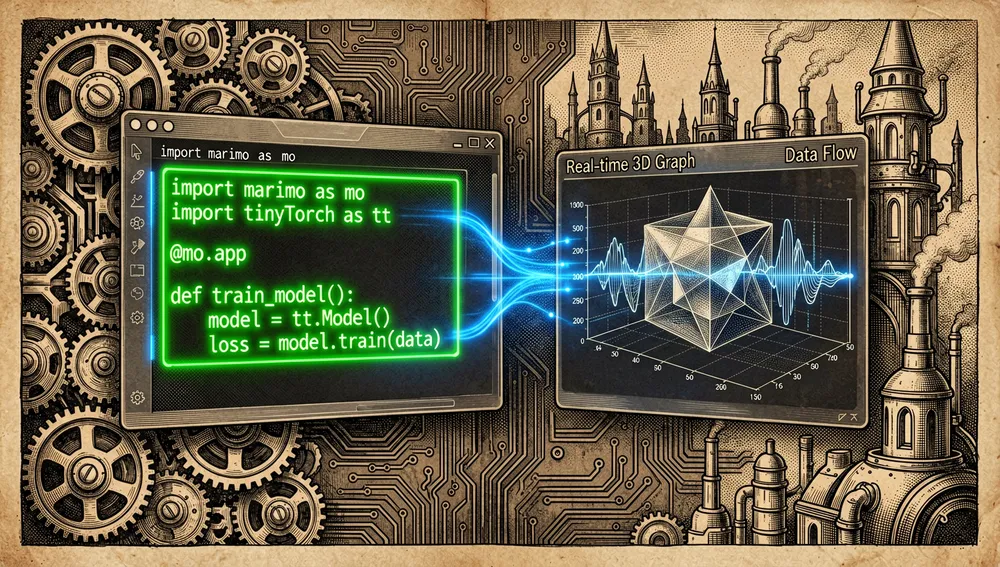
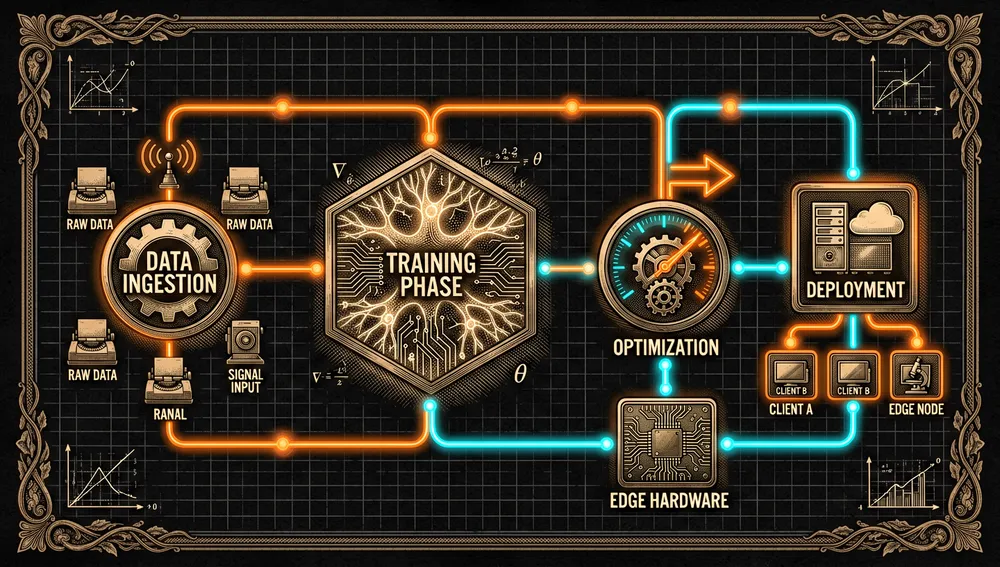
The goal is to study the entire system around a model: data, training, optimization, deployment, hardware, performance, and operations. For readers who just want the text, the site publishes Volume I and Volume II with no local install required; for hands-on practice it offers Labs, TinyTorch, and MLSys·im.
The origin: from a Harvard course to an open repository
The repository was created on September 6, 2023, according to the GitHub API, under the Harvard Edge Computing organization, whose profile links to the institutional site edge.seas.harvard.edu. The account with the most contributions in the API is profvjreddi; a video by Glen Rhodes about the repository identifies its author as professor Vijay Janapa Reddi and states that he opened up the curriculum.
The publishing format explains part of its reach: the course isn’t limited to lecture material or a collection of notebooks — it packages a public track with books, exercises, and exploration tools. The most recent book edition retrieved from Releases, Volume I v0.7.0 + Volume II v0.2.0, was published on June 24, 2026, and describes an editorial and production pass for HTML, PDF, and EPUB.
Philosophy and principles
The official structure suggests a teaching approach that connects theory with implementation constraints:
- Open access, multiple formats: both volumes can be read on the web or downloaded; there’s no need to clone the repository to start learning.
- Practical, progressive learning: the README recommends that self-learners start with Volume I and Lab 00 before moving through the specialized components.
- Systems, not just models: the proposal combines machine learning content with simulation, deployment, hardware, and operations.
- Reusable teaching material: the site includes a track for instructors, a course map, slides, and instructor resources.
- Reproducible quality in the repository: contributions go through pre-commit, Quarto rendering, and editorial output checks, rather than publishing content changes without building them.

How it works
The repository uses the dev branch as its working branch; main corresponds to the published site. Book content is rendered with Quarto, and its per-volume configuration lives under book/quarto/config/. The book’s contribution guide points to profiles such as _quarto-html-vol1.yml and _quarto-pdf-vol1.yml.
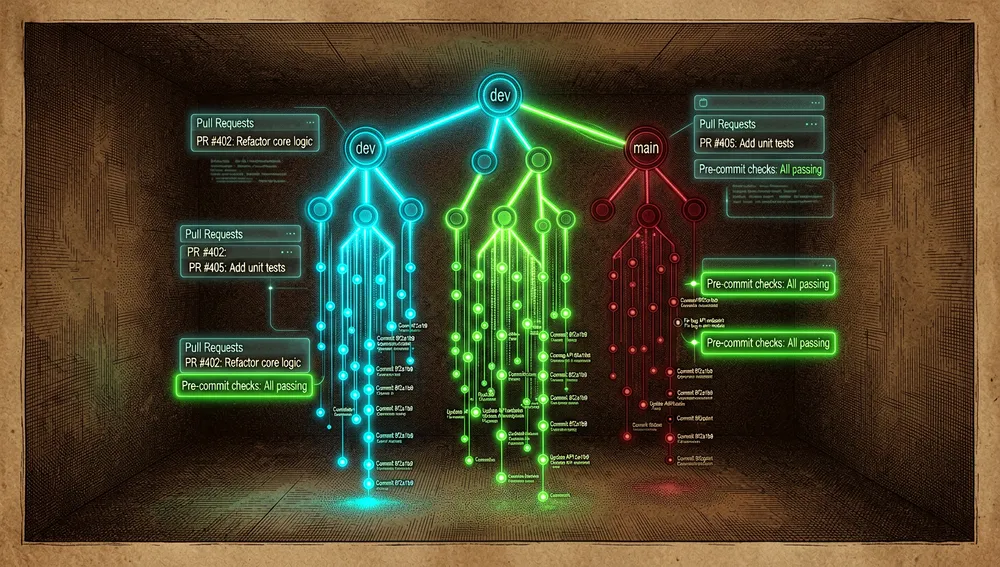
The components are spread across the monorepo, but they aren’t merely external links:
- Book, Volumes I and II: text and publishing configurations.
- Labs: interactive exercises built on Marimo.
- TinyTorch: a 20-unit module for building and exploring neural network components.
- MLSys·im: a simulator for analytical modeling of machine learning systems.
- StaffML: interview practice and an associated site.
- Kits, MLPerf EDU, slides, and instructor hub: complementary resources that the README lists as part of the curriculum.
The project has 26 GitHub releases and has Discussions and the wiki enabled. Its retrievable change history lives in Releases; no CHANGELOG.md or HISTORY file was found at the root of dev.
Official and semi-official status
The status is official as a Harvard Edge Computing publication: the repository belongs to that organization, and its CNAME configuration points to mlsysbook.ai, the domain the README and the repository’s API list as the project’s page.
No evidence was found of inclusion in a vendor’s extension marketplace, of certification by an MLOps company, or of a formal standard designation. Its nearly 28,000 stars show reach on GitHub, but that alone doesn’t equate to curricular accreditation, commercial support, or an industry standard.
The ecosystem
Related Harvard Edge repositories
The following repositories are companions within the same organization; the API and their descriptions distinguish them from forks of the book:
harvard-edge/cs249r_book_dev: build-hosting repository for the book’s development branch; 26 stars and 8 forks.harvard-edge/cs249r: the course repository, described as “CS249r: Tiny Machine Learning”; 16 stars and 4 forks.harvard-edge/cs249r_fall2025: materials from one edition of the course and a Pages site; 24 stars and 9 forks.
TinyTorch, Labs, MLSys·im, and StaffML aren’t presented as separate official repositories in the retrieved evidence: they’re distributed inside cs249r_book.
Forks, adaptations, and community extensions
GitHub reports 3,477 forks. Querying forks sorted by stars identified, among others, these direct variants; they shouldn’t be read as official support:
trungdoviet/cs249r_book, 6 stars, a direct fork.profvjreddi/cs249r_book-data_engr, 5 stars, a direct fork renamed for data engineering.lmoroney/cs249r_book, 4 stars, a direct fork.Arcala-Research-Lab/Efficient_ML_Computing_Book, 4 stars, a direct fork renamed for the occasion.
Non-forked projects declaring an explicit relationship were also retrieved:
Colin1860/rustytorch, 2 stars: a Rust neural network library built following the TinyTorch curriculum.lapbrian2/ml-systems-universe, 1 star: an interactive WebGL course for CS249r, with a site on Vercel.az9713/cs249r, 0 stars: a clone advertising TinyTorch documentation and tutorials.snehsourabh/mlsys-cs294r-labs, 0 stars: exercises and a TinyTorch implementation based on the material.
No verifiable community translation or official npm or PyPI package was found. An npm search for cs249r returned no packages, and PyPI queries for cs249r, cs249r-book, and mlsysbook returned 404s. These absences only describe the searches performed; they don’t prove that distributions don’t exist in other registries.
Repo numbers
Measured: August 6, 2026, GitHub API.
| Metric | Value |
|---|---|
| Stars | 27,743 |
| Forks | 3,477 |
| Real subscribers | 219 |
| Commits | 19,255 |
| Open issues per the API | 28 |
| Main language | Python |
| License per the API | Other / NOASSERTION |
| Created | September 6, 2023 |
| Last push to the repository | August 5, 2026 |
| Last metadata update | August 6, 2026 |
| Latest book release | vol1-v0.7.0+vol2-v0.2.0, June 24, 2026 |
Total commits were obtained from the last page of the pagination link for GET /commits?per_page=1. The top contributors returned by the API were profvjreddi (16,216), github-actions[bot] (1,293), hzeljko (294), dependabot[bot] (188), and Shashank-Tripathi-07 (105). The list includes automation accounts, so it shouldn’t be read as an exclusively human ranking.
The general API returns watchers_count equal to the star count; that’s why subscribers_count is reported here as the real subscriber count. The open_issues_count field can include open pull requests: it doesn’t necessarily represent issues only.
How to contribute
The contribution guide prescribes this flow:
- Create a fork and a local copy; add the original repository as
upstream. - Start from
dev, notmain, and create a branch tied to an issue. - Install the checks with
pre-commit; the guide discouragesgit add .and asks contributors to stage specific paths. - Open the pull request against
dev, referencing the issue; continuous integration renders the affected component. - Use the component-specific guide, for example
book/docs/CONTRIBUTING.md,tinytorch/CONTRIBUTING.md,labs/README.md, ormlsysim/docs/contributing.qmd.
Design questions should go to GitHub Discussions; bugs use the issue templates, and security problems must follow SECURITY.md, not a public issue. Content contributions are licensed under CC BY-NC-SA 4.0; code components may carry their own dual-license terms.
Quick usage guide
Installation and first run
Consuming the curriculum requires no installation at all: open mlsysbook.ai, start with Volume I and Lab 00, and enter Labs or MLSys·im from the site’s menu.
To prepare a development copy of the book, the official guide requires Python, Quarto, Java, and epubcheck. After forking and cloning the dev branch, run:
./book/binder setupThe command installs the configured pre-commit hooks and diagnoses Python, Quarto, Java, and epubcheck. The pyproject.toml declares Python >= 3.9. Root dependencies are installed with:
pip install -r requirements.txtCommon workflows
-
Read and practice without cloning: browse Volume I, open Lab 00, and continue in Labs. The result is an experience published in the browser, not a local artifact.
-
Render an HTML volume: from a configured copy, run:
quarto render --profile vol1-htmlFor the second volume, use
quarto render --profile vol2-html. Each profile’s configuration lives underbook/quarto/config/. -
Install and work on a Python component: TinyTorch uses:
pip install -r tinytorch/requirements.txt && pip install -e tinytorch/For MLSys·im, the guide points to
pip install -e mlsysim/[dev]; for MLPerf EDU,pip install -e mlperf-edu/[dev]. -
Check the full PDF build: run:
./preflight.shThe script runs
pre-commit, builds both PDFs via Book Binder, and checks layout, collisions, margins, and gaps.
Essential configuration
book/quarto/config/: Quarto profiles for HTML and PDF for each volume.requirements.txt: root dependencies plus a reference to the book’s dependencies..pre-commit-config.yaml: format, link, BibTeX, EPUB, and schema checks; installed via./book/binder setup.preflight.sh: quality gate for building and reviewing the full PDFs.CONTRIBUTING.md: component choice, target branch, and each subproject’s specific guides.
Common pitfalls and fixes
- Opening a pull request against
main:mainis the production site. The documented fix is to start from and submit the pull request againstdev. - Trying to render without the editorial environment:
./book/binder setupdiagnoses exactly Python, Quarto, Java, andepubcheck; running it before editing or rendering avoids mistaking a missing dependency for a problem with the book. - Staging changes in bulk with
git add .: the guide discourages this. Staging specific files or paths reduces accidental inclusions in a monorepo with several components. - Data loss in a browser lab: the open issue #1985 documents a loss in
DesignLedger.save()under Pyodide. The associated fix #1988 is described as a Pyodide/WASM persistence fix; until it’s available in the version you’re using, it’s best not to treat lab data as durable storage.
Integrations and migration
The documented integration points are internal to the curriculum: Quarto for publishing, Marimo for Labs, editable-mode installable packages for TinyTorch, MLSys·im, and MLPerf EDU, and npm for the StaffML site (cd interviews/staffml && npm install). No official guide for migrating to or from another course, an MLOps platform, or a specific editor was found; accordingly, no migration path is claimed beyond what the sources document.
How the community received it
The retrievable external reception is limited and should be read with caution:
- The video by Glen Rhodes, published on March 4, 2026, had roughly 41 views and 0 likes at the time it was checked. Rhodes calls the curriculum “genuinely good” because it covers areas he says many courses skip, such as edge deployment, privacy, MLOps, and production. That’s a personal assessment from a creator with 2.17 thousand subscribers, not an independent evaluation.
- The video by GitHub Daily Trend AI Podcast, published on October 21, 2025, showed 120 views and 5 likes and links directly to the repository. Its channel had 10.1 thousand subscribers. Given its aggregator format and the absence of any retrieved critique, it demonstrates reach, not an independent review.
- The equivalent episode of GitHub Daily Trend runs 4 minutes and 45 seconds and was published on October 22, 2025. It appears to be the podcast counterpart of that automated coverage, not an external editorial assessment.
Exact-match searches on Hacker News via Algolia returned no relevant threads or comments for the repository, CS249r, mlsysbook.ai, Vijay Janapa Reddi, or Harvard Edge. Reddit returned an HTTP 403 block, X required authentication, and Product Hunt returned a 403; none of that allows concluding that no conversations exist. No DEV Community or Hashnode articles, nor a verifiable inclusion in an awesome-* list, were retrieved either.
CS249r Book versus other proposals
The verifiable comparison is limited to projects that declare a concrete relationship to the material:
| Proposal | Verifiable overlap | Verifiable difference |
|---|---|---|
Colin1860/rustytorch | Follows the book’s TinyTorch curriculum to teach neural network components. | It’s a Rust library built from the curriculum; cs249r_book keeps the materials, Labs, and tools in a Python/Quarto monorepo. |
lapbrian2/ml-systems-universe | Describes itself as an interactive course for Harvard CS249r ML Systems. | Its format is a standalone WebGL course; it’s neither a fork nor the book’s official site. |
Arcala-Research-Lab/Efficient_ML_Computing_Book | It’s a direct fork of the original repository. | Its name declares a focus on efficient computing; the retrieved evidence doesn’t allow comparing the content or quality of its changes. |
No comparisons were included with courses or products that weren’t directly investigated: thematic overlap alone isn’t enough to claim functional equivalence or technical differences.
Use cases and who this repository can help
- Self-learners of machine learning systems can use the two volumes and Lab 00 as an initial path, then move on to Labs, TinyTorch, or MLSys·im depending on whether they want to practice, implement, or model system decisions.
- Instructors preparing a course can draw on the course map, slides, instructor materials, and the book’s public format, without having to pull them together from a scattered set of resources.
- People who need to connect a model to deployment and operations find a curriculum that includes simulation, hardware kits, and systems material; it’s better suited to that path than a collection focused solely on a training library.
- Contributors of content or educational tooling have a reproducible path to render, validate, and propose changes to specific components, with editorial and continuous-integration checks before anything reaches the published site.
Resources
- Repository: https://github.com/harvard-edge/cs249r_book
- Documentation and reading: https://mlsysbook.ai/
- Volumes: https://mlsysbook.ai/vol1/ and https://mlsysbook.ai/vol2/
- Labs and tools: https://mlsysbook.ai/labs/, https://mlsysbook.ai/tinytorch/, and https://mlsysbook.ai/mlsysim/
- How to contribute: https://github.com/harvard-edge/cs249r_book/blob/dev/CONTRIBUTING.md
- Official releases: https://github.com/harvard-edge/cs249r_book/releases
- Community: https://github.com/harvard-edge/cs249r_book/discussions
- Videos and podcast: https://www.youtube.com/watch?v=hInAR1_yo90, https://www.youtube.com/watch?v=l1wU0iQwCp8, https://podcasts.apple.com/us/podcast/github-harvard-edge-cs249r-book-introduction-to-machine/id1745882529?i=1000732918038&uo=4
Note: this article combines the project’s README, contribution guides, Releases, and GitHub API, its official site, and multimedia sources retrieved on August 6, 2026. The figures change over time.
Comments