

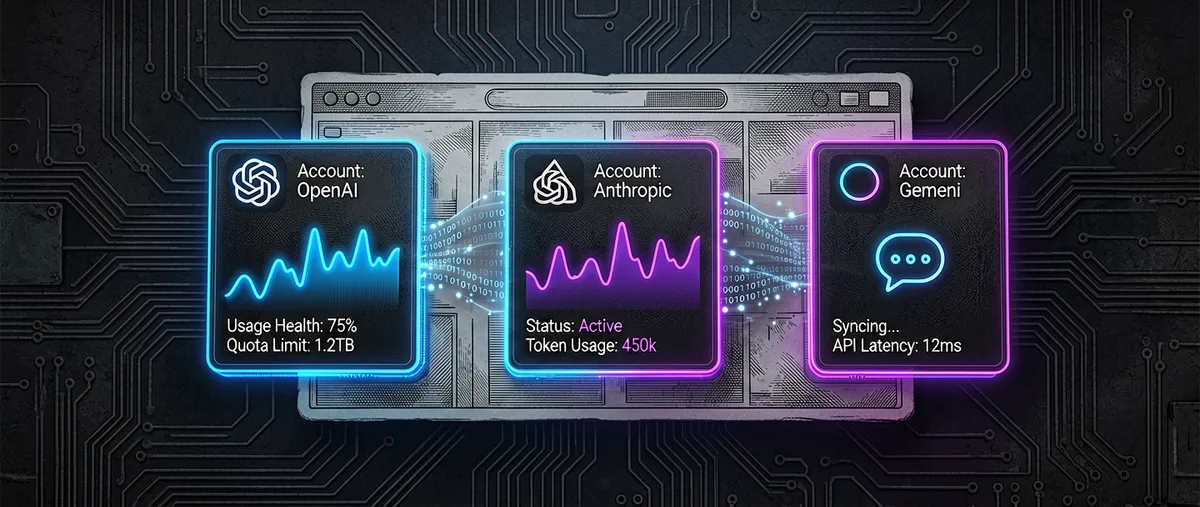
Antigravity Tools: a local gateway for AI accounts and protocols
lbjlaq/Antigravity-Manager · 31,740★ · 3,420 forks
Everything worth knowing about lbjlaq/Antigravity-Manager: a desktop application and local server that manages Antigravity accounts and exposes a gateway compatible with several AI protocols.
What Antigravity Tools is
Antigravity Tools is the name currently used by the lbjlaq/Antigravity-Manager repository. Its README presents it as a desktop application for developers and AI enthusiasts that brings together multi-account administration, quota lookup, account switching, and a local protocol proxy.
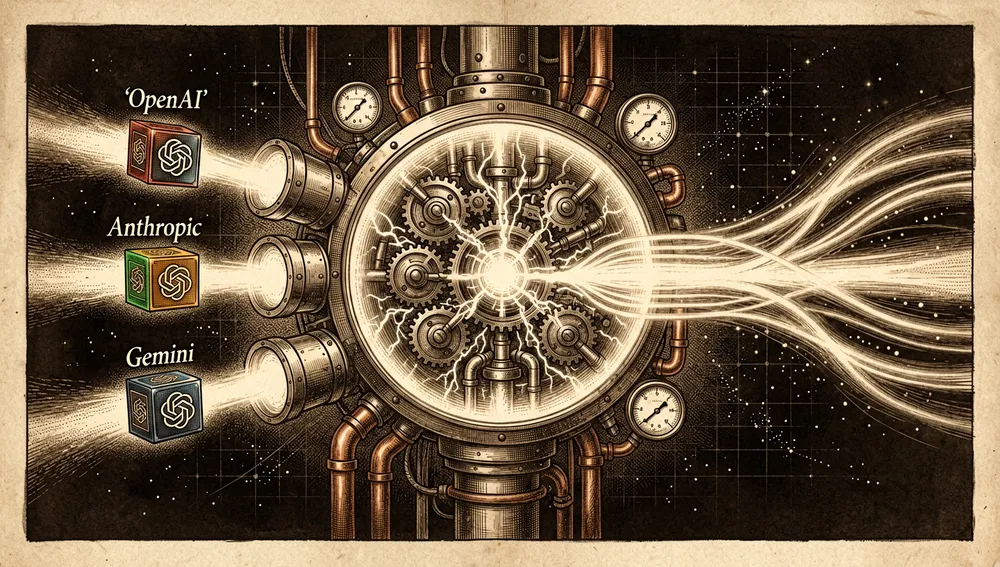
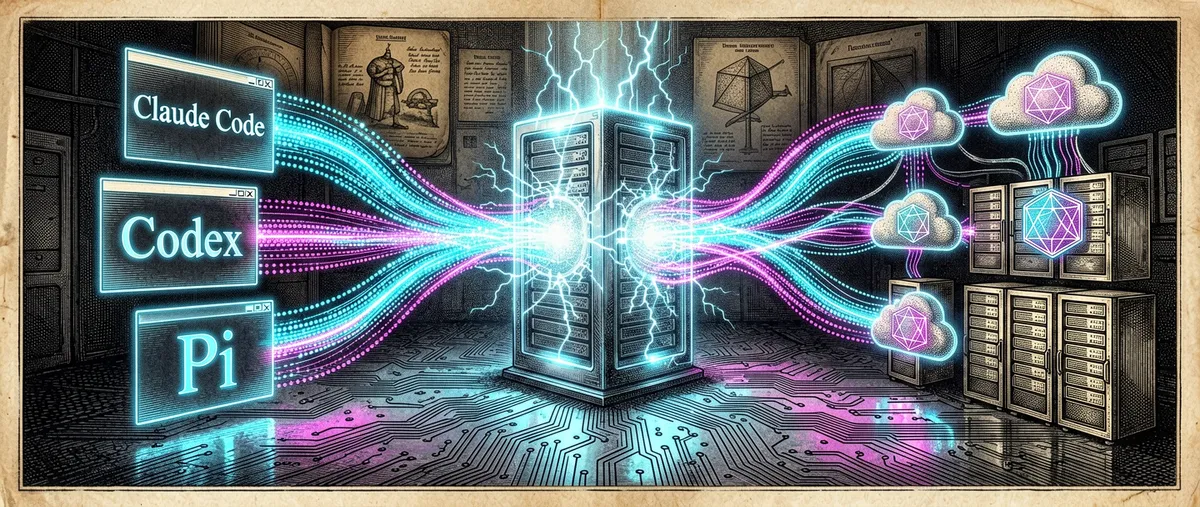
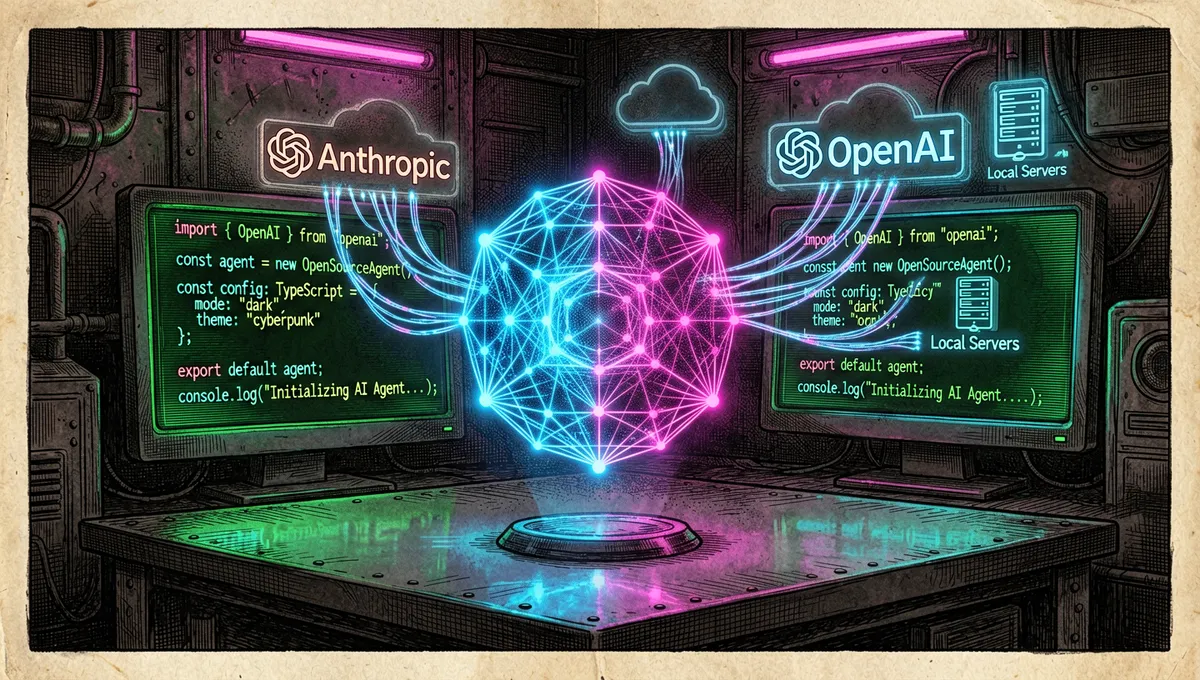
The proxy converts Google and Anthropic web sessions into interfaces compatible with OpenAI, Anthropic, and Gemini. The documentation specifies the /v1/chat/completions and /v1/messages endpoints, plus direct compatibility with Google’s official SDKs for Gemini. It is not a product from Google, Anthropic, or OpenAI: it is independent community software that connects to those ecosystems.
The origin: from account switcher to local gateway
GitHub records the repository’s creation on November 26, 2025. The lbjlaq account does not publish a name or bio on its profile, so it is not possible to attribute a personal identity beyond the pseudonym. The initial description and the repository name emphasized fluid switching between Antigravity accounts; the current README, version 4.5.2, positions it as a broader AI gateway.
That evolution also shows up in the changelog included in the README: the project documents base URL and key synchronization with Codex or Claude Code, compatibility with those clients’ tool-calling flows, and fixes for Gemini variants and protocols. That expansion explains the product’s central tension: providing a uniform local interface for different clients while the upstream platforms keep changing model names, authentication requirements, and request formats.
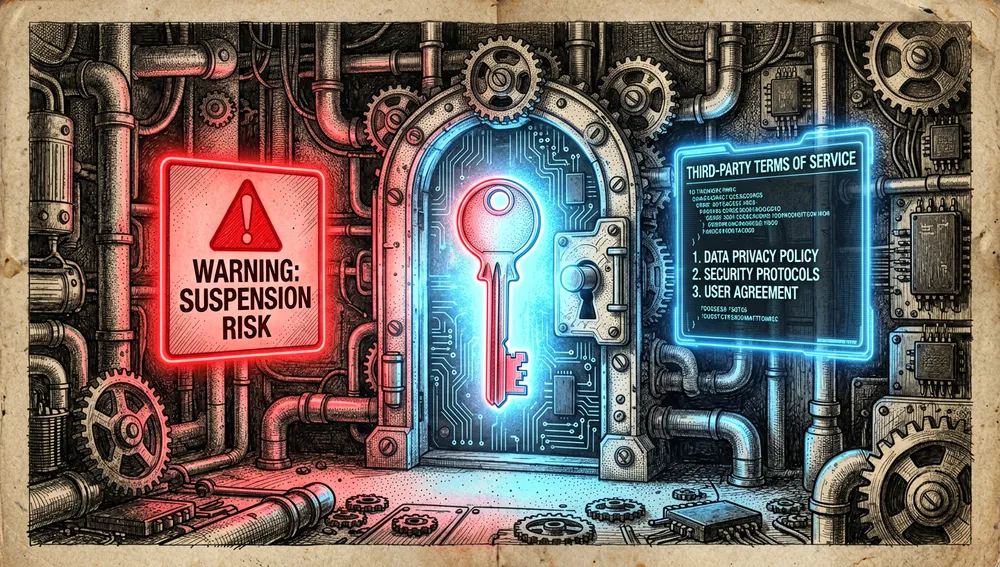
There is an important warning from the project itself: its documentation states that using third-party software, tools, or services with Antigravity, Gemini CLI, or Gemini Code Assist may violate Google’s applicable terms and policies and could lead to account suspension or termination. It recommends limiting use to the account-switching feature. That is a warning from the maintainer, not an approval from Google.
Philosophy and principles
The verifiable proposition rests on four ideas:
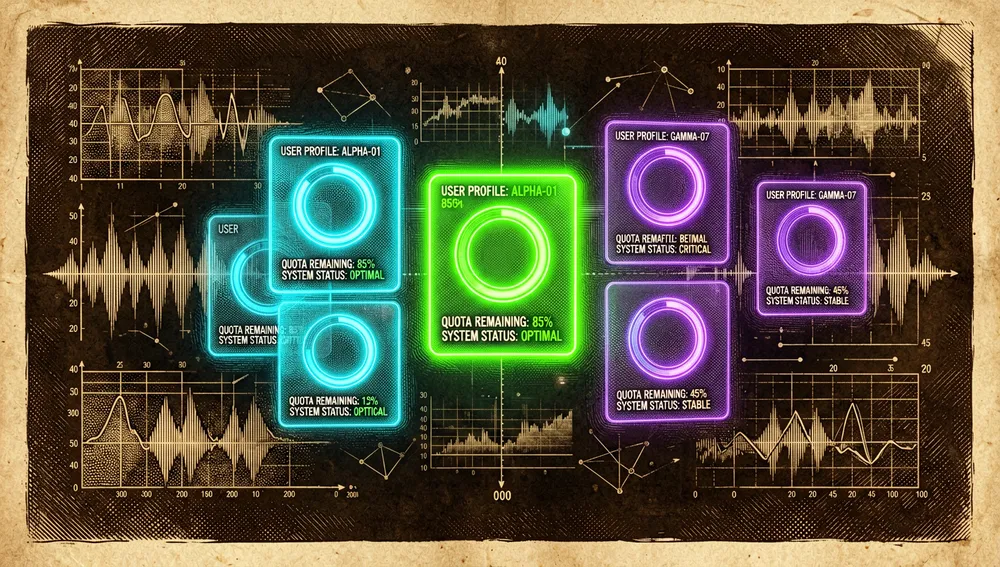
- Centralizing accounts and quotas: the dashboard shows the health and remaining average quota of accounts, and recommends an account with available headroom.
- Separating client and provider: the gateway accepts OpenAI, Anthropic, and Gemini formats to reduce each application’s dependence on a specific protocol.
- Continuity through failures: the README declares retries and silent rotation on
429and401expiration, along with the exclusion of accounts returning a403error. - Local control and explicit configuration: the application offers model mapping, body-size limits, and interface credentials, instead of hiding the connection behind a hosted service.
These are features declared by the repository; they are not an independent guarantee of availability, security, or compliance with providers’ terms.
How it works
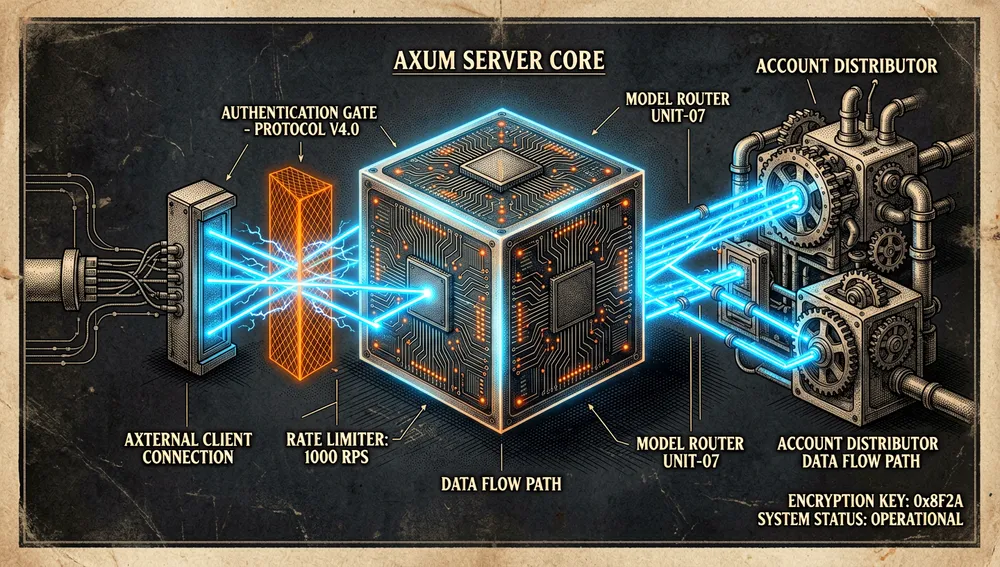
The application combines Tauri v2, Rust, and React. The README’s architecture diagram describes this chain: external client → Antigravity’s Axum server → authentication, rate-limiting, and logging middleware → model router → account distributor → request converter → Google or Anthropic services → response converter.
The dashboard manages automatic or manual OAuth 2.0 authorizations, token and JSON import, and migration of the version-1 database. The router can map model names to families or apply regular expressions; it also sorts accounts by type and quota-refill frequency. For background requests from tools like Claude CLI, the README declares a configurable downgrade to Flash models.
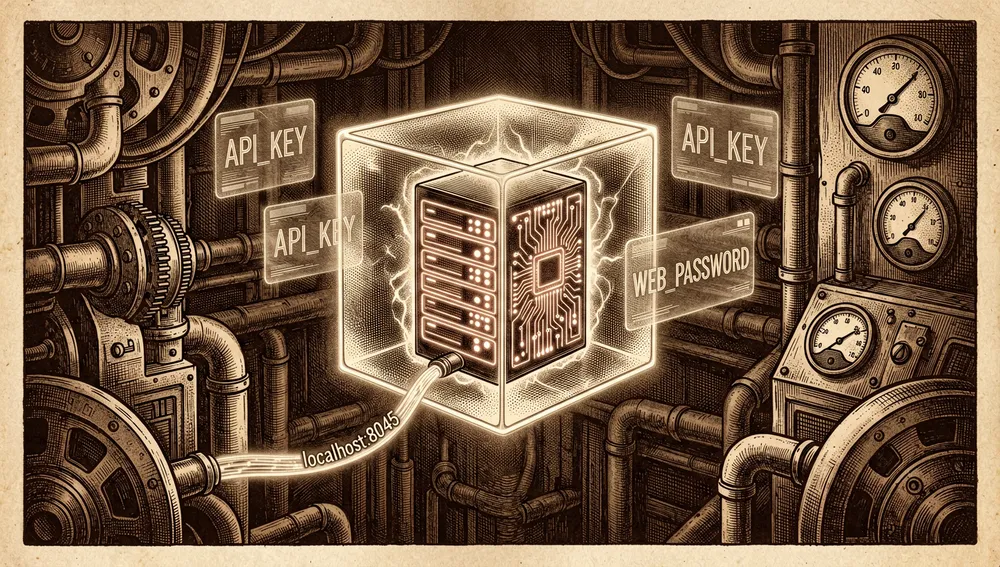
The server can run in GUI mode or headless via Docker. By default, the admin panel and the API base are http://localhost:8045 and http://localhost:8045/v1.
The README also shows integrations with Claude Code, OpenCode, Python via the OpenAI client, Kilo Code, Cherry Studio, NextChat, and LobeChat. For Kilo Code, it recommends choosing the Gemini protocol: its OpenAI mode adds a non-standard route that the project documents as the cause of a 404 error.
Official and semi-official status
The status is unofficial. No evidence was recovered of acceptance into a Google, Anthropic, or OpenAI store, nor of an endorsement from Antigravity’s provider. The official page linked by GitHub is a site hosted by the author on GitHub Pages, not a provider domain.
In practice, the project integrates with those providers’ APIs and clients, and the README lists sponsors that are API relay services. That establishes that the project maintains integrations and sponsorships, but it does not amount to certification, affiliation, or permission from the platforms. The README’s own terms-of-service warning makes it especially important to keep these concepts distinct.
The ecosystem
Author’s repositories
lbjlaq/Antigravity-Tools-LS: local proxy bridge for the Antigravity IDE; the GitHub API describes it as a system designed specifically for that IDE, and it registered 399 stars at the time of this measurement. Antigravity Tools’ README recommends it as a language server for completion, diagnostics, and protocol debugging.lbjlaq/gpt2api: an OpenAI-compatible SaaS gateway based, according to its public description, onchatgpt.com; it showed 0 stars. It is a project by the same author on gateways, but no documentation was recovered proving a dependency on Antigravity Tools.lbjlaq/CursorChecker: a repository by the same author, with 24 stars at query time. The API provided no description; it is mentioned only as part of the public portfolio, not as a confirmed integration.
Forks, ports, and translations
The forks API retrieved several derivatives that do declare their own changes:
thuongtin/Antigravity-Manager, with 78 stars, presents itself as a cross-platform manager with a Flet interface, account switching, and backups; it is a fork, not the original Tauri client.Safphere/Toybox, with 44 stars, broadens its description to cross-platform tools and retains Tauri v2, React, and Rust; the technical relationship beyond being a fork was not demonstrated.MixasV/DroidGravity-Manager, with 8 stars, declares additional compatibility with Factory Droid.vnt87/antigravity-tools, with 1 star, identifies itself as a Vietnamese version. The API only retrieved that description; the extent of its translation was not verified.
A search for repositories by name returned many mirrors with no declared changes, and unrelated programs that reuse the phrase “Antigravity Manager.” They are not presented as extensions of the project, so as not to turn a name coincidence into a technical relationship.
Repo numbers
Measured: August 8, 2026, GitHub API and Docker Hub.
| Metric | Value |
|---|---|
| Stars | 30,329 |
| Forks | 3,282 |
| Real subscribers | 107 |
| Commits | 729 |
| Open issues reported by the API | 1,787 |
| Visible open pull requests | 45 |
| Primary language | Rust |
| License declared by the README | CC BY-NC-SA 4.0 |
| Created | November 26, 2025 |
| Latest release | v4.5.2, August 8, 2026 |
Docker image lbjlaq/antigravity-manager | 151,509 cumulative pulls |
The top contributors returned by the API were lbjlaq (507 contributions), new-Beginner (31), normal-coder (16), franklegolasyoung (11), and CarlitoDon (10). The 729-commit total comes from the last-page link of the API’s commit pagination. GitHub returns watchers_count as identical to stars, so subscribers_count is reported as the real subscriber figure. open_issues_count can include open pull requests, so it should not be read as an issue-only count. The API generically labeled the license as “Other,” while the README’s badge specifies CC BY-NC-SA 4.0.
How to contribute
No CONTRIBUTING.md file or specific contribution instructions were found in the root tree. There is development infrastructure, though: .github/workflows, testing documentation in docs/testing, and open pull requests. Anyone wishing to contribute should first review the issues, the open pull requests, and the contents of docs/testing; in the sources retrieved, the repository does not document a mandatory branch, a pull-request template, or a single test command.
Quick-start guide
Installation and first launch
- Linux or macOS: the README publishes the installer
curl -fsSL https://raw.githubusercontent.com/lbjlaq/Antigravity-Manager/main/install.sh | bash. The script detects the OS, architecture, and package manager;--dry-runcan be used to preview and--version 4.5.2to pin that version. - Windows: the documented PowerShell command is
irm https://raw.githubusercontent.com/lbjlaq/Antigravity-Manager/main/install.ps1 | iex. - macOS with Homebrew:
brew tap lbjlaq/antigravity-manager https://github.com/lbjlaq/Antigravity-Managerfollowed bybrew install --cask antigravity-tools. - Server or NAS: the README offers the Docker image. After starting the container, it is administered from
http://localhost:8045;API_KEYmust be defined, and it is advisable to defineWEB_PASSWORDseparately.
On first launch, an account is added via OAuth. The authorization URL uses a one-time local callback port: you must open the URL shown in the active dialog. If the application closes during the process, the browser may show that localhost refused the connection.
Common workflows
- Add and choose an account: complete OAuth from the dialog, return to the application, and check the dashboard; it shows the quota and lets you select the recommended account.
- Offer a local API to an OpenAI client: set the base URL
http://127.0.0.1:8045/v1and the proxy’s API key in the client. The chat endpoint is/v1/chat/completions. - Connect an Anthropic-compatible client: use the
/v1/messagesendpoint; the README documents this for Claude Code CLI and preserves system prompts and reasoning depending on its implementation. - Run it in Docker: use the README’s example with port
8045, a~/.antigravity_tools:/root/.antigravity_toolsvolume, andAPI_KEY; the volume preserves configuration and data across container recreations.
Essential configuration
API_KEY: required in Docker to authenticate AI requests.WEB_PASSWORD: optional password for the web interface; if missing, the documentation states thatAPI_KEYis used as a fallback. It is advisable to keep them separate.ABV_MAX_BODY_SIZE: maximum request body size limit; the example uses104857600for payloads of up to 100 MB.~/.antigravity_tools/gui_config.json: documented location for persistent configuration, includingadmin_passwordinsideproxy.- Model mapping page: allows correcting mismatches between the client’s model names and the project’s internal names.
Common pitfalls and fixes
- “Damaged app” on macOS: the README proposes
sudo xattr -rd com.apple.quarantine "/Applications/Antigravity Tools.app"; the Homebrew installation states it clears that attribute automatically. 404error with Kilo Code in OpenAI mode: the README attributes the problem to a non-standard extra route and recommends using the Gemini protocol, reviewing the model mapping, and checking the logs.- Web login with the wrong key: if both
API_KEYandWEB_PASSWORDare defined, the interface requiresWEB_PASSWORD; the API key is reserved for calls. Environment variables take priority over changes made in the interface and the configuration file. - Authentication and account issues: GitHub discussions include concrete reports of
403s, ineligible accounts, missing enterpriseproject_id, andstorage_json_not_found. These don’t prove a common cause, but they confirm they are cases handled by the community; re-authorizing with a valid account and using the current OAuth URL is the documented path before attributing the issue to the proxy. - Compliance risk: before connecting third-party clients or automations, review Google’s terms. The README explicitly warns of possible suspension; there is no technical fix in the project that nullifies that risk.
Integrations and migration
The README documents OpenAI clients via a local base URL, Anthropic clients via /v1/messages, the Gemini SDK, Claude Code, OpenCode, Kilo Code, Cherry Studio, NextChat, and LobeChat. For a Docker installation predating version 4.0.2, the project indicates a headless architecture and describes how to add WEB_PASSWORD; v1 installations can migrate their database automatically. No verifiable migration guide from a different gateway was recovered.
How the community received it
The retrievable evidence shows an active support community, but not a broad, verifiable external review of the repository:
- The GitHub Discussions page maintains categories for announcements, general discussion, ideas, polls, Q&A, and “show and tell.” The pinned bug-feedback thread for version 3.3.16 was posted by
lbjlaq, so it establishes an author-run support channel, not an independent opinion. - On that same page,
Zorro20010opened a question about an account missing an enterpriseproject_idand a failed automatic resolution, with 8 votes and 1 visible comment.AngelNetw0rkreported an account ineligible for Antigravity, with 2 votes and 9 comments. These are specific authentication issues, not an overall product evaluation. markpiterposted a suggestion after a month of use, with 1 vote and 0 comments. With no comments or full text retrieved, no praise or specific criticism can be attributed to it.- Hacker News searches for the exact name, the author, and the product did not return a direct thread about
lbjlaq/Antigravity-Manager. Comments about the Google Antigravity product were retrieved, but they are not used as reception of this repository. Reddit and Product Hunt returned a verification screen or anti-bot block, so no retrievable evidence was obtained. The YouTube search returned videos about Google Antigravity, not a verifiable demo of this application; they are omitted as reviews of the repository.
Antigravity Tools versus other proposals
| Proposal | Verified relationship | Verified difference |
|---|---|---|
lbjlaq/Antigravity-Tools-LS | The README recommends it, and the API describes it as a local proxy bridge for Antigravity. | It is an IDE-oriented language server; Antigravity Tools manages accounts, quotas, and protocols. |
thuongtin/Antigravity-Manager | The API identifies it as a fork of the original repository. | Its description declares a Flet interface and backups; the original declares Tauri v2, Rust, and React. |
MixasV/DroidGravity-Manager | The API identifies it as a fork. | Its description adds Factory Droid compatibility; no evidence was recovered that the original advertises it as an equivalent feature. |
Clients like Claude Code, Cherry Studio, or Kilo Code are not presented as competitors: the README treats them as integrations. Features not found in other gateways are not compared either, because partial functional overlap is not enough to establish a reliable comparison.
Use cases and who this repository can help
- People who juggle multiple Antigravity accounts can check quotas, spot accounts with
403errors, and switch the active account from a dashboard, if they accept the terms-of-service risk that the project itself warns about. - Teams or labs that need a local API URL for different clients can use the OpenAI, Anthropic, and Gemini adapters to connect tools that already accept those interfaces, keeping authentication and routing on their own machine or container.
- NAS, home server, or Docker users can deploy the headless variant, persist
~/.antigravity_tools, and separate the admin password from the key shared with clients. - Anyone integrating Claude Code, OpenCode, Kilo Code, or clients like Cherry Studio can use model mapping and logs to adapt names and protocols. This use case requires controlled testing: the project logs many compatibility changes, and its own notices flag operational and policy risks.
Resources
- Repository: https://github.com/lbjlaq/Antigravity-Manager
- Documentation and installation: https://github.com/lbjlaq/Antigravity-Manager#installation
- Project’s official site and docs: https://lbjlaq.github.io/Antigravity-Manager/
- API reference: https://github.com/lbjlaq/Antigravity-Manager/blob/main/docs/API_REFERENCE.md
- Changelog and releases: https://github.com/lbjlaq/Antigravity-Manager/releases
- Docker image: https://hub.docker.com/r/lbjlaq/antigravity-manager
- Related project by the author: https://github.com/lbjlaq/Antigravity-Tools-LS
- Community and support: https://github.com/lbjlaq/Antigravity-Manager/discussions
- Retrievable media about the Antigravity product, not reviews of this repository: Agent Manager 30 seconds, Google Antigravity, 34 thousand views visible in the search.
Note: this article combines the repository’s README and documentation, the GitHub API, Docker Hub, GitHub Discussions, Hacker News, and searches on Reddit, Product Hunt, and YouTube consulted on August 8, 2026. Figures change over time; platforms that blocked access are not used to draw conclusions.

Comments