

Awesome LLM Apps: a runnable catalog of agents, skills, and RAG
Shubhamsaboo/awesome-llm-apps · 139,728★ · 20,533 forks
Everything worth knowing about Shubhamsaboo/awesome-llm-apps: a collection of over a hundred open examples, organized so you pick and run a specific case rather than install a single product.
What Awesome LLM Apps is
Awesome LLM Apps gathers over a hundred open-source AI agents, agent skills, and RAG applications. The repository states its examples are compatible with Claude, Gemini, GPT, DeepSeek, Llama, Qwen, and other models; its license is Apache-2.0.
It isn’t a library or a monolithic app. It’s a monorepo of independent projects, grouped into agent_skills, starter and advanced agents, always-on agents, voice agents, MCP agents, generative UIs, RAG tutorials, and short framework courses.

The origin: from a first template to a catalog
The repository was created by Shubham Saboo on April 29, 2024; the earliest verifiable commit carries the message “Initial commit.” Saboo’s GitHub profile identifies them as “Senior AI PM @ Google Cloud” and links Unwind AI, though that doesn’t establish Google’s ownership or sponsorship of the repository.

No official launch announcement was retrieved in the project’s documentation. The earliest verifiable external reference found is the Hacker News thread 42510073, posted on December 25, 2024, and linking to the repository.
Philosophy and principles
The pitch favors examples that can be inspected and run, not a single abstraction for every case. The README describes them as applications built and tested end to end; a Starlog review interprets that orientation as a response to the problem of code examples not working once moved into your own project.
The practical consequence is deliberately heterogeneous: each subproject keeps its own dependencies, model provider, and configuration. It’s worth picking a template by use case and reading its README before assuming it shares requirements with the rest of the catalog.

How it works
The journey starts by picking a folder. Skills live in agent_skills; runnable demos are distributed by family, and each can include its own requirements.txt, .env.example, pyproject.toml, package.json, or Dockerfile.
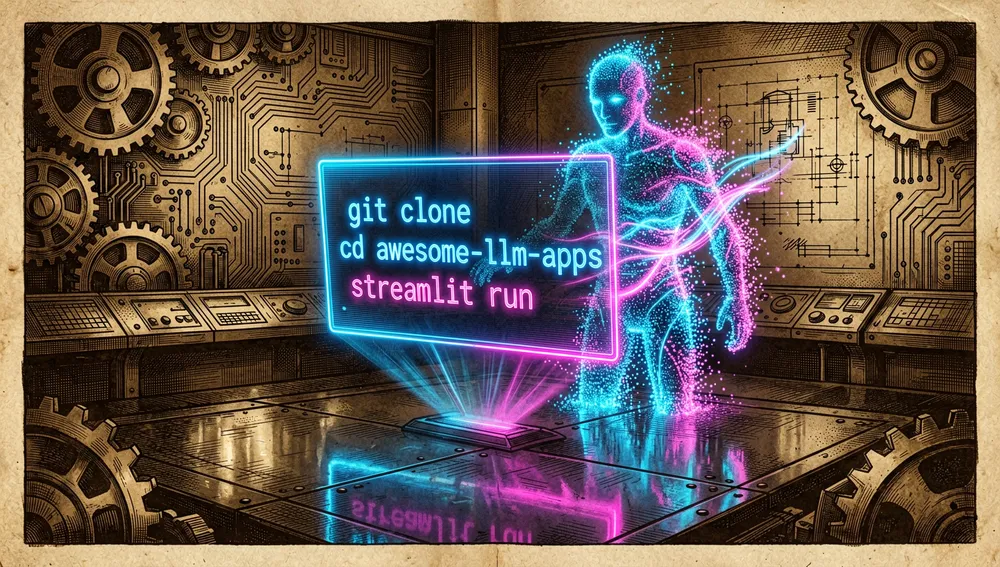
The official pattern for a Python template is cloning the repository, installing dependencies inside the chosen folder, and starting Streamlit. For a skill, the README offers direct installation via npx skills add from the skill’s path.
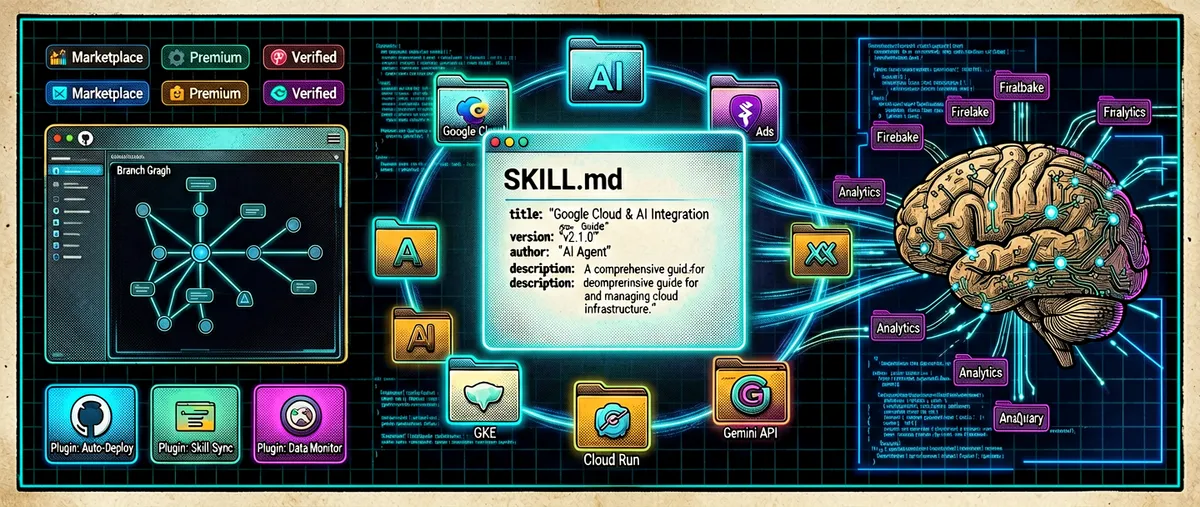
The repository includes a skill-evals automation that runs deterministic evaluations, SKILL.md validation, injection or supply-chain pattern analysis, and activation-vocabulary checks. That’s a safeguard for skill content, not a security or quality guarantee for every example app.
Official and semi-official status
The project is a collection publicly maintained by its author, not an official marketplace run by a model vendor. The presence of npx skills add instructions proves an installation path for a specific skill, but the retrieved sources don’t prove acceptance into Anthropic’s, OpenAI’s, Google’s, or another vendor’s official marketplace.
Its practical standing is that of a widely visible community catalog: no formal statement was retrieved turning it into a standard, nor a vendor certification. Unwind AI appears as a resource linked by the project, though its site wasn’t retrievable in this run due to anti-bot protection.
The ecosystem
Families and repositories by the same author
The repository itself is its main extension: its installable skills and agent families let you add cases without installing the whole collection as a single package.
Saboo’s account identified all-rag-techniques, Awesome-LLM, and awesome-ai-apps. These are public repositories by the same author, but Awesome LLM Apps’ README doesn’t present them as subprojects or official dependencies; they should be understood as related work, not required components.
Forks, copies, and translations
The API records 19,430 forks. Among the highest-starred retrieved are blurred-machine/awesome-llm-apps (369), asimov-academy/ia-projects-example (95), 0xSojalSec/awesome-llm-apps (93), and peteryxu/Shubham-awesome-llm-apps (42); the source doesn’t demonstrate they’re maintained or author-endorsed ports.
The README links versions rendered by readme-i18n.com in German, Spanish, French, Japanese, Korean, Portuguese, Russian, and Chinese. These are translations published outside the canonical tree, not translation files integrated into the repository.
Repo numbers
Measured: August 10, 2026, GitHub API and page.
| Metric | Value |
|---|---|
| Stars | 131,939 |
| Forks | 19,430 |
| Real subscribers | 1,251 |
| Visible commits | 1,176 |
| Visible contributors | 94 |
| Branches / tags | 3 / 0 |
| Primary language | Python |
| Last push activity | 2026-08-10T07:26:18Z |
Star, fork, subscriber, and activity figures come from the API; the commit, branch, tag, and contributor totals are GitHub’s visible values. The API sorted by contributions placed Shubhamsaboo (607), Madhuvod (265), onestardao (17), thejesh23 (17), and awesomekoder (11) among the top five retrieved. The API’s watchers_count duplicates the star count, which is why subscribers_count is used here as the subscriber measure. The open_issues_count field was 10 and can include open pull requests; it isn’t read as ten user-reported issues.
Python dominates by bytes, followed by TypeScript, JavaScript, HTML, and CSS — a distribution consistent with varied examples rather than a single executable.
There are no published releases or retrievable version tags, so there’s no official release timeline to cite.
How to contribute
No CONTRIBUTING.md, code of conduct, security policy, or central support guide was retrieved in the current tree. So there’s no documented branch-or-pull-request flow that should be attributed to the project.
There is GitHub activity: the page showed 4 open issues and 6 open pull requests, versus 166 and 735 closed, respectively. Among the open issues are a deprecated node:20-slim and old Python dependencies; among the pull requests are contributions of new skills and agents.
To contribute responsibly, the available evidence suggests preparing an addition as a self-contained project, reviewing its specific documentation, and checking it doesn’t trip the skill-evals validations. That’s a recommendation derived from the verified structure and automation, not a policy published by the maintainer.
How the community received it
The HN thread 42510073 got 3 points and 1 comment. Commenter chris_5f praised the resource for concentrating LLM material and described Saboo as more of a curator than a creator; that’s an individual opinion, not an independent evaluation of each template.
HN thread 44258452, from June 2025, logged 1 point and no comments: it shows distribution, but doesn’t allow inferring a qualitative reception.
Starlog published a read focused on the runnable templates on May 9, 2026, and OpenTools and PyShine indexed the project as a resource. These are external coverage or directories, not performance proof for the apps.
On video, OverClocked published a 7:46 setup guide on July 25, 2026, with 28 visible views; Forkcast included the repository on July 19 in an 18:25 weekly roundup with 64 views. Both figures are point-in-time measurements of the retrieved pages, and the second video isn’t a dedicated review.
Reddit, X, and Product Hunt weren’t retrievable without authentication or due to anti-bot challenges. So neither an absence of conversation nor an absence of a launch on those platforms is claimed.
Awesome LLM Apps versus other approaches
| Project | Verifiable difference |
|---|---|
NirDiamant/GenAI_Agents | Presents itself as 53 tutorials and implementations on agent techniques; Awesome LLM Apps presents itself as over a hundred runnable apps, agents, skills, and RAG examples. |
microsoft/ai-agents-for-beginners | An 18-lesson course, with a written lesson, video, and Python samples per unit; the documented project is a catalog of templates by use case. |
openai/openai-cookbook | Publishes guides and examples for OpenAI’s API; Awesome LLM Apps declares examples across multiple providers and model families. |
e2b-dev/awesome-ai-agents | A directory of projects and companies, including closed-source products; Awesome LLM Apps distributes open-source code from its own templates and examples. |
These differences describe the scope declared by the first two repositories; they aren’t quality, cost, or security benchmarks. The same caution applies to the remaining two comparisons.
Quick-start guide
Installation and first run
Option 1: install a skill. Node.js and the skills client are required. The README shows this exact example:
npx skills add https://github.com/Shubhamsaboo/awesome-llm-apps/tree/main/agent_skills/project-graveyardThe first expected result is that skills picks up that specific skill; it doesn’t install the whole monorepo.
Option 2: run a Streamlit template. Git, Python, and the dependencies declared by the chosen folder are required:
git clone https://github.com/Shubhamsaboo/awesome-llm-apps.git
cd awesome-llm-apps/starter_ai_agents/ai_travel_agent
pip install -r requirements.txt
streamlit run travel_agent.py
The command starts the ai_travel_agent example; its keys and variables shouldn’t be extrapolated to other folders.
Common workflows
- Add an agent skill: run
npx skills addwith a skill’s path, such asproject-graveyard, and use it through askills-compatible environment. - Try a starter agent: clone, enter the chosen folder, install
requirements.txt, and run its Streamlit command, as inai_travel_agent. - Explore RAG, MCP, voice, or a generative UI: pick the relevant family in the tree, open that template’s README, and follow only its own dependencies and variables.
Essential configuration
requirements.txt: Python dependencies specific to the selected template..env.example: a variable template when an example includes one; check it in the specific folder before creating local secrets.pyproject.tomlorpackage.json: configuration for Python or JavaScript/TypeScript examples that use them.Dockerfile: a packaging option only for projects that include one..github/workflows/skill-evals.yml: validation automation relevant when contributing a skill.
Common pitfalls and fixes
- Trying
pip installat the root: there’s no common root-levelrequirements.txt. Fix: enter the example’s folder first and use its own files. - Assuming every template shares a provider or variables: the collection is heterogeneous. Fix: read the subproject’s README and
.env.examplebefore running. - Using an outdated base image: issue 1046 identifies
node:20-slimas end-of-life. Fix: check the issue and update the affected template before building it. - Adding a skill without validating it: the
skill-evalsflow checks format and security patterns. Fix: review that automation and run the relevant checks before opening a pull request.
Integrations and migration
The documented integration is twofold: npx skills add for individual skills, and local execution of agent, RAG, MCP, voice, or generative-UI examples from their directories. No official migration guide from or toward another catalog was retrieved; to move a case, it’s best to copy or adapt only the selected template and its dependencies, not treat the repository as a migration package.
Use cases and who this repository can help
- Developers who need a runnable starting point can pick an agent, a RAG app, or a skill and study its isolated dependencies, instead of designing every component from scratch.
- Teams comparing model-integration patterns get a collection that declares examples covering multiple providers and model families, so it serves as a reference repertoire, not a universal abstraction layer.
- People building skills for agents get the
agent_skillstree, the install command, andskill-evalsvalidation as examples and hints of the expected format and controls. - Instructors and self-learners can contrast a working template with more curricular repositories, like Microsoft’s 18 lessons or the GenAI_Agents tutorials, choosing the resource depending on whether they prefer code-per-case or a didactic sequence.
Resources
- Repository: https://github.com/Shubhamsaboo/awesome-llm-apps
- Documentation or setup: the repository’s README and https://www.theunwindai.com/
- Official skills:
agent_skills/and thenpx skills addinstallation documented in the README. - Reviews or conversations: Hacker News 42510073, Starlog, and OpenTools.
- Videos: OverClocked and Forkcast Weekly #11.
- Community: GitHub issues and pull requests; Discussions are disabled per the API.
Note: this article was compiled from sources retrieved on August 10, 2026. Metrics change over time.
Comments