

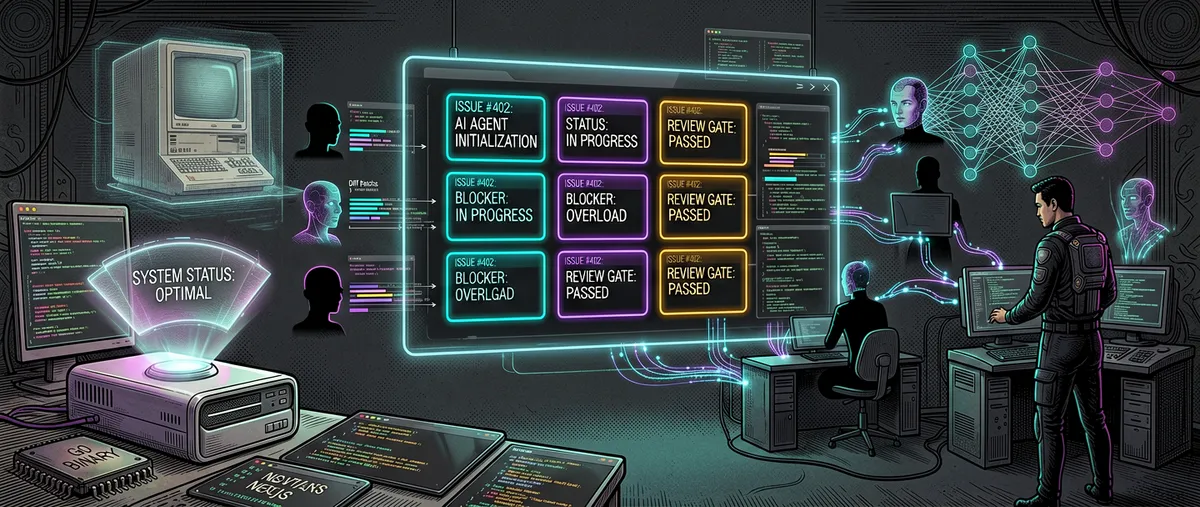
Multica: a workspace where coding agents and humans share the same issue board
multica-ai/multica · 51,341★ · 6,656 forks
Multica is an open-source workspace where tasks are assigned to coding agents —Claude Code, Codex, Cursor, and 20 more CLIs— the same way you’d assign them to a teammate. Agents pick up the issue, report progress, raise blockers, and hand work back for review; the entire history stays attached to the same issue. It’s self-hostable, bundles no model of its own, and creates no single-provider lock-in.
Origin
The repository was created on January 13, 2026, and the first commit dates to January 28, 2026. It’s a product of the multica-ai organization, based at multica.ai.
The top contributors by commit count were Bohan-J (multica-ai co-founder, 1,366 commits), NevilleQingNY (1,096), forrestchang (1,028), ldvnbl (485), multica-eve (373), yyclaw (47), and seacen (30).
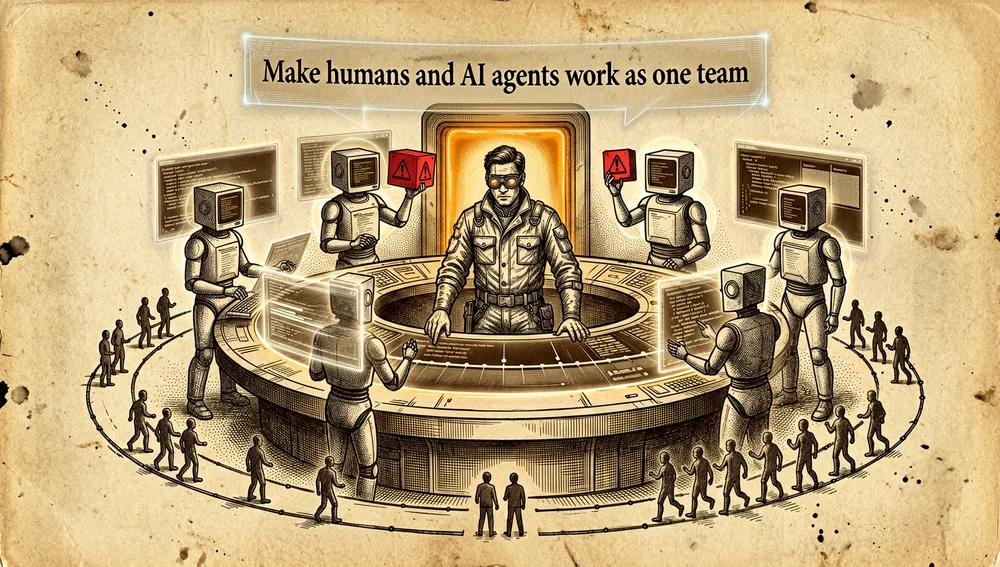
The project launched with cross-platform ambition from the start: the README and documentation guides are in English and Simplified Chinese, with the docs also served in Japanese and Korean. That early investment in translation, alongside community integrations for DingTalk, WeCom, and Telegram, suggests a deliberate orientation toward the Asian market. The tagline accompanying the logo — “Your next 10 hires won’t be human” — sums up the market thesis the project has argued from day one.
The name Multica stands for Multiplexed Information and Computing Agent and is a nod to Multics, the pioneering 1960s operating system that introduced time-sharing. According to its VISION.md, the bet is that Unix was a deliberate simplification of Multics, and that inflection point is repeating now, except “users” are both humans and autonomous agents.
Philosophy and principles
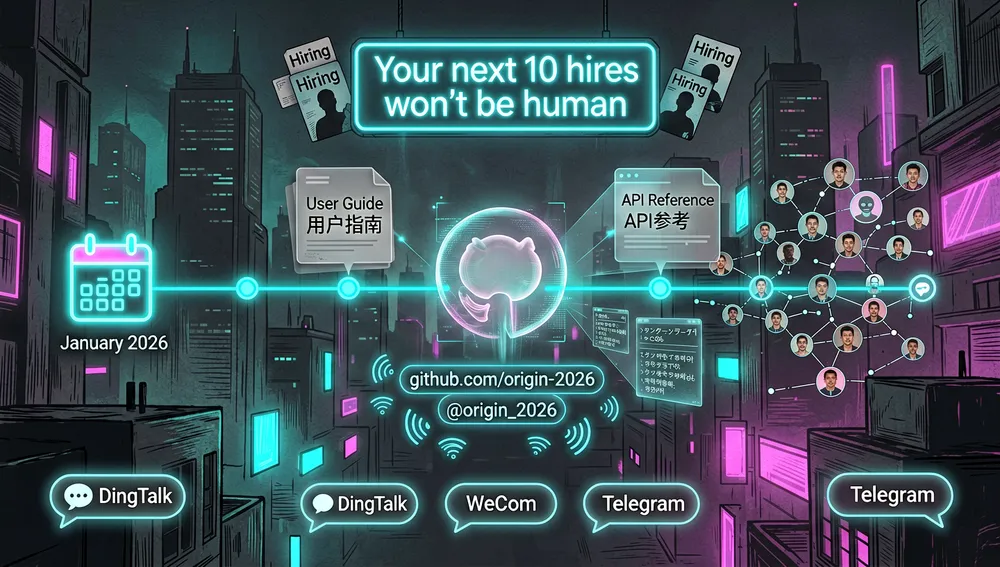
VISION.md states the central goal as “Make humans and AI agents work as one team.” From it, verifiable principles emerge in the code and documentation:
- Agents are first-class teammates. They’re not a collection of isolated tools: they receive issues, comment, raise blockers, and ship code just like a colleague.
- Multiplexing, not replacement. As with Multics, the bet is that “a small team doesn’t feel small”: with the right system, two engineers and a fleet of agents can move like twenty.
- Humans set direction and are accountable for the outcome. Multica “is not an autonomous company acting beyond human control.” Nothing ships without a human saying so; issues land in review, not
main. - Intent and outcome stay linked. When work finishes, its history doesn’t vanish with the session: the original intent, decisions, actions, and final result remain connected.
- The machine is the user’s. Each agent’s “desktop” is a computer connected via a local daemon; code never leaves it. Switching model providers is “a dropdown, not a migration.”
How it works
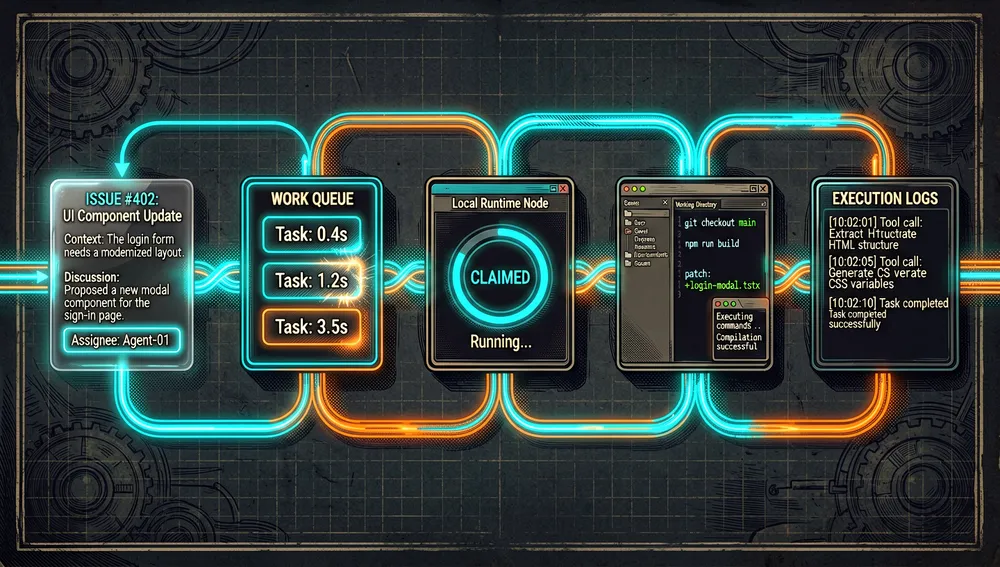
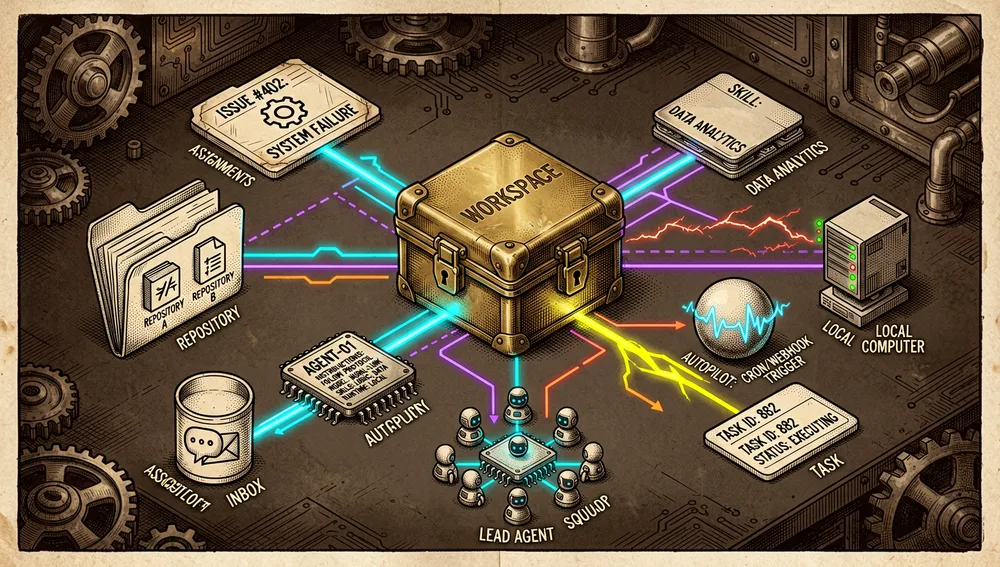
The full flow has five steps: (1) the issue supplies context — description, discussion, and assignee; assigning it to an agent uses that agent’s instructions, model, skills, and runtime configuration; (2) Multica creates a task that enters a queue; (3) a runtime claims the task, on a connected computer; (4) the AI tool runs locally, reads the working directory, runs commands, and produces results; (5) results write back to the issue.
The basic objects are: Workspace, Issue (the unit of work, whose assignee can be a member, an agent, or a squad), Project, Agent (a reusable configuration, not a long-running process), Skill, Runtime, Task, Squad, Chat, Inbox, and Autopilot (triggers runs via cron or webhook). An agent never starts work on its own: every run is triggered by an explicit action.
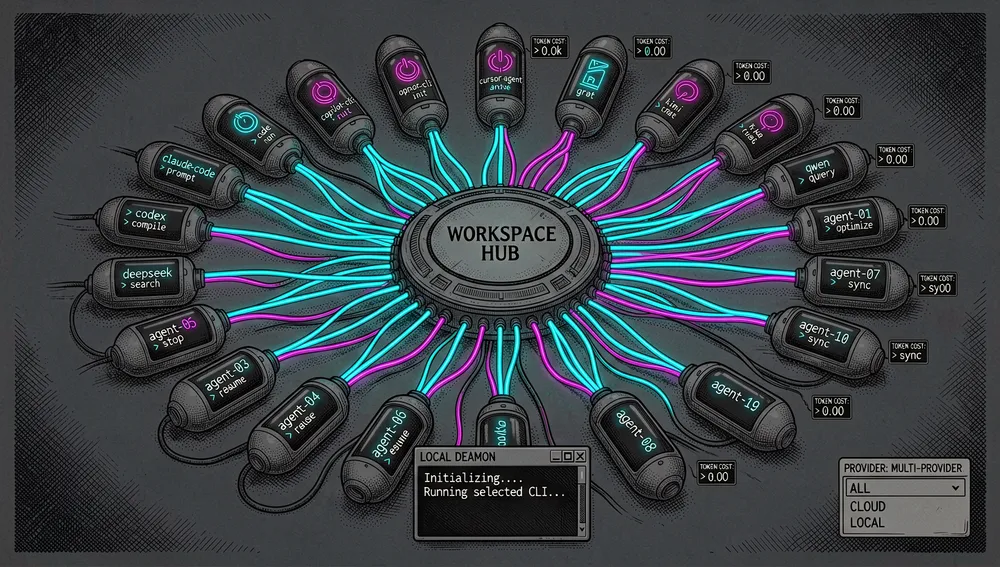
The 23 supported agent CLIs include Claude Code, OpenAI Codex, Cursor Agent, GitHub Copilot CLI, OpenCode, OpenClaw (openclaw), Hermes (hermes), Pi, Antigravity, CodeBuddy, DevEco Code, Grok, Kimi, Kiro CLI, Qoder CLI, Qwen Code, QwenPaw, Reasonix, Trae CLI, DeepSeek Harness, Oh-My-Pi, MiniMax Code, and Dim. Skills follow the open Anthropic Agent Skills standard: their main file is SKILL.md, and they can be imported from GitHub, ClawHub, or Skills.sh.
The ecosystem
Beyond Multica, the organization maintains: multica-ai/andrej-karpathy-skills (the org’s most visible project, with 205,501 stars and 21,022 forks, already catalogued on this site); multica-ai/dsh-multica-runtime (55 stars, DeepSeek Harness runtime support); multica-ai/multica-cli (26 stars, an agent skill for operating Multica without burning tokens); multica-ai/homebrew-tap (16 stars, the Homebrew tap).
Several third-party npm packages extend Multica: pi-multica-spine, @amaster.ai/pi-teamwork, multica-cli-manager, pi-multica-doctor, @openabc/multica-taskboard, n8n-nodes-multica, multica-slack-assistant, and @kevisual/multica-run. The Docker Hub search didn’t turn up an official image, but community builds exist: fengwk/multica (1,579 pulls), votanchat/multica (1,004), shubham16negi/opencode-multica (359).
Official / semi-official status
- Multica is open source under its own license: the “Multica License” is Apache License 2.0 with additional conditions. The key condition: without a commercial license you can’t use the code to offer a hosted service to third parties or embed it in a commercially sold product. Internal use within a single organization doesn’t require a commercial license.
- Open skills standard: by following the Anthropic Agent Skills open standard, Multica can import any skill meeting the spec. This isn’t an Anthropic affiliation, just format compatibility.
- Official distribution: there’s a Multica Cloud (multica.ai) and the self-hosted route with official GHCR images and a Homebrew tap.
- No formal vendor-marketplace acceptance was found. Its de facto reference position in the “agents as teammates on a board” category rests on its star base and npm ecosystem, not institutional backing.
Repo numbers
Measured: August 23, 2026, GitHub API.
| Metric | Value |
|---|---|
| Stars | 47,328 |
| Forks | 6,058 |
| Real subscribers | 164 |
| Open issues + PRs | 1,382 |
| Commits (last API page) | 4,967 |
| Primary language | Go |
| License | Multica License (Apache 2.0 + conditions) |
| Created | January 13, 2026 |
| Latest release | v0.4.32, August 21, 2026 |
The release cadence is very high: from v0.4.23 to v0.4.32 in eleven days.
Quick-start guide
Installation and first run
Self-hosted (recommended), macOS/Linux:
curl -fsSL https://raw.githubusercontent.com/multica-ai/multica/main/scripts/install.sh | bash -s -- --with-server
multica setup self-host
On Windows (PowerShell): $env:MULTICA_MODE="with-server"; irm https://raw.githubusercontent.com/multica-ai/multica/main/scripts/install.ps1 | iex then multica setup self-host. The script installs the CLI, fetches the self-hosted assets, and pulls the official GHCR images. http://localhost:3000 opens. Prerequisite: Docker and Docker Compose.
Without Docker: git clone https://github.com/multica-ai/multica.git && cd multica && make selfhost.
Common workflows
- Assign an issue to an agent:
multica issue assign MUL-123 --to "Backend Agent". - Create an issue from the terminal:
multica issue create --title "Fix login failure". - Review a run:
multica issue runs MUL-123lists the history. - Manage a daemon:
multica daemon start,multica runtime list.
Essential configuration
~/.multica/config.json: the CLI’s default config; contains tokens, don’t commit it.- Profiles (
--profile <name>): isolate a combination of server, token, workspace, and daemon. .env(self-hosted): definesPOSTGRES_DB,DATABASE_URL,PORT,FRONTEND_PORT.
Common pitfalls and fixes
- Don’t pin
MULTICA_DAEMON_PORTin the host shell or the container: the daemon derives its own port. - The daemon must run from a built binary, never
go run: it registers its own executable path and relaunches it. - Don’t copy
.envinto a git worktree: use.env.worktreeto avoid pointing back at the main database. - Skills imported from external sources can contain unsafe instructions: Multica doesn’t review or sandbox them; the source must be trusted.
Integrations and migration
Git hosts: GitHub, GitLab, Gitea, and Forgejo. Messaging channels: Slack and Lark (core) plus DingTalk, WeCom, Telegram (community-maintained). MCP: a server library lives in the workspace. Automation: Autopilot triggers via cron or webhook; a community n8n node exists.
Contributing
CONTRIBUTING.md: prerequisites are Node.js 22, pnpm 10.28.2, Go 1.26.6, and Docker. Contributing means accepting the full Multica License. Flow: make dev auto-detects checkout or worktree, creates the env, installs dependencies, and starts backend and frontend; make check-main runs typecheck, TypeScript unit tests, Go tests, and Playwright E2E tests.
How the community received it
The recovered evidence shows traction on YouTube and in the npm ecosystem, but almost no verifiable discussion on Hacker News. The main thread, “Multica: Assign issues to coding agents and track them like teammates” (April 13, 2026), got only 2 points and 0 comments. YouTube does have active coverage: “Multica: The Open Source Tool That Makes Claude Code 10x Better,” “Multica — Open Source Managed Agents Platform (30.8K Stars),” and two videos in Spanish. One of the titles cites “30.8K Stars,” a figure lower than the 47,328 measured today, indicating growth over a few months.
Multica versus other proposals
| Project | Verifiable overlap | Verifiable difference |
|---|---|---|
paperclipinc/paperclip | An open-source agent orchestrator, directly compared to Multica in several YouTube videos. | Its narrative centers on “zero-human companies,” versus Multica’s “humans and agents as one team” model with human sign-off. |
| Pokegents, OpenRig, Lula, Vestige | All propose multi-agent coding work (from the same HN wave). | All have very few points and comments on HN; none appears as an established competitor. |
Use cases and who this repository can help
- Small teams already running several agent CLIs who feel swamped “babysitting” them across isolated terminal tabs: Multica brings agents and people together on one board.
- Teams that require code to never leave their machines: the local runtime model and self-hosting with Docker Compose/Helm let them operate within their own perimeter.
- Quality-control and compliance owners: review gates and the execution log give an audit trail that “includes the robots.”
- Organizations wanting scheduled agent automation: Autopilot triggers runs via cron or webhook.
- Asian or multilingual teams: documentation in Chinese, Japanese, and Korean fits teams already conversing on those platforms.
Resources
- Repository: https://github.com/multica-ai/multica
- Documentation: https://multica.ai/docs
- Vision: https://github.com/multica-ai/multica/blob/main/VISION.md
- Community / Discord: https://discord.gg/W8gYBn226t
- Downloads (desktop): https://multica.ai/download
Note: this article combines the README, guides (VISION.md, SELF_HOSTING.md, CONTRIBUTING.md), official documentation, the GitHub API, the npm registry, Docker Hub, and Hacker News/YouTube results consulted on August 23, 2026. Figures change over time.
Comments