

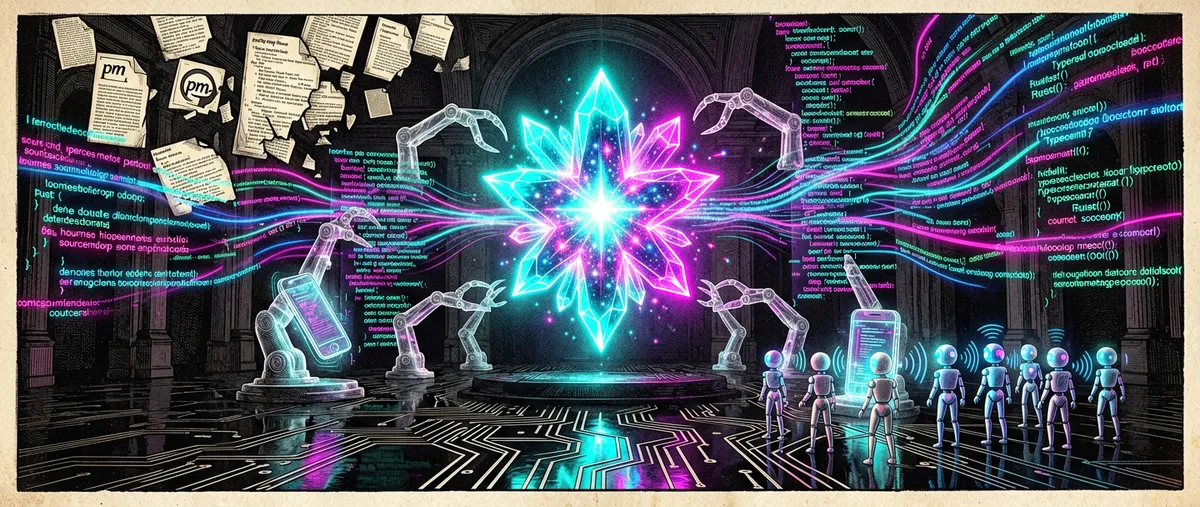
Claw Code: the Rust museum exhibit born from the Claude Code source leak
ultraworkers/claw-code · 195,287★ · 108,387 forks
Claw Code is a public Rust implementation of claw, a coding-agent harness with the shape and workflow of Claude Code, that also presents itself —and operates— as an “agent-managed museum exhibit”: a repository built and maintained with minimal human intervention, steered through Discord and a multi-agent coordination layer (OmX, clawhip, and OmO). Its origin is tied to the most consequential incident in the AI industry in 2026: the Claude Code source-code leak of March 31, 2026, after which the project became one of the most visible rewrites of that architecture on GitHub, with 195,110 stars as of measurement.
Identity note: the current canonical location is
ultraworkers/claw-code. The API shows thatinstructkr/claw-code(the original author’s personal account) now permanently redirects to the same repository, indicating the project was created under that account and later transferred to theultraworkersorganization. Older links, including several Hacker News threads, still point toinstructkr/claw-code.
Origin
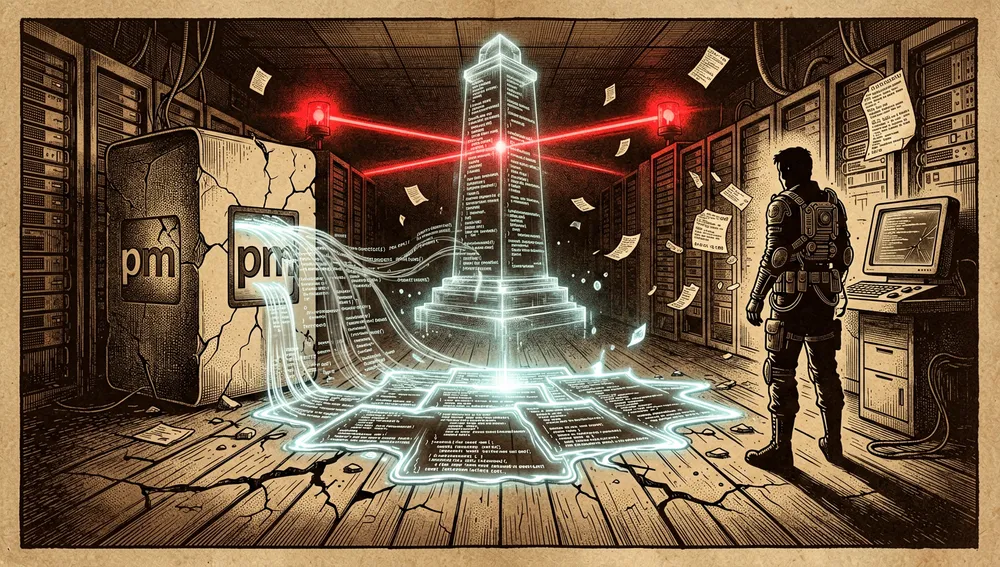
The repository was created on March 31, 2026, the same day, according to press coverage and the project’s site, the Claude Code source code leaked. The chronology verified across recovered sources is: a mistakenly published source map revealed “over half a million lines” of Claude Code source code —a 59.8 MB .map file bundled in the npm package @anthropic-ai/claude-code v2.1.88, roughly 512,000 lines of TypeScript across 1,906 files— and security researcher Chaofan Shou was among the first to spot it. Days later, Anthropic filed over 8,100 DMCA takedown requests to slow the copies spreading on GitHub.
That same March 31, 2026, Claw Code appeared: a rewrite of the harness architecture, attributed by German magazine heise to Korean developer Sigrid Jin (realsigridjin) with AI assistance. heise describes it as “the fastest-growing repository in GitHub history”; the claw-code.codes site claims it was “one of the fastest projects in GitHub history to reach 30,000 stars” (within hours).
The repository describes itself as “An agent-managed museum exhibit, built in Rust with Gajae-Code / LazyCodex — developed and maintained with no human intervention.” heise notes the project was “gladly embraced, for example, by Elon Musk’s xAI” thanks to it, citing a post by Sigrid Jin on X.
Philosophy and principles
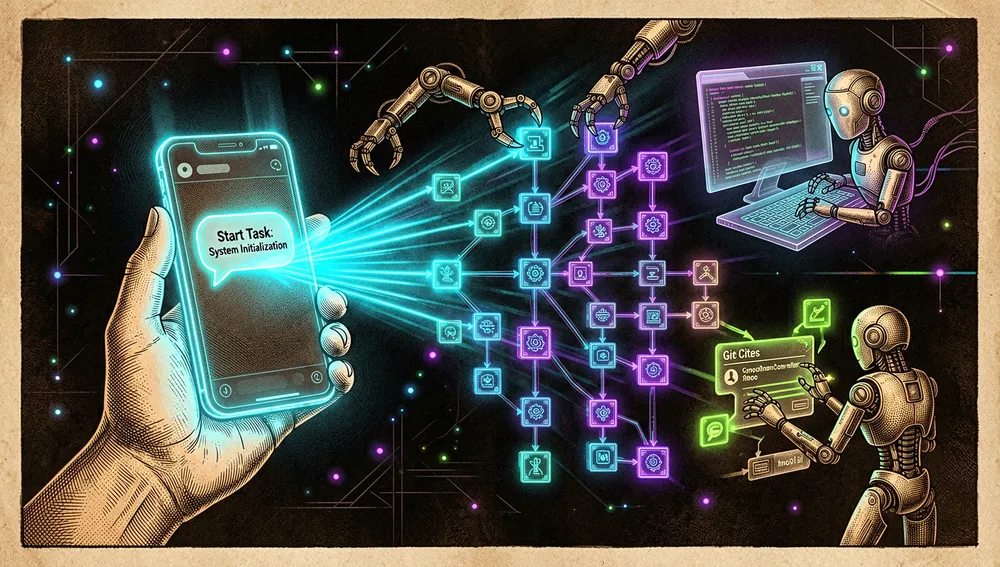
The repository’s PHILOSOPHY.md states the project’s thesis explicitly: “Stop Staring at the Files” — only looking at the generated files is looking at the wrong layer; “the Python rewrite was a byproduct. The Rust rewrite was too. What’s actually worth studying is the system that produced them: a clawhip-based coordination loop where humans give direction and autonomous claws execute the work.” The human interface is Discord: “A person can write a sentence from their phone, walk away, go to sleep… The claws read the directive, break it into tasks, assign roles, write code, run tests, debate failures, recover, and push the code once the work passes.”
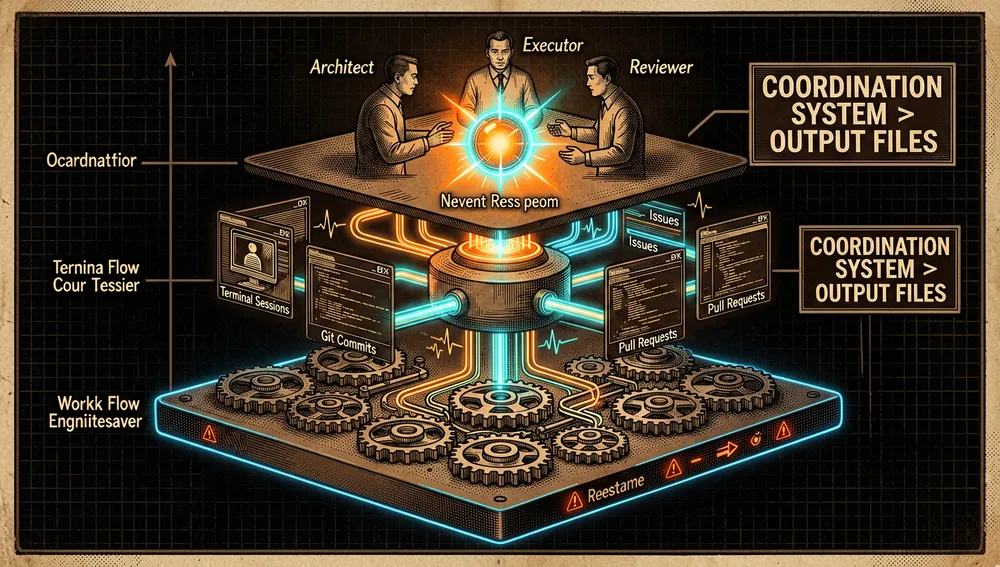
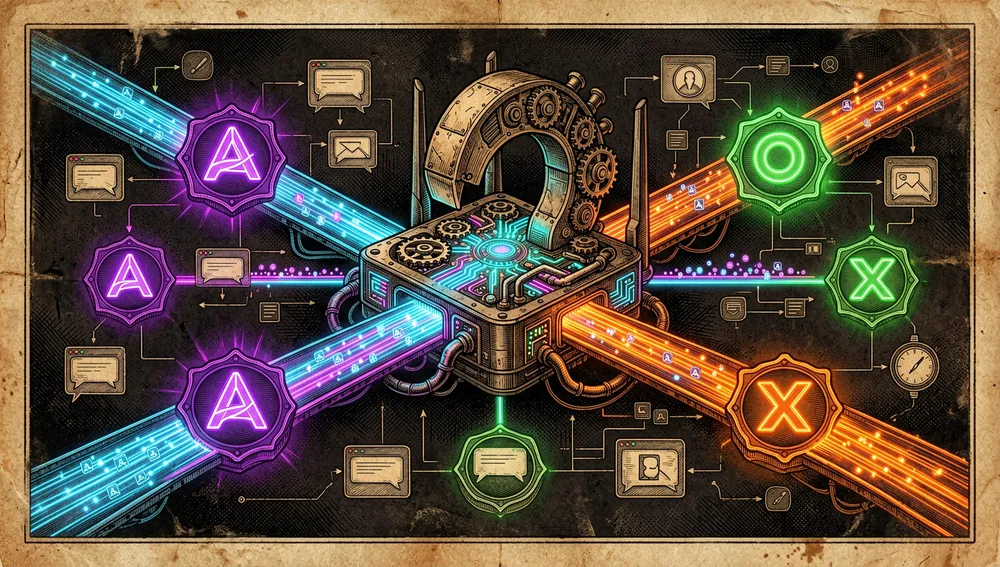
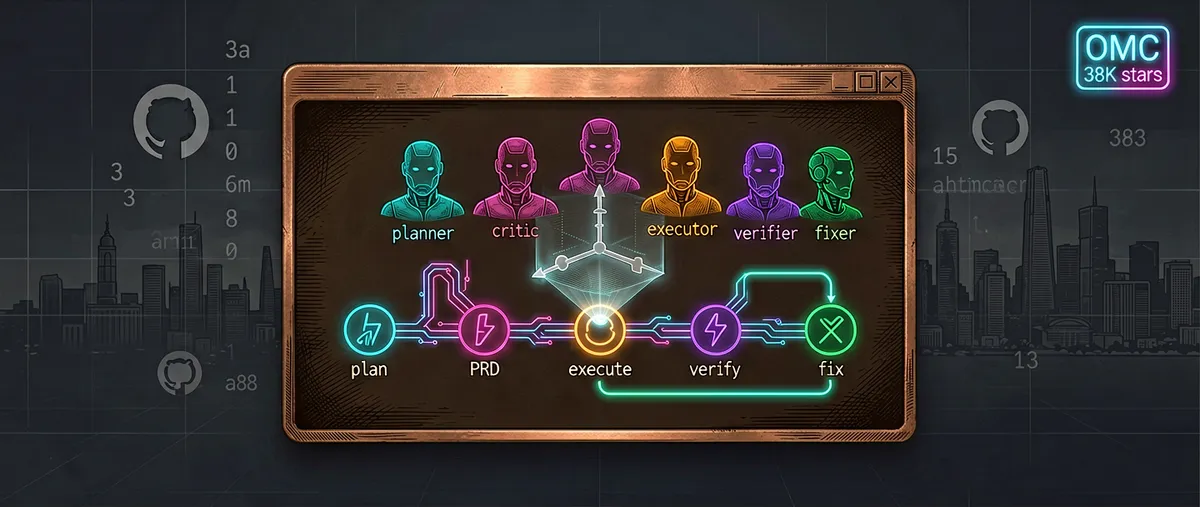
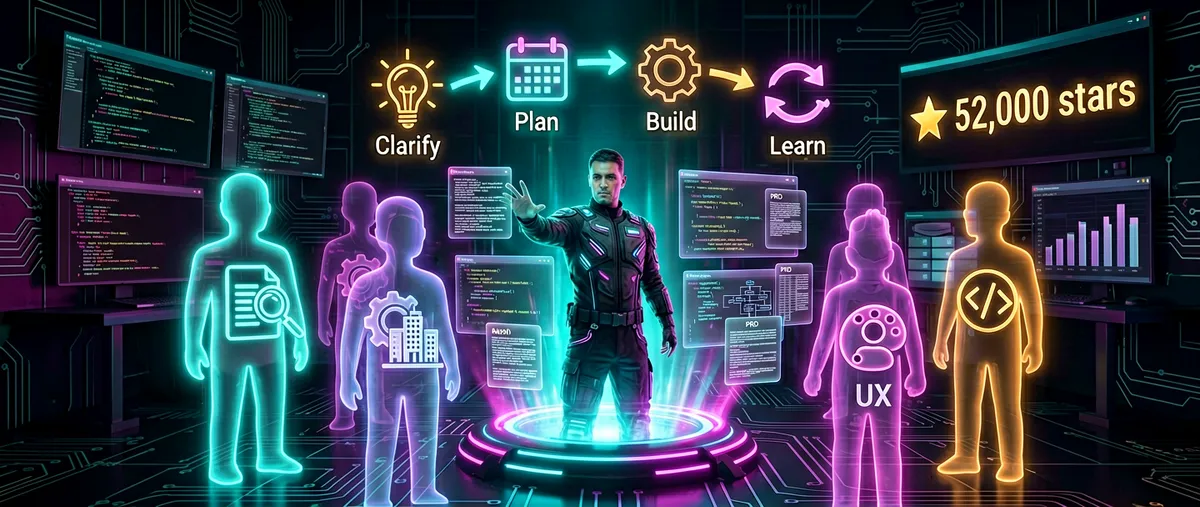
The three-piece system: (1) OmX (oh-my-codex), the workflow layer that turns short directives into structured execution; (2) clawhip, the event and notification router that watches git commits, tmux sessions, issues, and PRs; (3) OmO (oh-my-openagent), multi-agent coordination among Architect/Executor/Reviewer-type roles.
The ROADMAP.md (8,016 lines) formalizes the “clawable” harness concept: deterministic on startup, machine-readable in state and failure modes, recoverable without a human watching the terminal, “event-first, not log-first.” The README insists it’s not a production project: “it’s closer to a museum exhibit than a product pitch,” and recommends LazyCodex or Gajae-Code for real work.
How it works
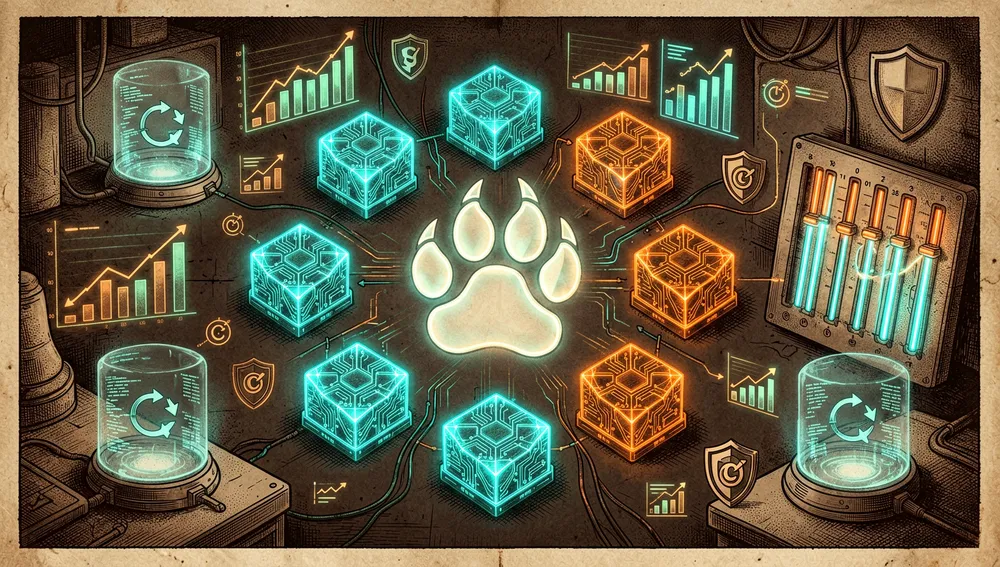
Claw Code is a coding-agent CLI (claw) whose canonical workspace lives in rust/ (~96% of the repository’s bytes) and reimplements the Claude Code harness architecture: tool system, streaming query engine, sessions and memory, permission system, MCP integration, and model-provider abstraction.
Parity status (PARITY.md): nine “lanes” integrated into main —bash validation, CI/sandbox fixes, file tools, TaskRegistry, Team+Cron, MCP lifecycle, LSP client, and permission enforcement— with a deterministic mock parity harness: 12 scripted scenarios and 21 captured /v1/messages requests. The repo has 1,690 total commits as of this investigation’s measurement.
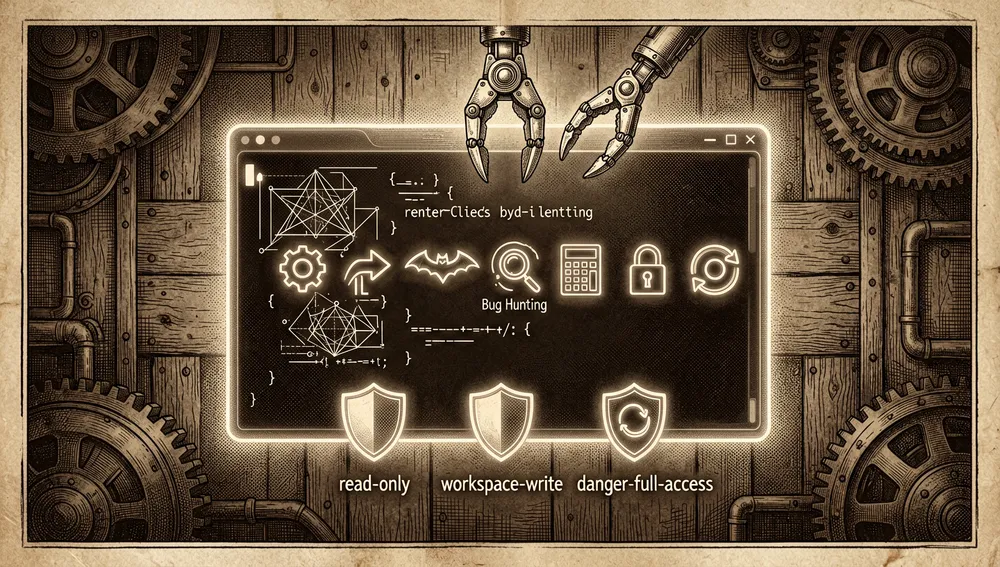
User surface: an interactive REPL with /help, /status, /cost, /config, /session, /model, /permissions, /export, and the advanced /ultraplan (deep multi-step planning), /teleport (jump to file or symbol), and /bughunter (suspicious-pattern scanning). Model and permission control: model aliases (opus, sonnet, haiku) and three permission modes: read-only, workspace-write (default), and danger-full-access. Multi-provider: Anthropic, OpenAI-compatible endpoints, OpenRouter, Ollama, xAI, and DashScope (Qwen).
What it doesn’t do: it doesn’t ship an ACP/Zed daemon or a real JSON-RPC entrypoint yet —claw acp is currently a discovery alias that returns status and exits code 0—; it also doesn’t support OpenAI Codex CLI sessions or importing/exporting them.
The ecosystem
The README links Claw Code to the broader UltraWorkers tooling, which —per the API’s creation dates— existed before the leak: clawhip (March 8, 2026), oh-my-openagent (December 3, 2025), oh-my-claudecode (January 9, 2026), and oh-my-codex (February 2, 2026). Claw Code was the public showcase of that ecosystem.
UltraWorks chain repos (stars as of August 22, 2026): code-yeongyu/oh-my-openagent (OmO) 68,252 ★; Yeachan-Heo/oh-my-claudecode 38,739 ★; Yeachan-Heo/oh-my-codex (OmX) 32,801 ★; ultraworkers/claw-code-parity 6,653 ★ (a temporary parity working repo during the Rust migration); code-yeongyu/lazycodex 3,296 ★; Yeachan-Heo/gajae-code 2,551 ★; Yeachan-Heo/clawhip 929 ★.
Community projects: odysa/mini-claw-code (27 ★, a derivative exercise); ornith-ai/Tokenless-Claw-Code (17 ★, a rewrite aimed at reducing token usage); StartripAI/claw_code (10 ★, “Production-grade Rust rewrite”); Skynet-Pro-Plus/ClawCodex (4 ★).
Official / semi-official status
- No affiliation with Anthropic: the README includes an “Ownership / affiliation disclaimer” stating the repository “does not claim ownership of the original Claude Code source material” and “is not affiliated with, endorsed by, or maintained by Anthropic.”
- No official marketplace or formal status: the API also shows
has_discussions: false,has_wiki: false, and no official homepage, though the unofficialclaw-code.codesdocumentation site exists. - Semi-official vendor recognition: heise claims Claw Code was “gladly embraced, for example, by Elon Musk’s xAI.” This is the only vendor acceptance verified in this investigation.
- crates.io: the
claw-codepackage (0.1.0, 302 downloads) is deprecated (“This crate has been renamed to agent-code”); theagent-codepackage (0.30.0) exists with 5,077 cumulative downloads.
Repo numbers
Measured: August 22, 2026, GitHub API.
| Metric | Value |
|---|---|
| Stars | 195,110 |
| Forks | 109,000 |
| Subscribers | 1,940 |
| Total commits | 1,690 |
| Open issues (incl. 25 PRs) | 41 |
| Languages | Rust 4,077,650 B · Python 168,159 B |
| License | MIT |
| Releases/tags | none formal |
| Created | March 31, 2026 |
| Last push | August 16, 2026 |
Top contributors: Yeachan-Heo (609), code-yeongyu (566), TheArchitectit (16), realsigridjin (7). The top two account for ~88% of the top-ten contributions — consistent with self-management by two agent teams.
Quick-start guide
Installation and first run
Prerequisites: a Rust toolchain with cargo and an API key. The repository is build-from-source only; the README explicitly warns: don’t use cargo install claw-code (it installs the deprecated stub).
git clone https://github.com/ultraworkers/claw-code
cd claw-code/rust
cargo build --workspace

export ANTHROPIC_API_KEY="sk-ant-..."

./target/debug/claw doctor
./target/debug/claw prompt "say hello"
./target/debug/claw
After building, the binary isn’t added to PATH automatically: it stays at rust/target/debug/claw.
Common workflows
- Initialize a project:
./target/debug/claw initcreates.claw/settings.json,.claw.json, and a guidingCLAUDE.md; it’s idempotent. - Plan a complex task:
/ultraplan refactor the auth module to use async/awaitinside the REPL. - Review code before a full review:
/bughunter(whole workspace) or/bughunter src/auth.rs. - Automate with JSON output:
printf 'summarize this repository\n' | ./target/debug/claw prompt --output-format json.
Essential configuration
ANTHROPIC_API_KEYvsANTHROPIC_AUTH_TOKEN: not interchangeable —sk-ant-*keys go inANTHROPIC_API_KEY; OAuth/proxy bearer tokens go inANTHROPIC_AUTH_TOKEN.- Config resolution order:
~/.claw.json→~/.config/claw/settings.json→<repo>/.claw.json→<repo>/.claw/settings.json→<repo>/.claw/settings.local.json. --permission-mode:read-only,workspace-write(default), ordanger-full-access.
Common pitfalls and fixes
cargo install claw-codeinstalls the wrong thing: it drops a stub that only prints that it was renamed to agent-code.401 Invalid bearer token: usually ansk-ant-*key placed inANTHROPIC_AUTH_TOKEN.- “command not found: claw”: the binary stays at
rust/target/debug/claw, not on PATH. - ACP/Zed doesn’t work:
claw acp serveis only a discovery alias; there’s no ACP daemon or JSON-RPC yet.
Integrations and migration
MCP is configured in mcpServers (.claw.json); claw mcp --output-format json validates entries. Providers: Anthropic, OpenAI-compatible endpoints, OpenRouter, xAI, and DashScope. Migrating from Claude Code, Claw Code presents itself as a runtime with the same workflow shape but multi-provider; the project itself recommends leaving production work to LazyCodex or Gajae-Code.
Contributing
CONTRIBUTING.md documents: small, reviewable changes tied to a concrete issue; local setup with git clone, cargo build --workspace, cargo test --workspace; a local pre-push build gate (git config core.hooksPath .github/hooks); ROADMAP id assignment via scripts/roadmap-next-id.sh; pre-PR checks (cargo fmt --all --check, cargo clippy --workspace); and accepting the project’s MIT license by contributing.
How the community received it
Hacker News — “Claw code reaches 100k stars on GitHub in 1 day” (13 points, 1 comment): tedeh criticizes that clout-chasing was the point all along. “Claw Code – A Full Rewrite of Claude Code in Python” (1 point, 3 comments): dghong attacks the clean-room label: “‘Clean-room rewrite’ doesn’t mean much when you’ve read the original first — that’s not clean-room, that’s copying with extra steps.” In an April 2026 Ask HN, the author asks about a fully local setup rivaling Claude Code and names ultraworkers/claw-code and Gitlawb/openclaude as the competing harnesses that emerged “from the March 31 leak.”
heise online published the incident’s reference article (8,100 DMCA takedowns and the birth of Claw Code as a community reaction). The claw-code.codes site lists figures (“48k+ stars”) already stale relative to the API (195,110 stars).
Claw Code versus other proposals
| Project | Stars | Description |
|---|---|---|
anomalyco/opencode | 200,382 | “The open source coding agent.” |
ultraworkers/claw-code | 195,110 | An agent-managed museum exhibit; a Claude Code-shaped harness in Rust, multi-provider. |
anthropics/claude-code | 142,574 | Anthropic’s official agentic coding tool. |
openai/codex | 113,627 | OpenAI’s lightweight coding agent. |
Gitlawb/openclaude | 30,802 | Cited alongside claw-code as a harness born from the leak. |
Claw Code stands out for its explicit positioning (a coordination exhibit/demo, not a product), its documented multi-provider support, and being the public artifact of the UltraWorks chain.
Use cases and who this repository can help
- People studying autonomous software development: the OmX + clawhip + OmO trinity (workflow, event routing, multi-agent coordination) is the pattern worth examining, not so much the binary itself.
- Teams wanting a Claude Code-shaped harness over other providers: the documented multi-provider support with auditable JSON output fits CI and automation.
- “Discord as a development interface” experiments: the pattern of directing agents from a phone is the use case the repository demonstrates by operating on itself.
- Researchers of the leaked Claude Code architecture:
PARITY.mdand the mock parity harness are also a case study in deterministic testing methodology for agents. - Anyone wanting to work in production: the README explicitly redirects to LazyCodex or Gajae-Code — Claw Code, as an exhibit, is not the recommended tool for real work.
Resources
- Repository: https://github.com/ultraworkers/claw-code
- Official documentation: USAGE.md, PHILOSOPHY.md, PARITY.md, ROADMAP.md, CONTRIBUTING.md in the repository
- Documentation site (unofficial): https://claw-code.codes/
- Review: heise online, “Claude Code Leak: 8100 Takedown Requests and the Birth of Claw-Code”
- Community / Discord: UltraWorkers https://discord.gg/5TUQKqFWd
- Package registries: crates.io —
claw-code(deprecated) ·agent-code(0.30.0)
Note: this article combines the repository’s README, PHILOSOPHY.md, USAGE.md, PARITY.md, ROADMAP.md, CONTRIBUTING.md, the GitHub API endpoints, the heise online article, the claw-code.codes site, Hacker News searches, the crates.io API, and the GitHub repository search API, consulted on August 22, 2026. Figures change over time.
Comments