

Awesome Claude Skills: a reusable-instructions directory wired into Composio
ComposioHQ/awesome-claude-skills · 75,622★ · 8,781 forks
Everything you need to know about ComposioHQ/awesome-claude-skills: a curated collection of skills and plugins for agents, with its own app-automation layer through Composio.
What Awesome Claude Skills is
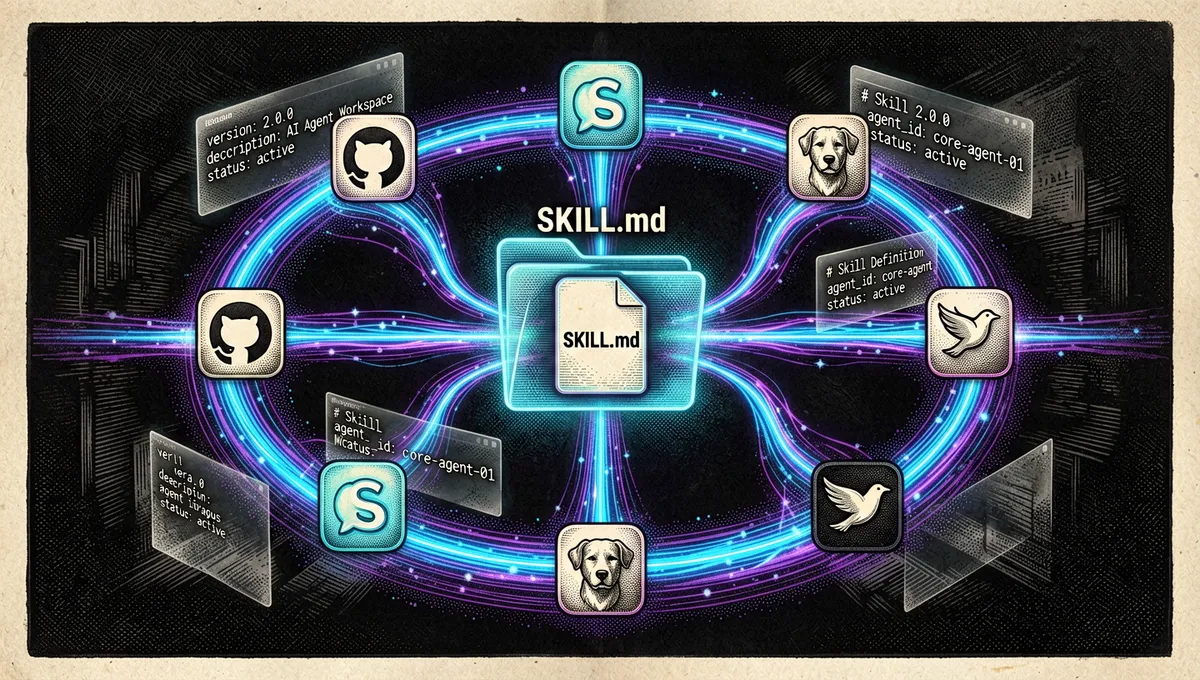
Awesome Claude Skills is a Composio repository that gathers more than a thousand skills and plugins for Claude and other coding agents. Per its README, a skill is a folder with SKILL.md, YAML metadata, and Markdown instructions; it can include scripts, references, and resources. The catalog groups document processing, development, data, writing, creative content, productivity, collaboration, security, and app automation.
The project doesn’t just link to third-party material. It hosts its own skills, such as content-research-writer, mcp-builder, skill-creator, webapp-testing, and automations for specific services. It also integrates Composio’s commercial offering: the connect-apps plugin lets Claude act on external applications once an API key is configured.
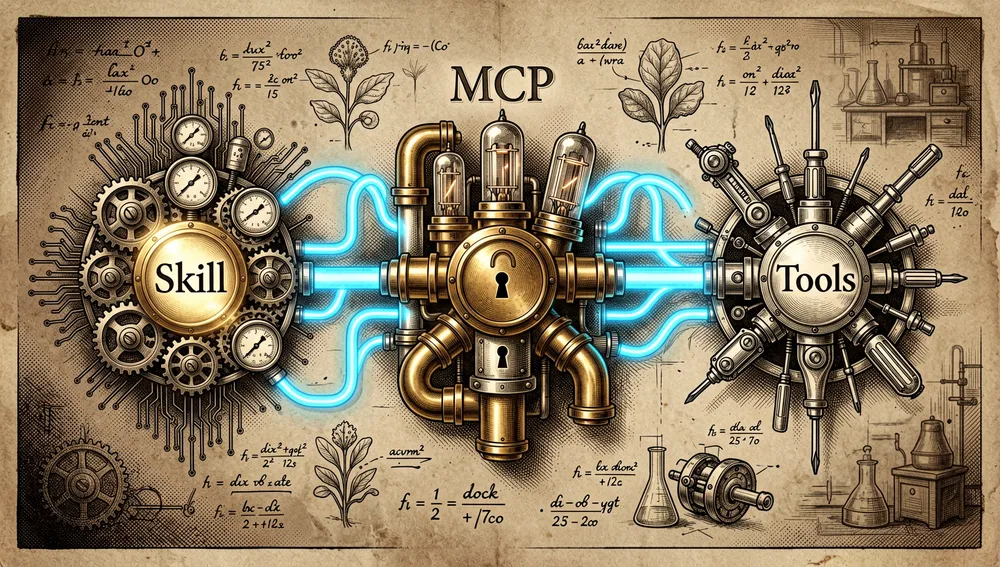
The README distinguishes three layers: skills specify the flow and its safeguards; MCP defines connection, authentication, and tool discovery; tools are the functions the agent invokes. It’s a useful distinction, though it comes from the project’s own documentation, not an independent specification.
The origin: a Composio collection amid the skills boom
The GitHub API places the repository’s creation on October 17, 2025. The owning organization, Composio, has existed on GitHub since March 2023 and links to composio.dev from its profile. The latest confirmed commit in the history is by Prathit (Prat011) on July 24, 2026, updating the README; the API identifies him as the top contributor by number of contributions.
No signed launch announcement or independent origin narrative was found that would let us attribute the creation to a specific person. It’s therefore more accurate to describe it as a Composio initiative than to credit it to an unverified founder.
The context is documented by the README: it presents the skills format as packages of reusable instructions loaded progressively. The agent first sees the name and description, then loads the body of SKILL.md when it deems it relevant. The repository places this proposal alongside Claude.ai, Claude Code, Codex, Cursor, Gemini CLI, and Antigravity, but that list is a claim from the README, not certification from each provider.
Philosophy and principles
Curation follows explicit criteria in CONTRIBUTING.md:
- Solve a real use case, not a hypothetical one.
- Document understandable instructions, examples, and use cases.
- Test the skill on Claude.ai, Claude Code, or the API when applicable.
- Confirm destructive operations before executing them.
- Seek cross-platform portability when applicable.
- Attribute the original flow or source when a skill builds on someone else’s work.
The repository’s technical philosophy combines instruction libraries with connectivity. In its framing, a skill doesn’t replace an MCP connector: it indicates how to operate once the agent has the tools available. This explains why the collection contains both purely editorial guides and automations for GitHub, Datadog, PagerDuty, Vercel, Slack, and other applications.
How it works
There are three documented paths to use it:
- On Claude.ai, add a skill from the marketplace or upload a custom one; Claude would activate the relevant ones based on the task.
- On Claude Code, copy a skill folder to
~/.config/claude-code/skills/, review itsSKILL.md, and openclaude. - For the connectivity plugin, run
claude --plugin-dir ./connect-apps-plugin, then/connect-apps:setup, supply the API key, and restart the session.
A minimal skill has the structure skill-name/SKILL.md; the README allows adding scripts/, templates/, and resources/. The repository recommends that SKILL.md declare a name and description, use cases, instructions, and examples.

Composio’s distinctive piece is its SaaS automation skills. The README declares prebuilt flows for 78 applications, with tool sequences, parameters, and warnings, using Composio’s Rube MCP. Infrastructure cases include GitHub, GitLab, CircleCI, Datadog, PagerDuty, Sentry, Supabase, and Vercel. The connect-apps plugin claims connectivity with more than a thousand applications; both figures are README claims and can change with the catalog.

Official and semi-official status
The Agent Skills format has official support from Anthropic: anthropics/skills publishes examples and the specification, and Claude Code’s documentation distinguishes an official marketplace curated by Anthropic from community and independent marketplaces.
This repository should not be confused with that official catalog. ComposioHQ/awesome-claude-skills belongs to Composio and uses Claude Code’s marketplace format in its composio-skills/.claude-plugin/ subdirectory. The sources retrieved show it distributes a compatible independent marketplace, but they did not demonstrate that the full repository or its plugins appear in Anthropic’s official marketplace. Its verifiable status is therefore semi-official in the sense of compatibility with Claude Code’s format and mechanisms, not acceptance or endorsement from Anthropic.
Its practical weight comes from the scale of the catalog and the 71,560 stars recorded on GitHub, not from a formal standard designation. Users should review each skill’s instructions and permissions, especially those that execute external actions via Composio.
The ecosystem
Composio repositories
ComposioHQ/composio: the main platform for toolkits, tool search, context management, authentication, and an isolated workbench for agents; 29,491 stars and 4,681 forks in the queried API.ComposioHQ/composio-plugin-cc: the repository for Composio’s Claude Code plugin; 8 stars and 3 forks.ComposioHQ/composio-mcp-plugin: plugins and skills for MCP registries; 3 stars and no forks in the queried API.ComposioHQ/trustclaw: a self-hostable personal agent with vector memory, Composio tools, and Telegram; 870 stars and 202 forks.
Within awesome-claude-skills, connect-apps-plugin and the composio-skills directory are the pieces that link the collection to Composio’s infrastructure. They are not independent projects nor an official Anthropic integration.
Ports, translations, and community derivatives
GitHub searches retrieved during this research verified these forks or derivatives:
TheArchitectit/awesome-opencode-skills: a formal fork that adapts the collection for OpenCode; 134 stars and 15 forks.skillcreatorai/Awesome-Agent-Skills: a formal fork oriented toward Agent Skills; 163 stars and 15 forks.MrChihiro/awesome-claude-skills-cn: a fork marked as a Chinese version. The source retrieved did not provide a reliable star count, so it is omitted.zhangyimingovo/awesome-claude-skills-CN: a fork marked as a Chinese version. The source retrieved did not provide a reliable star count.ColonyShopkeeper/r08-composiohq-awesome-claude-skills-seo,CraftsmanTuck/r08-composiohq-awesome-claude-skills-security,OrdinaryChart/r08-composiohq-awesome-claude-skills-ecommerce, andTameoltreasure34/r08-composiohq-awesome-claude-skills-datascience: themed derivatives for SEO, security, e-commerce, and data science/AI. Their descriptions present them as derivatives, but no reliable metrics were retrieved to cite them.

The forks indicate the format’s spread, not compatibility, maintenance, or security equivalent to the original repository’s.
Repo numbers
Measured: August 1, 2026, GitHub API and page.
| Metric | Value |
|---|---|
| Stars | 71,560 |
| Forks | 8,051 |
| Subscribers | 447 |
| Commits | 77 |
| Open issues reported by the API | 1,150 |
| Primary language | Python |
| License declared in the README | Apache-2.0 |
| Created | October 17, 2025 |
| Latest commit | July 24, 2026 |
| Latest published release | No GitHub releases |

The top contributors returned by the API were Prat011 (38 contributions), sohamganatra (11), and sanjay3290 (2). The 77-commit count was obtained from the API’s last pagination link. The metadata endpoint did not return a license object, though the README declares Apache-2.0; that’s why the table specifies the origin of that license. open_issues_count can include open pull requests. Additionally, GitHub’s watchers_count field mirrors the star count; subscribers_count is reported here as the real subscriber figure.
How to contribute
The contribution process is documented and concrete:
- Choose a skill based on a real use case and check that it doesn’t duplicate an existing one.
- Create a fork and a branch, for example
git checkout -b add-skill-name. - Add the folder with
SKILL.mdand update the README in the corresponding category, alphabetically. - Test the skill, document its use, and attribute the original source or inspiration when there is one.
- Commit, push the branch, and open a pull request whose title explains the skill, the problem, its users, the inspiration, and an example.

The guide asks contributors to avoid destructive operations without confirmation and to keep documentation accessible. It doesn’t describe an automated test harness for the repository; it requires whoever contributes to verify the skill on the applicable platforms.
How the community received it
The evidence retrieved shows plenty of attention on GitHub, but little verifiable public conversation outside of it.
- The Hacker News thread 46597679, submitted by saikatsg on January 13, 2026, presented the list of skills and resources. It reached 2 points and 0 comments. It confirms the repository was shared, but contains no praise or criticism from which reception could be inferred.
- The thread 46390810, submitted by msis, also got 2 points and 0 comments. It’s another minimal signal, not community validation.
- In issue #1, virologist asked for the repository to be installable as a marketplace via
/plugin marketplace add ComposioHQ/awesome-claude-skills. Prat011 replied that he had added it. Later, deevus reported it didn’t work with the latest version of Claude Code; MoogyG confirmed the same experience, and vixalien wrote that the skills weren’t working. The closed issue has 5 comments total: it documents a historical installation friction, not a demonstrated current failure. - Pull request #319 proposed moving the marketplace file to the root because the command looked for
.claude-plugin/marketplace.jsonthere. It’s a diagnosis from its author, digitall-it, with no comments or independent confirmation. - Issue #1054 contains a concrete demand signal: Huaian666 seconded a financial-compliance skill they were missing and said they had spent months solving it with a script. This shows interest in an absent category, not a positive overall evaluation.
The searches performed did not retrieve verifiable independent reviews. The absence of retrieved results doesn’t prove they don’t exist, but it prevents attributing to the project an external editorial reception that could not be verified.
Awesome Claude Skills versus other proposals
| Proposal | Verifiable overlap | Verifiable difference |
|---|---|---|
anthropics/skills | Both collections use the skills format and can be distributed via Claude Code. | Anthropic’s repository publishes examples and the official specification; Composio functions as a broad catalog and adds its own SaaS automation. |
vercel-labs/agent-skills | Both are instruction collections for coding agents. | Vercel’s collection focuses on engineering and its platform, per its README; Composio mixes business, content, productivity, and app-connectivity use cases. |
TheArchitectit/awesome-opencode-skills | It’s a formal fork of Composio’s repository and keeps the idea of a skills collection. | Its stated adaptation targets OpenCode; it isn’t the repository maintained by Composio, nor does it by itself prove functional equivalence. |
The relevant comparison isn’t just the number of skills. awesome-claude-skills offers a broad surface and a path to turn instructions into connected actions; official or more specialized collections can be preferable when you need a support contract, a canonical spec, or a narrower technical focus.
Use cases and who this repository can help
Developers who want to bring a skill into Claude Code or Claude.ai can pick a folder, review its SKILL.md, and copy it to ~/.config/claude-code/skills/ or upload it to the corresponding environment. The repository is especially useful for comparing a skill’s structure — instructions, examples, scripts, templates, and resources — and for building one’s own with skill-creator or mcp-builder, following the contribution guide’s criteria for testing, attribution, and confirming destructive actions.
Teams automating work across SaaS applications can study the flows for GitHub, GitLab, CircleCI, Datadog, PagerDuty, Sentry, Supabase, and Vercel, and connect connect-apps with Rube MCP after configuring the Composio API key. For communication and documentation, the same catalog includes content-research-writer, internal-comms, changelog-generator, image-enhancer, and document skills. Each flow requires reviewing instructions, credentials, permissions, and the actual installation behavior before executing external actions.
Resources
- Repository: https://github.com/ComposioHQ/awesome-claude-skills
- Documentation and installation: https://github.com/ComposioHQ/awesome-claude-skills#getting-started
- Contribution guide: https://github.com/ComposioHQ/awesome-claude-skills/blob/master/CONTRIBUTING.md
- Anthropic’s official skills: https://github.com/anthropics/skills
- Official Claude Code marketplace documentation: https://code.claude.com/docs/en/discover-plugins
- Composio’s platform and automation: https://github.com/ComposioHQ/composio
- Reviews and conversations: https://news.ycombinator.com/item?id=46597679, https://news.ycombinator.com/item?id=46390810, https://github.com/ComposioHQ/awesome-claude-skills/issues/1
- Community/Discord: https://discord.com/invite/composio
Note: this article combines the repository’s README and contribution guide, the GitHub API, Anthropic’s documentation, and the linked threads, retrieved on August 1, 2026. Figures change over time.


Comments