

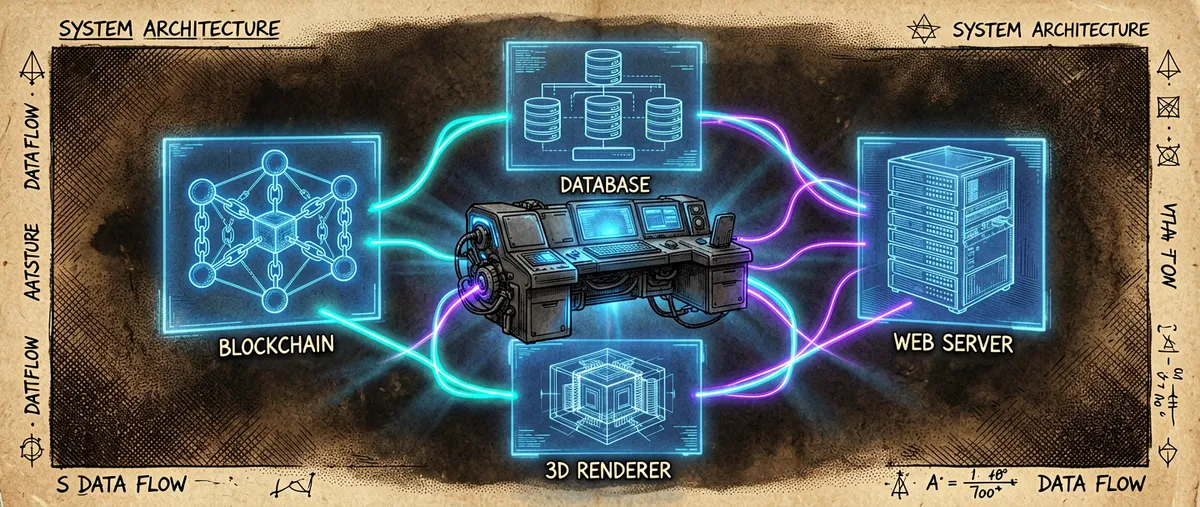
Build Your Own X: a map for learning by rebuilding
codecrafters-io/build-your-own-x · 549,458★ · 51,627 forks
Everything worth knowing about codecrafters-io/build-your-own-x: a curated collection of step-by-step guides for recreating well-known technologies from scratch.
What Build Your Own X is
Build Your Own X is not a library, a compiler, or an application you install. It is a Markdown index of external tutorials, sorted by technology and language, for implementing educational versions of real systems. Its README sums up the intent with Richard Feynman’s quote: build something to understand it.
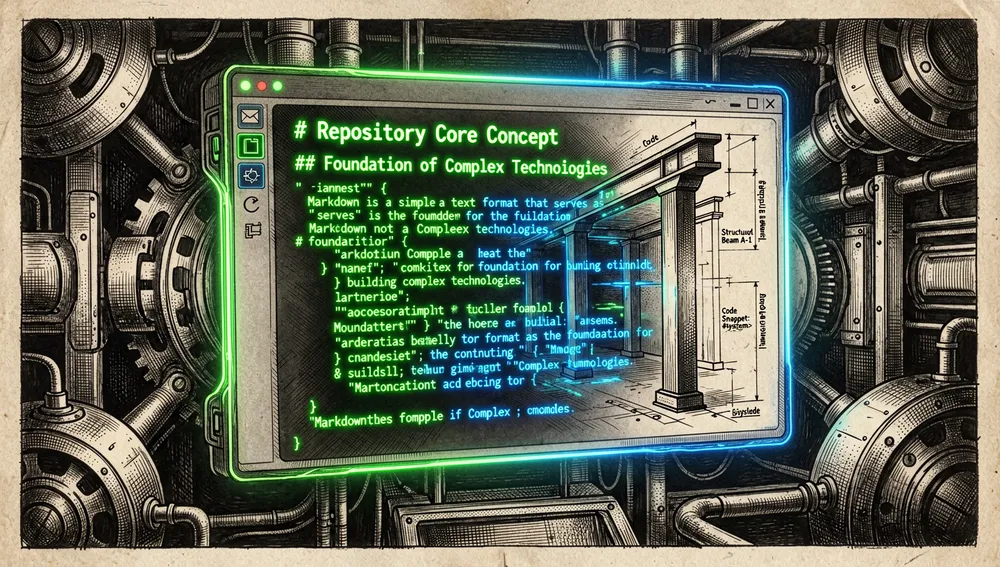
The list covers, among other categories, 3D renderers, AI models, BitTorrent clients, blockchains, databases, Docker, emulators, programming languages, regular expression engines, operating systems, search engines, shells, editors, and web servers. Each entry declares a language and links to the guide or video it comes from. So the repository does not promise that every path shares the same level, maintenance, license, or quality: it functions as a curated selection and a starting point.
The origin: from a personal list to CodeCrafters
The repository’s story begins with Daniel Stefanovic (danistefanovic): GitHub’s history records his initial commit on May 9, 2018. The earliest direct submission recovered on Hacker News, thread 17054419, appeared three days later, on May 12, 2018, with 507 points, 25 comments, and a submission by dhanush.

The historical path danistefanovic/build-your-own-x now resolves, via the GitHub API, to the canonical repository codecrafters-io/build-your-own-x; the current owner is the CodeCrafters organization. The exact date of that transfer could not be established from the sources recovered. CodeCrafters’ product is presented separately as a platform of guided challenges for experienced programmers; its current catalog offers challenges for Shell, Redis, grep, interpreters, BitTorrent, Kafka, Git, SQLite, DNS, HTTP, and Claude Code.
The link between the two explains the proposal’s practical twist: the list keeps links to independent tutorials, while CodeCrafters structures some topics as graded stages. The two should not be confused: the repository remains a Markdown collection with no executable of its own.
Philosophy and principles
CodeCrafters’ official philosophy sets out four ideas that align with the list:
- Difficulty is part of learning: recognizing an explanation is not the same as being able to apply it unaided.
- Tools and environment should resemble real work; the platform advocates using your own IDE and setup.
- It is worth studying concrete implementations and systems, not just consuming popular tutorials.
- AI can speed up the work, but understanding trade-offs and complexity remains a skill that is built through practice.

The list embodies that philosophy in a more open way: it prescribes neither a solution nor a language. Rather than teaching one abstraction on top of another, it invites you to rebuild components such as a Redis protocol parser, a Git object store, or a SQLite B-tree. It is pedagogical guidance, not a claim that redoing a technology is appropriate for production.
How it works
The repository’s flow is deliberately simple:
- Open the
README.mdindex and pick a category, for exampleDatabase,Programming Language, orWeb Server. - Choose an entry by its listed language; each link leads to material published by its original author.
- Follow the external guide and build the project in your own repository or local environment.
- If you find a guide that meets the editorial criteria, propose it via an issue or a pull request.
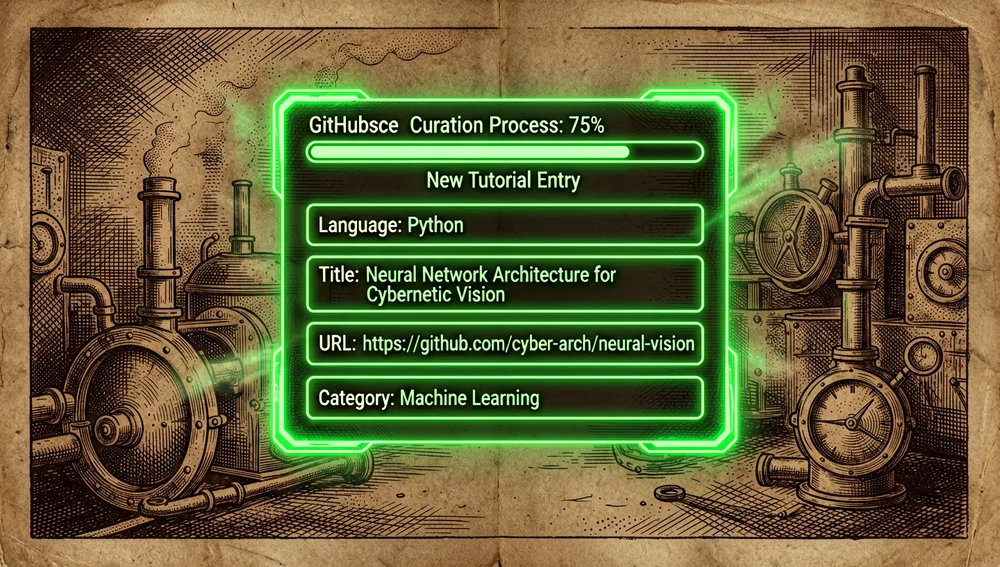
The issue template clarifies the filter: a proposal must offer a guided, gradual path, build something interesting from scratch, and not merely assemble libraries or teach a framework. It asks for four verifiable pieces of data: primary language, original title, URL, and category. The repository contains no commands, run configuration, or tests, because its content is a catalog of links.
Official and semi-official status
There is no applicable notion of an extension marketplace, registry package, or vendor certification for this repository: it is a Markdown list with no distribution channel like npm, PyPI, crates.io, or Docker Hub. It is, however, semi-official with respect to CodeCrafters, since it sits under that organization, links to codecrafters.io as its homepage, and the company’s site identifies it as its repository with more than half a million stars.
No formal standard designation or endorsement from GitHub beyond hosting and public metadata was recovered. Its status as a de facto reference is a cautious interpretation of its size, of the fact that it holds the top spot on CodeCrafters’ official site, and of repeated community submissions — not a certification.
The ecosystem
CodeCrafters repositories
Querying the organization’s API identifies related tools and challenge definitions, not dependencies of Build Your Own X:
codecrafters-io/docs— documentation for users and contributors; 25 stars.codecrafters-io/languages— multi-language support for the challenges; 336 stars.codecrafters-io/course-sdk— rewritten SDK for course definitions; 111 stars.codecrafters-io/cli— command-line interface for running tests; 27 stars.codecrafters-io/ccbench— benchmark suite for coding agents; 38 stars.- Public challenge definitions:
build-your-own-redis(359),build-your-own-sqlite(153),build-your-own-git(150),build-your-own-http-server(123),build-your-own-bittorrent(95),build-your-own-interpreter(60),build-your-own-kafka(57), andbuild-your-own-shell(55).
These figures come from the GitHub API on August 5, 2026. The confirmed relationship is one of shared organization and related challenges; no evidence was recovered that all of these repositories are used directly by the list.
Forks, translations, and community extensions
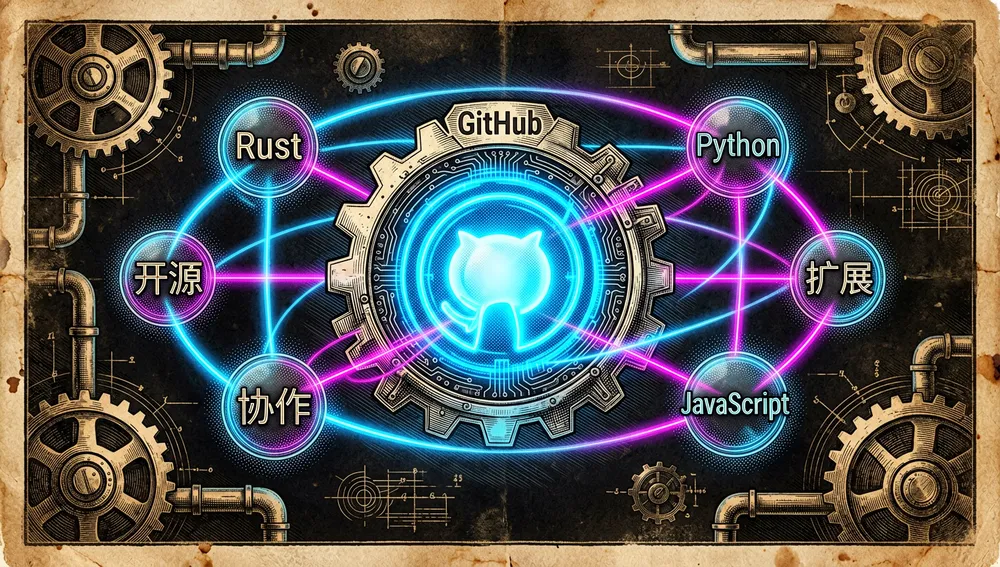
Repository search and a query of forks recovered derivatives explicitly described as adaptations, alongside many mirrors with no substantial changes:
buhe/build-your-own-x-zh, a Simplified Chinese translation, 428 stars.johnzhu12/build-your-own-x-chinese, a Chinese translation, 47 stars.houbb/build-your-own-x, whose GitHub text declares a Chinese translation, 1 star.durnosmih/build-your-own-x-in-rust, a Rust-focused adaptation, 745 stars.amitshekhariitbhu/build-your-own-x-machine-learning, a collection for building machine learning components from scratch, 571 stars.linkxzhou/build-your-own-x-skills, a project that declares it is gradually converting the list’s projects into skills for AI agents, 17 stars.inFaaa/build-your-own-x-vibe-coding, an adaptation of tutorials to an AI-assisted-coding approach, 94 stars; the main README also links to it.
Repositories simply named build-your-own-x with no differentiating description are treated as forks or mirrors, not independent products. The search does not prove compatibility, support, or endorsement by CodeCrafters for the community derivatives.
Repo numbers
Measurement: August 5, 2026, GitHub API.
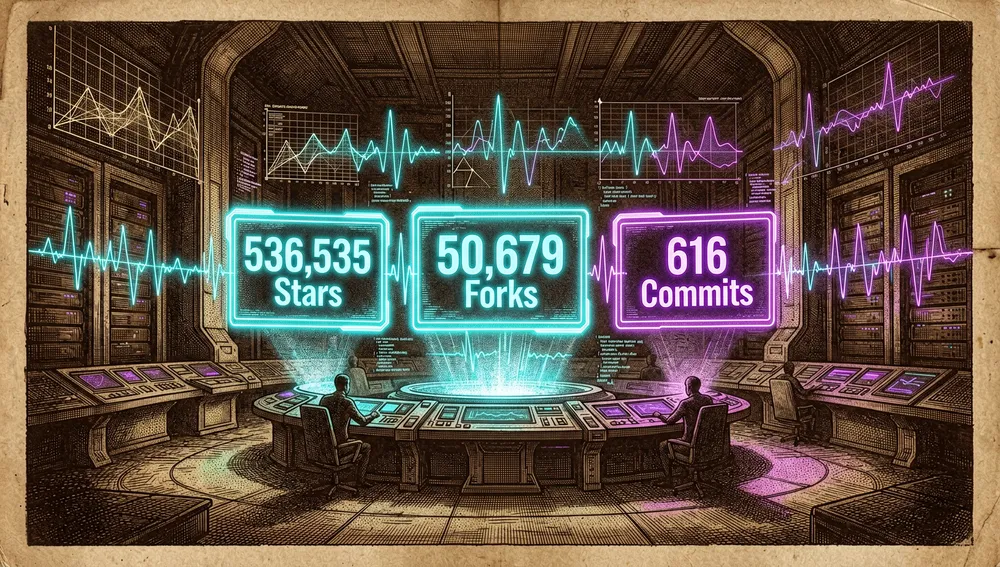
| Metric | Value |
|---|---|
| Stars | 536,535 |
| Forks | 50,679 |
| Subscribers | 6,826 |
| Commits | 616 |
| Open issues reported by the API | 622 |
| Primary language | Markdown |
| Declared license | Not declared |
| Created | May 9, 2018 |
| Last reported push | July 14, 2026 |
| Releases | None recovered |
The top contributors returned by the API are danistefanovic (320 contributions), rohitpaulk (70), sarupbanskota (26), and fake-rookie (15). The commit total was obtained by pagination: six full pages of 100 and a seventh of 16. subscribers_count is the subscriber figure; GitHub’s watchers_count field duplicates the star count here and is not used as the watcher figure. open_issues_count may mix open issues and pull requests. The API returned an updated_at of August 6, 2026, later than the environment’s measurement date; it is transcribed as a metadata anomaly, without inferring future activity.
How the community received it
There is verifiable reception on Hacker News, with enthusiasm and concrete objections:
- Thread 32157759, posted by
pretexton July 19, 2022 and linked to the current repository, gathered 528 points and 82 comments.tranxenpraised it for covering many topics. By contrast,intrepidheromissed a terminal emulator tutorial, andthemodelplumberasked for filters or ratings on difficulty, demands, and estimated time; these are requests for further curation, not quality measurements. - The historical thread 21430321, with 867 points and 64 comments, contains a more ambivalent discussion:
yjftsjthsd-hvalued that reimplementing a standard library makes for a better programmer, but warned that there are a limited number of hours and that knowing when to lean on existing abstractions also matters. This is a critique of the opportunity cost of learning from scratch, not of a flaw in the repository. - The platform’s launch, 32342334, was posted by
rohitpaulkand reached 403 points and 206 comments.aliasxneofound the platform appealing but judged an $80-a-month personal subscription steep;sarupbanskota’s reply explained that the target audience included people with corporate training budgets. This is reception of CodeCrafters, not an independent review of the list.
The video coverage recovered is mostly tutorials and mentions, not reviews. A YouTube search surfaces the playlist “Building my own shell with Rust and CodeCrafters” from the Brooks Builds channel, a video by Code With Cypert about building Claude Code on CodeCrafters (about 2,600 views visible), and the video “CodeCrafters build your own git - clone part 1” by Brooks Builds (1,000 views visible). Short videos about the repository also turned up, but with no recoverable technical assessment.
Searches were attempted on Reddit, Product Hunt, X, and web search engines. Reddit returned no recoverable results, and Product Hunt showed a bot-verification screen; X requires authentication in this environment. No opinions are attributed to those platforms. Nor was a verifiable Product Hunt launch, a Dev.to/Hashnode review, a podcast or newsletter mention, or a distributable package of the repository located.
Build Your Own X versus other approaches
The comparison should be made by format, not popularity:
| Approach | Verifiable difference |
|---|---|
codecrafters-io/build-your-own-x | A free index of external guides, by topic and language; it does not run or grade code. |
| CodeCrafters | An adjacent platform of staged challenges: its catalog lists Shell, Redis, Git, SQLite, BitTorrent, and others; requires an account to start the challenges. |
durnosmih/build-your-own-x-in-rust | A community adaptation focused on Rust, rather than a multi-language index. |
amitshekhariitbhu/build-your-own-x-machine-learning | A community adaptation that narrows the focus to machine learning. |
The first repository is best for exploring options and picking sources; CodeCrafters adds a guided path and evaluation for a specific set of topics. The two adaptations trade breadth for explicit specialization. No benchmark comparing educational outcomes between them was recovered.
How to contribute
The README accepts submissions via a pull request or an issue, and invites people to comment and react on pending proposals. The issue template asks for the language, original title, URL, and a category. Before proposing a link, the template’s text requires it to be a programming tutorial with a gradual path that builds something interesting from scratch, not a framework guide or a shallow integration of libraries.
No branching guide, test harness, or pull request template was recovered for this repository. Given its editorial nature, the main check is whether the link fits those criteria and the chosen category.
Quick usage guide
Installation and first run
There is no installation or startup command: the artifact is the README.md file. Open the repository, pick a heading from the table of contents, and follow the link to the guide matching your language. If you want a guided CodeCrafters challenge, the official catalog lets you pick one and sign in with GitHub; this is an adjacent service, not a requirement for reading the list.
Common workflows
- Understand a database: under
Database, pick a guide such as “Let’s Build a Simple Database” in C, or an alternative in Go/Python; the result is developed in the local project indicated by that guide, not inside this repository. - Learn Git internals: open
Git, choose for example “Write yourself a Git!” in Python, and follow its steps; as an alternative with evaluation, select “Build your own Git” in the CodeCrafters catalog. - Practice a network server: use
Web ServerorNetwork Stack, filter by language, and build the linked resource’s example. - Contribute a guide: open a new issue, fill in the language, title, URL, and category, and explain why it is a gradual, from-scratch implementation path.
Essential configuration
There is no project configuration file. The initial decisions are editorial and personal:
README.md: index, categories, languages, and available links.ISSUE_TEMPLATE.md: fields and criteria for proposing material.- The local environment indicated by the chosen guide: compiler, interpreter, or dependencies belong to that external source, not to Build Your Own X.
- GitHub account: needed only to open issues or pull requests.
- CodeCrafters account: needed only to start challenges on the adjacent platform.
Common pitfalls and fixes
- Expecting a ready-to-run implementation: the list only links to external material. Fix: pick a guide and prepare its concrete prerequisites.
- Treating all links as equivalent: the index mixes languages, formats, age, and authors. Fix: confirm the chosen source’s level, maintenance, and license before investing time.
- Proposing a tutorial that only wires libraries together: the template excludes this. Fix: propose a guide with a gradual, from-scratch build of an interesting component.
- Confusing the repository with the paid challenges: the README is free; CodeCrafters is a related but distinct product. Fix: use the catalog link only when seeking staged progression and evaluation.
Integrations and migration
The repository offers no integration with MCP, CI, editors, or messaging: its links are consumed from any browser or Markdown editor. The practical integration is carrying the selected guide’s project over into your usual workflow. To move from exploration to guided practice, common topics can be continued on the CodeCrafters catalog; no tool was recovered that migrates code or progress from the list to the platform.
Use cases and who this repository can help
- Developers who want to stop treating systems as black boxes: they can pick Git, Redis, SQLite, DNS, HTTP, or an interpreter and follow a path that exposes internal protocols, formats, and structures.
- People learning a language through projects: entries tag the language, so they can look for, say, a server, game engine, or compiler implementation in C, Go, Python, Rust, or JavaScript.
- Technical training teams: the list serves as an initial inventory of practical projects; afterward they can select a specific guide and review its license, currency, and goals before adopting it.
- Those evaluating a more structured path: the repository helps discover the topic; CodeCrafters offers related staged challenges when a guided itinerary is needed. Available documentation does not demonstrate educational equivalence between the two options.
- People who curate resources: the issue template offers a concrete way to contribute a guide that adds from-scratch construction and an understandable progression.
Resources
- Repository: codecrafters-io/build-your-own-x
- Documentation or official catalog: CodeCrafters challenge catalog
- Official philosophy: Why CodeCrafters?
- Official blog and product status: pause on new challenges, May 22, 2026
- Community and discussions: HN 2018, thread 17054419, HN 2019, thread 21430321, HN 2022, thread 32157759, and CodeCrafters launch, thread 32342334
- Videos recovered: YouTube search for Build Your Own X and CodeCrafters
- Contributing: new issue and pending proposals
Note: this article combines the GitHub API, the repository’s README and issue template, CodeCrafters’ official site, Hacker News, and YouTube. Figures correspond to August 5, 2026.
Comments