


OpenViking: a context database for AI agents
volcengine/OpenViking · 38,660★ · 3,014 forks
Everything worth knowing about volcengine/OpenViking: an open-source system that unifies an agent’s memory, resources, and skills under a filesystem interface.
What OpenViking is
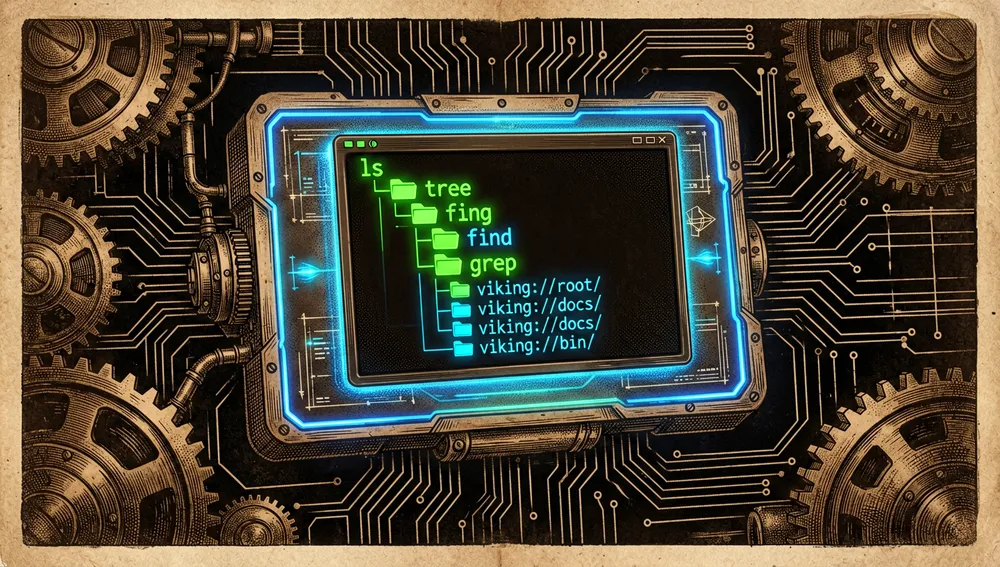
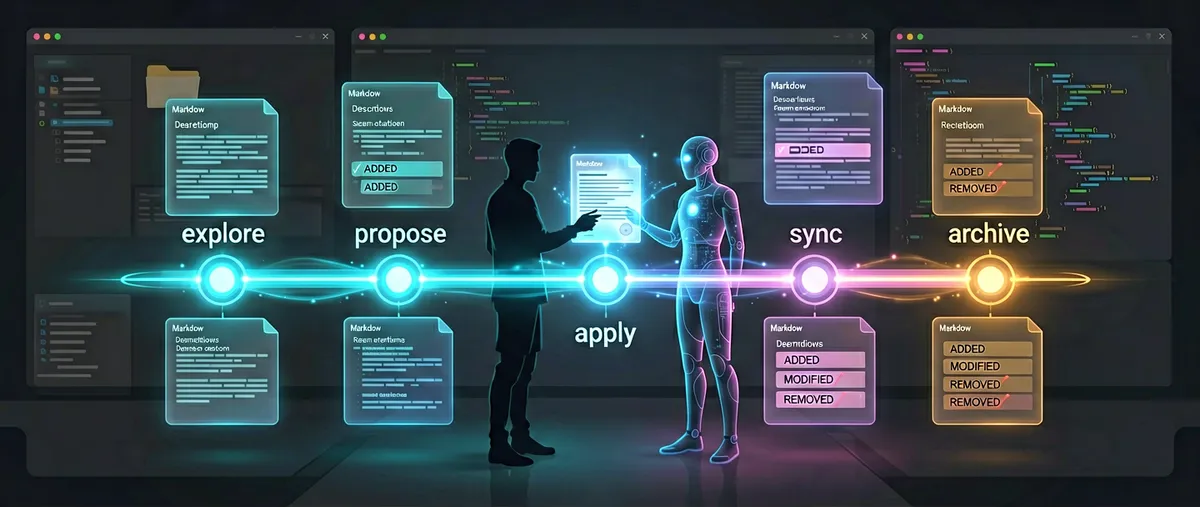
OpenViking is a context database for AI agents. Rather than treating memory, documents, and skills as separate stores, it exposes them under the virtual viking:// protocol. The agent can explore that space with operations similar to ls, tree, find, and grep, and the system records the retrieval path so it can be inspected.
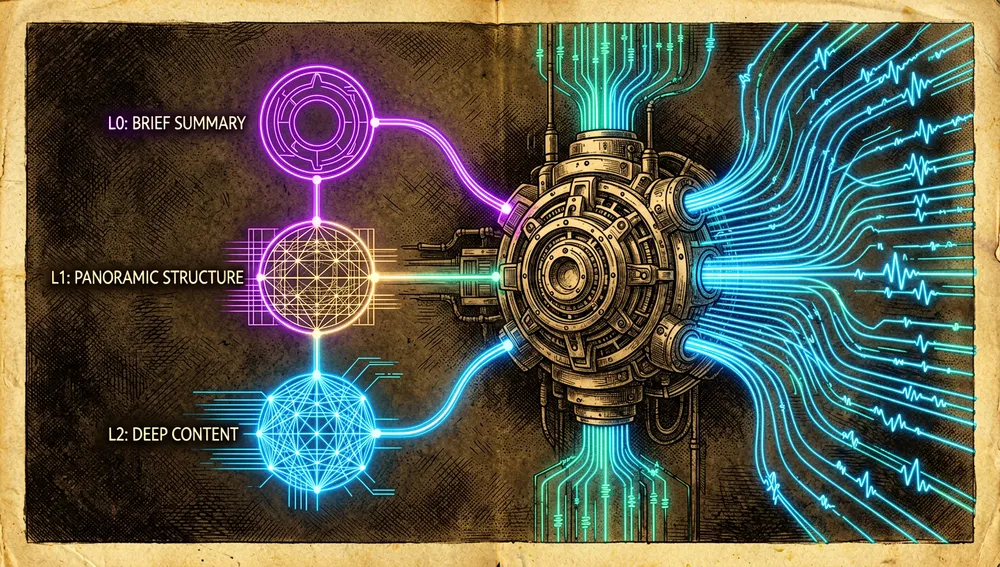
It isn’t just a vector store or a memory plugin. When a resource is ingested, it generates three layers: L0, a brief summary for deciding relevance; L1, an overview; and L2, the full content. Retrieval first locates candidate directories and then drills down by layer, aiming not to load all the material into the model’s context.
The origin: turning context engineering into a data layer
The repository was created on January 5, 2026 within the volcengine organization, and its linked site is openviking.ai. The technical essay by maojia, published March 9, 2026 and updated on May 13, frames the problem as fragmentation across instructions, RAG, web search, tools, skills, and memory: the proposal is to manage them as organizable, retrievable, updatable data.
The research connection is made explicit: the README states that the open-source code materializes part of the capabilities of VikingMem, work by Jiajie Fu, Junwen Chen, Mengzhao Wang, Aoxiang He, Maojia Sheng, Xiangyu Ke, Yifan Zhu, and Yunjun Gao. The paper was submitted to arXiv on May 28, 2026 and states acceptance at VLDB 2026.
Philosophy and principles
- Context as managed data: attaching text to the prompt isn’t enough; data is ingested, indexed, summarized, scoped, retrieved, and updated over its lifecycle.
- Incremental, explainable exploration: the agent first receives summaries and can drill down to evidence; the retrieval trajectory stays observable.
- Evolving memory: on confirming a session, the system asynchronously extracts user preferences and agent experience into long-term memory.
- Uniform interface: resources, memory, and skills share
viking://URIs, so no category requires a separate query integration.
The VikingMem paper articulates a closely related philosophy: selectively extracting valuable memories, correcting and temporally weighting them, seeking an abstraction transferable across applications. That’s evidence of the associated research work, not an independent guarantee that every OpenViking integration reaches the same result.
How it works
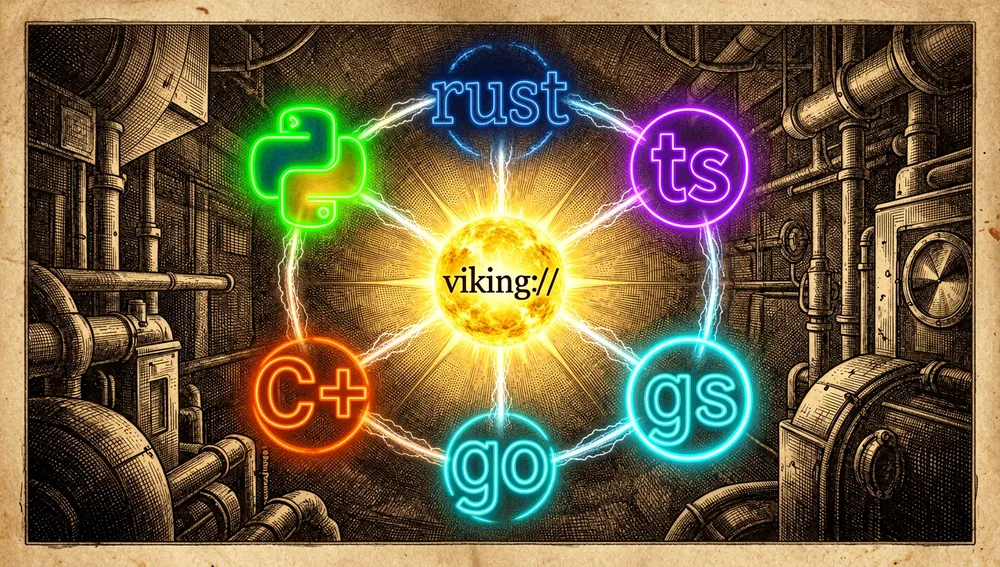
An added resource enters a processing pipeline; afterward its tree can be navigated and searched by semantics or text. The architecture combines Python as the primary language with components in Rust, TypeScript, C++, and Go according to GitHub’s language breakdown.
The repository documents its own evaluation of version 0.3.22 on LoCoMo and tau2-bench. It reports accuracy improvements and token-savings indicators against native memory in OpenClaw, Hermes, and Claude Code; since it comes from the project, it should be read as a vendor result reproducible from benchmark/, not as an external audit.
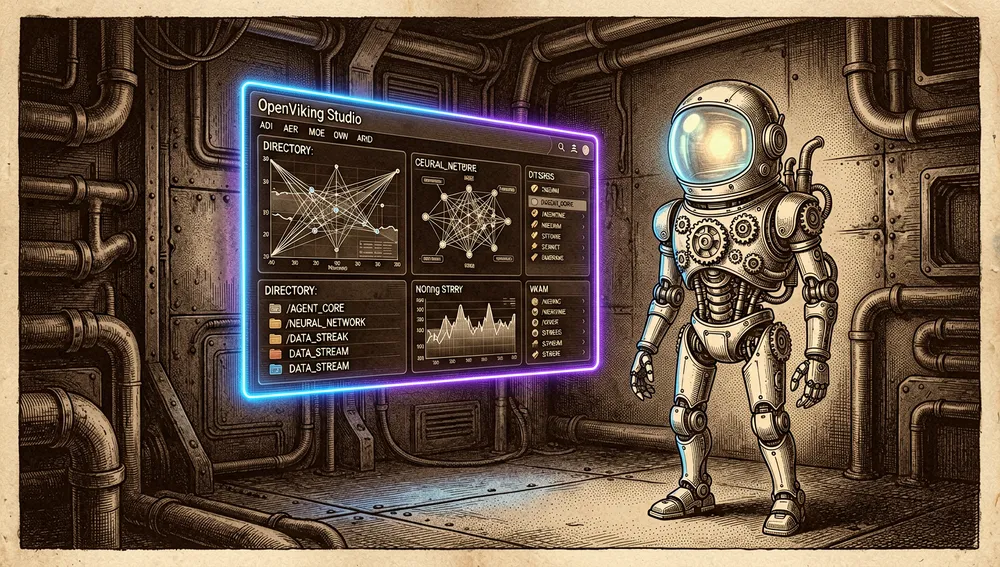
It also includes OpenViking Studio, an install-free web demo, and VikingBot, an agent framework installed with the bot extra and run alongside the server.
Official and semi-official status
The repository is published by volcengine, and the README offers an officially managed SaaS mode on Volcano Engine, plus commercial self-managed modes. The open edition is AGPLv3, with no activation or account required per the README itself; the commercial variants add operations, distributed deployment, or support.
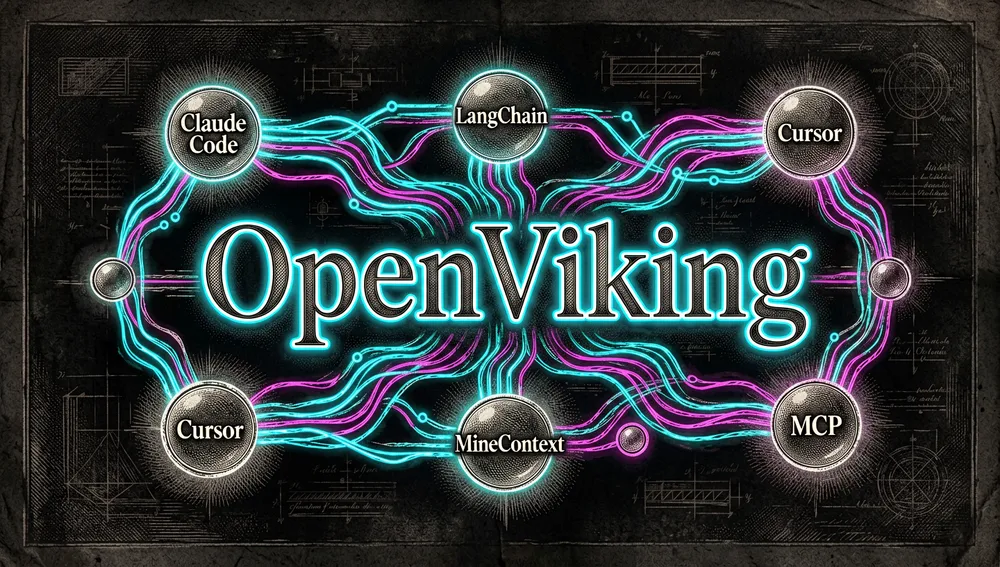
No evidence was found that OpenViking has been accepted into an official marketplace by an agent provider. There are documented integrations for Claude Code, Codex, OpenClaw, Hermes, Cursor, Trae, OpenCode, pi, MCP clients, and LangChain/LangGraph; this establishes documented technical compatibility, not certification by those products.
The ecosystem
Components and associated projects
- OpenViking Helper: a beta desktop console for macOS and Windows x64 that detects local tools, configures integrations, and lets you inspect session traces.
- VikingBot: an agent framework included in the repository, installable via
pip install "openviking[bot]". - MineContext (
volcengine/MineContext, 5,458 stars at query time): a repository from the same owner whose summary presents it as a proactive, context-aware AI partner. It’s a public sibling project, not a dependency the README establishes for OpenViking. - deer-flow, NoKV, loopx, and Hermes Agent appear in the README as confirmed partner projects. The first is described as a long-horizon agent harness; NoKV as a native distributed filesystem for AI; loopx as a lightweight engineering-state core.
Community extensions, ports, and forks
A GitHub search returned related projects, not all official: swizardlv/openclaw_openviking_skill (23 stars), ruansheng8/openviking-ui (18), Castor6/openviking-plugins (14), aeromomo/openviking-rs (7, a declared Rust rewrite), and davidwarshawsky/VikingSpeed (5, a declared Go fork). It also found 952800710/openclaw-vikingfs (10), whose Chinese-language description presents it as a lightweight framework inspired by OpenViking. These are community extensions or derivatives per their own descriptions; they shouldn’t be confused with software maintained by Volcengine.
The most visible forks returned by the API had between 13 and 1 stars and essentially kept the original’s description; they’re therefore classified as forks, not independent ports. The repository itself does carry official documentation in English, Chinese, and Japanese (README.md, README_CN.md, README_JA.md).
Repo numbers
Measured: August 13, 2026, GitHub API.
| Metric | Value |
|---|---|
| Stars | 28,382 |
| Forks | 2,242 |
| Real subscribers | 77 |
| Open issues per API | 424 |
| Primary language | Python |
| Main project license | AGPL-3.0 |
| Created | January 5, 2026 |
| Last metadata update | August 13, 2026 |
| Latest main release | v0.4.13, August 6, 2026 |
The API mirrors stars in watchers_count; that’s why the table reports subscribers_count as the real subscriber count. open_issues_count may include open pull requests. The top contributors by contribution count were qin-ctx (252), zhoujh01 (136), r266-tech (129), ZaynJarvis (124), and MaojiaSheng (93).
Quick-start guide
Installation and first run
Python 3.10 or later is required. The simple route per the README is:
pip install openviking --upgrade
openviking-server init
openviking-server doctor
openviking-server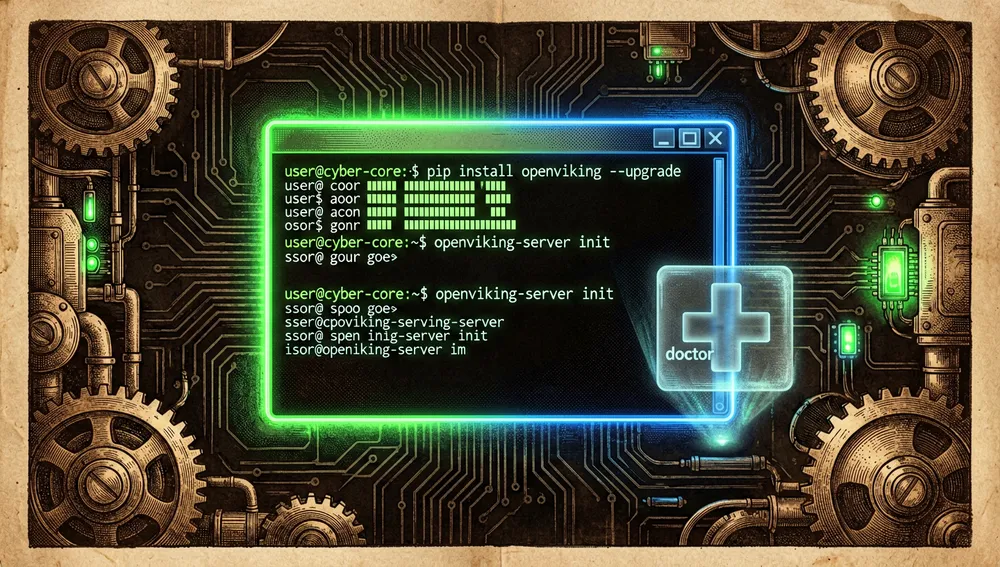
init walks through provider selection and creates ~/.openviking/ov.conf; doctor checks configuration, Python version, provider connectivity, and disk space. The documentation also recommends uv tool install openviking --upgrade, and distinguishes ov as the client from openviking-server as the server.
For a standalone service, the official guide proposes the ghcr.io/volcengine/openviking:latest image, with the ~/.openviking directory mounted to preserve configuration and state.
Common workflows
ov status
ov add-resource https://github.com/volcengine/OpenViking --wait
ov ls viking://resources/
ov tree viking://resources/volcengine -L 2
ov find "what is openviking"
ov grep "openviking" --uri viking://resources/volcengine/OpenViking/docs/en
In this flow, add-resource ingests and processes the repository; --wait avoids continuing before semantic processing finishes. Then tree explores the hierarchy, find searches by semantics, and grep scopes a text search to a specific URI.
To try the included agent, the docs show:
pip install "openviking[bot]"
openviking-server --with-bot
ov chat
The last command runs in another terminal with the server active.
Essential configuration
~/.openviking/ov.conf: the main JSON file with storage, embeddings, and VLM settings.embedding.dense: provider, key, model, dimension, and input type for vector retrieval.vlm: vision/content-understanding provider and model; the key may not be needed when leveraging Codex OAuth.storage.workspace,storage.vectordb, andstorage.agfs: paths and backups for workspace, vector database, and virtual filesystem.~/.openviking/ovcli.conf: connection configuration for theovclient.
Common pitfalls and fixes
- On platforms without precompiled wheels, installation may compile from source: the contribution guide requires Rust 1.91.1+, a C++17 compiler, and CMake 3.15+ for that path.
- If the Rust binding, CLI, or C++ extensions are modified, the project indicates
uv pip install -e . --force-reinstallto rebuild the artifacts. - A wrong API key, incompatible vector dimension, VLM timeout, or rate limiting each have specific sections in the configuration guide; it’s worth running
openviking-server doctorfirst and checking the configured provider. - On Docker over macOS, the documentation warns the service listens on
127.0.0.1for security and proposessocatredirection if the host can’t reachlocalhost:1933.
Integrations and migration
The repository links guides for agents, MCP clients, and LangChain/LangGraph. To move to the SaaS edition, the README states a migration tool exists; its detailed steps weren’t recovered, so no commands are invented. The documentation includes a migration path from 0.3.x to 0.4.0, a signal that version changes should be planned before upgrading.
How to contribute
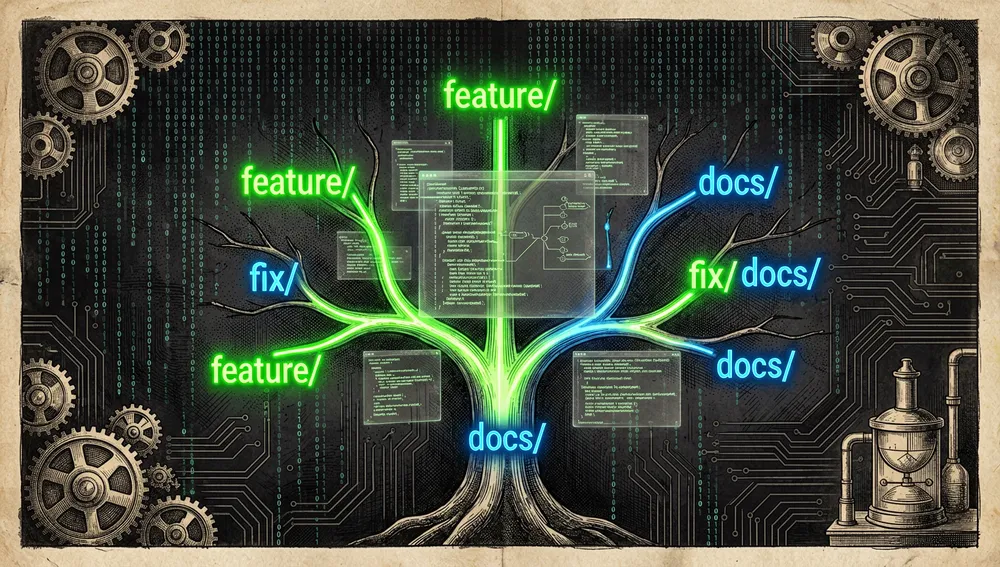
Contribution is documented: fork, clone the repository, install the environment with uv sync --all-extras, branch from main using a feature/, fix/, docs/, or refactor/ prefix, and open a pull request.
The project requires formatting and checks with ruff format openviking/, ruff check openviking/, mypy openviking/, and pytest. Its GitHub Actions run linting and a light test on pull requests; on entering main, they run full tests and CodeQL. It also requires commit conventions and a pull request template with a summary, tests, and related issues.
How the community received it
The recoverable external reception is limited but not nonexistent. On Hacker News, thread 47365646 linked the OpenViking page on March 13, 2026: it was submitted by lab14, with 2 points and 1 comment per Algolia. That figure shows very small reach, not consensus or a substantive review; no specific opinion is attributed because the recovered content didn’t allow verifying one.
A Hacker News comment from lucamrtl, within a thread about another tool, placed OpenViking in the category of context/memory infrastructure versus semantic layers for data. That’s a contextual comparison from that participant, not an evaluation of OpenViking or a statement from the team.
On DEV Community, maref published “Why I’m recommending OpenViking” on July 24, 2026. The piece praises its modular MCP integration, active maintenance, and documentation, but had 0 reactions and 0 comments; it therefore establishes an individual recommendation, not broad validation.
On YouTube, a video titled “OpenViking: Context Database for AI Agents (24k★)”, 2 minutes 36 seconds long, was verified. The recovered page didn’t offer visible author or view-count figures, so it’s recorded as a media resource without turning it into a quantitative adoption signal.
Reddit returned no processable results in an automated old.reddit.com search; X requires authentication to search, and Product Hunt presented a Cloudflare challenge. Those results are access limits, not proof of an absence of conversations or a launch.
A search of Apple/iTunes episodes did recover “OpenViking: A Filesystem for AI Agent Memory”, from My Weird Prompts, dated July 24, 2026; its description presents it as an analysis of viking://, the L0/L1/L2 layers, and asynchronous memory extraction. The listing doesn’t offer a recoverable audience metric.
OpenViking versus other approaches
| Approach | Verifiable overlap | Verifiable difference |
|---|---|---|
| Conventional vector store | Both can participate in semantic retrieval. | OpenViking adds a navigable viking:// hierarchy, L0/L1/L2 layers, and retrieval traces; the essay explicitly frames it as an interface alternative to querying an opaque store. |
| An agent’s native memory | Both preserve context across interactions. | OpenViking seeks to separate and unify memory, resources, and skills across environments, while the listed integrations are connectors toward existing agents. |
aeromomo/openviking-rs | The derivative declares it rewrites OpenViking’s memory engine in Rust. | It’s a community reimplementation with 7 stars in the search, not the official Volcengine repository. |
952800710/openclaw-vikingfs | It declares being inspired by OpenViking’s idea for lightweight context management. | Its description limits it to a lightweight, community framework; the source doesn’t allow inferring feature equivalence or full compatibility. |
Use cases and who this repository can help
- Teams building agents over documents, repositories, and internal policies can index those resources, explore their structure first, and load details only when needed.
- Anyone needing to debug why an agent retrieved certain context can take advantage of observable search trajectories, instead of treating retrieval as a black box.
- Multi-agent or multi-tool teams using Claude Code, Codex, Hermes, OpenClaw, Cursor, or other documented connectors can centralize memory and resources, keeping agent choice at the integration layer.
- Environments with self-deployment requirements can use the AGPLv3 edition; for managed operation, a dedicated VPC, or isolated installs, the README describes commercial alternatives with different limits.
Resources
- Repository: https://github.com/volcengine/OpenViking
- Documentation and installation: https://docs.openviking.ai/en/getting-started/02-quickstart
- Configuration: https://docs.openviking.ai/en/guides/01-configuration
- Official blog: https://blog.openviking.ai/post/openviking-context-database/
- Research paper: https://arxiv.org/abs/2605.29640
- Official skills and integrations: https://github.com/volcengine/OpenViking/tree/main/integrations
- Community: https://discord.com/invite/eHvx8E9XF3
- HN discussion: https://news.ycombinator.com/item?id=47365646
- Review: https://dev.to/maref/why-im-recommending-openviking-32gp
- Video: https://www.youtube.com/watch?v=MoEFmM5hgYA
- Podcast: https://podcasts.apple.com/us/podcast/openviking-a-filesystem-for-ai-agent-memory/id1868354117?i=1000778198515
Note: this article combines the official repository, documentation, and blog, the GitHub API, arXiv, and community sources retrieved on August 13, 2026. Figures change over time.


Comments