

GitNexus: structural code intelligence for agents
abhigyanpatwari/GitNexus · 47,569★ · 5,186 forks
Everything worth knowing about abhigyanpatwari/GitNexus: a local tool that indexes a repository as a knowledge graph and exposes it via CLI, MCP, and a web interface.
What GitNexus is
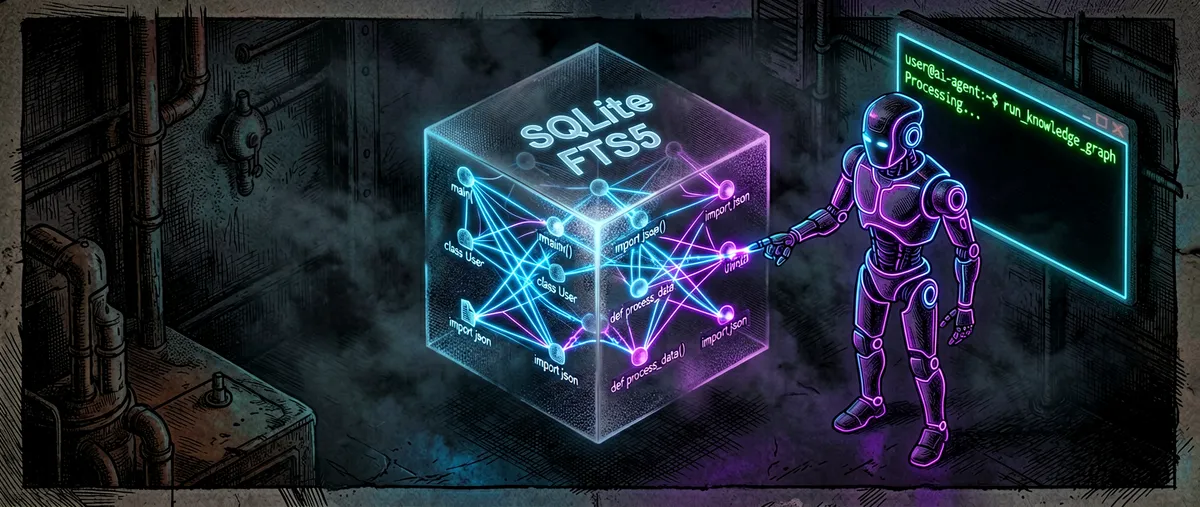
GitNexus is a code intelligence engine that transforms a repository into a knowledge graph: import relationships, calls, symbols, functional groupings, and execution flows. Its npm package presents itself as a graph tool for AI agents; the repository offers a CLI, an MCP server over standard input/output, and a web interface.
Its main use is providing architectural context to agents that edit code. The project itself contrasts that approach with a search that returns isolated edges: it precomputes structure during indexing so queries like impact, context, or trace can return a more complete answer. That’s a design promise from the project, not an independent quality measurement.
The origin: from browser explorer to agent infrastructure
The GitHub API dates the repository’s creation to August 2, 2025. Its author and owner is Abhigyan Patwari, whose account describes them as a computer science student and AI engineer in Guwahati, Assam.
The offering keeps two modes. The web interface lets you explore and chat with a repository in the browser; the CLI+MCP route indexes locally and keeps persistent indexes. The README states neither mode requires sending code to a project server, while gitnexus serve can bridge the web interface with local indexes.

Philosophy and principles
- The graph before isolated text. Analysis starts from symbols and relationships, not only fragments retrieved by similarity.
- Context prepared at indexing time. Groupings, processes, and hybrid search are built before an agent queries the MCP.
- Local, controllable execution. The CLI stores the index in
.gitnexus/and registers repositories locally in~/.gitnexus/registry.json. - Integration over a proprietary agent. The project integrates MCP, skills, and hooks with existing coding tools.
How it works
Indexing follows six documented stages: it walks the file structure; parses AST with Tree-sitter; resolves imports, calls, and types across files; groups symbols into communities; traces processes from entry points; and builds hybrid search indexes. The monorepo architecture separates gitnexus/ (CLI, MCP, ingestion, and LadybugDB), gitnexus-web/ (React/Vite), and gitnexus-shared/.

The documented MCP surface includes query, context, impact, trace, detect_changes, rename, cypher, route_map, tool_map, shape_check, api_impact, explain, and pdg_query. The last two require an index built with --pdg. There are also repository groups for contracts and cross-service links.

Official and semi-official status
No acceptance of the project into an official provider marketplace was recovered. There is a documented installable Codex plugin from the repository via codex plugin marketplace add abhigyanpatwari/GitNexus, followed by installing it in /plugins; this establishes a Codex integration format, not certification or endorsement from OpenAI. The README also documents configuration for Claude Code, Cursor, Antigravity, OpenCode, CodeBuddy, Qoder, and Windsurf.
Quick-start guide
Installation and first run
Node.js is required. The contribution guide specifies ^22.18.0 || >=24.11.0 for the CLI/MCP package. From the root of a code repository:
npx gitnexus analyze
npx gitnexus setup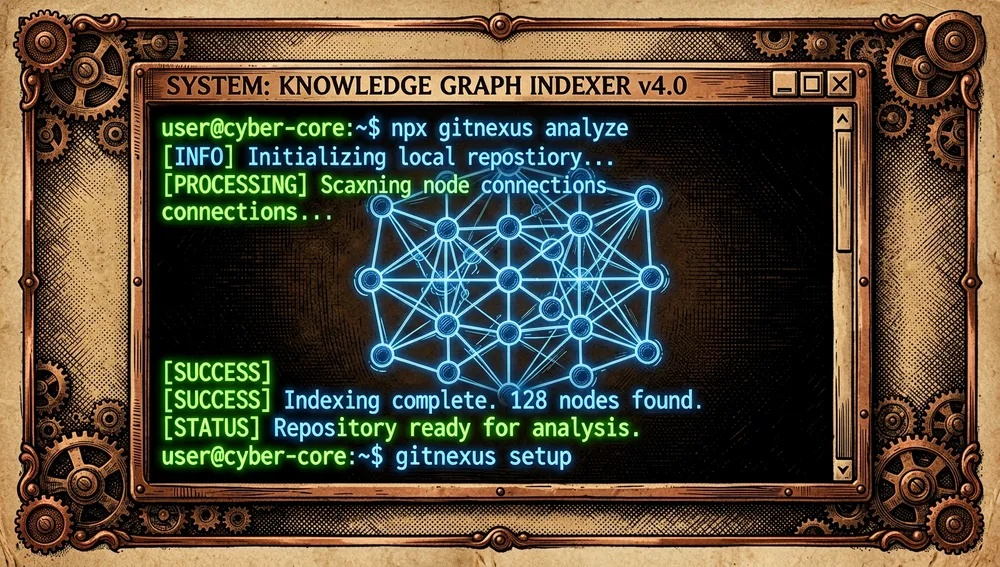
analyze creates or updates the index, installs skills, and generates AGENTS.md/CLAUDE.md context; setup detects editors and writes MCP configuration. To avoid npx’s slow startup, the README recommends installing globally with npm install -g gitnexus@latest.
Common workflows
- Understanding an unfamiliar repository: run
gitnexus analyze [path], then usegitnexus query,gitnexus context, orgitnexus tracefrom the CLI or via the agent connected through MCP. - Evaluating a modification: use
detect_changesto relate a diff to affected symbols and processes;impactshows the blast radius.
- Preparing semantic search:
gitnexus analyze --embeddingsgenerates vectors;--skip-embeddingsspeeds up analysis when they’re not needed. - Generating documentation:
gitnexus wiki [path]produces a wiki from the graph.
Essential configuration
.gitnexusrc: a per-project JSON file for recurring options; the CLI takes precedence over it..gitnexus/: the local index directory, excluded from Git.GITNEXUS_MCP_READ_ONLY=1: reduces the MCP surface to read-only tools for a single repository.GITNEXUS_MCP_ALLOWED_REPOS: limits which repositories an MCP server can expose.--workersand--worker-timeout: tune analysis on slow repositories or CPU-limited machines.
Common pitfalls and fixes
- npm 11 can fail before GitNexus runs; the README proposes
pnpm --allow-build=@ladybugdb/core --allow-build=gitnexus --allow-build=tree-sitter dlx gitnexus@latest analyzeor a global install. - If the MCP server started via
npxexceeds Claude Code’s timeout, the official recommendation is to install the package globally beforegitnexus setup. - Without a C/C++ compiler,
GITNEXUS_SKIP_OPTIONAL_GRAMMARS=1allows installation, at the cost of not analyzing Dart, Proto, Swift, and Kotlin. - Open issue 2953 describes an incorrect resolution of external TypeScript imports in pnpm monorepos; there’s an associated pull request to resolve imports according to declared configuration.
Integrations and migration
gitnexus setup -c cursor,codex lets you choose integrations. For Codex, codex mcp add gitnexus -- npx -y gitnexus@latest mcp is also documented; you should pick between that route and the plugin, since installing both duplicates the hooks. The bridge mode gitnexus serve links the web interface with CLI indexes without re-indexing.
The ecosystem
Related repositories and extensions
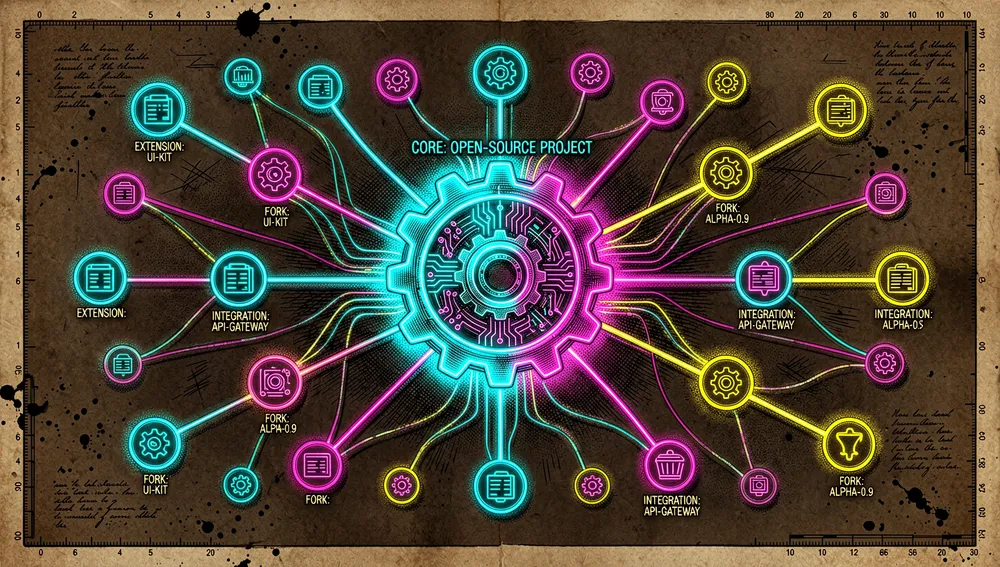
Akon-Labs/gitnexus-check: a GitHub Action that posts graph-derived checks on every pull request; 3 stars in the recovered search.tintinweb/pi-gitnexus: an integration of the GitNexus graph for the Pi agent; 196 stars.antomy-gc/gitnexus-opencode: an integration for OpenCode; 7 stars.chencore/gitnexus-guide: a community installation and usage guide in Chinese; 4 stars.Trenza1ore/GitNexus-Cangjie: a fork declaring Cangjie support; 2 stars.
The same search identifies projects that describe themselves as integrations or extensions, not official components: mybolide/mcp-probe-kit, rajshah4/openhands-autodocs, and jiahuijun/GitNexus-ai-factory. The author also maintains abhigyanpatwari/prowl, another code-graph explorer with 14 stars, but the API doesn’t establish a technical dependency with GitNexus.
The highest-starred forks recovered, nxpatterns/gitnexus (170) and digitalapplied/gitnexus (16), keep the original description. They’re therefore classified as forks, not verified independent ports.
Repo numbers
Measured: August 14, 2026, GitHub and npm APIs.
| Metric | Value |
|---|---|
| Stars | 45,370 |
| Forks | 5,028 |
| Real subscribers | 152 |
| Commits | 1,815 |
| Open issues per API | 297 |
| Primary language | TypeScript |
| License published on npm | PolyForm Noncommercial 1.0.0 |
| Created | August 2, 2025 |
| Latest release candidate | v1.6.10-rc.200, August 13, 2026 |
| npm downloads | 50,043 between August 3 and 9, 2026 |
The top accounts in the recovered contributor listing are magyargergo (523 contributions), dependabot[bot] (288), abhigyanpatwari (268), and Copilot (77). The total commit count comes from the API’s last pagination link. open_issues_count may include open pull requests; watchers_count mirrors stars, so subscribers_count is used for the real subscriber count. The API returned an updated_at of August 14, 2026, later than other metadata recovered in the same run; it’s transcribed as an API anomaly, without inferring additional activity.
How to contribute
The project does document contribution. Clone the repository, build gitnexus-shared first, then gitnexus, and optionally gitnexus-web. Branches should be short-lived and pull requests must use a conventional-commit-style title. Before opening one, type checking, tests for affected packages, documentation updates, and the absence of secrets are required.
The published verification commands are:
cd gitnexus && npx tsc --noEmit && npm test
cd ../gitnexus-web && npx tsc -b --noEmit && npm test
The CLI/MCP core and the web app use Vitest; the web app also has E2E tests with Playwright. The testing document separates unit, integration, scope-resolution, and cross-platform compatibility tests.
How the community received it
The recoverable evidence shows adoption on GitHub and active technical questions, but doesn’t support claiming broad external consensus. Three direct submissions were found on Hacker News: threads 47831132, 47243101, and 47210282 link the repository, but have 3, 1, and 1 points respectively, all with 0 comments; they establish reach, not praise or criticism.
In GitHub Discussions, calesthio opened discussion 586 noting GitNexus seemed especially useful with OpenMontage; it had no comments in the recovered response, so it’s an individual experience without further validation. There are also concrete questions from barainilesh about failures mid-analysis (discussion 1276, 5 comments) and from chenglun17-0 about a size limit causing a stack error (discussion 747, 1 comment).
Searches on Reddit, X, YouTube, Product Hunt, and Dev.to were attempted. This run didn’t recover a verifiable individual page or post that would allow attributing opinions, counts, or a launch; they’re therefore not used as reception evidence.
GitNexus versus other approaches
The README explicitly compares itself to DeepWiki: it presents DeepWiki as a tool for understanding code and GitNexus as a more relational, graph-based analysis. That’s the project’s own position, not an independent comparative test.
The same README lists Cursor, Claude Code, Codex, Cline, Roo Code, and Windsurf as agents that may lack a full structural view; they’re integration targets or problem context, not direct GitNexus competitors. No official documentation was recovered for another code-graph engine sufficient for a verifiable technical comparison, so no performance or coverage advantages are attributed against alternatives.
Use cases and who this repository can help
- Teams modifying unfamiliar codebases:
context,trace, andimpacthelp locate dependencies and execution paths before changing an interface. - Agent-assisted development: users of Claude Code, Codex, Cursor, Antigravity, or OpenCode can connect the same index via MCP, skills, and, where available, hooks.
- Reviews and API changes:
detect_changes,api_impact,shape_check, androute_mapare aimed at anticipating the effects of a diff, a route, or a response shape. - Multi-service architecture: repository groups and their contract registry can help teams that need to search or measure impact across indexed services.
- Environments with exposure limits: local mode,
GITNEXUS_MCP_READ_ONLY, and theGITNEXUS_MCP_ALLOWED_REPOSlist let you restrict which repositories and operations remain visible to the agent.
Resources
- Repository: https://github.com/abhigyanpatwari/GitNexus
- Documentation and installation: https://github.com/abhigyanpatwari/GitNexus#readme · https://gitnexus.vercel.app
- Official skills: https://github.com/abhigyanpatwari/GitNexus#agent-skills-installed-to-claudeskills-and-agentsskills-if-agents-exists-automatically
- Package: https://www.npmjs.com/package/gitnexus
- Reviews or discussions: https://news.ycombinator.com/item?id=47831132 · https://github.com/abhigyanpatwari/GitNexus/discussions
- Community or Discord: https://discord.gg/MgJrmsqr62
Note: this article was compiled from sources retrieved on August 14, 2026. Figures change over time.


Comments