

PM Skills: a library of product workflows for AI assistants
phuryn/pm-skills · 26,595★ · 2,829 forks
Everything worth knowing about phuryn/pm-skills: a marketplace of skills, commands, and plugins for turning AI assistants into product management copilots, from discovery and strategy to execution, launch, analytics, and growth.
phuryn/pm-skills is an open marketplace of skills, commands, and plugins for turning assistants like Claude Code, Claude Cowork, Codex, Cursor, Gemini CLI, OpenCode, and Kiro into product management copilots. The pitch isn’t “prompts for PMs,” but a library of 68 skills and 42 chained workflows, grouped into 9 plugins, covering discovery, strategy, execution, analytics, go-to-market, growth, and reviewing agent-built applications. The verified canonical URL is https://github.com/phuryn/pm-skills.
Origin
The repository was created by Paweł Huryn, author of The Product Compass, and publicly appears as a project launched on March 2, 2026 in the article “PM Skills Marketplace: An AI Operating System for Better Product Decisions.” That first version presented itself as 65 skills and 36 workflows distributed across 8 plugins for Claude Code and Cowork, with compatibility for other assistants. The article’s own page states it later evolved into PM Skills 2.0, with 68 skills, 42 commands, and 9 plugins.
The launch narrative revolves around a concrete tension: generic models can draft documents, but don’t necessarily enforce a product-thinking method. Huryn sums it up in the README as a difference between generic text and structure: each skill encapsulates discovery, prioritization, strategy, or execution frameworks and guides the agent step by step. In June 2026, version 2.0 added pm-ai-shipping, a block aimed at PMs and founders who need to review agent-built applications before putting their name on them.
Initial traction was strong. On LinkedIn, Huryn reported 1,100+ stars in 3 days and then 1,500 new stars in 16 hours, with 2,500 total stars at that point. Star History records the repo as created in March 2026 and places it at 25.3k stars and 2.7k forks as of August 16, 2026, with a best daily rank of #2 on June 11, 2026.
Philosophy and principles
The core philosophy is that the quality of PM work depends less on producing more text and more on applying good decision frameworks. The README states that skills are knowledge blocks or guided workflows; commands chain several skills together; and plugins group installable domains.

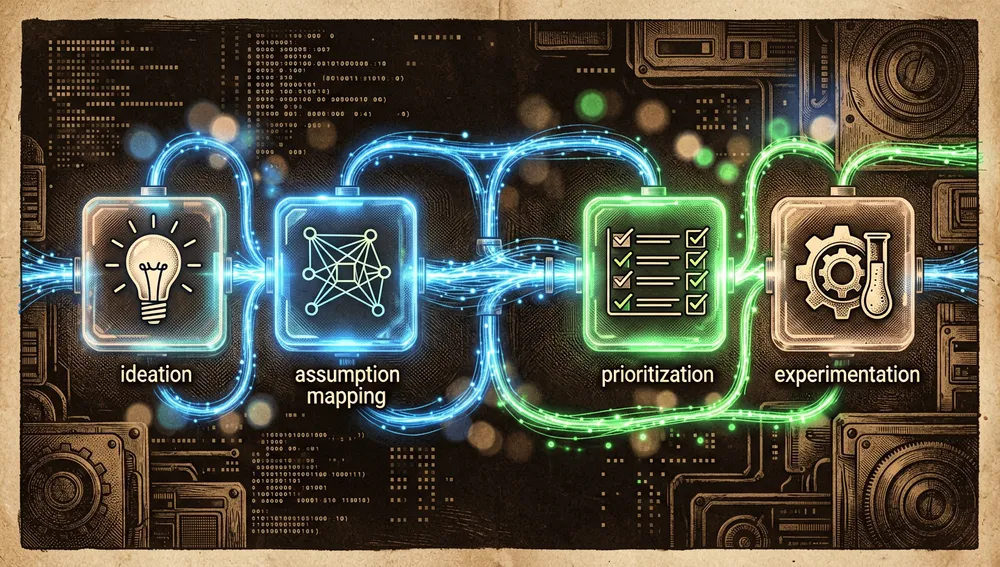
The most important pattern is composition: /discover chains ideation, assumption identification, prioritization, and experiments; /write-prd turns an idea into a PRD; /red-team-prd stress-tests the strategy; /ship-check reviews a repo before shipping.
The project also takes a clear stance on portability. Slash commands are Claude-specific, but SKILL.md files follow a format reusable across other agents. The README documents paths for Codex, Gemini CLI, OpenCode, Cursor, and Kiro, with the caveat that in Codex commands install as files but don’t run as native slash commands: the user must request the workflow in natural language or ask Codex to convert frequent commands into equivalent skills.
Another visible principle is “frameworks first, automation second.” Skills are explicitly based on authors and frameworks like Teresa Torres, Marty Cagan, Alberto Savoia, Dan Olsen, Roger L. Martin, Ash Maurya, Strategyzer, Christina Wodtke, Anthony W. Ulwick, Lean Analytics, Sean Ellis, and Maja Voje. That gives the repo an editorial orientation more than a purely technical one: the value is in packaging decision methods, not in running complex code.
How it works
The repository is organized as a plugin marketplace. The root contains .claude-plugin/marketplace.json, which declares the pm-skills marketplace at version 2.1.0, owned by Paweł Huryn, with nine plugins. Each plugin has its own .claude-plugin/plugin.json manifest, skills/ folders with SKILL.md, and, where applicable, commands in Markdown format. The validate_plugins.py validator checks manifests, skill frontmatter, command frontmatter, each plugin’s README, and cross-references between commands and skills.
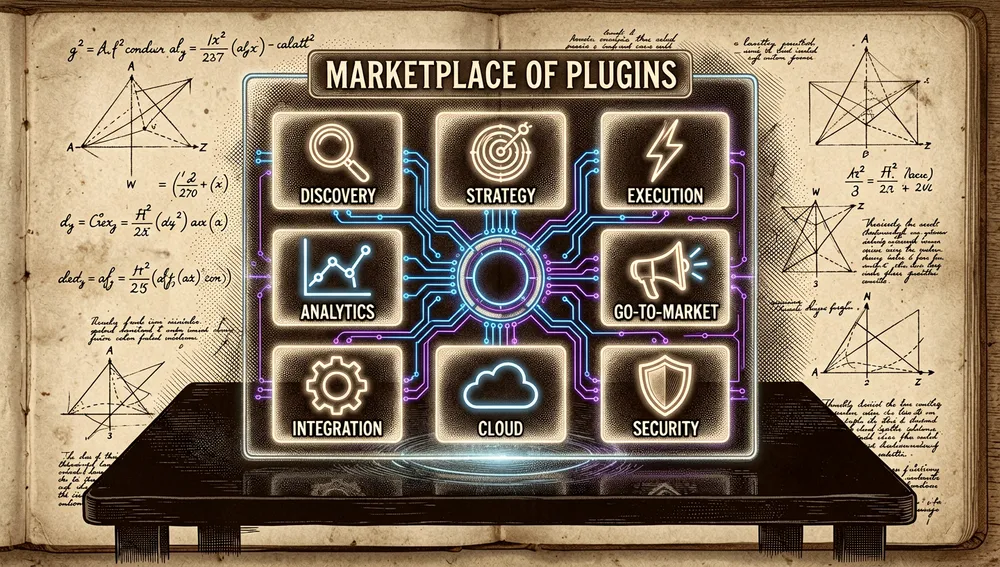
The nine plugins verified in the README and manifest are:
| Plugin | Coverage | Documented count |
|---|---|---|
pm-product-discovery | Ideation, interviews, assumptions, experiments, OSTs, and metrics | 13 skills, 5 commands |
pm-product-strategy | Vision, strategy, pricing, business models, and competitive analysis | 12 skills, 5 commands |
pm-execution | PRDs, OKRs, roadmaps, sprints, retros, stories, stakeholders, and red-team | 16 skills, 11 commands |
pm-market-research | Personas, segmentation, journeys, sizing, competition, and feedback | 7 skills, 3 commands |
pm-data-analytics | SQL, cohorts, and A/B test analysis | 3 skills, 3 commands |
pm-go-to-market | GTM, ICP, beachhead, growth loops, motions, and battlecards | 6 skills, 3 commands |
pm-marketing-growth | Marketing ideas, positioning, value props, naming, and North Star | 5 skills, 2 commands |
pm-toolkit | CVs, NDAs, privacy policy, and writing review | 4 skills, 5 commands |
pm-ai-shipping | Documentation, static audit, performance, and a ship package for agent-built apps | 2 skills, 5 commands |
The expected technical flow depends on the agent. In Claude Cowork, you add the marketplace from the UI and enable plugins. In Claude Code you add the marketplace with claude plugin marketplace add phuryn/pm-skills and then install specific plugins. In Codex you use codex plugin marketplace add phuryn/pm-skills and codex plugin add ...; the README itself clarifies Codex can read the marketplace without conversion, but doesn’t expose slash commands as native commands.
The ecosystem

The author’s direct ecosystem includes three repos linked from the README:
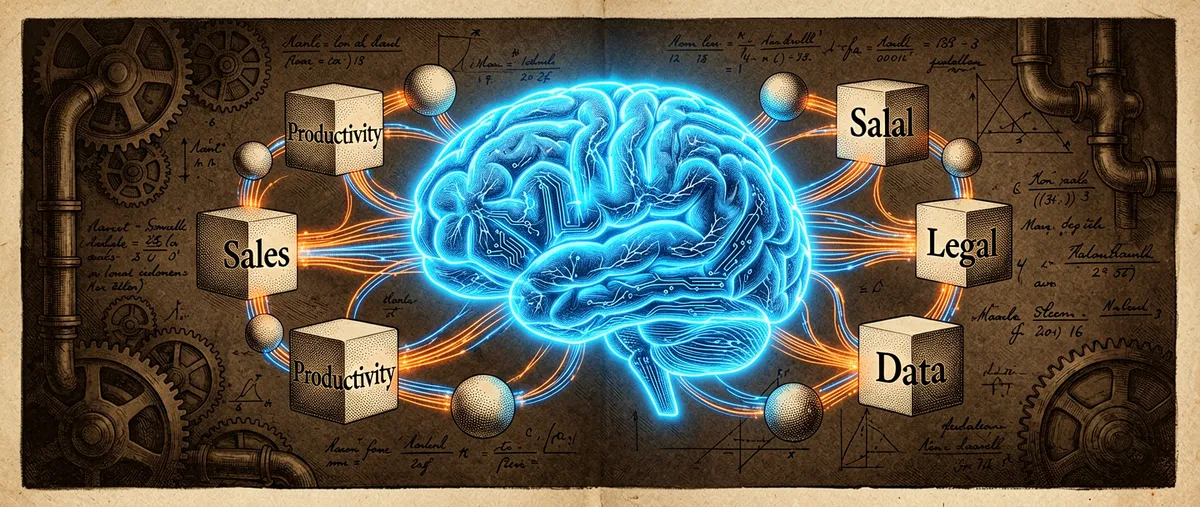
phuryn/pm-brain: a Markdown “second brain” for PMs. Thepm-skillsREADME defines it as the memory layer that provides persistent context: PM Skills provides the method; PM Brain provides what the agent knows about the actual product. Huryn’s GitHub profile page presents it as part of the same family.phuryn/burnstop: a companion repository linked via badge in the README. Insufficient content was found in this run to describe it accurately without risking invention.phuryn/claude-usage: a local dashboard for Claude Code usage, costs, and history, also linked as a companion in the README. Huryn’s GitHub profile shows it as a pinned repo.
Repos or catalogs referencing it also appear:
eigent-ai/agent-skillsincludes apm-skillsentry pointing tophuryn/pm-skills, describing it as product workflows for PRDs, OKRs, meeting notes, discovery, strategy, execution, launch, and growth.heilcheng/awesome-agent-skillslists an entry “Product Management Skills by Pawel Huryn” aspm-skills-huryn, alongside other skill collections.- GitHub Topics indexes
phuryn/pm-skillsunderproduct-managementandagent-skills.
Comparable or nearby projects, verified in this run:
deanpeters/Product-Manager-Skills: a PM skills collection with framing, strategy, discovery, prioritization, and deliverables.product-on-purpose/pm-skills: an Apache-2.0 collection oriented toward PM frameworks and templates.refoundai/lenny-skills: 86 product skills based on Lenny’s Podcast.pmprompt/skills/pmprompt/claude-plugin-product-management: an open plugin for product managers, focused on Claude plugins, Cowork, and Claude Code.eigent-ai/agent-skills: a general skills hub that includes PM workflows and annpxinstaller.
No community forks, ports, or translations of phuryn/pm-skills were found with a distinct identity verifiable enough to list by name.
Official / semi-official status
The repo works as an installable marketplace for Claude Code and Cowork via the .claude-plugin/marketplace.json specification, but no evidence was found that it’s an official Anthropic marketplace or that it was published by a vendor as an official catalog. The most precise status is semi-official/community: it uses the format expected by Claude Code and Cowork, and the README documents direct installation in those environments.
In Codex, the README claims native compatibility with the marketplace file: “Codex reads the same plugin marketplace file as Claude Code.” That compatibility is practical, not a formal endorsement from OpenAI.
In external catalogs, Claude Cowork Guide marks it as “Editor’s pick” and “Featured,” with 63 product management skills and 22.5k GitHub stars at the time of that page. Star History records it as trending, with a global rank of #1567 as of August 16, 2026. Upsun Developer included it in its AI Weekly Review of April 7, 2026 as a repo “worth watching” for bringing the agent-skills pattern to product management.
Current metrics
Query performed August 17, 2026.
| Metric | Verified value | Source and caveat |
|---|---|---|
| Stars | 25.3k | GitHub page and Star History |
| Forks | 2.7k | GitHub page; Star History shows 2.7k and OSS Insight listed 2,483 in a snapshot 5 days earlier |
| Watchers | 227 | GitHub page |
| Commits | 62 | GitHub page, main branch |
| Open issues | 24 | GitHub page |
| Open pull requests | 17 | GitHub page |
| Documented version | v2.1.0, 2026-07-03 | CHANGELOG.md and marketplace.json |
| License | MIT | README, GitHub page, and manifests |
| Releases | no complete data recovered | The recovered HTML page showed a “Releases” section with no entries; the changelog states tags/releases are projected from CHANGELOG.md |
| Top contributors | not verified | The recovered HTML page didn’t expose a contributor list, and the API couldn’t be reached from this session |
Quick-start guide
Installation and first run
For Claude Code:
claude plugin marketplace add phuryn/pm-skills
claude plugin install pm-toolkit@pm-skills
claude plugin install pm-product-strategy@pm-skills
claude plugin install pm-product-discovery@pm-skills
claude plugin install pm-market-research@pm-skills
claude plugin install pm-data-analytics@pm-skills
claude plugin install pm-marketing-growth@pm-skills
claude plugin install pm-go-to-market@pm-skills
claude plugin install pm-execution@pm-skills
claude plugin install pm-ai-shipping@pm-skills
For Codex CLI:
codex plugin marketplace add phuryn/pm-skills
codex plugin add pm-toolkit@pm-skills
codex plugin add pm-product-strategy@pm-skills
codex plugin add pm-product-discovery@pm-skills
codex plugin add pm-market-research@pm-skills
codex plugin add pm-data-analytics@pm-skills
codex plugin add pm-marketing-growth@pm-skills
codex plugin add pm-go-to-market@pm-skills
codex plugin add pm-execution@pm-skills
codex plugin add pm-ai-shipping@pm-skills
For Claude Cowork, the README says to open Customize, go to Browse plugins → Personal → +, choose “Add marketplace from GitHub,” and enter phuryn/pm-skills.
Common workflows
- Discovery from scratch: run
/discover [idea]in Claude Code, or ask Codex to do discovery on an idea: brainstorm options, map assumptions, prioritize the riskiest ones, and design experiments. - PRD and plan stress-testing: use
/write-prd [feature or problem]to draft the PRD, then/red-team-prd [PRD, roadmap, or strategy]to identify fragile assumptions and cheap tests. - Go-to-market: use
/plan-launch [product or segment]to go from beachhead and ICP to a launch strategy. - An agent-built app: use
/ship-check [repo or folder]to generate documentation, map tests, statically audit security/performance, and compile a reviewable package.
Essential configuration
.claude-plugin/marketplace.json: the global manifest; defines name, version, owner, and plugin list.<plugin>/.claude-plugin/plugin.json: each plugin’s manifest, with version, author, keywords, homepage, and license.<plugin>/skills/<skill>/SKILL.md: the reusable instruction for each skill, withnameanddescriptionfrontmatter.<plugin>/commands/*.md: slash workflows for Claude; contain command frontmatter and references to skills in the same plugin.CHANGELOG.md: the source of truth for versions and releases, perCONTRIBUTING.md.
Common pitfalls and fixes
- On Codex, slash commands don’t run as native commands. The README’s documented fix: describe the workflow in natural language, or ask Codex to convert frequent commands into equivalent skills.
- On other agents like Gemini CLI, OpenCode, Cursor, or Kiro, documented compatibility is for skills, not necessarily commands. Fix: copy the
skills/folders to each agent’s skills path. - On Windows, the README records a known Claude Cowork issue when it can’t start a VM. The proposed fix is creating a scheduled task that keeps
CoworkVMServicerunning; if that doesn’t resolve everything, openservices.mscand manually start the “Claude” service. - For large contributions, don’t open a direct PR without discussion.
CONTRIBUTING.mdasks for a prior issue for new skills, commands, or major changes.
Integrations and migration
The main integration is with the Claude Code/Cowork plugin ecosystem. The second is Codex CLI, which can read the same marketplace. For tools without marketplace support, the README proposes copying skills to agent paths:
for plugin in pm-*/; do
  mkdir -p .opencode/skills/
  cp -r "$plugin/skills/"* .opencode/skills/ 2>/dev/null
done
No formal migration guide from other PM skills packages was found. The practical path is installing the plugin that covers the needed domain and replacing loose prompts with skills/workflows: discovery, PRD, strategy, GTM, metrics, or shipping.
Community reception
Verifiable reception combines enthusiasm about growth and criticism about the risk of automating PM judgment.
On LinkedIn, Huryn reported 1,100+ stars in 3 days and 1,500 stars in 16 hours. In the comments, Eduard Ruzga asked which skills were used most and whether there’d be usage metrics; Arden Rosenblatt asked whether the files worked in Cursor; Anton Leynzon interpreted the 1,100 stars as a signal of real pain from generic prompts that don’t understand PM.
Jeff Gothelf shared the repo on LinkedIn with a more ambivalent read: he considered it impressive and useful, but flagged an underlying concern: when frameworks become agent-executable, the value shifts from completing steps to the judgment behind them. That critique fits PM Skills 2.0’s own message: “AI does not fix weak product judgment. It scales it.”
On Reddit, an r/ProductManagement thread about time-saving automations received a concrete recommendation of phuryn/pm-skills for competitive analysis or interview summaries. The same thread includes useful objections: several users question whether PM work is really automatable when there’s ambiguity, internal politics, and human context. On r/prodmgmt, a user described their personal stack with “PM Skills (PHuryn)” alongside BMAD, Open Design, Taste, and Impeccable, but also flagged limits: innovation and strategy don’t transfer as easily as data-driven feature evolution.
In external media/lists, Upsun Developer highlighted it on April 7, 2026 as a maturity signal for the agent-skills pattern applied to product management. GitHub Topics indexes it under product-management and agent-skills, and catalogs like Eigent and awesome-agent-skills include it as a PM skill set.
No direct Hacker News or Product Hunt threads with reliable point, comment, or upvote metrics for this repo were found. No npm/PyPI/crates/Docker Hub downloads were found either, which is consistent with the project distributing as a GitHub marketplace and Markdown files, not a runtime package.
Comparison with similar projects
| Project | Similarity | Practical difference |
|---|---|---|
deanpeters/Product-Manager-Skills | PM skills for discovery, strategy, prioritization, and deliverables | More focused on coaching and skill depth; a marketplace with 9 plugins and chained commands like phuryn/pm-skills wasn’t verified |
product-on-purpose/pm-skills | PM skills with templates and frameworks | Smaller scale verified in recovered sources; Apache-2.0 license; oriented toward covering the product cycle with 24 skills per external sources |
refoundai/lenny-skills | Product skills for agents | Based on Lenny’s Podcast content; covers 86 skills, but its conceptual source is editorial/podcast, not a domain-based PM plugin marketplace |
pmprompt/skills | Open plugin for product managers | Focused on a product plugin for Claude; phuryn/pm-skills has a documented greater breadth of plugins and commands |
eigent-ai/agent-skills | Agent-compatible skills hub | It’s a generalist collection with its own CLI; includes a pm-skills entry, but isn’t centered solely on product management |
How to contribute
CONTRIBUTING.md documents a simple flow. For bugs and small fixes, a direct PR can be opened. For new skills, commands, or large changes, it asks to open an issue first to discuss the approach. The main rules are:
- Focused PRs: one change per PR.
- Skills as domain nouns; commands as workflow verbs.
- Each skill needs frontmatter with
nameanddescription. - Each command needs
descriptionandargument-hint. - The skill’s
namemust match the directory name. - No cross-references between plugins inside commands.
- Before submitting:
python3 validate_plugins.pyandpython3 -m unittest discover -s tests. - Every user-visible change must be added to
CHANGELOG.mdunder## Unreleasedand credit the contributor.
For releases, the changelog is the source of truth. The maintainer renames ## Unreleased to ## vX.Y.Z — YYYY-MM-DD, syncs versions in .claude-plugin/marketplace.json and the plugin.json files, and on pushing to main, CI validates, tags, and publishes the release.
Use cases and who this repository can help
phuryn/pm-skills helps most PMs, founders, and builders who already use agents to produce product artifacts and want to lower the variability of the responses. It’s especially useful when the work needs a repeatable structure: discovering an idea, interviews, PRDs, prioritization, outcome-based roadmapping, pricing, GTM, feedback analysis, metrics, or launch prep.
For non-technical PMs, Claude Cowork offers the simplest path: install the marketplace from the UI and use workflows like /discover, /strategy, /write-prd, or /plan-launch. For technical PMs or founders working in repos, Claude Code and Codex let you use the same skills alongside code. The pm-ai-shipping part is relevant for teams using agents to write software and needing reviewable artifacts: architecture, permissions, test coverage, security audit, and performance.
The repo doesn’t replace product judgment. Community sources and the author himself agree on the warning: skills make it easier to apply frameworks, but they can also scale a weak assumption badly. Its best use is as a structure for thinking, documenting, and stress-testing decisions, not as an autopilot for deciding.
Resources
- Repository: https://github.com/phuryn/pm-skills
- Documentation: https://github.com/phuryn/pm-skills#readme
- Marketplace / manifest: https://raw.githubusercontent.com/phuryn/pm-skills/main/.claude-plugin/marketplace.json
- Changelog: https://raw.githubusercontent.com/phuryn/pm-skills/main/CHANGELOG.md
- Contribution: https://github.com/phuryn/pm-skills/blob/main/CONTRIBUTING.md
- Launch article: https://www.productcompass.pm/p/pm-skills-marketplace-claude
- PM Skills 2.0: https://www.productcompass.pm/p/pm-skills-2-red-team-ship
- PM Brain companion: https://github.com/phuryn/pm-brain
- Star History: https://www.star-history.com/phuryn/pm-skills
- OSS Insight: https://ossinsight.io/analyze/phuryn/pm-skills
- Claude Cowork Guide: https://claudecowork.im/resources/pm-skills-marketplace
- Upsun AI Weekly Review: https://developer.upsun.com/posts/ai/aiweekly-2026-04-07
Note: this article combines the repository, README, CONTRIBUTING.md, CHANGELOG.md, launch articles, and public conversations retrieved on August 17, 2026. Figures and features change over time. No official npm, PyPI, crates.io, or Docker Hub package registries were found for this repo.

Comments