

OpenMontage: the video studio that orchestrates your coding assistant
calesthio/OpenMontage · 61,249★ · 7,798 forks
Everything worth knowing about calesthio/OpenMontage: an open, agentic video production system that turns your coding assistant into a full research, script, storyboard, narration, editing, and rendering team. As of August 31, 2026 it carries 55,006 stars.
What OpenMontage is
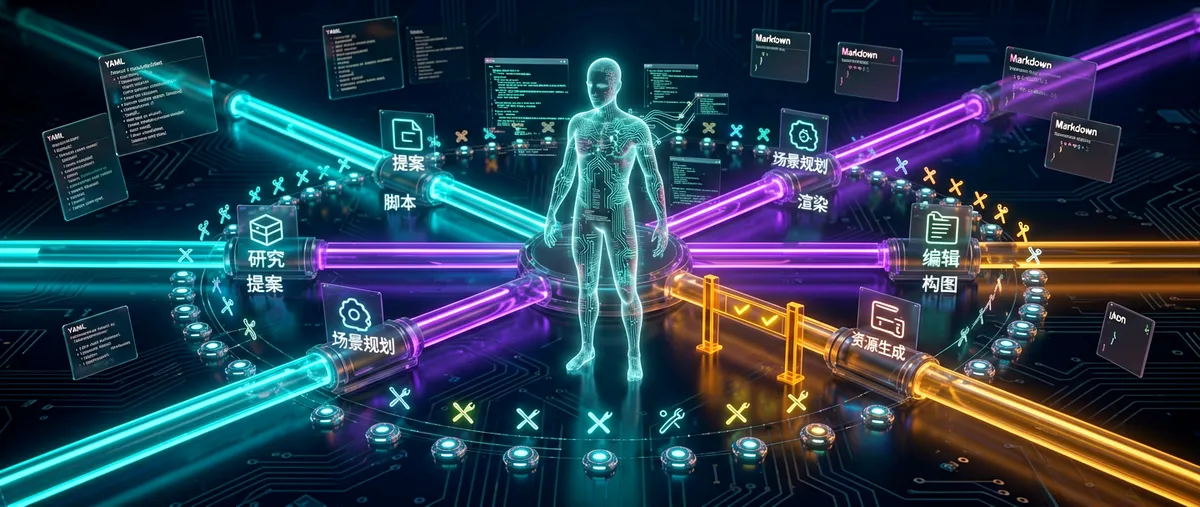
OpenMontage bills itself as the first open-source agentic video production system. It isn’t a generation model or an application with a UI — it’s a codebase that opens inside a coding assistant (Claude Code, Cursor, GitHub Copilot, Codex, or Windsurf) and turns it into the production orchestrator. The assistant is the orchestrator; there’s no separate orchestrator engine of its own.
The repository’s official description sums up the pitch: 12 production pipelines, over 100 tools, over 60 provider integrations, and over 700 skill and production-knowledge files. In practice, the user writes a natural-language request and the agent researches the topic on the web, writes the script, generates or retrieves audiovisual material, narrates it, adds music and subtitles, composes it, and renders it, asking for human approval at every creative decision.
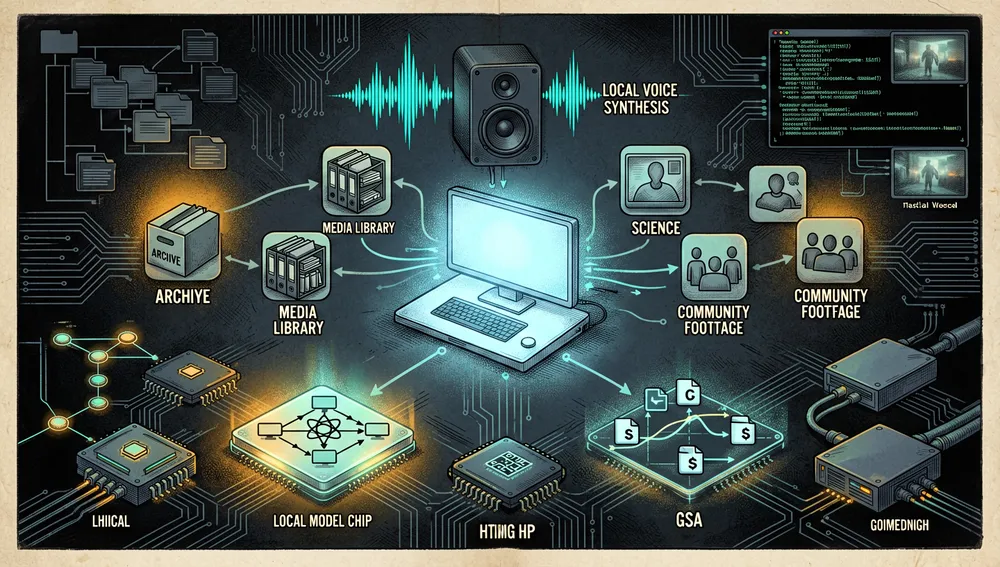
Two traits set it apart from most “AI video” tools, per the README itself: it can produce video from real motion footage (a CLIP-indexed corpus of free, open-archive material, edited on an actual timeline), and it operates at zero cost when no API keys are set, using Piper for voice, footage from Archive.org, NASA, and Wikimedia Commons, and the Remotion or HyperFrames composition engines.
Origin: from a creator’s account to GitHub Trending’s front page
The repository was created on March 29, 2026. Its author is Calesthio (calesthio), whose GitHub profile lists Seattle, Washington as location and Microsoft as company, with the bio “Building open source AI Assisted and Agentic Tools. Creator of OpenMontage and Crucix.” The account opened in May 2025 and maintains nine public repositories.
The README carries the GitHub Trending Repository of the Day badge, which the project itself displays as proof of its visibility peak; the exact date of the recognition wasn’t retrieved, but the oldest forks found (late June 2026, with the description “12 pipelines, 52 tools, 500+ agent skills”) and the subsequent growth to 55,000 stars place that peak in the summer of 2026.
The official site, openmontage.video, defines the product in one line: “Make video the way you now make software,” and announces a waitlisted beta whose exact scope couldn’t be verified in this research. The official YouTube channel @OpenMontage publishes videos produced with the system; the README states that every video includes the full prompt, the pipeline, the tools used, and the cost, so anyone can reproduce it.
Philosophy and principles
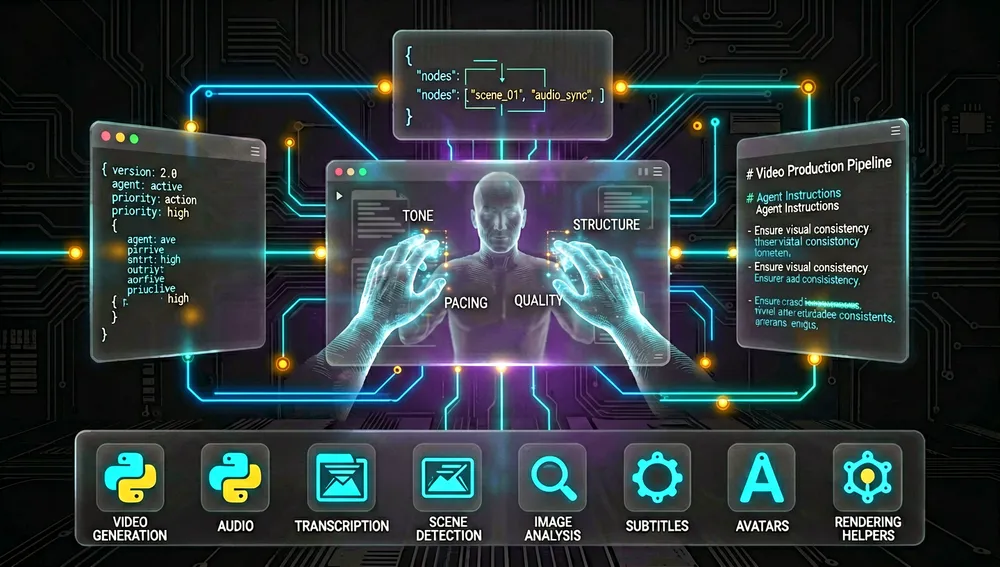
The README explicitly declares an agent-first architecture: orchestration logic, review criteria, and quality standards live in readable files (YAML manifests and Markdown skills), not in code the user has to trust blindly. Several verifiable principles follow from that:
- The agent is the orchestrator; Python is just the toolbox. All creative judgment lives in instructions that can be inspected and customized.
- Quality via human approval gates that are enforced, not suggested. The checkpoint writer refuses to mark a stage “complete” if approval wasn’t recorded; every superseded checkpoint is archived to preserve the audit trail.
- Production governance as engineering. Pre-render validation (delivery promise, “slideshow” risk, renderer family), mandatory self-review after every render (ffprobe, frame extraction, audio analysis), and an auditable decision trail where every provider choice is logged with the alternatives considered and the reasoning.
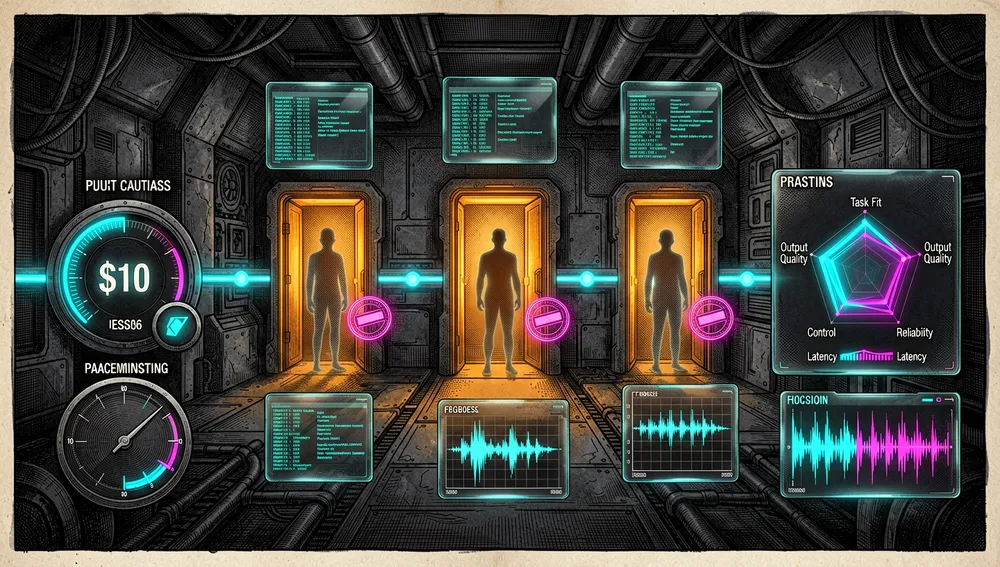
- No provider lock-in. A scored selector rates each provider across seven dimensions (task fit 30%, output quality 20%, control 15%, reliability 15%, cost efficiency 10%, latency 5%, continuity 5%) and can swap providers freely.
- Built-in budget governance: estimation before execution, budget reservation, reconciliation afterward, a total cap (default $10), and per-action approval above a threshold (default $0.50).
- Free and local first, cloud optional. Every capability has a local or open-source alternative alongside paid APIs; with zero API keys the system already produces complete videos.
How it works
The documented flow of every pipeline is the same:
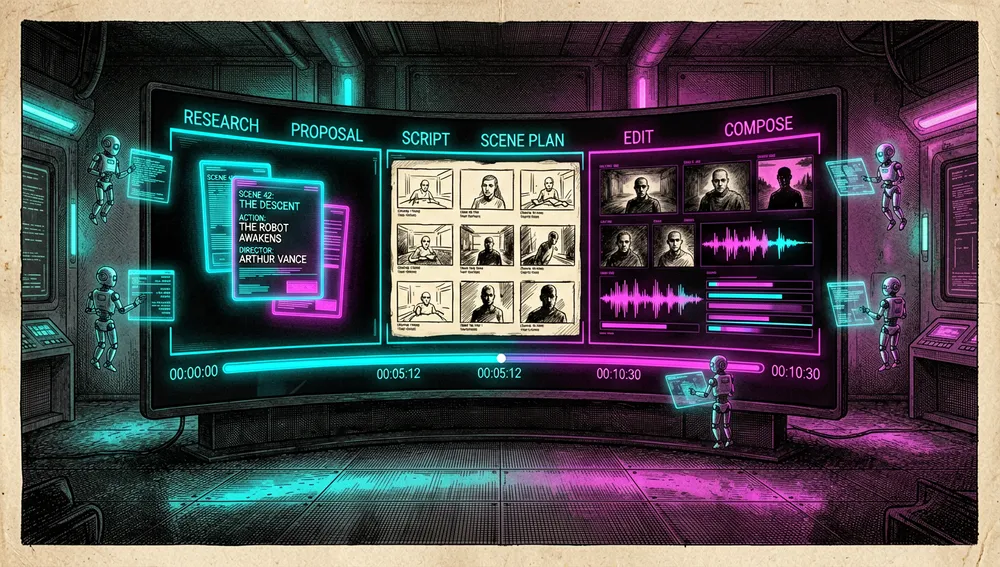
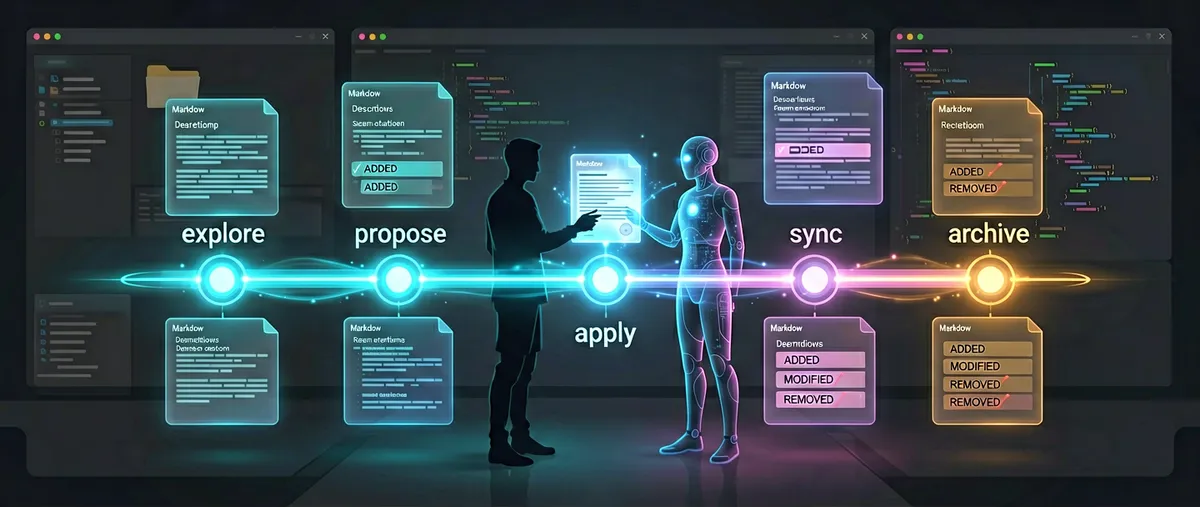
research -> proposal -> script -> scene_plan -> assets -> edit -> composeEach stage has a directive skill (a Markdown file that teaches the agent how to execute that stage). The agent reads the pipeline manifest, reads the stage skill, calls the Python tools in tools/ (with scored provider selection), self-reviews using the reviewer skill, saves a resumable JSON checkpoint with a decision log and accumulated cost, and presents the result for human approval.
The documented internal organization:
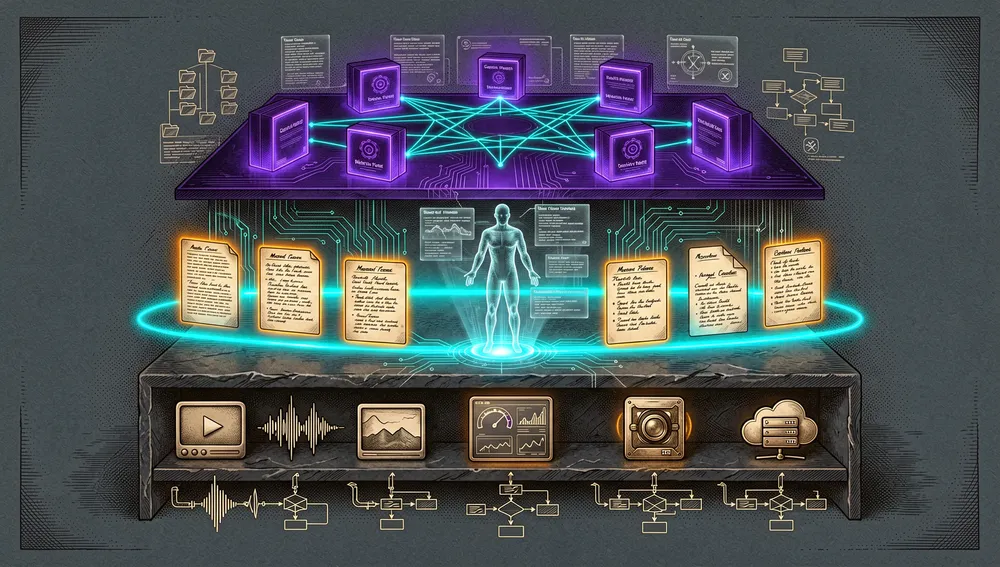
tools/— the 100+ registered tools: video generation (20+ providers), audio and TTS (10+), images (15+), enhancement (upscaling, background removal, face restoration), analysis (WhisperX transcription, scene detection, CLIP/BLIP-2), avatars and lip sync, subtitles.pipeline_defs/— YAML manifests for the pipelines (the agent’s “roadmap”).skills/— Markdown skills: per-pipeline directors, creative techniques, core skills, and meta-protocols (reviewer, checkpoints).schemas/— over 20 JSON schemas validating contracts between stages.remotion-composer/— the React/Remotion composition engine.backlot/— the Backlot, a live local dashboard that fills up during production: stages lighting up, the script as a screenplay page, scene cards as assets get generated, costs and provider decisions, with chronological playback of a finished run.
Three-layer knowledge architecture: layer 1 (tools/ + pipeline_defs/) says what exists; layer 2 (skills/) says how OpenMontage wants it used; layer 3 (.agents/skills/) contains deep technical knowledge packages for each technology. Every tool declares which layer-3 skills it depends on.
Pipelines documented in the README’s table: Animated Explainer, Animation, Avatar Spokesperson, Cinematic, Clip Factory, Documentary Montage, Hybrid, Localization & Dub, Podcast Repurpose, Screen Demo, and Talking Head. The repository’s official description mentions 12 pipelines; the table visible in the README lists the eleven above, and the text also mentions a character-animation pipeline (rigged SVG character animation) among its examples. Web research is a first-class stage: before the script, the agent runs 15 to 25 searches across YouTube, Reddit, Hacker News, media, and academic sources, citing everything in a structured brief.
Composition with two engines: the system chooses between Remotion (React, the default for data-driven explainers and the existing React scene stack) and HyperFrames (HTML/CSS/GSAP, the default for motion-graphics-heavy pieces and for SVG/GSAP character-animation output) at the proposal stage, and locks that decision in as render_runtime; switching runtimes without justification is a governance violation.
The ecosystem
The author’s repositories
calesthio/Crucix: “Your personal intelligence agent. Watches the world from multiple data sources and pings you when something changes.” 11,599 stars in the GitHub API consulted. The author’s other flagship project, cited alongside OpenMontage in their own bio.calesthio/generative-media-skills: research skills and tools for premium image, video, audio, and voice production in coding assistants. 144 stars.calesthio/Resonant: a free, local Windows music studio with Codex or Claude connectivity via MCP. 128 stars.- Other minor public repos by the author:
OptionsCanvas(60 stars),PhantomReach(46),OpenMAIC(28),SessionAnchor(26), andBreakoutAnalysis(279).
Forks, translations, and derivatives
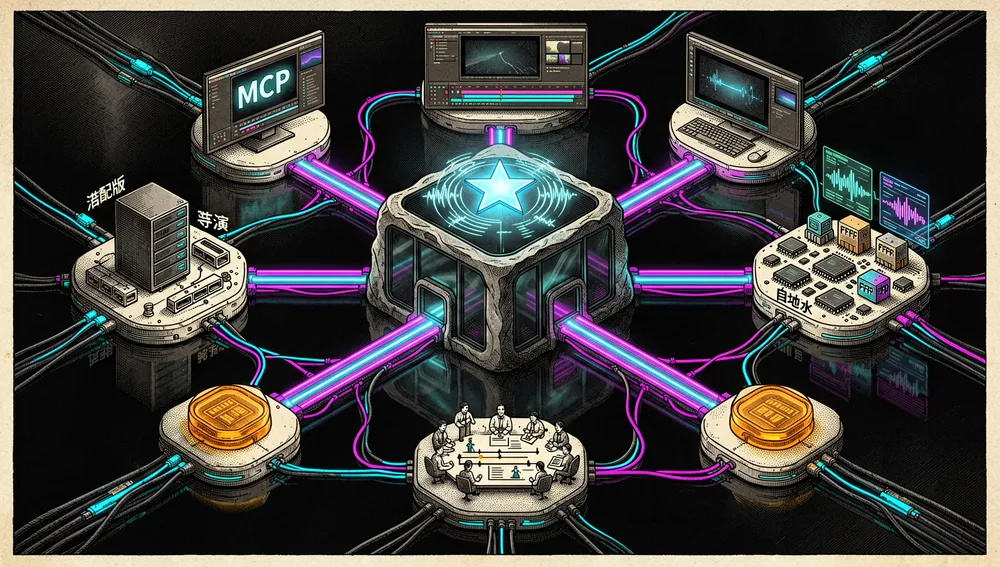
noah-1106/openmontage-zh-mcp: the most visible Chinese translation found (9 stars, a fork). It’s more than a translation: it adds an MCP server exposing 9 business-level tools (list_capabilities,create_project,get_project_status,run_tool, among others) over stdio, so Claude Code, Cursor, or Copilot can call the pipelines and tools without a resident port; it also declares adaptation to Chinese language models.47thtechcorner/RayCodes_OpenMontage: an independent repository (27 stars, created June 22, 2026) titled “OpenMontage: 100% Free Local AI Video Production System,” combining Ollama (local models likegemma4:e2b), HyperFrames, and FFmpeg with no external API dependencies, with its own YouTube tutorial. It’s not a fork of the original repository.may215/openmontage_ui(2 stars): a video editor with a full interface for the project.ddokkang2/openmontage-mcp-providers(3 stars): a generic MCP provider bridge for OpenMontage.X-J-S-C/openmontage-studio(2 stars): a Chinese-language workstation for the full video flow, described as collaboration between script, direction, and production roles.- Mirror forks with unchanged descriptions: among others,
Shubhamsaboo/OpenMontage(12 stars) andSayanDey322/OpenMontage(10); most keep the upstream description and don’t credit an adaptation of their own. digimads-lab/OpenMontage(7 stars): describes itself as “Open source collaborative filmmaking,” with no further verified detail.
Integrated tools and related projects
remotion-dev/remotion(57,886 stars): a programmatic video engine built on React; in OpenMontage it’s one of the two composition runtimes, not a competitor.heygen-com/hyperframes(43,380 stars, created March 10, 2026): “Write HTML. Render video. Built for agents.”; the second composition runtime, consumed vianpx hyperframes.- OpenClaw: the README includes a section dedicated to OpenClaw-style agents reading the repository (“If You’re An OpenClaw Agent Reading This, Congratulations: You Probably Passed The Turing Test”), with the recommended path of
AGENT_GUIDE.mdandPROJECT_CONTEXT.md. It’s a compatibility reference, not a dependency. - Bloome and Atlas Cloud appear as official sponsors in the README: Bloome for collaborating with multiple agents in one conversation, and Atlas Cloud as a multimodal inference platform.
GML-MMGroup/AdCraft(128 stars): an agentic video platform aimed at advertising and marketing, with an infinite canvas and reference cloning; it appears in the same repository search and is analyzed in the comparison section.
Official and semi-official status
No acceptance into any vendor’s official marketplace or vendor endorsement was found in the sources consulted: OpenMontage is an independent project by its author, licensed AGPLv3, funded through individual sponsorship (github.com/sponsors/calesthio) and two visible commercial sponsors in the README (Bloome, Atlas Cloud).
What can be verified: the GitHub Trending Repository of the Day badge the README itself displays (with no retrievable date), the 55,000-star figure as of August 2026, and the announcement of a waitlisted beta on the official site openmontage.video, whose scope couldn’t be confirmed. In practice, the combination of the trending badge, community adoption (MCP, UI, and Chinese-translation derivatives), and integration with all major coding assistants places it as a candidate de facto standard for the “agentic video studio in the repository” pattern, but no source consulted declares a formal designation.
Quick-start guide
Installation and first run
Documented prerequisites: Python 3.10+, FFmpeg, and Node.js 18+ (HyperFrames requires Node 22+ per the composition table), plus a compatible coding assistant.
git clone https://github.com/calesthio/OpenMontage.git
cd OpenMontage
make setup
Then the project is opened in the coding assistant and the request is made in natural language, for example:
"Make a 60-second animated explainer about how neural networks learn"If make isn’t available, the README gives the manual equivalent (macOS/Linux): python3 -m venv .venv && source .venv/bin/activate && python -m pip install -r requirements.txt && cd remotion-composer && npm install && cd .. && python -m pip install piper-tts && cp .env.example .env (with a PowerShell variant for Windows). All API keys in .env are optional: with no keys, make setup leaves Piper TTS, the open archives (Archive.org, NASA, Wikimedia Commons), Remotion, HyperFrames, and FFmpeg available. make demo renders demo videos with no keys.
Common workflows
- Narrated explainer, no keys: request “Make a 45-second animated explainer about why the sky is blue”; the agent researches, generates images, narrates with Piper, composes with Remotion, and self-reviews before delivering.
- Documentary montage with real footage: request “Make a 90-second documentary montage about what a city feels like at 4am. Use real footage only, no narration, elegiac tone.”; the Documentary Montage pipeline builds a CLIP-indexable corpus from Pexels, Archive.org, NASA, Wikimedia, and Unsplash and cuts real footage on a timeline.
- Starting from a reference video: paste a YouTube Short, Reel, or TikTok (“Here’s a YouTube short I love. Make me something like this, but about CRISPR for high school students”) and the agent replies with 2-3 differentiated concepts, an honest tool route, a cost estimate, and a sample before full production.
- Watching production from Backlot:
python -m backlot openopens the on-disk library of every project;python -m backlot open <project-id>opens a production’s live dashboard; when finished, the REPLAY RUN button plays back the entire run from its timestamps.python scripts/backlot_simulate_run.pyshows a simulated run with no prior production. - Checking installed capability:
python -c "from tools.tool_registry import registry; import json; registry.discover(); print(json.dumps(registry.support_envelope(), indent=2))"shows the real capability envelope;registry.provider_menu()shows the provider menu.
Essential configuration
.env(copied from.env.example): all keys are optional, and more keys mean more tools. Typical keys:FAL_KEY(FLUX, Veo, Kling via fal.ai),PEXELS_API_KEY,PIXABAY_API_KEY,SUNO_API_KEY,ELEVENLABS_API_KEY,KLING_API_KEY,VIDEO_GEN_LOCAL_ENABLED/VIDEO_GEN_LOCAL_MODELfor local GPU generation (make install-gpu).pipeline_defs/: YAML manifests with each pipeline’s stages, tools, review criteria, and success gates; this is where a flow is defined or modified.skills/: the Markdown skills (stage director, creative techniques, reviewer, checkpoint protocol); this is the knowledge the agent applies, and where standards are customized.remotion-composer/: the Node.js project for the Remotion engine;npm installinside it is part ofmake setup.AGENT_GUIDE.mdandPROJECT_CONTEXT.md: the operational contract for agents and the architecture reference; the README flags them as the starting point for any agent working on the repo.
Common pitfalls and fixes
npm installfails on Windows withERR_INVALID_ARG_TYPE: the README suggests usingnpx --yes npm installinstead.- Silent runtime changes:
render_runtimeis locked at the proposal stage and travels throughedit_decisions; switching from Remotion to HyperFrames without justification is a governance violation documented inskills/core/hyperframes.md. - “Slideshow”-style renders: six-dimension slideshow-risk scoring and pre-render validation block deliveries that contradict the declared promise (e.g. a “motion-led” video that’s 80% static images); if the post-render self-review fails, the video isn’t presented.
- Gated stages without approval: the checkpoint writer refuses to mark a stage with a human-approval gate as “complete” if approval wasn’t recorded; approvals happen by replying in chat or on the Backlot dashboard.
- Cost: the default budget caps at $10, with per-action approval required above $0.50;
observe,warn, andcapmodes are configured in the budget control.
Integrations and migration
- Coding assistants: dedicated files
CLAUDE.md,CURSOR.md+.cursor/rules/,COPILOT.md+.github/copilot-instructions.md,CODEX.md, and.windsurfrules, all pointing to the sameAGENT_GUIDE.md. The README announces “coming soon” support for local LLMs via Ollama and LM Studio to run the pipeline without the cloud. - MCP: the main repository doesn’t document its own MCP server; MCP integration is provided by the community derivative
noah-1106/openmontage-zh-mcp(9 business tools over stdio). - Community: GitHub Discussions with Show and Tell, Ideas, and Q&A categories.
- Migration: no formal migration path from another tool is documented. In practice, Remotion or HyperFrames used standalone become internal OpenMontage runtimes, and the reference flow (paste a video and ask for variants) replaces manually prompting loose generation tools; declared compatibility with five coding assistants means there’s no need to switch assistants to adopt it.
Current metrics
Measured: August 31, 2026, GitHub API.
| Metric | Value |
|---|---|
| Stars | 55,006 |
| Forks | 6,865 |
| Subscribers | 311 |
| Commits (approx.) | 448 |
| Open issues (API) | 277 |
| Primary language | Python |
| License | AGPL-3.0 |
| Created | March 29, 2026 |
| Last push | August 22, 2026 |
| Last metadata refresh | August 31, 2026 |
The API doesn’t expose published releases for this repository (the /releases response was empty), so a stable version can’t be cited; status is tracked through commits and the official channel’s production videos. Top contributors returned by the API: calesthio (310 contributions), 0xDevNinja (28), yiyabo (13), xucailiang (7), and ziyu4huang (6). Caveat: open_issues_count may include open pull requests, not just issues; the general response’s watchers_count field mirrors the star count, which is why subscribers_count is reported as the real follower figure; 448 was obtained from the last page of the commits API’s pagination link.
Community reception
The Hacker News footprint is thin and early; no main thread with substantial debate was retrieved:
- The highest-traction submission, “OpenMontage: Turn your AI coding assistant into a full video production studio” (thread 48616398, submitted by
vantareedon June 21, 2026), reached 7 points per Algolia. The retrieved comment from the thread, by jdiff, is a concrete product criticism: it argues the tool doesn’t seem useful beyond mass-producing ridiculous content, describes the examples as “slop” that says nothing or exaggerates grotesquely, and flags a visible glitch — text that rewrites itself mid-animation in the first example, which they attribute to animating box width instead of scale. - Other direct submissions to the repository: 48647621 (5 points, 1 comment, June 23), 48740853 (3 points, 0 comments, July 1), 48592834 (2 points, 0 comments, June 18), and 48686111 (1 point, 0 comments, June 26). Those figures don’t imply community consensus or enthusiasm — they document reach, with a single retrieved critical opinion.
- Reddit: the public search API query returned an HTML challenge page instead of JSON, so no retrievable threads were obtained in this research.
- YouTube: the video from Ray Codes’s local derivative, “OpenMontage: The World’s First 100% Free Local AI Video Production System” (Ray Codes channel, published June 22, 2026), showed 14,381 views at query time. It’s the most concrete external adoption signal retrieved, though it corresponds to a local fork, not the original repository.
- jdiff’s criticism contrasts with the README’s own stance, which explicitly acknowledges the quality problem and addresses it with governance gates (pre-validation, slideshow risk, post-render self-review); that tension — trending hype versus perceived output quality — is the axis of verifiable reception to date.
OpenMontage vs. other approaches
| Approach | Verifiable overlap | Verifiable difference |
|---|---|---|
remotion-dev/remotion (57,886 stars) | Programmatic video production with React. | Remotion is a composition library; in OpenMontage it acts as one of two internal runtimes. There’s no research, script, or human-approval flow. |
heygen-com/hyperframes (43,380 stars) | Video rendering from HTML/CSS/GSAP, “built for agents.” | HyperFrames is a render engine; OpenMontage consumes it (via npx hyperframes) as an alternate runtime alongside Remotion. |
GML-MMGroup/AdCraft (128 stars) | Open-source agentic video platform for marketing (infinite canvas, reference cloning, full-flow automation, per its description). | Positions itself specifically in advertising and marketing; the retrieved description doesn’t support claiming architectural or provider equivalence with OpenMontage. |
47thtechcorner/RayCodes_OpenMontage (27 stars) | A local video pipeline with Ollama + HyperFrames + FFmpeg, inspired by the OpenMontage brand. | An independent repository focused on 100% local, no external APIs; not a fork of the original. |
noah-1106/openmontage-zh-mcp (9 stars) | The same system, with a Chinese-language interface. | Adds an MCP server (9 business tools over stdio) and adaptation to Chinese models; the community’s most relevant functional extension. |
The most useful comparison: OpenMontage competes for control of the entire production flow (research → script → assets → edit → delivery) inside a coding assistant that’s already in use, while Remotion and HyperFrames solve only the composition leg, and AdCraft solves the flow but within its own marketing platform.
How to contribute
The documented process is minimal and explicit. CONTRIBUTING.md states no CLA or origin certificate is required: submitting a pull request confirms the right to contribute, contributions must be AGPLv3-compatible, and PRs stay focused, with tests when behavior changes.
The two contribution routes the README documents:
- Add a tool: create a Python file in the corresponding
tools/subdirectory, inherit fromBaseTool, and implement the contract; the registry auto-discovers it with no manual registration, and a skill is added if the tool needs usage guidance. - Add a pipeline: create the YAML manifest in
pipeline_defs/and the directive skills inskills/pipelines/<pipeline>/, reusing existing tools or adding new ones.
Review is governed by docs/PR_REVIEW_GUIDE.md, a framework (not a closed checklist) for human and assistant reviewers: it asks whether the PR preserves the agent-first architecture, whether it updates tests and documentation to match the behavior change, and whether it introduces regressions in provider discovery, pipeline artifacts, or rendering. The open issue #149 (“Call for PR reviewers with video generation production experience,” from the author) confirms an active search for reviewers with video production experience. To test: make test-contracts (no API keys) and make test for the full suite. The community organizes via GitHub Discussions (Show and Tell, Ideas, Q&A).
Use cases
- Educational and content creators with no AI budget: the zero-key path (Piper + Archive.org/NASA/Wikimedia + Remotion/HyperFrames + FFmpeg) documented in the README enables producing narrated explainers and real-footage montages without paying for APIs; the README’s example videos declare costs of $1.33 to $5 in flows involving generation, putting the economic threshold well below subscription AI-video services.
- Product and marketing teams with a coding assistant already installed: the Screen Demo, Avatar Spokesperson, Cinematic, and Clip Factory pipelines map directly to product demos, corporate announcements, brand teasers, and cutting long-form content into short pieces; the approval gate and auditable decision trail answer a team that needs to account for why the video looks the way it does.
- Essay-video and documentary producers: the Documentary Montage pipeline with its CLIP-indexed corpus of open archives is the documented route for pieces using real footage without paid models; the README’s examples (“How Salt Made History,” an Adam Curtis-style collage) show the expected register.
- Localization and multilingual distribution teams: the Localization & Dub pipeline and the Google TTS provider (700+ voices, 50+ languages per the README’s table) cover subtitles, dubbing, and translation as a production flow, not a manual post-process.
- Developers who want to study or extend the pattern: the three-layer architecture, the 20+ JSON schemas, and the self-discovering tool registry make the repository an inspectable reference for agentic governance applied to media; the README explicitly invites adding your own tools and pipelines.
- Users in the Chinese-speaking community: the
openmontage-zh-mcpderivative, with its MCP server and adaptation to local Chinese models, is the documented entry point for that audience.
Resources
- Repository: https://github.com/calesthio/OpenMontage
- Official site: https://www.openmontage.video/
- Documentation:
docs/ARCHITECTURE.md,docs/PROVIDERS.md,AGENT_GUIDE.md,docs/PR_REVIEW_GUIDE.md(in the repository) - Skills and pipelines: https://github.com/calesthio/OpenMontage/tree/main/skills, https://github.com/calesthio/OpenMontage/tree/main/pipeline_defs
- Prompt gallery: https://github.com/calesthio/OpenMontage/blob/main/PROMPT_GALLERY.md
- Community (Discussions): https://github.com/calesthio/OpenMontage/discussions
- Official YouTube: https://www.youtube.com/@OpenMontage
- Author’s X: https://x.com/calesthioailabs
- Sponsorship: https://github.com/sponsors/calesthio
- Community tutorial (local fork): “OpenMontage: The World’s First 100% Free Local AI Video Production System” — Ray Codes channel, https://youtu.be/FyM-0sJYIR8 (14,381 views at query time)
- Hacker News threads: https://news.ycombinator.com/item?id=48616398 (7 points), https://news.ycombinator.com/item?id=48647621 (5 points), https://news.ycombinator.com/item?id=48740853 (3 points)
- Chinese MCP derivative: https://github.com/noah-1106/openmontage-zh-mcp
- Package registries: not published on npm, PyPI, or Docker Hub in the queries performed
Note: this article draws on the README and repository docs, the GitHub API, the author’s profile, repository/fork search, the official site openmontage.video, and Hacker News (Algolia), consulted on August 31, 2026. Figures change over time; the scope of the “beta” announced on the official site wasn’t verified.
Comments