

Anthropic Skills: the repository that turned instructions into portable capabilities
anthropics/skills · 178,114★ · 21,100 forks
Everything you need to know about anthropics/skills: Anthropic’s public collection of examples and components for Agent Skills, the open format of folders with instructions, code, and resources for AI agents.
What is Anthropic Skills?
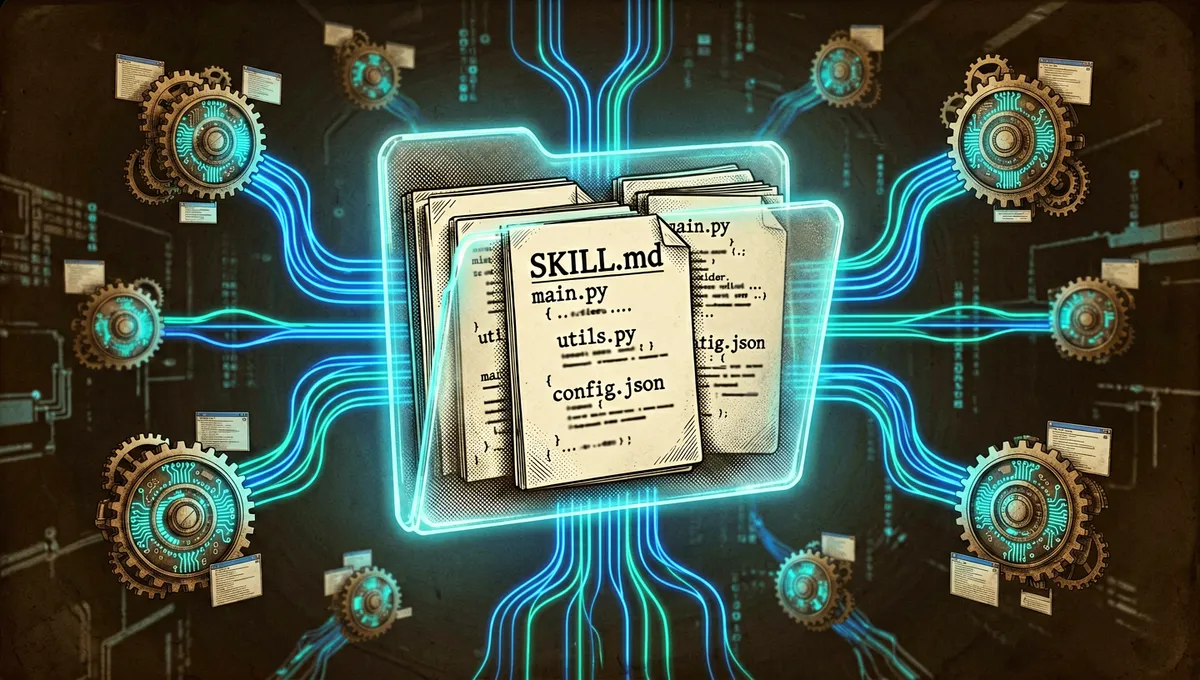
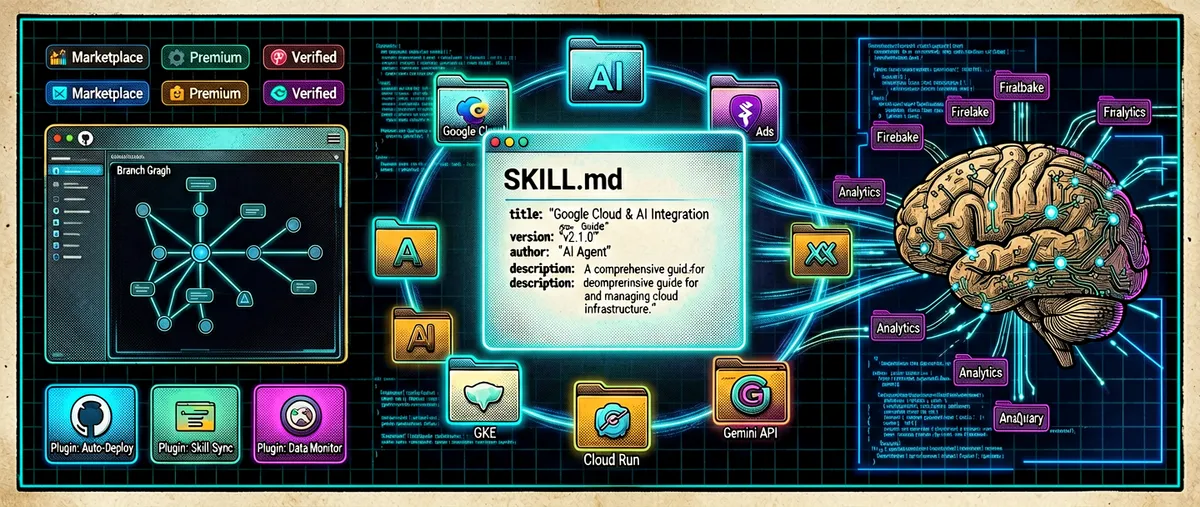
anthropics/skills is Anthropic’s public repository to showcase its implementation of Agent Skills in Claude. It is not a model or an independent agent: it contains self-contained skills that an agent can discover and load when the task requires it. Each skill groups a SKILL.md file with metadata and instructions, and may include scripts, references, templates, and other resources.
The README clearly defines the scope: the repository contains Anthropic’s implementation for Claude; the multi-platform specification lives at agentskills.io. Its examples cover art and design, automation and technical tasks, business communications, and document creation or editing. Among the 17 published skill folders are docx, pdf, pptx, xlsx, frontend-design, mcp-builder, webapp-testing, claude-api, and skill-creator.
The most significant case is not just didactic. The README identifies docx, pdf, pptx, and xlsx as the skills that power Claude’s document capabilities; they are source code available, not open source. Many other skills in the repository are under Apache 2.0.
Origin: from a Claude capability to an open format
The GitHub API dates the creation of the repository on September 22, 2025. Anthropic publicly presented Agent Skills on October 16, 2025 in an engineering article about that release. The institutional authorship is verifiable: the repository belongs to the Anthropic organization, and the article describes the launch as a new way to build specialized agents using files and folders.
The starting problem was a practical tension. Claude Code and other general agents could already use a file system and execute code, but the procedural knowledge and context of each organization remained scattered or required custom agents for each case. The proposal was to package that knowledge as an onboarding guide for a new employee: a reusable folder instead of an isolated agent per task.
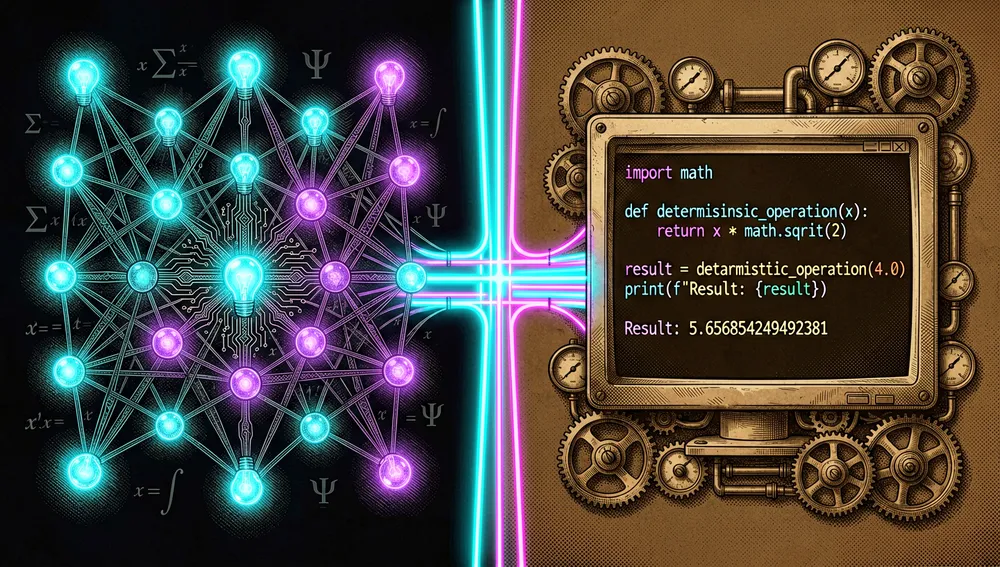
The article uses PDF editing as an example of that gap. A model can understand a PDF, but it does not necessarily manipulate its forms directly. A skill provides instructions and a Python script that extracts fields, which combines reasoning with a deterministic operation. This is a significant difference from simply asking the model to improvise a solution in each session.
On December 18, 2025, Anthropic updated the article to announce Agent Skills as an open standard for cross-platform portability. That evolution separates the Claude brand from the specification: anthropics/skills remains an official collection of Anthropic, while agentskills/agentskills and agentskills.io articulate the shared format.
Philosophy and principles
Anthropic’s documentation and the published specification support four concrete principles:
- Packaged procedural knowledge: a skill captures steps, context, and resources for a specific task, instead of relying on an extensive prompt repeated manually.
- Composition and portability: the skill is a folder; it can combine instructions, code, and reference files, and the standard aims to make it work in different compatible clients.
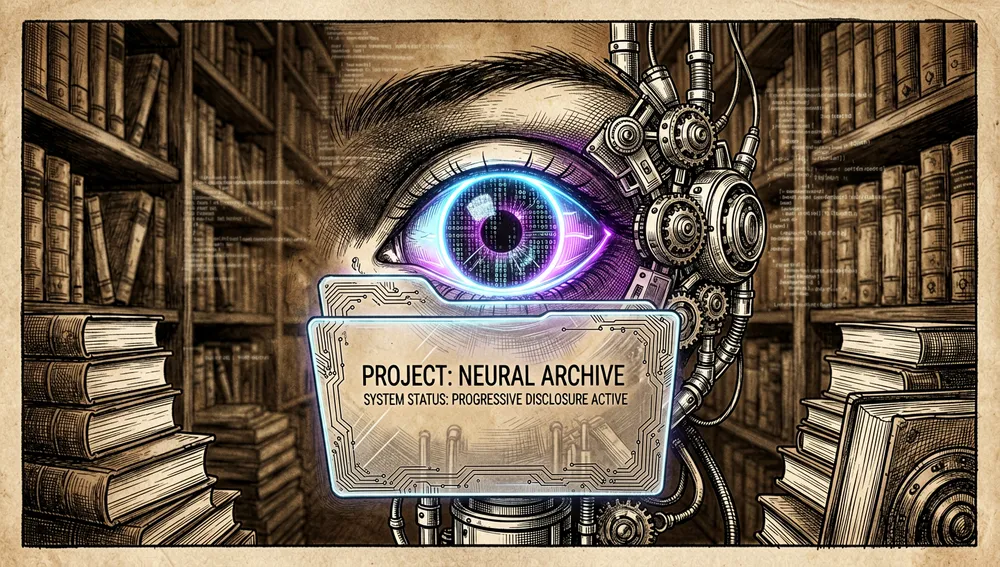
- Progressive disclosure: at startup, the agent receives only
nameanddescription; it loads the completeSKILL.mdwhen it detects relevance and consults auxiliary files only if necessary. This avoids filling the context with the entire library. - Code where reliability demands it: packaged scripts allow deterministic, repeatable, and more efficient operations than generating tasks that a program can solve directly by tokens.
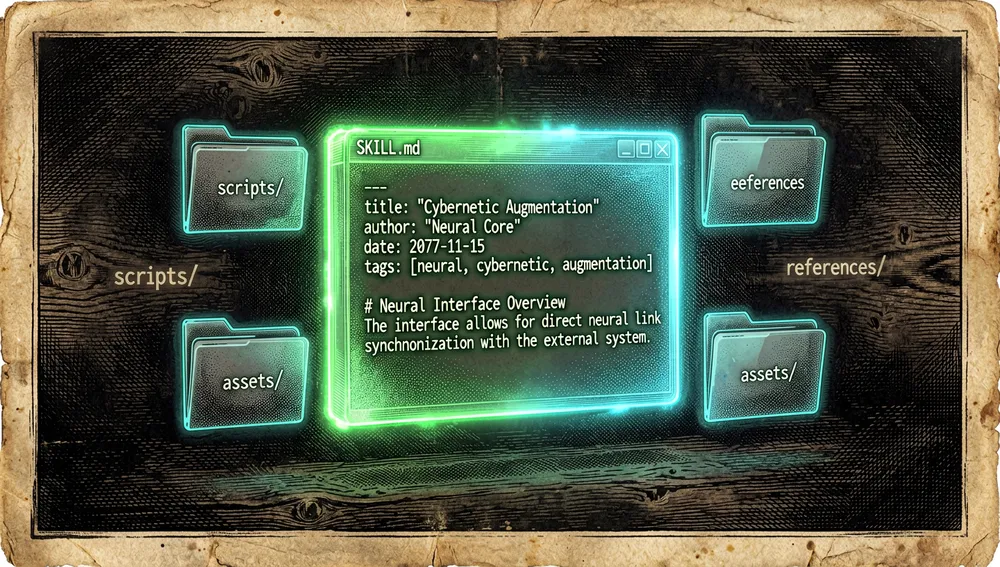
The specification establishes a deliberately small minimum: a folder with SKILL.md, with YAML frontmatter and Markdown content. name and description are mandatory; scripts/, references/, and assets/ are optional. The simplicity explains both the adoption and one of its limits: the format defines the packaging, but it does not guarantee that a skill is correct, safe, or suitable for a specific environment.
How it works
Technical flow
- A skill folder is installed or made available.
- The client loads at startup the
nameanddescriptionmetadata of the available skills. - When the description matches a task, the agent reads the corresponding
SKILL.md. - If more detail is needed, it follows local references and uses included templates or resources.
- It can execute packaged scripts when the environment and permissions allow it.
The format requires that the frontmatter name matches the folder name. The specification limits name to 64 characters, with lowercase letters, numbers, and hyphens, and requires a non-empty description of up to 1,024 characters. It also supports optional fields for license, compatibility, metadata, and allowed tools.
Documented installation and use
For Claude Code, the README allows registering the repository as an add-on marketplace and then installing specific sets of skills. It also documents a direct installation of add-ons. Once a skill is installed, the user can invoke it by mentioning the task; the official example asks to use the PDF skill to extract the fields of a form.
In Claude.ai, the README indicates that the example skills are already available for paid plans. In the Claude API, pre-built skills can be used or custom skills can be uploaded using the Skills API. The repository also includes a minimal template with name, description, and instructions to create a new skill.
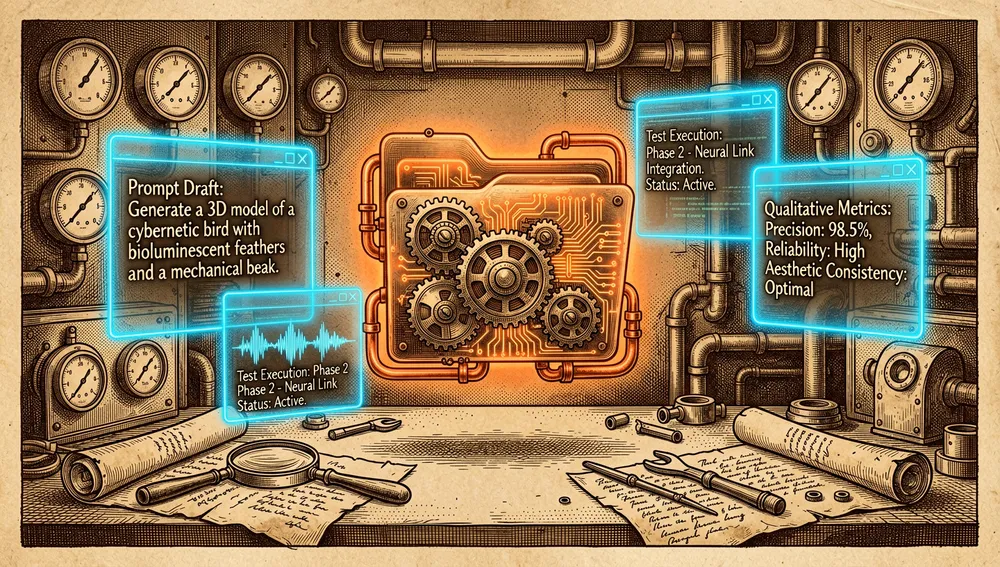
skill-creator reveals that the proposal is not limited to consuming prompts. Its documented flow is: decide on the function of the skill, write a draft, prepare test prompts, execute them with the agent that has access to the skill, and evaluate results qualitatively and quantitatively. The folder incorporates auxiliary agents, resources, scripts, and an evaluation viewer.
Official and semi-official status
The status of anthropics/skills is official from Anthropic: it belongs to the Anthropic organization, the README presents it as its implementation for Claude, and links to its support pages, API, and engineering article.
The Agent Skills format has a broader and semi-official status: Anthropic claims to have published it as an open standard on December 18, 2025, and agentskills.io is presented as its open documentation. The standard page explicitly states that it was initially developed by Anthropic and adopted by a growing number of agent products. This does not mean certification of the quality of each repository that uses SKILL.md, nor that each client implements all fields or resources in the same way.
In practice, the presence of the format in the showcase of clients at agentskills.io, where Claude, OpenAI Codex, GitHub Copilot, Cursor, Gemini CLI, OpenCode, and others appear, shows interoperability declared by the ecosystem. It is reasonable to call it an influential de facto format for modular agent instructions; no formal designation as a standard by an independent standardization body was found.

The ecosystem
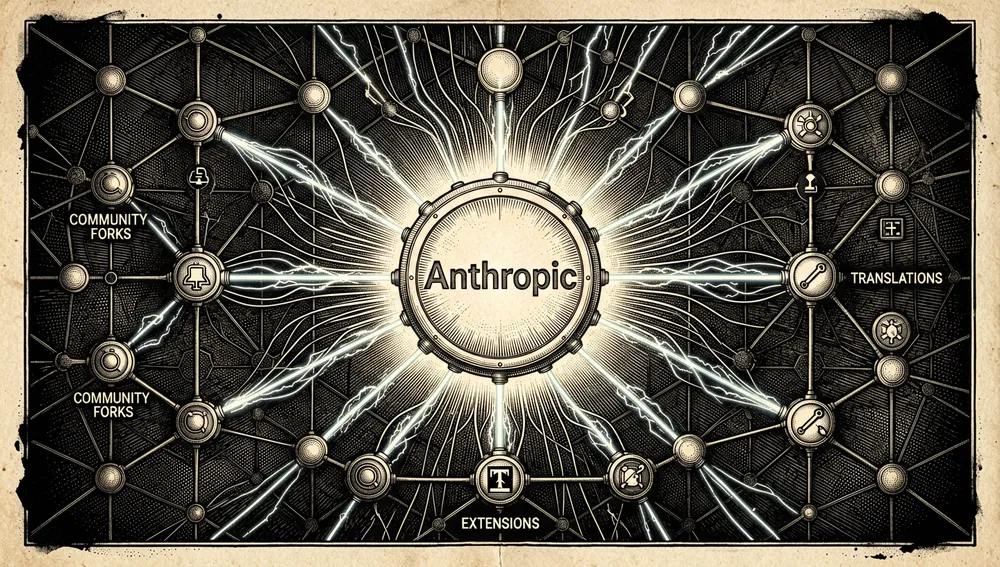
Official and related repositories
anthropics/skills: the official collection analyzed; 165,602 stars and 19,689 forks on August 1, 2026.agentskills/agentskills: repository linked by agentskills.io for the open standard of Agent Skills; the documentation page showed 23,727 stars during this consultation. It is the reference for the specification, not a duplicate of Anthropic’s examples.obra/superpowers: community methodology for development with skills and workflow for agents; the GitHub repository search returned 264,715 stars. It is a software development process proposal, not an official collection from Anthropic.mattpocock/skills: library published by Matt Pocock, described in its profile as skills for engineers; the same search returned 198,648 stars. Its relationship is the adoption of the skill pattern, not an affiliation with Anthropic.affaan-m/ECC: community system for agent optimization that claims to include skills and adapters for various environments; 236,772 stars in the consulted search. It is not an official fork ofanthropics/skills.
Community ports, translations, and extensions
Fantasia1999/skills-zhis described on GitHub as a Chinese translation and synchronization flow foranthropics/skills; it had 0 stars and 0 forks when consulted. It is a community translation, with no recovered evidence of Anthropic’s support.bglek/skill-creator-springettappears in Hacker News as a fork of theskill-creatorskill; the HN post 47541991 identifies its title and URL, but no confirmation of authorship or official support was recovered. It should be treated as a community derivative.akshayaggarwal99/agentskillswas presented on HN as a command-line interface to browse and install Anthropic skills. The post 46157833 obtained 2 points and no comments. It is a community distribution tool, not part of the official repository.LegalRabbit-AI/legalrabbit-docx-claude-pluginwas cited by its author on HN as a DOCX document plugin that claims to use two to five times fewer tokens than Anthropic’s DOCX skill. That comparison is a claim bytanin, not an independent measurement recovered in this research.
The search also found BDuba/claude-plugins-official-to-opencode-skills, whose summary declares translating the official catalog of Claude Code add-ons to OpenCode skills. It had no stars or forks when consulted; it is included for being a declared extension, not as proof of verified compatibility.
Repository numbers
Measurement: August 1, 2026, GitHub API.
| Metric | Value |
|---|---|
| Stars | 165,602 |
| Forks | 19,689 |
| Actual subscribers | 1,069 |
| Commits | 46 |
| Open issues indicated by the API | 1,053 |
| Main language | Python |
| Global license declared by the API | Not declared |
| Creation | September 22, 2025 |
| Last metadata update | August 1, 2026 |
| Last recovered change | July 24, 2026, update of claude-api for Claude Opus 5 |
| GitHub publications | None |
The languages returned by the API were Python, HTML, Shell, and JavaScript; Python is the main one by byte volume. The last page of the commit header pagination was page=46 with one element per page, from which the count of 46 comes. The main contributors returned by the API were rlancemartin with 14 contributions, klazuka with 13, and ericharmeling with 3; then several contributors appear with one or two.
The figure of open issues requires a caveat: open_issues_count from GitHub may include open change requests, so it does not necessarily equate to pure issues. Also, subscribers_count is reported as actual subscribers because the general response field watchers_count from GitHub replicates the number of stars.
How to contribute
No CONTRIBUTING.md file or documented branching, branches, and pull request flow was found in the README of anthropics/skills. Therefore, a contribution process for this repository is not invented.
If the goal is to create a compatible skill, the published path is to use the minimum template and the specification at agentskills.io: create the folder, write the SKILL.md with its mandatory fields, incorporate resources only when necessary, and validate it with representative tasks. The official skill-creator skill proposes tests and qualitative and quantitative evaluation before optimizing it. The open specification indicates that community contributions are accepted, but that corresponds to the standard and does not prove a maintenance policy for each of Anthropic’s example folders.
How the community received it
The verifiable reception combines practical use with objections about scope and cost. Direct references to the repository on HN had little debate, so it is advisable not to extrapolate its figures to all adoption:
- The post 45640018, published by jinqueeny on October 20, 2025 with the title of examples of skills for Claude, ended with 2 points and 0 comments. The post 45622743, by michaelmior three days earlier, also had 2 points and 0 comments. These are traces of launch, not a broad conversation.
- In 47073838, a question about using LLMs for interface accumulated 52 points and 37 comments. User sama004 specifically recommended
frontend-designfrom Anthropic because it helps him with Claude Code: it is a concrete anchor of perceived utility. In the same thread, bob1029 objected that LLMs can generate CSS and patterns, but fail in composition and layout. The skill offers guidance, not eliminating that visual criterion limit. - In 48528779, the monthly HN jobs thread by david927 reached 312 points and 737 comments. Within it, tanin claimed that his DOCX plugin for Cowork and Codex uses two to five times fewer tokens than Anthropic’s DOCX skill. That comparison is a claim by
tanin, not an independent measurement recovered in this research. - In 47642569, with 815 points and 77 comments, mynameisvlad argued that Copilot allows using Anthropic’s skills repository and linked to the GitHub documentation. This is evidence that the format is discussed outside of Claude. It does not by itself validate complete compatibility of each skill or all its scripts.
- In 48383438, gauravvij137 observed that five of the ten trending AI repositories were labeled as collections of skills, although with very different scopes, from a single instruction to systems with agents, hooks, and tools. The thread obtained 4 points and 1 comment. The observation supports a criticism of terminology: sharing
SKILL.mddoes not make the products equivalent.
The repository adds its own warning: Claude’s capabilities may differ from what the examples show, and skills should be tested in their own environment before using them in critical tasks. That precaution is important for permissions, dependencies, and because an instruction does not replace result validation.
Anthropic Skills versus other proposals
| Proposal | Verifiable match | Verifiable difference |
|---|---|---|
agentskills/agentskills | Documents the same open format of folders and SKILL.md. | It is the repository for the specification; anthropics/skills is a collection of implementations and examples for Claude. |
obra/superpowers | Uses skills as reusable units for agents. | Its profile is presented as a software development methodology; Anthropic’s skills cover also documents, design, communications, and automation. |
mattpocock/skills | Publishes skills for engineering tasks under the pattern of modular instructions. | It is Matt Pocock’s personal library; it is not Anthropic’s official collection or specification. |
affaan-m/ECC | Claims skills and support for various agent environments. | Its profile positions it as a system for optimizing the performance of the agent environment, with memory and security; not as a reference repository for Agent Skills. |
The correct comparison is not just by stars. anthropics/skills is especially useful as a reference material and as a catalog of Claude’s capabilities. The specification at agentskills/agentskills is the appropriate source if you need to implement compatibility in another client. Community libraries may provide methodologies or different domains, but they must be evaluated individually.
Use cases and who can benefit from this repository
- Teams that automate documents with Claude can take as a reference the
docx,pdf,pptx, andxlsxskills, which the README identifies as the basis of Claude’s document capabilities. For example, a PDF skill can bring together instructions and a Python script that extracts fields, instead of asking the agent to solve that step differently in each session. - Developers who create compatible skills can start with the minimum template and the structure
SKILL.md,scripts/,references/, andassets/. Theskill-creatorskill proposes a concrete flow: write the skill, prepare test prompts, execute them with access to it, and evaluate the results before iterating. - Those responsible for internal libraries of instructions can use progressive disclosure to maintain specialized skills without loading all the content at startup. The repository serves as a catalog of examples for tasks of design, automation, communications, and development; the specification at agentskills.io is the appropriate reference if compatibility in another client is also needed.
Each skill must be tested with permissions, dependencies, and representative tasks of the environment where it will be used. The format packages instructions and resources, but does not by itself validate the security, correctness, or cost of an implementation.
Resources
- Repository: https://github.com/anthropics/skills
- README and installation: https://github.com/anthropics/skills#readme
- Agent Skills specification: https://agentskills.io/specification
- Specification repository: https://github.com/agentskills/agentskills
- Launch article: https://www.anthropic.com/engineering/equipping-agents-for-the-real-world-with-agent-skills
- Official skills: https://github.com/anthropics/skills/tree/main/skills
- Skill creator and evaluation: https://github.com/anthropics/skills/tree/main/skills/skill-creator
- Agent Skills Discord community: https://agentskills.io
- Conversations: https://news.ycombinator.com/item?id=47073838, https://news.ycombinator.com/item?id=48528779, https://news.ycombinator.com/item?id=47642569, https://news.ycombinator.com/item?id=48383438
Note: This article combines the README and repository files, the GitHub API, agentskills.io, Anthropic’s engineering article, and Hacker News results consulted on August 1, 2026. The figures change over time.
Comments