

Awesome OpenClaw Skills: a filtered index for discovering OpenClaw skills
VoltAgent/awesome-openclaw-skills · 52,792★ · 5,051 forks
Everything you need to know about VoltAgent/awesome-openclaw-skills: a curated list that sorts skills already published in the public ClawHub registry for the local OpenClaw assistant.
What Awesome OpenClaw Skills is
Awesome OpenClaw Skills does not implement an agent or contain the skills it lists: it is an index maintained by VoltAgent. Its README explains that OpenClaw is an AI assistant that runs locally and that skills extend its interaction with external services, automations, and specialized tasks. The collection draws its entries from ClawHub, the public registry of OpenClaw skills, and groups them to make discovery easier.
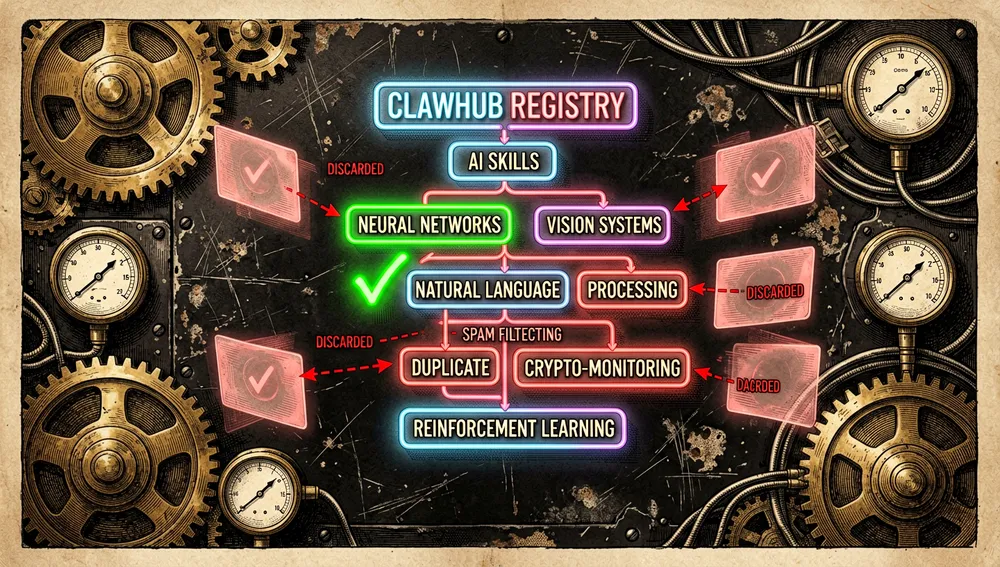
The scope is deliberately narrower than that of a generic link list. The contribution guide requires that a skill already be published on ClawHub, have a SKILL.md, pass ClawHub’s tests, have a security status not flagged as suspicious, include documentation, and show community use. The project states that it does not accept personal repositories, gists, or external links.
The origin: a curated list growing alongside the registry
The first verifiable commit is from Necati Özmen, dated January 25, 2026 and titled Initial commit. The GitHub organization VoltAgent describes itself as an agent-engineering platform built on an open-source TypeScript framework; its linked site is voltagent.dev.
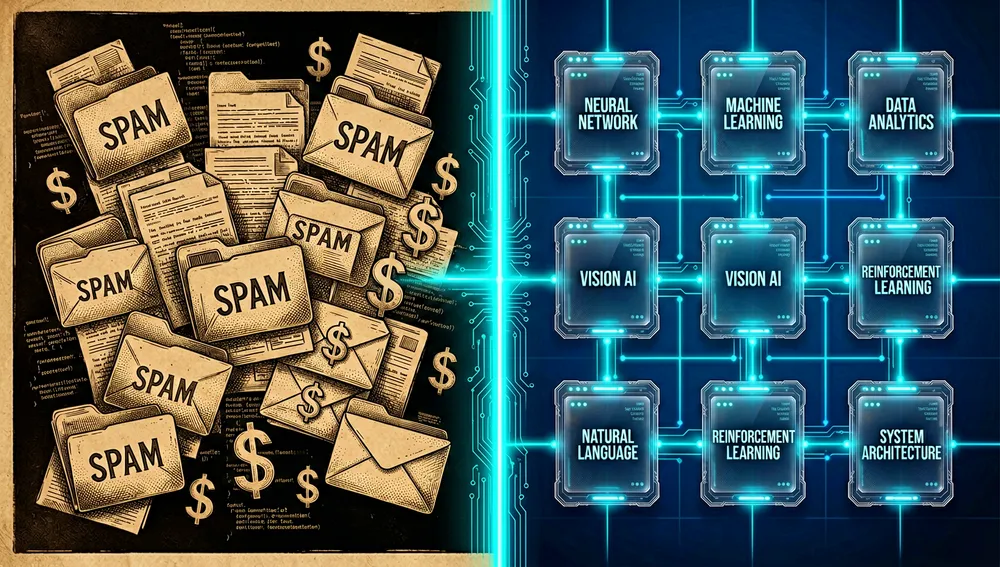
The tension that drove the design shows up in the README itself: the OpenClaw registry contains thousands of community contributions, but an unfiltered search can also surface duplicates, automated accounts, poor descriptions, cryptocurrency content, or malicious entries. The list publishes the filters it applied: 4,065 potential spam entries, 1,040 duplicates or near-identical names, 851 low-quality or non-English descriptions, 886 related to cryptocurrency, finance, or trading, and 373 flagged as malicious by researcher audits. These are figures declared by the repository, not an independent audit by this report.

The solution is editorial, not technical: keep ClawHub links that pass its rules and present them by category. Because of that, it does not replace the official registry or claim to certify the code of each skill.
Philosophy and principles
The proposal rests on four verifiable criteria drawn from its README and CONTRIBUTING.md:
- Discovery over accumulation: it organizes skills by category so a person can find a relevant integration or automation without scanning the entire registry.
- The official registry as an entry requirement: every entry must already exist on ClawHub; the list is not an alternative publishing mechanism.
- Curation with explicit limits: it excludes duplicates, categories it does not want to cover, and items flagged as suspicious; it also caps descriptions at ten words or fewer.
- Installer’s responsibility: the security notice stresses that skills are curated, not audited, may change after being included, and should be reviewed before use.
That last caveat guards against reading too much into the “curated” label: being on the list is not a guarantee of security, correctness, or endorsement by the list’s author.
How it works
The repository offers a discovery and installation path, not a runtime of its own:
- You look up the category and open a skill’s ClawHub page.
- On an OpenClaw installation, the README documents
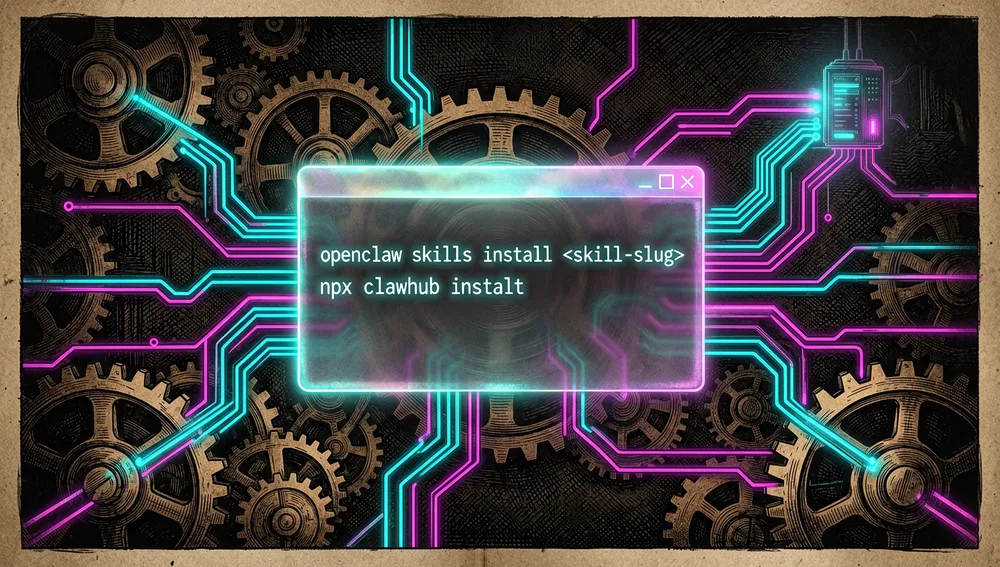
openclaw skills install <skill-slug>. - For registry-managed folders outside a full workspace, it documents
npx clawhub install <skill-slug>. - Manually, a skill folder can be copied to
~/.openclaw/skills/or to<project>/skills/; the README states that workspace takes priority over local and bundled.
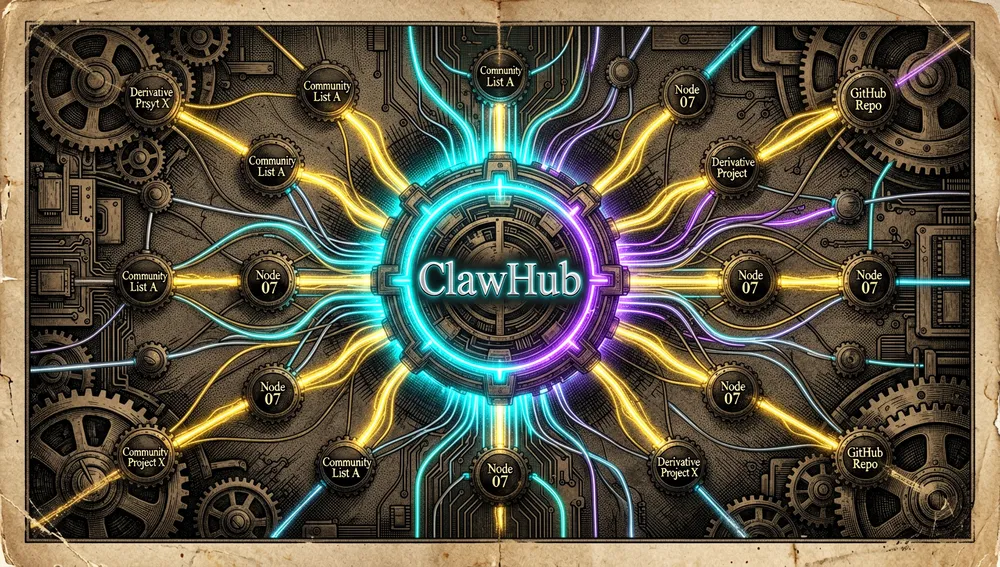
Beyond the catalog, it includes an ecosystem tools section. Its linked examples cover managed OAuth and scoped permissions for external services via Composio, hosting with MyClaw, search via SerpApi, and configuration auditing via trentclaw. These are README recommendations or links, not components bundled by this repository.
Official and semi-official status
The status is semi-official as a source, not official as a marketplace. The README and contribution guide define ClawHub as the public registry of OpenClaw skills and only accept entries already published there. That dependency gives it a direct relationship with OpenClaw’s official publishing ecosystem.
However, VoltAgent/awesome-openclaw-skills belongs to VoltAgent, not to the OpenClaw organization, and the text itself states that the linked projects are created and maintained by their respective authors. Nothing in the sources retrieved shows the repository being accepted as an official marketplace, certified by a vendor, or formally designated a standard. Its README describes itself as “the most-visited community resource after the official one,” a promotional claim from the project itself that could not be independently verified.
The ecosystem
VoltAgent repositories
The GitHub API retrieved identifies several sibling repositories from the organization. Among those most related to resource and skill curation:
VoltAgent/awesome-agent-skills— a collection of more than 1,000 skills for agents compatible with Claude Code, Codex, Gemini CLI, and Cursor; 29,447 stars.VoltAgent/awesome-claude-code-subagents— a collection of more than 100 specialized subagents for Claude Code; 23,954 stars.VoltAgent/awesome-codex-subagents— a collection of more than 130 subagents for Codex; 5,901 stars.VoltAgent/voltagent— the organization’s TypeScript agent framework; 10,256 stars.VoltAgent/skills— a same-named repository from the organization; 13 stars. The retrieved API returned no description, so no additional function is attributed to it.
The relationship is organizational and thematic; these repositories are not dependencies required to install an OpenClaw skill.
Derivatives, translations, and adjacent projects
The GitHub repository search performed during this run found, among others, the following community projects. Star counts are given to situate their visibility at the time of the query; they do not imply endorsement by VoltAgent or OpenClaw.
sundial-org/awesome-openclaw-skills: another list of popular OpenClaw skills; 637 stars.AIPMAndy/awesome-openclaw-skills-CN: a collection aimed at Chinese developers, with guidance for DeepSeek, Qwen, GLM, and Moonshot models; 119 stars.Rito-w/awesome-openclaw-skills-zh: a Chinese translation and classification of OpenClaw skills; 67 stars.whobot-ai/awesome-openclaw-skills-zh: a Chinese guide to selected skills; 6 stars.vincentkoc/awesome-openclaw: a broader list that adds plugins, memory, MCP tools, deployment, and security; 143 stars.OthmaneBlial/awesome-openclaw-examples: OpenClaw use-case examples built with ClawHub skills; 120 stars.roadsidedev/OpenClaw-Awesome-Skills: an adaptation of an Antigravity list to the OpenClaw context; 19 stars.
The adjacent projects cited inside the README —Composio, MyClaw, SerpApi, and trentclaw— extend connections, hosting, search, and configuration review, respectively. They are described only in those terms because this research did not evaluate their implementations.
Repo numbers
Measured: August 2, 2026, GitHub API and page.
| Metric | Value |
|---|---|
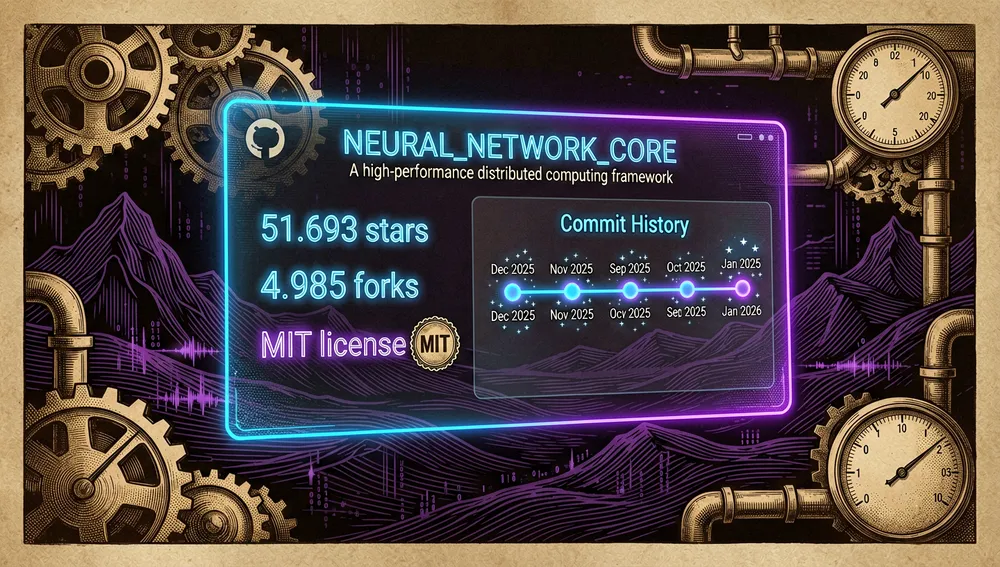
| Stars | 51,693 |
| Forks | 4,985 |
| Subscribers | 314 |
| Commits | 438 |
| Open issues reported by the API | 17 |
| License | MIT |
| Created | January 25, 2026 |
| Latest metadata update returned by the API | August 3, 2026 |
| Latest code push returned by the API | July 31, 2026 |
| GitHub releases | none |
The repository page showed 438 commits. The top contributors returned by the API were necatiozmen (268 contributions), LuanKunLun (7), tomfong (5), wd041216-bit (5), and agent-morrow (4). The repository has no primary language assigned by the API, consistent with a list dominated by Markdown.
GitHub’s general API mirrors the star count in watchers_count; that is why subscribers_count is reported here as the real subscriber figure. Its open_issues_count may include open pull requests, so 17 should not be read as an issue-only count. The metadata update date is later than the query date recorded by the environment; it is reproduced literally as returned by the API, without inferring future activity.
How to contribute
The process is documented in CONTRIBUTING.md:
- Publish the skill on ClawHub first.
- Confirm that its ClawHub tests pass, that it is not flagged as suspicious, that it includes
SKILL.md, and that it shows community use. - Add a line with a ClawHub link and a short description at the end of the appropriate category in
README.md. - Include the ClawHub URL in the pull request description and use the title
Add skill: author/skill-name.
Anyone fixing links, typos, or descriptions can submit a pull request. To remove a deleted, deprecated, or problematic skill, the guide accepts either an issue or a pull request. Maintainers review submissions and can reject them; they also do not accept functional duplicates or cryptocurrency, blockchain, finance, or DeFi content.
How the community received it
The external evidence retrieved is limited and does not support a claim of broad reception:
- Hacker News logged submission 47387946, titled in the source “OpenClaw Skills,” linked directly to the repository. It was posted by theorchid on March 15, 2026, and the API’s root item confirms 1 point and 0 comments. It is a minimal discovery signal, not a review or user validation.
- An exact Hacker News search returned no comments about this repository. So there is no favorable opinion in that source attributable to a specific person, nor a concrete, verifiable community objection to weigh against it.
- The most relevant documented criticism comes from the project itself, not from an external thread: its security notice states that skills are not audited and may contain prompt injections, tool poisoning, hidden malicious payloads, or unsafe data practices. It is an explicit operational caveat: editorial curation and ClawHub status do not replace reviewing code and permissions before production use.
The scarcity of identifiable discussion should be read as a limit of the sources consulted, not as proof of community approval or rejection.
Awesome OpenClaw Skills versus other proposals
| Proposal | Verifiable overlap | Verifiable difference |
|---|---|---|
sundial-org/awesome-openclaw-skills | Both are curated lists of OpenClaw skills. | Its description is limited to popular skills; VoltAgent’s declares publishing filters tied to ClawHub, tests, security, and community use. |
AIPMAndy/awesome-openclaw-skills-CN | Both catalog OpenClaw skills. | AIPMAndy’s repository explicitly targets Chinese developers and includes guidance on domestic models; VoltAgent does not declare that linguistic focus. |
Rito-w/awesome-openclaw-skills-zh | Both sort skills from the OpenClaw ecosystem. | Rito-w presents itself as a Chinese translation and classification; VoltAgent’s repository is the English-language source list consulted here. |
vincentkoc/awesome-openclaw | Both gather OpenClaw resources. | awesome-openclaw declares a broader scope —plugins, memory, MCP, deployment, security, and research— while VoltAgent centers its list on ClawHub skills and adds a separate ecosystem-tools section. |
The choice depends on the goal: this list is useful when you want a selection subject to entry rules tied to ClawHub; the Chinese-language alternatives can make consultation easier in that language, and a broader resource list may be more suitable for exploring infrastructure or tools that are not skills.
Use cases and who this repository can help
- People starting out with OpenClaw can locate a skill by category and use the documented OpenClaw or ClawHub commands instead of manually searching through thousands of registry entries.
- Teams adding integrations can use the index as a starting point for external-service capabilities, automation, and specialized tasks, then review the chosen skill’s ClawHub page, code, and permissions.
- Skill maintainers can gain an additional distribution channel: first publish and validate on ClawHub, then propose a short entry in the relevant category via pull request.
- Operators deploying OpenClaw can use the ecosystem section’s references to identify areas requiring a decision —OAuth, hosting, search, and auditing— without assuming that the recommended links have been audited by VoltAgent.
Resources
- Repository: https://github.com/VoltAgent/awesome-openclaw-skills
- Documentation and installation: https://github.com/VoltAgent/awesome-openclaw-skills#installation
- Contribution guide: https://github.com/VoltAgent/awesome-openclaw-skills/blob/main/CONTRIBUTING.md
- Official skills and registry: https://clawhub.ai/
- Reviews and conversations: no independent reviews were retrieved; Hacker News thread: https://news.ycombinator.com/item?id=47387946
- Community and ecosystem tools cited: https://composio.dev/claw, https://myclaw.ai/, https://serpapi.com/search-engine-apis, https://trent.ai/openclaw/
Note: this article combines the repository’s README and contribution guide, the GitHub API and page, and the Hacker News API, retrieved on August 2, 2026. Figures change over time.

Comments