


Taste Skill: design instructions so an agent doesn't ship a generic interface
Leonxlnx/taste-skill · 90,032★ · 6,131 forks
Everything worth knowing about Leonxlnx/taste-skill: a portable collection of skills that guides code and image agents toward designing web interfaces with explicit decisions about composition, typography, motion, and density.
What Taste Skill is
Taste Skill is a library of SKILL.md files, not a component library or a standalone interface generator. Its stated goal is to give agents like Codex, Cursor, and Claude Code design instructions to avoid repetitive, template-looking output. It contains interface-implementation skills and others that produce reference images to hand off afterward to a code agent.
The default skill, installed as design-taste-frontend, reads the brief, infers a visual direction, and adjusts three controls: design variance, motion intensity, and visual density. The repository claims to be framework-agnostic: the rules apply to visual intent, not to a particular API, and the README explicitly mentions React, Vue, and Svelte.
The name shouldn’t be read as objective proof of aesthetic quality. The project delivers instructions; the outcome depends on the model, the brief, the references, the implementation, and human review.
The origin: from a personal profile to a skills collection
GitHub’s API dates the repository’s creation to February 19, 2026. Its owner and primary contributor is Leon Lin (Leonxlnx), whose public profile lists Munich, the site own.page/leonlin, and the X account @lexnlin. The last retrieved change was signed by Leon Lin on July 23, 2026 and modified how a featured sponsor was displayed.
The project’s own material states the tension that motivates the collection: agents can produce functional pages, but they tend to repeat visual conventions. Rather than trying to solve that with a closed component kit, Taste Skill encodes a review criterion in text: analyze the brief, choose a visual language, avoid repeated patterns, and run a pre-delivery check before shipping.
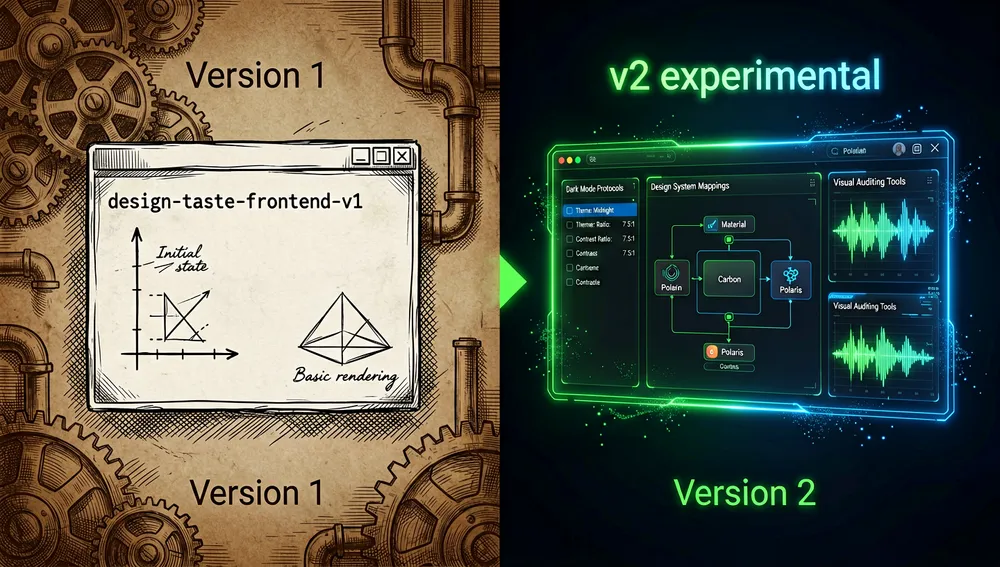
The visible evolution is documented in CHANGELOG.md: the old v1 remains as design-taste-frontend-v1, while the experimental v2 became the default install. The change keeps the three controls and adds brief inference, a mapping toward official design systems when the brief requires them, a dark-mode protocol, and an audit step for redesigns. There are no GitHub Releases, so this transition is distributed as repository content rather than a tagged release.
Philosophy and principles
The documented philosophy can be summarized as follows:
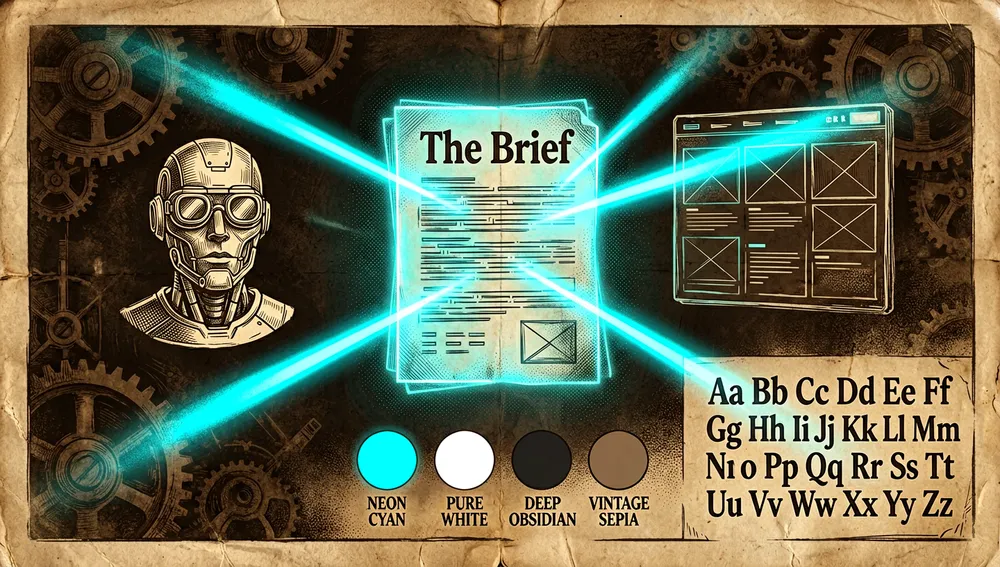
- The brief before default aesthetics. V2 asks for the page type, references, audience, constraints, and mood words to be identified before writing any code.
- Controlled variation, not randomness. The
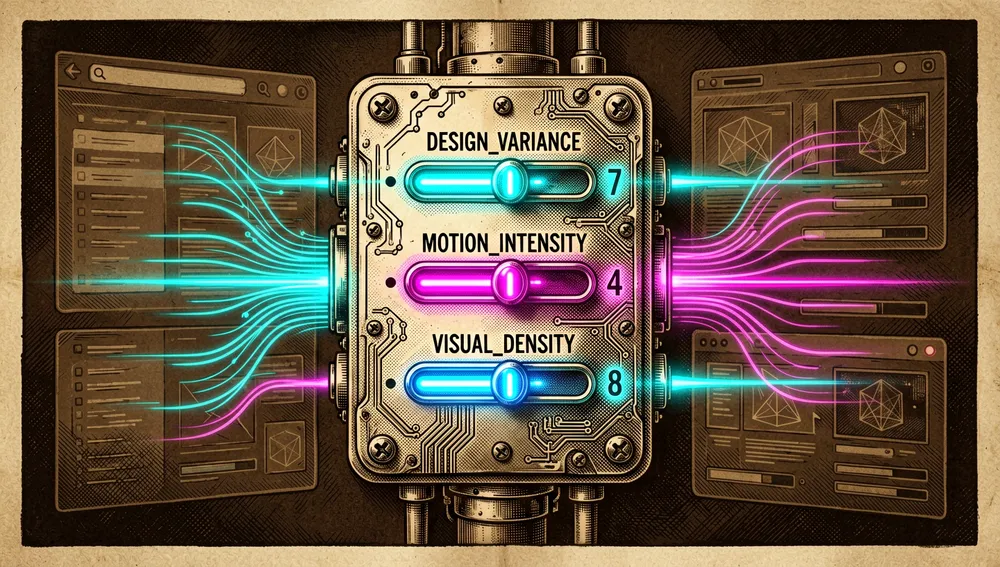
DESIGN_VARIANCE,MOTION_INTENSITY, andVISUAL_DENSITYcontrols are expressed as 1-to-10 scales to make explicit decisions that would otherwise stay implicit.
- Real systems when the request calls for them. The v2 changelog says to use the official package for briefs that match systems like Material, Fluent, Carbon, Polaris, Atlassian, Primer, GOV.UK, USWDS, Bootstrap, Radix, shadcn, or Tailwind; for aesthetics like brutalism or kinetic typography it proposes web standards and honest labeling of the approach taken.
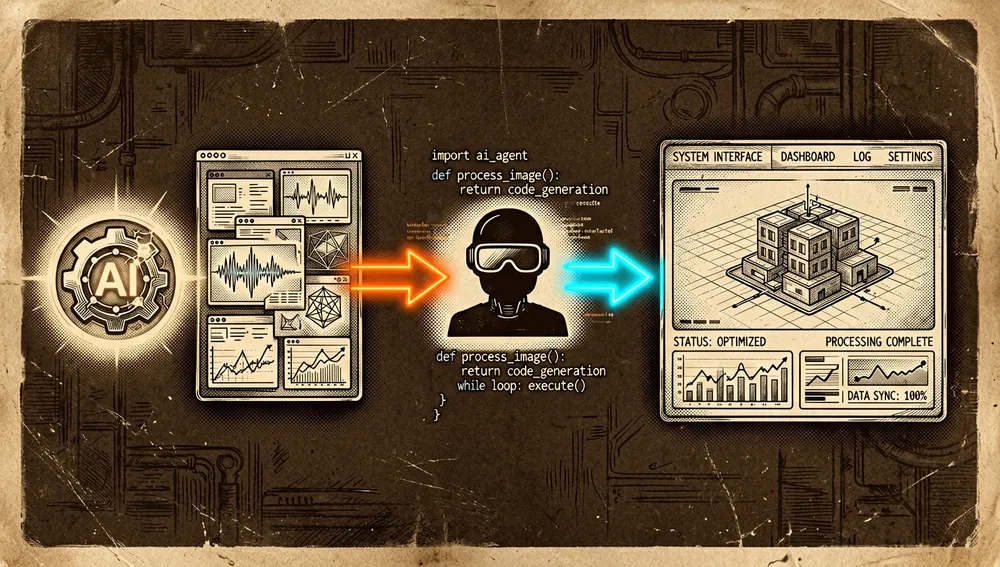
- Image can precede code. The visual-generation skills create reference mood boards or screens;
image-to-codechains generate → analyze → implement.
- Delivery must be complete.
full-output-enforcementexists for cases where the model leaves placeholder comments or an incomplete delivery.
How it works
Taste Skill uses the skill format that the npx skills add tool detects. Each folder under skills/ holds one specialty, and the install name is the name field in its metadata, which may not match the folder name.
The current collection includes:
design-taste-frontend(experimental v2) anddesign-taste-frontend-v1for the core skill.gpt-taste, a stricter variant aimed at GPT/Codex.image-to-code, for turning visual references into an implementation.redesign-existing-projects, for auditing an existing interface first.- Concrete visual directions:
high-end-visual-design,minimalist-ui,industrial-brutalist-ui, andstitch-design-taste. imagegen-frontend-web,imagegen-frontend-mobile, andbrandkit, which produce reference images, not code.
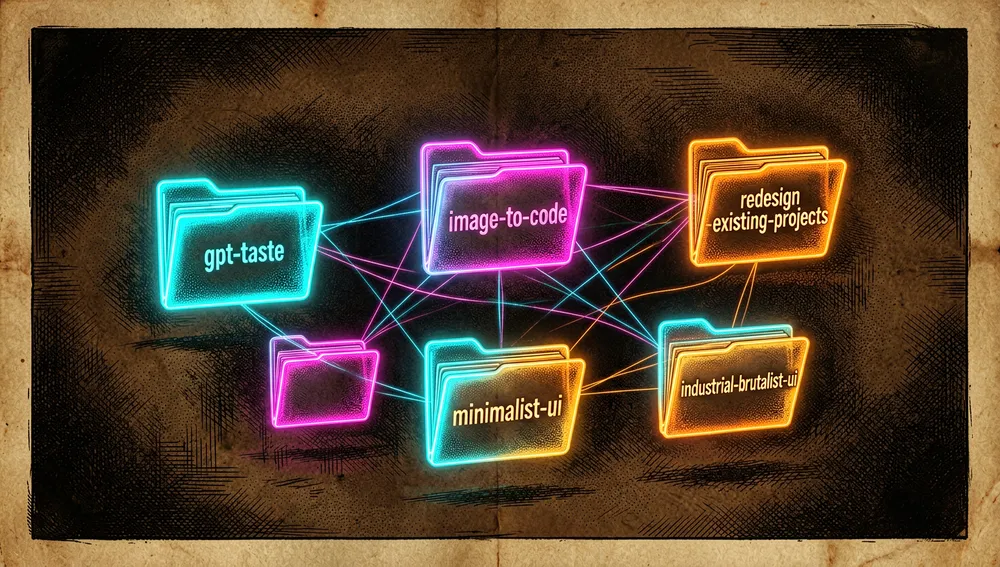
The workflow the documents suggest is: install a skill, write a brief with visual intent and constraints, produce visual references when useful, implement with the chosen agent, and review the result against the skill’s rules. For improving an existing product, the redesign variant flips the order: audit hierarchy, spacing, layout, and style before touching the code.
Official and semi-official status
The README declares compatibility with the Vercel Agent Skills format and links to vercel-labs/agent-skills; that’s the technical basis for the npx skills add command. The repository also includes .claude-plugin/marketplace.json, its own manifest for a Claude Code library, with a taste-skill plugin at version 1.0.0.
That establishes compatibility and a project-defined marketplace, but it does not establish that Taste Skill has been accepted into an official Anthropic, OpenAI, Cursor, or Vercel marketplace. The README also displays a badge linked to Vercel’s open-source program, but the retrieved sources don’t support treating that badge as content certification or a vendor endorsement. In practice it is a portable skill that is semi-official with respect to Vercel’s format; no evidence of a formal standard designation was found.
The ecosystem
Related repositories from the author
The public repositories API for Leon Lin surfaced direct or thematic relationships, not automatic dependencies:
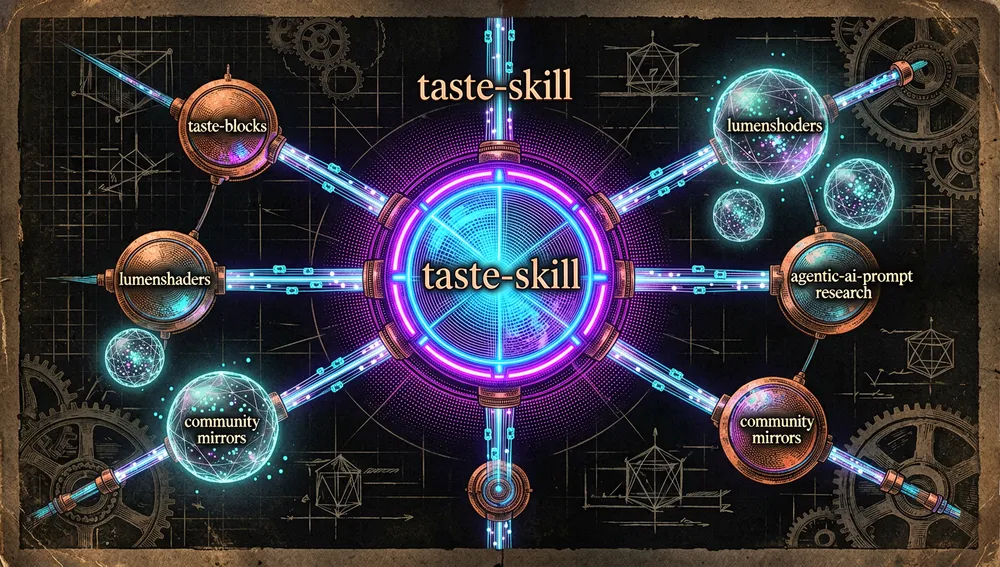
Leonxlnx/taste-blocks: a React component registry with verified sources for Taste Skill V2; 2 stars. It’s the most direct companion.Leonxlnx/stitch-skills: a skills repository for Stitch; 10 stars. The main repository also containsstitch-design-taste.Leonxlnx/lumenshaders: a generative shader studio with nine WebGL2 modes and PNG/WebM/GIF export; 326 stars. It’s a visual piece from the same author, but doesn’t appear as a Taste Skill dependency.Leonxlnx/agentic-ai-prompt-research: research on instruction patterns and coding-assistant coordination; 2,498 stars. Its relationship is thematic, not a declared integration.Leonxlnx/tasty-desktop: a desktop environment for Kimi, OpenAI Codex, Anthropic Claude, and Cursor; 29 stars. Shares a target audience, without Taste Skill’s README documenting integration.
Forks, mirrors, and community extensions
A GitHub repository search retrieved several projects that describe themselves as inspired by the approach or that use its name. These are independent projects, not extensions approved by Leon Lin unless stated otherwise:
gtmvalley/Leonxlnx-taste-skill, a declared mirror of the original repository; 2 stars.h3nryprod01/design-taste, described as a synthesis ofemilkowalski/skill,pbakaus/impeccable, and Taste Skill; 19 stars.phalla-doll/frontend-taste-skill, a version that claims to keep the variance, motion, and density controls; 2 stars.lazylizardai/skill-design-taste-frontend, which advertises the skill for Lovable; 5 stars.yojiro253-del/TasteSkill, described as anti-generic-interface design skills for agents; 0 stars.
No non-English translation was found whose description or documentation demonstrated a relationship with the original project. It also shouldn’t be confused with senlindesign/taste-skill (266 stars), which presents itself as an independent skill for analyzing site design, nor with jaytel0/taste (270 stars), described as a skill-creation pipeline.
Repository numbers
Measured: August 6, 2026, GitHub API.
| Metric | Value |
|---|---|
| Stars | 72,783 |
| Forks | 5,003 |
| Real subscribers | 238 |
| Open issues reported by the API | 53 |
| Main language | JavaScript |
| License | MIT |
| Created | February 19, 2026 |
| Last code push | July 23, 2026 |
| Last metadata update | August 6, 2026 |
| GitHub Releases found | none |
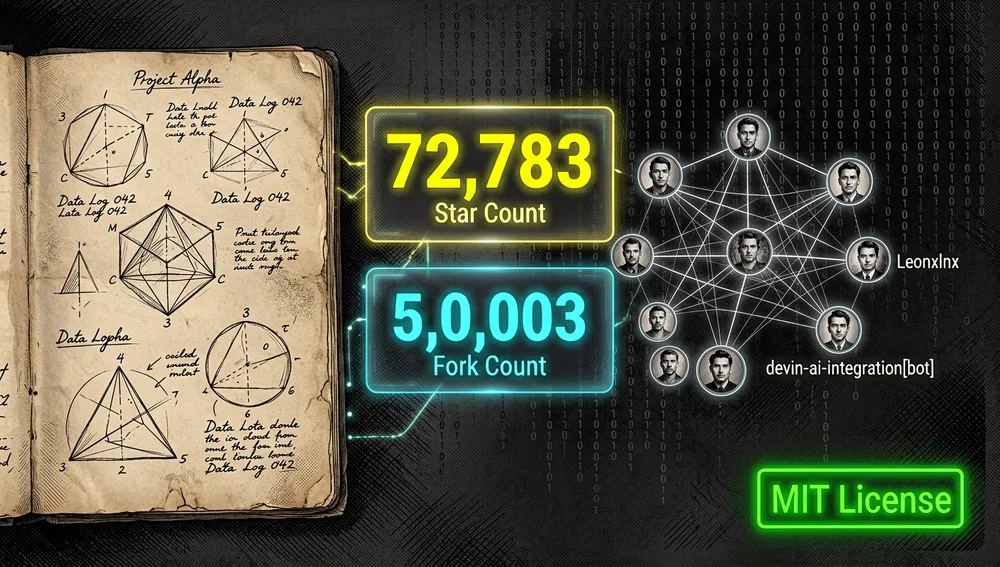
The top contributors returned by the API were Leonxlnx with 138 contributions, followed by devin-ai-integration[bot], jkk442, Osamaali313, Blueemi, and luojiyin1987, with one contribution each. The general API repeats the star count in watchers_count; that’s why the table reports subscribers_count as real subscribers. open_issues_count can include open pull requests, so it doesn’t represent issues exclusively.
How to contribute
There is no CONTRIBUTING.md on the main branch. The README does invite opening an issue or a pull request for suggestions and bugs, and offers the contacts @lexnlin, @blueemi99, and hello@tasteskill.dev.
The minimum verifiable practice is forking the repository, preparing the change, and opening a pull request on GitHub. No official instructions about base branch, PR template, required tests, or an evaluation harness were retrieved; additional requirements should therefore not be invented. The presence of open pull requests with extensive accessibility and performance changes shows that the community proposes extensions, not that they’ve been accepted.
How the community received it
The retrievable external evidence is scarce and should be read with caution:
- The Hacker News submission 48306196, titled as an anti-generic interface framework for agents, linked directly to the repository on May 28, 2026. It was posted by steveharing1 and had 3 points and 0 comments. It establishes discovery, not a review or independent enthusiasm.
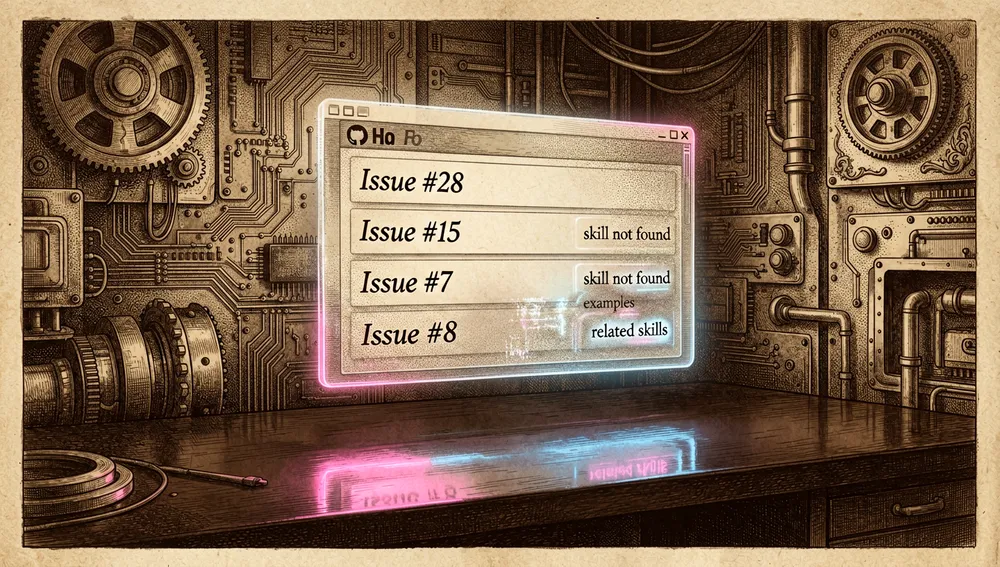
- In issue #28, flexchar reported that
--skill "taste"couldn’t find a skill, even though the tool listeddesign-taste-frontend. It’s a concrete installation snag: the argument has to be the install name, not the informal name or necessarily the folder name. - In the open issue #15, surajmandalcell asked for examples of each skill and noted that they only saw the landing page as an example. It’s a concrete critique of example materialization, not an evaluation of the collection’s visual effect.
- Issue #7, created by ceetity, links
ceetity/her-skill; its presence shows that the repository receives proposals or self-promotion from neighboring skills, but it’s not a maintainer recommendation.
Searches were attempted on the indicated Reddit subforums, X, YouTube, Dev.to, Product Hunt, package registries, and blogs via direct queries. No retrievable, verifiable evidence of posts, videos, a Product Hunt launch, or registry downloads was obtained. That access limitation doesn’t support claiming such materials don’t exist.
Taste Skill versus other proposals
| Proposal | Verifiable overlap | Verifiable difference |
|---|---|---|
vercel-labs/agent-skills | Defines the npx skills add install that Taste Skill uses. | It’s the distribution tool and format; Taste Skill provides the design content. |
senlindesign/taste-skill | Both are Claude Code skills centered on visual judgment. | senlindesign/taste-skill’s description focuses on reconstructing an existing site’s tokens and decisions; Taste Skill includes implementation, visual styles, and reference generation. |
jaytel0/taste | Both work on creating design-judgment skills. | jaytel0/taste is described as a pipeline for creating skills; the retrieved sources present Taste Skill as a ready-to-install collection. |
h3nryprod01/design-taste | Claims to include Taste Skill in a synthesis of design skills. | It’s a community synthesis of several sources; it’s not the repository maintained by Leon Lin. |
The comparison isn’t a performance benchmark: no shared test bed or independent measurements were found that would support declaring one option visually superior.
Quick usage guide
Installation and first run
Requirement: Node.js with npx available, and an agent or workflow capable of loading compatible skills. To install the whole collection:
npx skills add https://github.com/Leonxlnx/taste-skillTo install only the main skill, use the exact install name:
npx skills add https://github.com/Leonxlnx/taste-skill --skill "design-taste-frontend"The tool scans skills/ and copies or registers the skills it detects. Alternatively, the README allows copying a SKILL.md into the project or pasting it into a ChatGPT or Codex conversation. In Claude Code there is also a marketplace manifest under .claude-plugin/, but the README doesn’t provide a specific install command for that manifest.
Common workflows
- Build an interface from scratch: install
design-taste-frontend, provide the page type, audience, references, and constraints; the skill defines a reading of the brief and applies the three visual controls before generating the implementation. - Apply a specific direction: install, depending on the case,
minimalist-ui,industrial-brutalist-ui, orhigh-end-visual-design, and use it alongside the main skill to constrain the aesthetic direction. - Redesign an existing product: install
redesign-existing-projects; its documented process starts by auditing layout, spacing, hierarchy, and style, rather than immediately overwriting the interface. - Go from image to code: install
imagegen-frontend-weborimagegen-frontend-mobileto produce references; then hand them to Codex, Cursor, or Claude Code. For the full sequence, the README suggests explicitly asking:follow the skill: generate images, then analyze, then codewithimage-to-code.
Essential configuration
In the main skill, the first controls are values from 1 to 10:
DESIGN_VARIANCE: controls how far the composition drifts from a centered, conventional layout.MOTION_INTENSITY: controls the depth of animation, from hover interactions to scroll or magnetic effects.VISUAL_DENSITY: controls how much information is visible, from generous whitespace to dense panels.- Skill name in
--skill: usedesign-taste-frontend,gpt-taste, or the name from the README’s table, not a casual abbreviation. CHANGELOG.md: check this file before updating if your project depends on v1 or experimental-v2 behavior.
Common pitfalls and fixes
tastecan’t be found: issue #28 documents thattasteis not the install name. Run the command with--skill "design-taste-frontend"or install the full repository.- The output changed after updating: experimental v2 replaces v1 under the same name,
design-taste-frontend. To pin the previous behavior, installdesign-taste-frontend-v1. - Expecting code from an image skill:
imagegen-frontend-web,imagegen-frontend-mobile, andbrandkitgenerate visual references; they don’t implement the interface themselves. Pass the images to a code agent or useimage-to-code. - Not knowing what each skill does: the request for examples in issue #15 remains open. Use the README’s skills table and review the corresponding
SKILL.mdbefore combining several instructions.
Integrations and migration
The main integration is the Vercel Agent Skills format via npx skills add, with declared use alongside Codex, Cursor, and Claude Code. For ChatGPT Images or a Codex image mode, the README suggests attaching or pasting an image-generation skill, generating frames, and using those results as input for the implementation agent. Migrating from v1 to v2 is done by repeating the design-taste-frontend install command; the name stays the same and the file is replaced. To keep v1, install the explicit name design-taste-frontend-v1.
Use cases and who this repository can help
- Product designers and developers producing a first pass of a page with an agent can turn subjective references and constraints into reviewable instructions: page type, visual direction, density, variance, and motion.
- Teams reworking an existing interface can use the redesign skill to enforce a prior audit and prevent an agent from changing styles without reviewing hierarchy, spacing, and context.
- People working from reference images can create web, mobile, or brand-board screens and then hand them to Codex, Cursor, or Claude Code for implementation; that split between image and code is documented explicitly.
- Teams with an existing base built on v1 can migrate to v2 in a controlled way or pin v1 with separate install names, instead of assuming that an update preserves exactly the same behavior.
- Maintainers of interfaces built on known design systems can leverage v2’s rule of pointing to official packages when the brief identifies Material, Fluent, Carbon, or other systems, instead of asking the agent for an undeclared imitation.
Resources
- Repository: https://github.com/Leonxlnx/taste-skill
- Site and documentation: https://tasteskill.dev/
- Official installation and skills: https://github.com/Leonxlnx/taste-skill#installing
- Official changelog: https://github.com/Leonxlnx/taste-skill/blob/main/CHANGELOG.md
- Skills format and tool: https://github.com/vercel-labs/agent-skills
- Claude Code manifest: https://github.com/Leonxlnx/taste-skill/tree/main/.claude-plugin
- Hacker News thread: https://news.ycombinator.com/item?id=48306196
- Cited issues: https://github.com/Leonxlnx/taste-skill/issues/28, https://github.com/Leonxlnx/taste-skill/issues/15
- Contact and community: https://github.com/Leonxlnx/taste-skill#feedback—contributions
Note: this article combines the README, CHANGELOG.md, the repository’s manifests, the GitHub API, GitHub repository search, issues, and Hacker News, all retrieved on August 6, 2026. Figures change over time; external searches without retrievable evidence are not presented as definitive absences.


Comments