

Awesome DESIGN.md: visual references so an agent doesn't design blind
VoltAgent/awesome-design-md · 117,842★ · 13,203 forks
Everything you need to know about VoltAgent/awesome-design-md: a curated collection of DESIGN.md documents extracted from public interfaces to guide interface generation by AI agents.
What Awesome DESIGN.md is
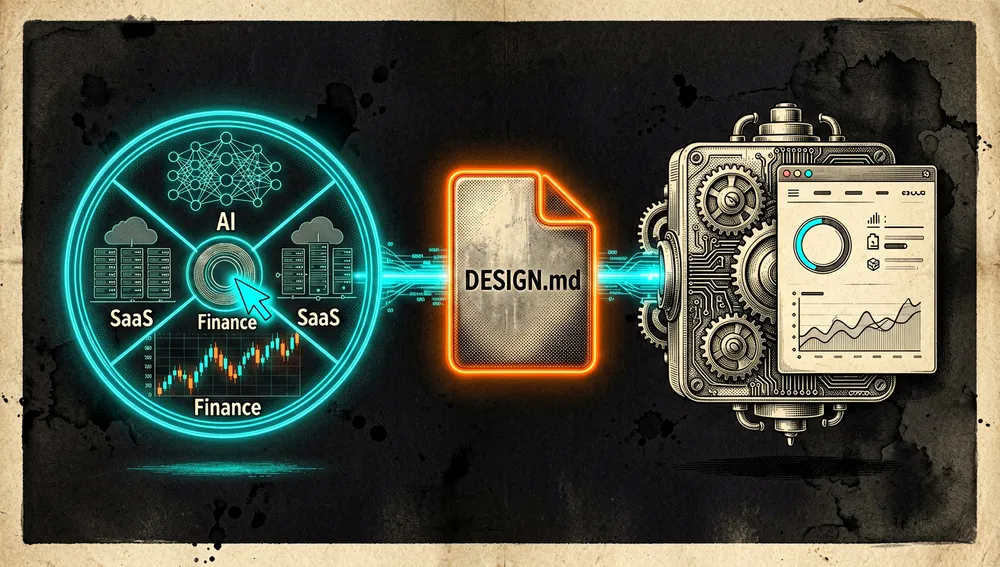
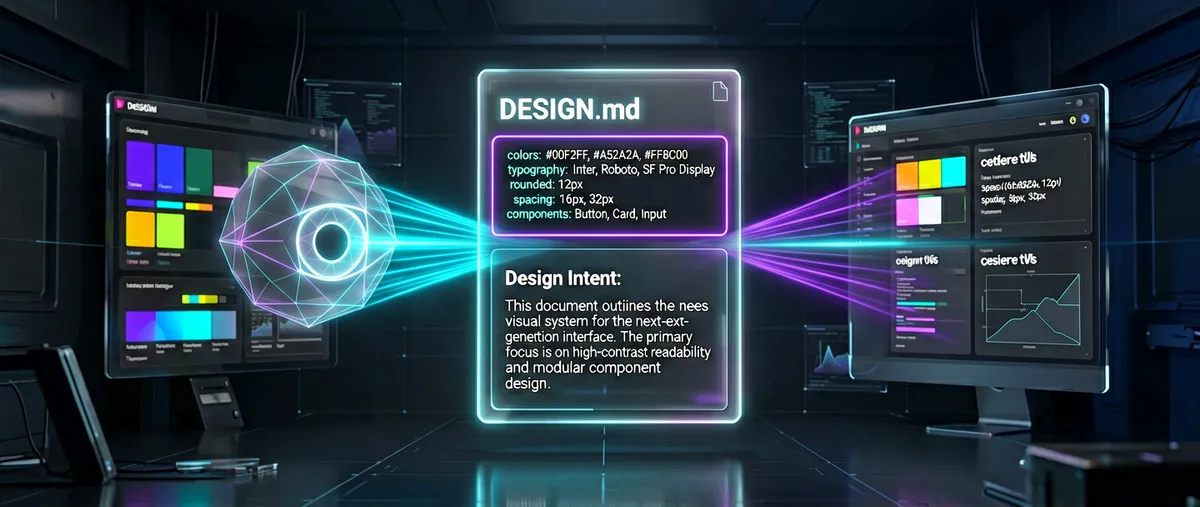
Awesome DESIGN.md gathers text documents that describe the visual systems observed on public websites. Its purpose is operational: copy one of those DESIGN.md files to the root of a project and ask a coding agent to build a page consistent with that visual language.
The README presents DESIGN.md as a Markdown document readable by design agents: where AGENTS.md explains how to build a project, DESIGN.md explains how it should look and feel. Each entry includes a visual theme, a palette and its color functions, typography rules, component styles, composition principles, elevation, constraints, adaptive behavior, and an instruction guide for the agent. It also includes light and dark HTML previews.
It is not a component library, a Figma exporter, or a generator that inspects a URL in real time. It is a collection of editable references, published under MIT and provided without warranty; the README clarifies that the extracted values come from visible CSS and that the repository does not claim the visual identity of the analyzed sites.
The origin: a collection born around Google Stitch
The GitHub API places the creation of VoltAgent/awesome-design-md on March 31, 2026. The authoring organization is VoltAgent; the retrieved source does not identify an individual as the repository’s creator, so no individual authorship is attributed. The top contributor returned by the API is necatiozmen, with 58 contributions; doanbactam, LeeDoYup, and omeraplak each show one contribution.
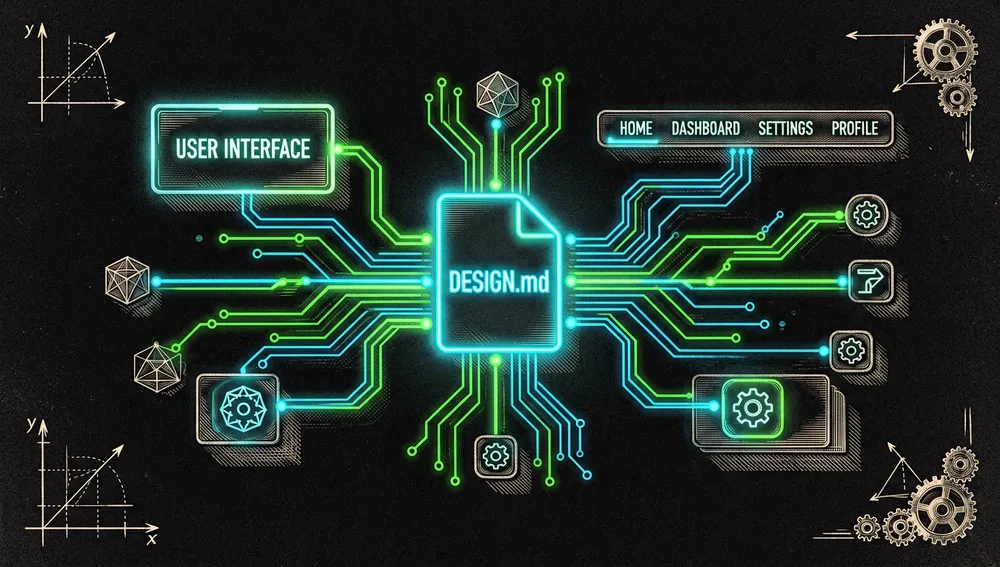
The idea did not originate as a specification of VoltAgent’s own making. The README states that DESIGN.md was introduced by Google Stitch and links to its documentation and specification. The practical tension the project tries to resolve is that an agent can produce functional code without a consistent design reference: against Figma exports, JSON schemas, or additional configuration, the collection proposes Markdown text an agent can read directly.
No VoltAgent launch post narrating the origin story was retrieved. The verifiable timeline does show a very recent project: on Hacker News there were three direct submissions in April and May 2026, all without comments, and the first commit visible on the repository’s page is described as first commit roughly five months ago.
Philosophy and principles
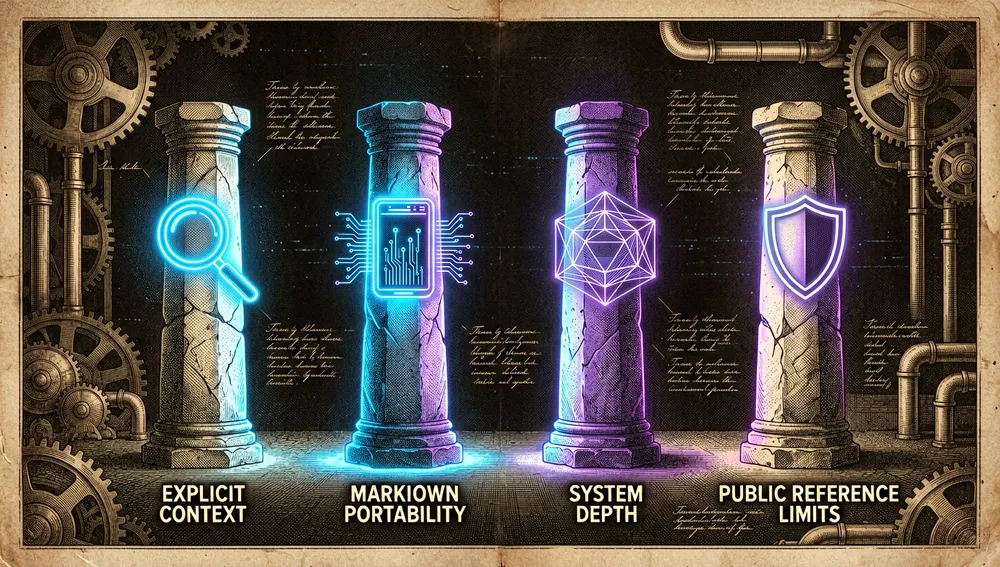
The proposal rests on four decisions visible in the README:
- Explicit context over vague imitation: the documents express tokens, hierarchies, and constraints, not just a screenshot or a style label.
- Portable Markdown over proprietary formats: a file at the root can travel with the code and be read by different agents, with no dedicated tool needed to interpret it.
- System depth over decorative surface: each entry aims to describe components, states, spacing, composition, and responsiveness to screen sizes.
- Public reference with limits: the content is offered “as is” and presented as an extraction of publicly visible CSS, not as ownership or authorization from the listed brands.
The result is a library of design context, not a guarantee of pixel fidelity or brand compliance: those conclusions depend on the agent, the product, and human review.
How it works
The documented flow is deliberately short:
- Choose a site from the collection, organized into categories such as AI platforms, developer tools, SaaS products, design, finance, commerce, and automotive.
- Copy its
DESIGN.mdto the root of the project. - Ask the agent to use it, for example:
build me a page that looks like this. - Check
preview.htmlorpreview-dark.htmlto review the palette, typography, and components before accepting the result.
The content defines concrete rules: color names and codes with their function, typography families and scales, buttons, cards, fields, navigation, grid, shadows, prohibitions, and adaptive guidelines. This lets an agent work with a visual specification alongside the technical specification of AGENTS.md.
Official and semi-official status
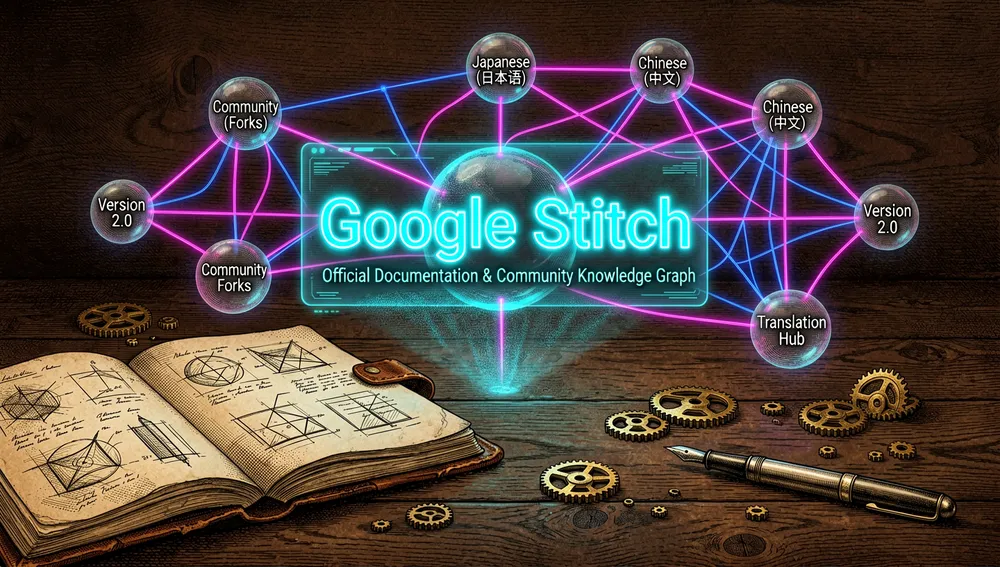
The DESIGN.md concept and format are presented in Google Stitch’s official documentation, which the README itself links to. That establishes the link to Stitch, not a certification of this collection: awesome-design-md belongs to VoltAgent, not Google, and the retrieved sources do not show that Google has accepted it into an official marketplace or endorses it as an official catalog.
Its practical status is, therefore, semi-official with respect to the format: it uses and extends a convention documented by Google Stitch, but its brand analyses and curation process are community-driven. The more than one hundred thousand stars indicate adoption on GitHub, but they do not amount to a formal standard designation.
The ecosystem
Related VoltAgent repositories
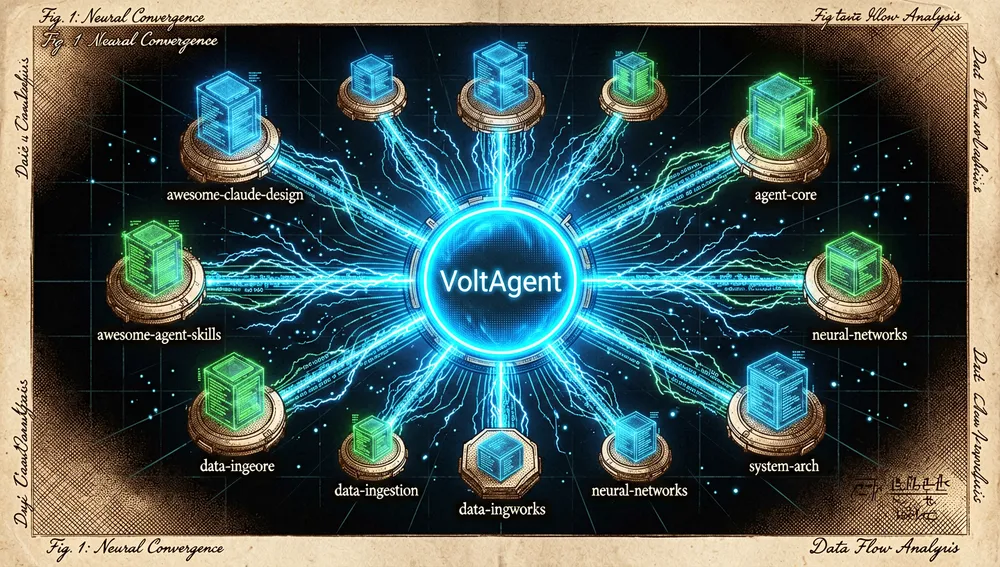
Querying VoltAgent’s public repositories reveals a direct family of projects around agents and design references:
VoltAgent/official-design-md: a collection ofDESIGN.mdfiles published by the companies themselves; 459 stars and 40 forks.VoltAgent/awesome-claude-design: 68 visual-system inspirations inDESIGN.mdformat; 3,314 stars and 365 forks.VoltAgent/design-md: a public repository with no description in the API; 18 stars.VoltAgent/voltagent: a TypeScript framework for agent engineering; 10,264 stars and 1,069 forks.VoltAgent/awesome-agent-skills: a collection of skills for various agent environments; 29,469 stars and 3,172 forks.VoltAgent/awesome-claude-code-subagentsandVoltAgent/awesome-codex-subagents: collections of specialized subagents; 23,973 and 5,905 stars, respectively.
official-design-md is the closest complement: it separates first-party references from the curated extractions of awesome-design-md.
Forks, translations, and community extensions
The forks API returns 12,140 forks in total. The most notable by retrieved star count are direct forks with nearly identical descriptions, not independent functional ports: BiscuitCoder/awesome-design-md (11 stars), GitNimay/awesome-design-md (4), and ShadowAmitendu/awesome-design-md (3).
Repository search does identify translations and extensions that should not be confused with direct forks:
kzhrknt/awesome-design-md-jp: a Japanese collection that claims to extend Google Stitch’s format for CJK typography; 891 stars and 66 forks.HU-UH/awesome-design-md: a collection described in Chinese with 55 design systems for agents; 361 stars and 91 forks.bergside/awesome-design-skills: a list of 67DESIGN.mdandSKILL.mdfiles for Claude Design, Google Stitch, Codex, Cursor, and other tools; 2,148 stars and 195 forks.Meliwat/awesome-ios-design-md: a collection for apps, with framework-neutral documents and variants for SwiftUI, Jetpack Compose, and Expo; 149 stars and 15 forks.aaldere1/awesome-design-systems: a Paperclip skill explicitly based on VoltAgent; 8 stars and one fork.
There are also tools covering a different part of the cycle: adityarajdigital/designmd, jpoindexter/design-md-extractor, and yuvrajangadsingh/brandmd extract systems from a URL; they are not equivalent collections but alternatives for creating a document.
Repo numbers
Measured: August 3, 2026, GitHub API and page.
| Metric | Value |
|---|---|
| Stars | 106,243 |
| Forks | 12,140 |
| Real subscribers | 418 |
| Commits | 61 |
| Open issues reported by the API | 312 |
| License | MIT |
| Primary language | No primary language reported by the API |
| Created | March 31, 2026 |
| Latest code push | July 31, 2026 |
| Latest metadata update | August 3, 2026 |
| Releases and tags | 0 releases and 0 tags |
The top contributors returned by the API are necatiozmen (58), doanbactam (1), LeeDoYup (1), and omeraplak (1). The GitHub page shows 61 commits. The general API duplicates the star total in watchers_count; that is why subscribers_count is reported here as the real subscriber figure. open_issues_count may include open pull requests, so 312 does not necessarily equal 312 issues alone.
How to contribute
The README links to CONTRIBUTING.md and documents two paths: improving existing files — for example, fixing colors, missing tokens, or weak descriptions — and opening issues when something looks wrong. Before submitting a pull request, it requires opening an issue first to discuss the proposal and get feedback from the maintaining team.
The retrieved activity confirms both catalog and infrastructure contributions: pull request #127, from Luc0-0, proposed automation to validate the collection’s integrity; #163, from Nyvo2010, proposed previews and quick copy. Both are recorded as closed in the API; the retrieved status does not allow inferring that they were merged.
How the community received it
The retrieved external evidence is modest and should be read with caution:
- The Hacker News submission 48177822, posted by DeathArrow on May 18, 2026, and linked directly to the repository, got 4 points and 0 comments. It is a signal of discovery, not proof of satisfaction or criticism.
- Submission 47654756, by vanyle, got 3 points and 0 comments; 47822069, by granto, got 2 points and 0 comments. There are no opinions attributable to those threads.
- As a signal of practical interest within GitHub, JacobH555 opened issue #42 to expand mobile interface extraction; it accumulated 5 comments before closing. mhakimarifin requested a
ui.shadcnreference in #247, with 4 comments. These are coverage requests, not quality assessments. - The verifiable objection is about maintenance: fuleinist opened #377, still open at the time of the query, with a title flagging broken external links to
getdesign.mdand 2 comments. Abysssea raised another, closed, issue, #388, about DNS poisoning ofgetdesign.md, with 2 comments. The titles do not allow a conclusion about cause or technical resolution; they do show that external dependencies and links are a real concern for users.
No threads with comments on Hacker News nor extensive external reviews were retrieved that would support a claim of consensus. The high star count alone does not substitute for that qualitative evidence.
Awesome DESIGN.md versus other proposals
| Proposal | Verifiable overlap | Verifiable difference |
|---|---|---|
VoltAgent/official-design-md | Both gather DESIGN.md documents for agents. | The latter states its files are published by the companies themselves; Awesome DESIGN.md analyzes public sites. |
kwakseongjae/oh-my-design | Distributes DESIGN.md references for coding agents. | Offers installation via a single command and claims more than 400 rated references; Awesome DESIGN.md documents manually copying a chosen file. |
Meliwat/awesome-ios-design-md | Both are collections of design systems in this format. | Its stated focus is mobile and it lists SwiftUI, Jetpack Compose, and Expo. |
jpoindexter/design-md-extractor | Produces visual context usable by agents. | It is a CLI and local-GUI extractor from a URL; Awesome DESIGN.md distributes already-prepared analyses. |
yuvrajangadsingh/brandmd | Extracts a DESIGN.md specification from a site. | States validation via the official @google/design.md linter; the retrieved sources for Awesome DESIGN.md do not state that tool. |
Use cases and who this repository can help
- Developers starting from a blank page with an agent can pick a reference from the collection, place it alongside the code, and give the agent tokens, typography, states, and visual rules before requesting the interface.
- Product teams that need coherent prototypes can use
preview.htmlandpreview-dark.htmlto align on a visual direction and then generate a first implementation with the same specification. - Designers or maintainers who want to turn observations of public interfaces into reusable context can contribute token and description fixes or request a new reference through the pre-pull-request issue flow.
- Teams that need first-party references, Japanese-language content, or a specific mobile platform can complement the collection with
official-design-md,awesome-design-md-jp, orawesome-ios-design-md, depending on each repository’s documented scope.
Resources
- Repository: https://github.com/VoltAgent/awesome-design-md
- Format documentation: https://stitch.withgoogle.com/docs/design-md/overview/
- Google Stitch specification: https://stitch.withgoogle.com/docs/design-md/specification/
- How to contribute: https://github.com/VoltAgent/awesome-design-md/blob/main/CONTRIBUTING.md
- Related official repositories: https://github.com/VoltAgent/official-design-md, https://github.com/VoltAgent/awesome-claude-design
- Conversations and community: https://news.ycombinator.com/item?id=48177822, https://github.com/VoltAgent/awesome-design-md/issues/42, https://github.com/VoltAgent/awesome-design-md/issues/377
- Discord community: https://s.voltagent.dev/discord
Note: this article combines the repository’s README and contributing file, Google Stitch’s documentation, the GitHub API and page, public issues, and Hacker News results retrieved on August 3, 2026. Figures change over time.
Comments