

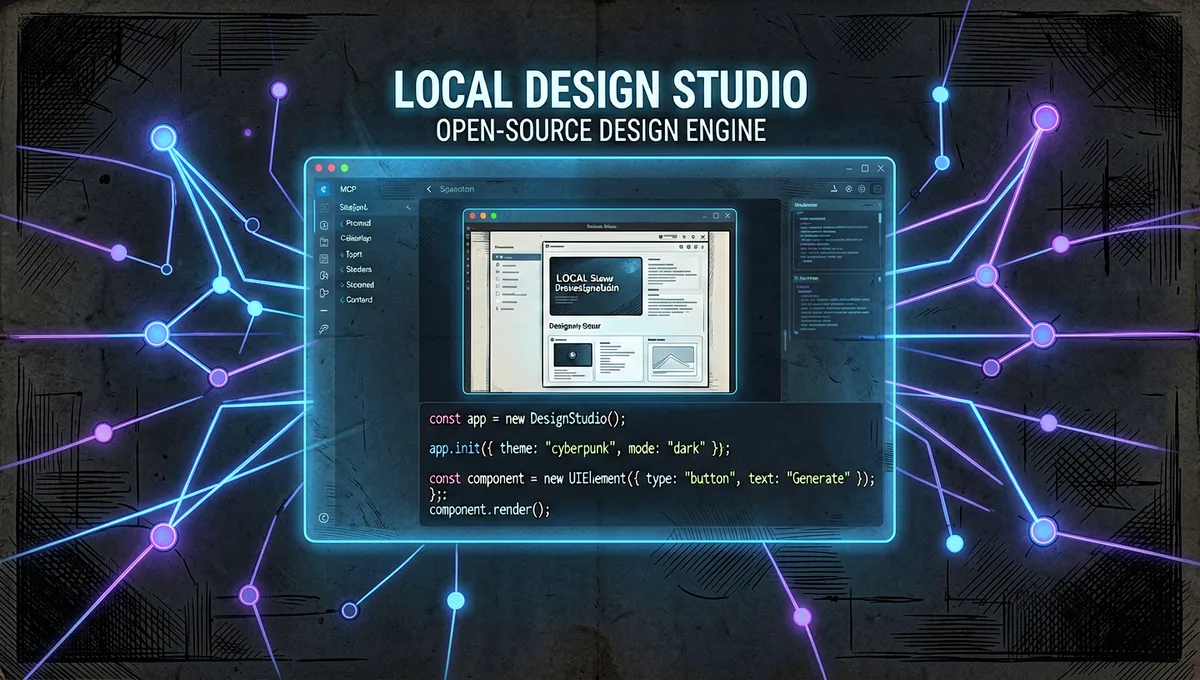
Open Design: a local studio for turning code agents into design tools
nexu-io/open-design · 98,056★ · 11,380 forks
Everything you need to know about nexu-io/open-design: a local desktop application that connects code agents with skills, design systems, and visual artifact export.
What Open Design is
Open Design (OD) is an open-source project from nexu-io positioned as an alternative to Claude Design. It is a local desktop application for macOS and Windows, with an optional AppImage route for Linux, and it can also run as a web app or with Docker. It does not ship its own model: it uses an already-installed code agent or an OpenAI-compatible BYOK connection as its design engine.
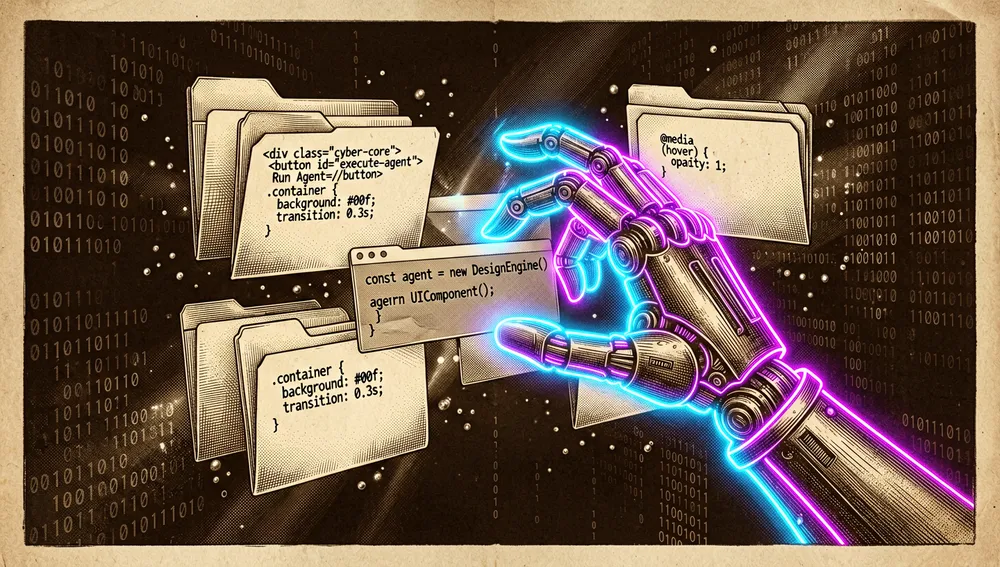
The output is not a proprietary vector canvas. The agent creates project files — HTML, CSS, and components, for example — that are previewed in an isolated iframe and can be exported as HTML, PDF, PPTX, ZIP, Markdown, or MP4. The repository describes web, mobile, and desktop prototypes, interactive dashboards, presentations, images, and motion graphics as its output surfaces.
The origin: an open answer to Claude Design
The nexu organization created the repository on April 28, 2026; its GitHub account had been created on February 24, 2026. The queried API does not identify a specific person as the original creator, so it is not possible to attribute the launch to an individual based on the retrieved sources.
The motivation, though, is stated very directly in the README: Anthropic launched Claude Design in April 2026 and, according to the project, it combined a brief-discovery, direction, generation, critique, and delivery flow, but it was closed, paid, cloud-hosted, and tied to the Anthropic ecosystem. Open Design proposes opening that cycle up as versionable directories of skills, templates, DESIGN.md systems, and plugins, run by the agent the user already has on their machine.
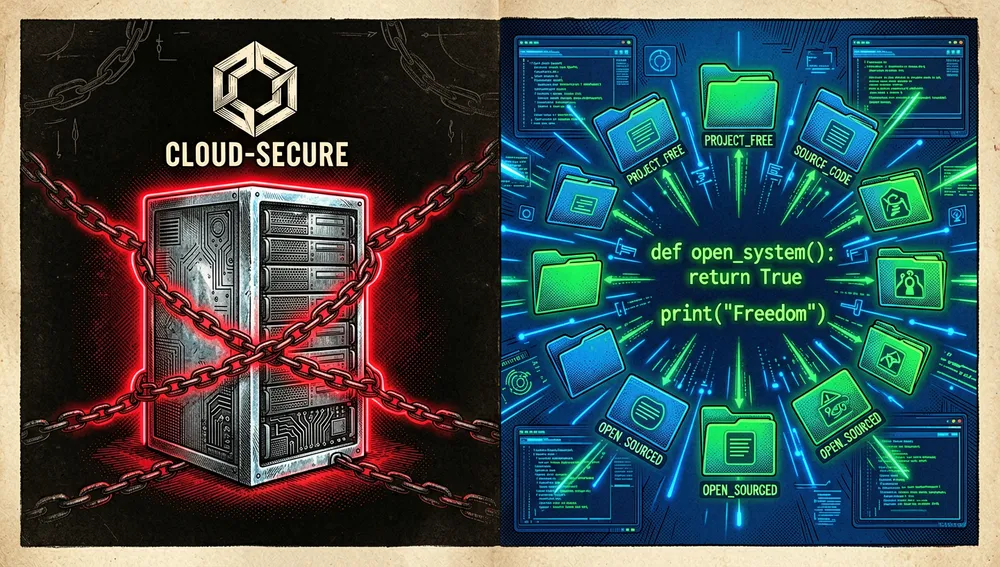
The central tension is, therefore, between an integrated experience from a single vendor and a local tool that tries to keep the files, the agent, and the user’s key under their own control. The first published release the API retrieved was open-design-v0.3.0, on May 3, 2026; the timeline shows the project appeared just days after the repository was created.
Philosophy and principles
The proposal rests on four verifiable decisions from the README and the contribution guide:
- The existing agent is the engine. OD detects local agent executables and offers a BYOK route; its guide rejects bundling a model runtime of its own.
- Design as portable files. Skills, templates, plugins, and
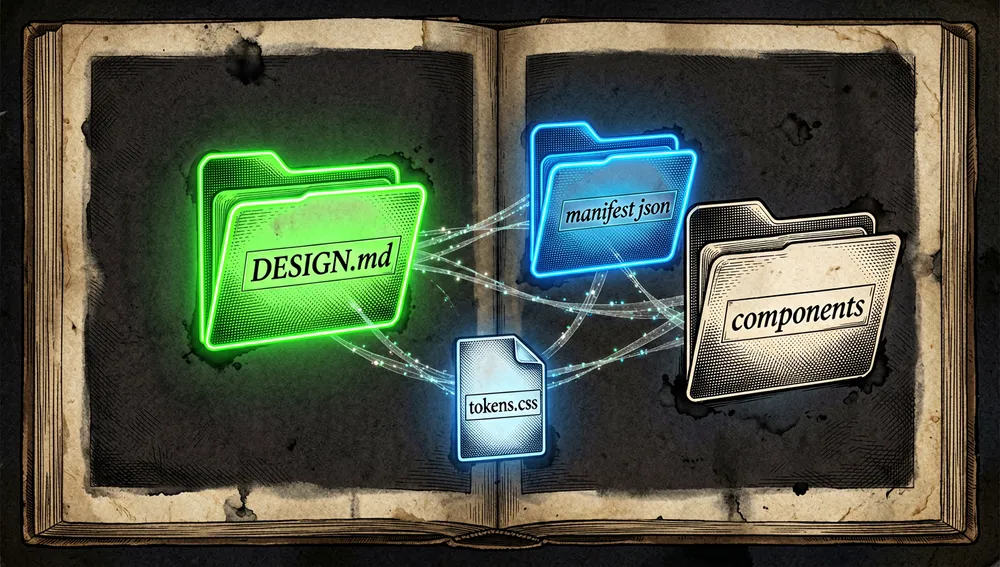
DESIGN.mdsystems live as folders that can be read, versioned, modified, and shared. - A brand contract before isolated appearance. Each generation can read a
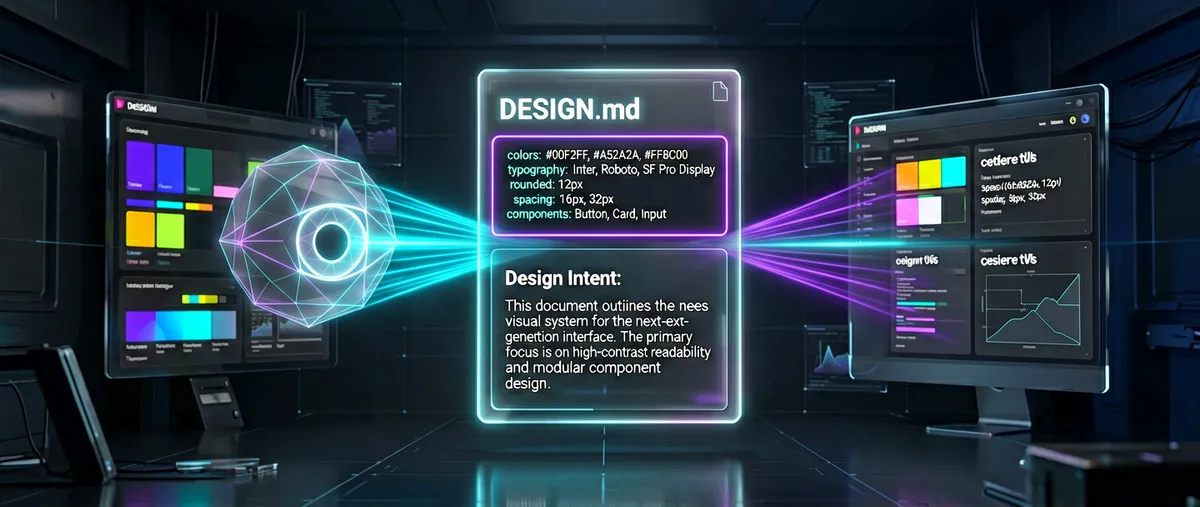
DESIGN.mdand, in recent bundles,manifest.json,tokens.css, components, assets, and provenance. - Local-first, with explicit limits. The daemon binds to
127.0.0.1by default, MCP access is read-only by default, and the BYOK proxy includes SSRF protection. The documentation also clarifies that certain scrubbed security and reliability telemetry stays active in configured builds; that is not a promise of zero outbound communication.

How it works
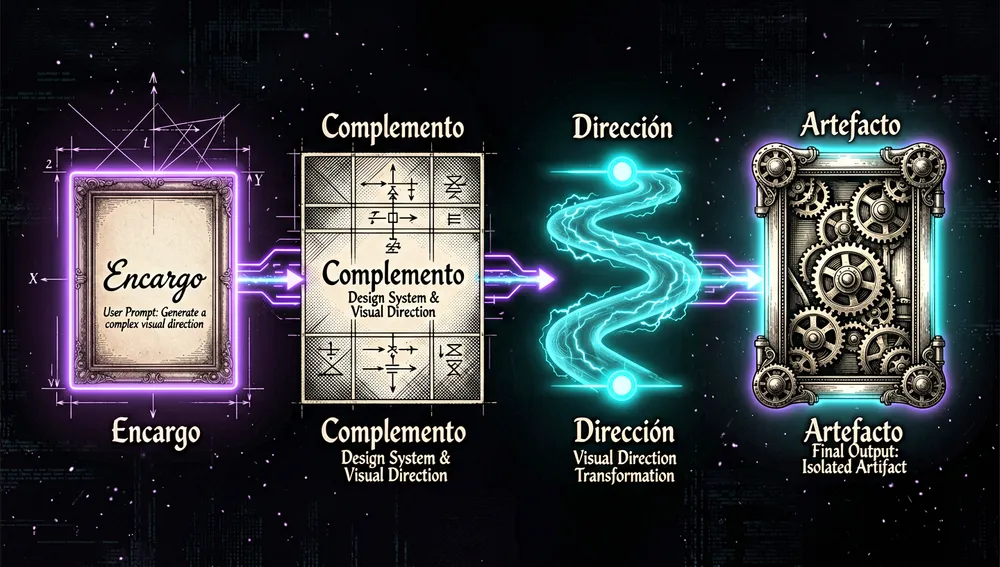
The documented sequence maps to brief → plugin → direction → design system → artifact → delivery → memory:
- The person describes the brief and picks a skill, template, or plugin.
- They select a visual direction or provide a brand, screenshot, or URL to build a reusable
DESIGN.md. - The adapter composes that instruction with the design system and runs the local code agent; on the BYOK route without file tools, it returns a complete
<artifact>block. - OD previews the isolated result and delivers it as code or via export.
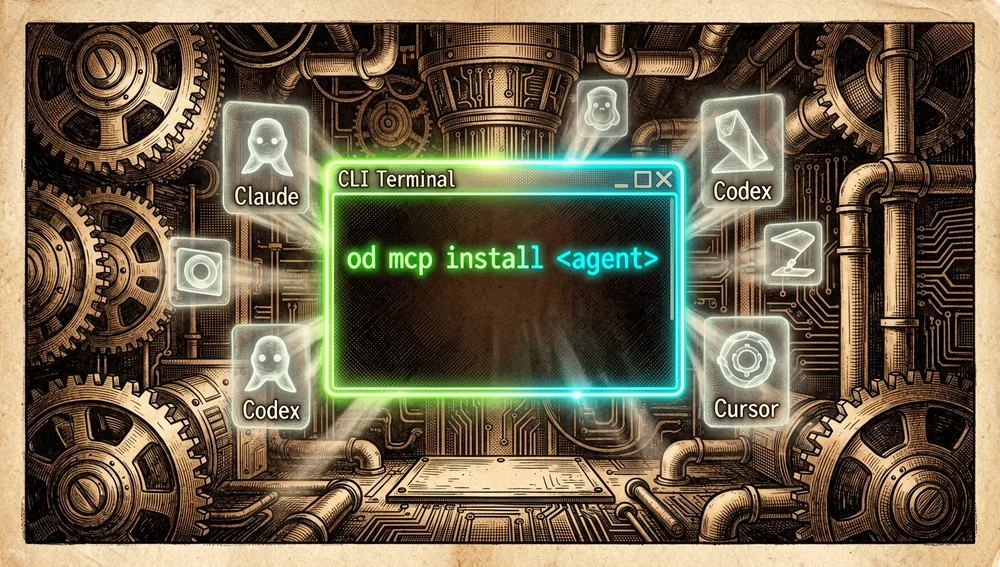
MCP installation centers on od mcp install <agent>. The README documents, among others, od mcp install claude, codex, cursor, copilot, openclaw, antigravity, hermes, kimi, and opencode; --print shows a preview and --uninstall reverts the configuration. From the agent, local work can be queried with od project list --json, od files list <project-id> --json, od files read <project-id> <relative-path>, od plugin list --json, and od skills list --json.
The technical core the project documents is a Next.js 16 and React 18 interface inside Electron, a local Node 24 daemon with Express, SQLite, and SSE streaming, and an MCP server over stdio. The catalog declares more than 100 functional skills, 151 design-system bundles, and 277 official plugins. That last claim comes from the README itself, not an independent audit of each bundle’s contents.
Official and semi-official status
Open Design is not an official Anthropic product: the repository itself positions explicitly as an open alternative to Claude Design. No source was retrieved either that proves acceptance into an official marketplace of Anthropic, OpenAI, Figma, or Cursor, nor a vendor certification.
There is, however, a distribution and extension path of its own: the repository includes a plugin registry, a plugins page inside the app, and documentation for publishing to external registries such as skills.sh and ClawHub. The Open Design Fellow program, announced in the README, offers selected participants a direct review path and regional representation; it is a project program, not third-party accreditation.
In practice, documented compatibility with numerous MCP clients and command-line agents makes it interoperable with those environments. That compatibility should not be confused with endorsement, support, or a formal standard from their makers.
The ecosystem
nexu-io repositories
The API query returned 21 public repositories from the organization. The ones closest to Open Design by description and function are:
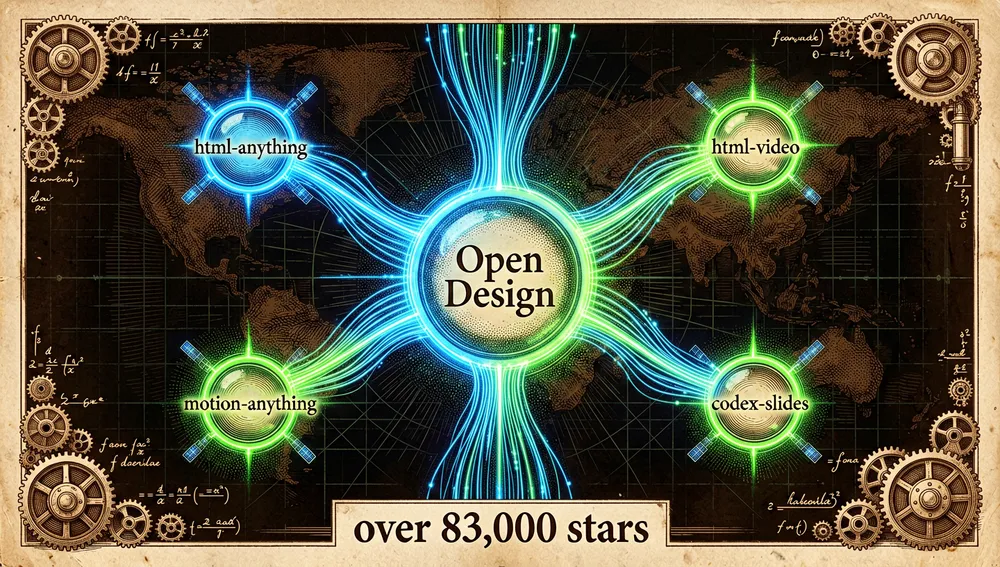
nexu-io/agentic-design: a conversational design space between people and agents; 14 stars and 10 forks.nexu-io/html-anything: a local agentive HTML editor with skills and publishing surfaces; 8,069 stars and 788 forks.nexu-io/html-video: local video generation from HTML, CSS, and data, with swappable rendering engines; 4,247 stars and 534 forks. Its description calls it the official project of the Open Design team.nexu-io/motion-anything: an open conversational animation engine; 641 stars and 69 forks.nexu-io/codex-slides: a presentation studio for Codex, with PDF/PPTX export; 748 stars and 62 forks.nexu-io/open-design-agent-plugins: an associated plugin repository for agents; the API returned 0 stars and 0 forks.nexu-io/od-contribute: a one-click contribution flow installable vianpx skills add; 3 stars and 1 fork.nexu-io/open-design-contributor-card: a Cloudflare Worker service with D1 and R2 for contributor cards; 1 star and 3 forks.
Also appearing are nexu-io/design (a design system and prototypes), nexu-io/harness-engineering-guide (a guide on agent execution environments), nexu-io/looper (an autonomous agent team for GitHub repositories), and nexu-io/nexu (a desktop client for OpenClaw). These are sibling projects retrieved from the same organization; their precise functional relationship to Open Design is not established beyond those descriptions.
Provenance, integrations, and extensions
The README attributes or links specific ecosystem pieces: it integrates heygen-com/hyperframes to convert HTML to MP4; it incorporates the op7418/guizang-ppt-skill presentation skill; it cites lewislulu/html-ppt-skill as the source of a template family; it uses VoltAgent/awesome-design-md as a predecessor of part of its DESIGN.md systems; and it acknowledges OpenCoworkAI/open-codesign and multica-ai/multica as flow and architecture references. These mentions document provenance or integration, not common ownership.
The GitHub API identified several visible forks. aresbit/autoagent-design (54 stars) adopts a different name and describes itself as AutoAgent-Design; agentik-os/Agentik-Design (2 stars) also rebrands. The other highest-visibility results, such as sholajegede/open-design (12 stars) and arupdas0825/open-design (11 stars), keep the original’s description; they are reported as forks, not as independent ports. No translated fork with its own identity was verified in that sample.
Internationalization, by contrast, lives inside the main repository: the README offers Spanish, Brazilian Portuguese, German, French, Simplified and Traditional Chinese, Korean, Japanese, Arabic, Russian, Ukrainian, Turkish, and Thai; the contribution guide also maintains several translations. These are official documentation translations, not separate community repositories.
Repo numbers
Measured: August 3, 2026, 13:34 UTC−03; GitHub API.
| Metric | Value |
|---|---|
| Stars | 83,367 |
| Forks | 9,675 |
| Real subscribers | 259 |
| Commits | 3,051 |
| Open issues reported by the API | 723 |
| Primary language | TypeScript |
| License | Apache-2.0 |
| Created | April 28, 2026 |
| Latest reported push | August 3, 2026, 16:09 UTC |
| Latest published release | open-design-v0.17.0, August 3, 2026, 13:33 UTC |
The final page indicated in the commits API’s pagination header was 3,051, hence the count. The contributors with the most contributions in the API response were lefarcen (363), PerishCode (189), pftom (121), cursoragent (116), Siri-Ray (87), and mrcfps (78). The watchers_count field in the general response repeats the star count, which is why subscribers_count is reported here as the subscriber number. Also, open_issues_count may include open pull requests, not just issues.
How to contribute
The project documents contributions of code, documentation, agent adapters, skills, design templates, design systems, and plugins. The basic path is to clone, run corepack enable, pnpm install, and pnpm tools-dev run web; before opening a pull request, pnpm guard, pnpm typecheck, and the affected package’s tests are required.
For a plugin, the guide requires open-design.json and the corresponding loading; a skill or scenario additionally requires SKILL.md. The documented validation is od plugin validate, pnpm guard, and pnpm --filter @open-design/plugin-runtime typecheck. Visual contributions must attach a screenshot or preview in the pull request template.
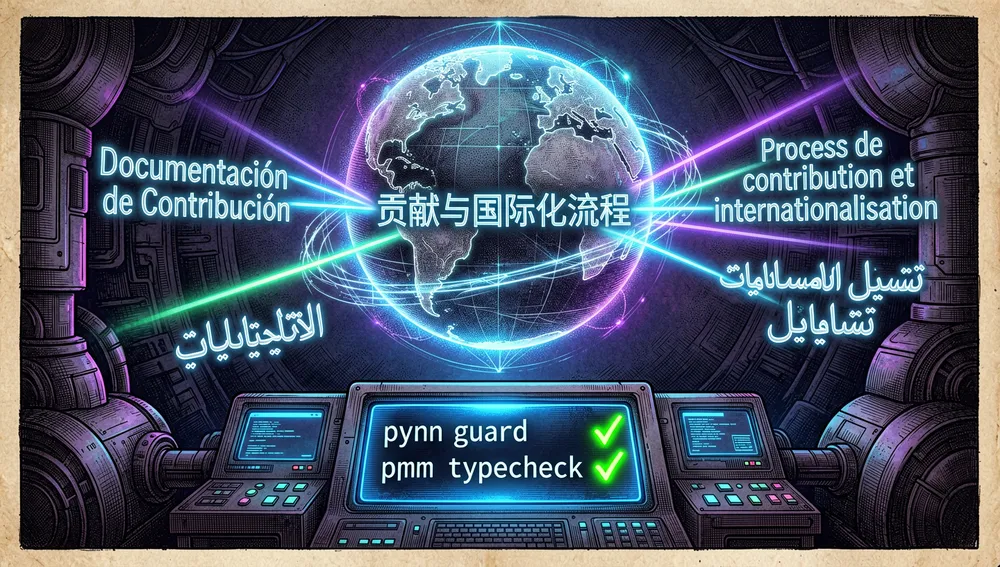
The editorial policy includes one concern per pull request, an imperative title with scope, a completed pull request template, and a reference to an issue for non-trivial changes. There is no CLA: contributions fall under Apache-2.0, except for bundled files that keep another license. To get started, the README links the good first issue and help wanted labels.
How the community received it
The retrieved discussion shows real interest, but no consensus on the visual output or the way the product is presented:
- The Hacker News submission 47985750, posted by steveharing1 on May 2, 2026, linked directly to the repository and reached 232 points and 92 comments. The author thanked the open-source community for its speed. nilirl said the examples looked beautiful and wondered how a human designer would compete; that is an individual reaction, not a quality evaluation.
- In that same thread, ricardobeat objected that the README’s commercial style felt off-putting; ColinEberhardt found it unappealing and Strom criticized its buzzword density. ModernMech questioned the pace of its early star growth. These are participants’ observations; they do not prove metric manipulation.
- Also in 47985750, Saline9515 called Claude Design’s approach costly in tokens and time and said they preferred, from their own experience, prototyping interfaces with ChatGPT Image 2. NetOpWibby argued that model-generated interfaces can look generic and personality-less. Both are personal opinions, not comparisons backed by a published methodology.
- The thread 48140859, started by splatzone on May 14, 2026, received 26 points and 7 comments. rida01 called Open Design decent, but less polished than Claude Design; ra0x3 considered it the closest thing available at the time, though also not at the same level. Reubend recommended Google Stitch as another option. The small size of this conversation limits any general conclusion.
Open Design versus other proposals
| Proposal | Verifiable overlap | Verifiable difference |
|---|---|---|
| Claude Design | Open Design’s README identifies it as the immediate functional reference. | Open Design claims to be Apache-2.0, local, and compatible with agents and swappable keys; Claude Design is described in the project’s own source as closed and tied to Anthropic. This characterization comes from Open Design, not from Anthropic documentation retrieved in this run. |
OpenCoworkAI/open-codesign | Its description states an open alternative to Claude Design, with prototype, slide-deck, and PDF generation via BYOK. | Open Design cites it as a precedent for interface patterns. The retrieved API reported 7,649 stars and an MIT license for open-codesign, versus Apache-2.0 for Open Design. |
onlook-dev/onlook | It is an open AI design tool with visual editing for React apps. | Onlook presents itself as a visual editor for React; Open Design centers on a local studio that orchestrates agents, files, DESIGN.md systems, MCP, and export across several artifact types. The API returned 26,397 stars for Onlook. |
superdesigndev/superdesign | Its description presents it as an open AI product-design agent. | The retrieved source does not allow for a more precise technical comparison. The API reported 6,775 stars; it should therefore be treated as an adjacent proposal, not a proven functional substitute. |
Use cases and who this repository can help
- Product teams that already use a code agent can turn a brief into an HTML prototype, dashboard, or presentation while keeping the result as editable files and later handing it to engineering through the same agent.
- Brand or design teams can encode tokens, typography, components, and constraints in
DESIGN.md, reuse them across different outputs, and reduce drift between a prototype, a dashboard, and a presentation. - People who need communication artifacts beyond an interface can use the presentation, image, and HyperFrames templates to generate PDF, PPTX, or MP4; it is worth separately verifying the quality of each output and the licenses of the bundled assets.
- Developers working with Claude Code, Codex, Cursor, Copilot, Hermes, or other documented adapters can install the MCP server and query local projects, files, skills, and plugins without attaching repeated exports.
- Authors of agent workflows can create a skill, template, design system, adapter, or plugin validated through the
SKILL.mdandopen-design.jsoncontracts, and publish the result to the project’s community registry.
Resources
- Repository: https://github.com/nexu-io/open-design
- Documentation and installation: https://github.com/nexu-io/open-design#quick-start
- Architecture: https://github.com/nexu-io/open-design/blob/main/docs/architecture.md
- Official skills: https://github.com/nexu-io/open-design/tree/main/skills
- Official and community plugins: https://github.com/nexu-io/open-design/tree/main/plugins
- Contribution guide: https://github.com/nexu-io/open-design/blob/main/CONTRIBUTING.md
- Releases: https://github.com/nexu-io/open-design/releases
- Reviews and conversations: https://news.ycombinator.com/item?id=47985750, https://news.ycombinator.com/item?id=48140859
- Community and Discord: https://github.com/nexu-io/open-design/discussions, https://discord.gg/mHAjSMV6gz
Note: this article combines Open Design’s README and contribution guide, the GitHub API, Hacker News threads, and the repositories linked by the project itself, retrieved on August 3, 2026. Figures change over time.
Comments