

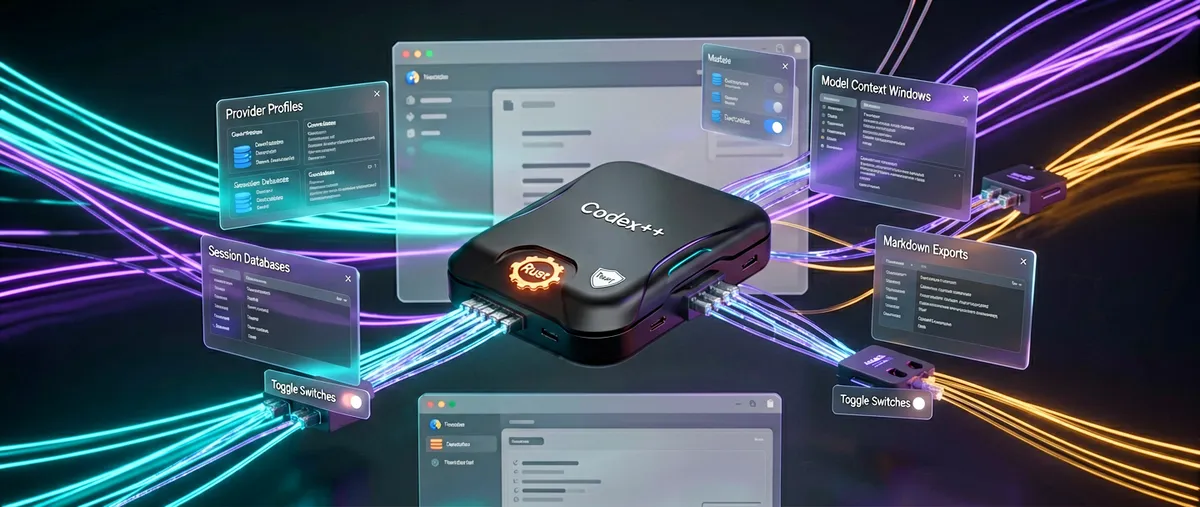
Codex++: an external launcher and manager for the Codex desktop app
BigPizzaV3/CodexPlusPlus · 31,524★ · 2,005 forks
Codex++ is an open-source external tool, written in Rust and Tauri, that adds provider switching, protocol conversion, session management, and interface enhancements to OpenAI’s Codex / ChatGPT desktop app, without modifying its app.asar file or writing patches into its install directory.
What Codex++ is
Codex++ (repository name CodexPlusPlus) is an external launcher and management panel for OpenAI’s Codex / ChatGPT desktop app. It’s not a model, a server, or an alternative to the app — it’s a layer that boots the official app, talks to it over the Chrome DevTools Protocol (CDP) and a local helper service, and on that basis offers four families of features:
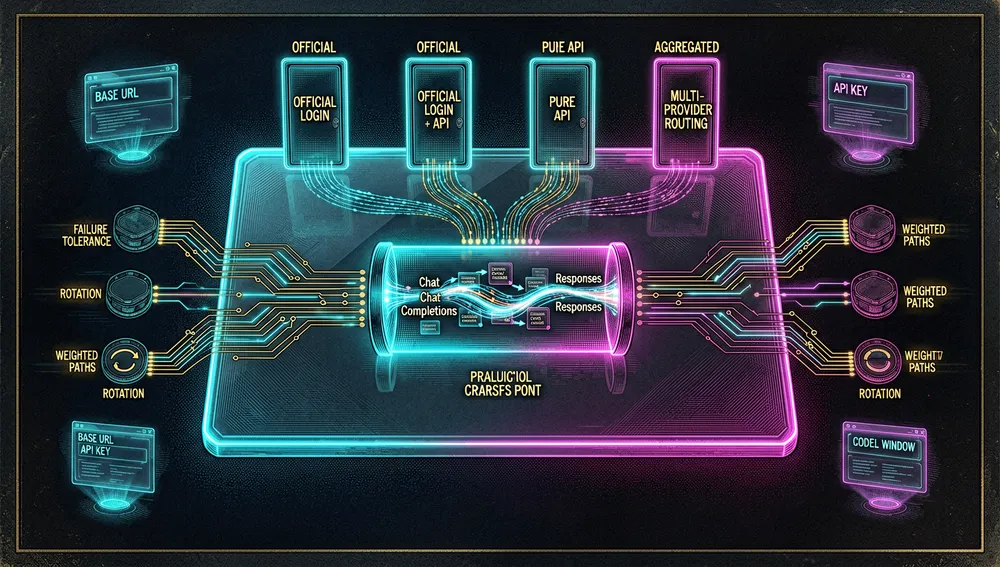
- Provider configuration: four authentication modes (official login only, official login plus API, pure API, and an aggregated provider with routing across several), with support for both the Responses and Chat Completions protocols and local conversion between them.
- Models and context: per-model context windows, automatic compression thresholds, and generation of a model catalog (
model_catalog_json) that the Codex client reads at runtime. - Session management: scanning local sessions stored in Codex’s database, bulk deletion, Markdown export, token usage history, and provider metadata sync with backups.
- Interface and workflow enhancements: plugin marketplace unlock, model allowlist handling, paste-fix, a Chinese-language interface, fast boot, scroll width/position restoration, service-tier controls, Goals, Stepwise suggestions, image overlay, worktree creation from upstream branches, Zed Remote project detection, user scripts, and community themes.
The README and official site emphasize that every enhancement can be toggled off independently; with the master switch off, Codex++ reduces to a plain provider manager and launcher.
Origin: a community response to the Codex desktop app
The repository was created on May 6, 2026 by the account BigPizzaV3 (a GitHub account opened in October 2025, 423 followers as of this research, with no visible bio or company). Its first two releases, v1.0.4 and v1.0.5, shipped on May 11, 2026, five days after the repository was created; since then the project has published 74 releases, up to v1.2.56 on August 27, 2026 — roughly two releases a week.
The launch context is documented in the repository itself: the Codex desktop app had become popular (the “The Codex App” announcement reached 805 points on Hacker News, thread 46859054, in February 2026), and the Chinese-speaking user base was looking for ways to use local and third-party model providers (DeepSeek, Kimi, GLM, MiniMax) inside that app, plus a Chinese-language interface. The current README is sustained by a sponsor list made up almost entirely of model API relay services (jojocode.com, apikey.fun, RunAPI, quya.org, EveryAPI, Volcengine / 方舟 Agent Plan, Qiniu Cloud, among others), which confirms the niche: flexible model connectivity, not competing with the official app.
Two details of the timeline and development are worth mentioning:
- The repository keeps plans, specs, and a research report on the per-model context window feature under
docs/, plus adocs/superpowers/folder with plans and specs — the team appliesobra/superpowers’s methodology for agent-driven development. - A research document in the repository (
docs/research/01-调研结果.md) records a prototype validation “verified by Kimi Code CLI,” and the rootHANDOVER.mdfile describes the work of an external contribution (PR #1247) on service ports for multi-user RDP environments. Together, these files show a project developed and maintained partly with coding agents, with handover documents between sessions.
Philosophy and principles
The official site (codexpp.cc) sums up the philosophy with the motto “enhances, but doesn’t take control,” and four principles verifiable in the product:
- Don’t modify the original install: the tool doesn’t touch
app.asaror write patch files into the app’s directory; everything is injected at runtime via CDP, so a Codex update or reinstall isn’t contaminated. - Keys stay on the local machine: provider credentials are saved in the local profile and never uploaded to the project or to third-party services.
- Features can be turned off: every enhancement has its own toggle plus a master switch; turning it off doesn’t stop provider management from working.
- Public build process: the source code, issues, releases, and the installer build workflow (GitHub Actions) are all viewable on GitHub.
The README adds a compatibility warning that defines the limits of that philosophy: Codex++ depends on the official app’s page structure, CDP behavior, and local data formats, so an app update can break the injections, and the project asks users to keep backups before touching configuration.
How it works
The visible architecture is a Rust monorepo (Rust 1.85 or higher per the README badge) with a Tauri 2.x desktop app:
apps/
  codex-plus-launcher/          Silent launcher for the official app
  codex-plus-manager/           Management panel (Tauri, React + TypeScript frontend)
  codex-plus-mobile-relay/      Relay service for use from a phone
assets/inject/
  renderer-inject.js            Script injected into Codex's renderer
crates/
  codex-plus-core/              Core logic: boot, injection, config, updates, bridge
  codex-plus-data/               Session data, export, and provider sync
scripts/installer/              NSIS installer (Windows) and DMG packaging (macOS)
The flow is as follows:
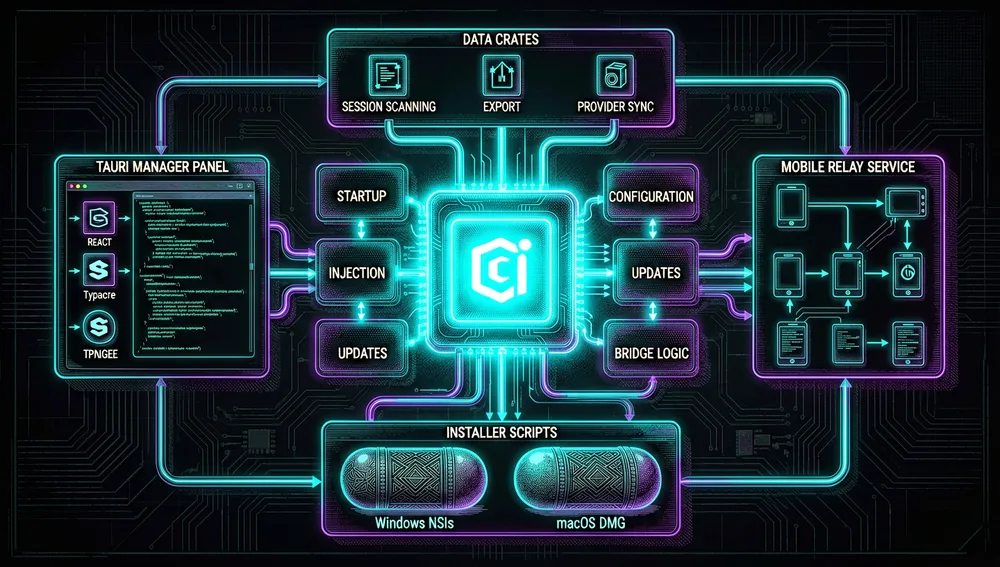
- Boot: the
Codex++launcher silently starts the official desktop app with the saved provider profile and enabled enhancements. TheCodex++ Managerpanel handles configuration. - Injection:
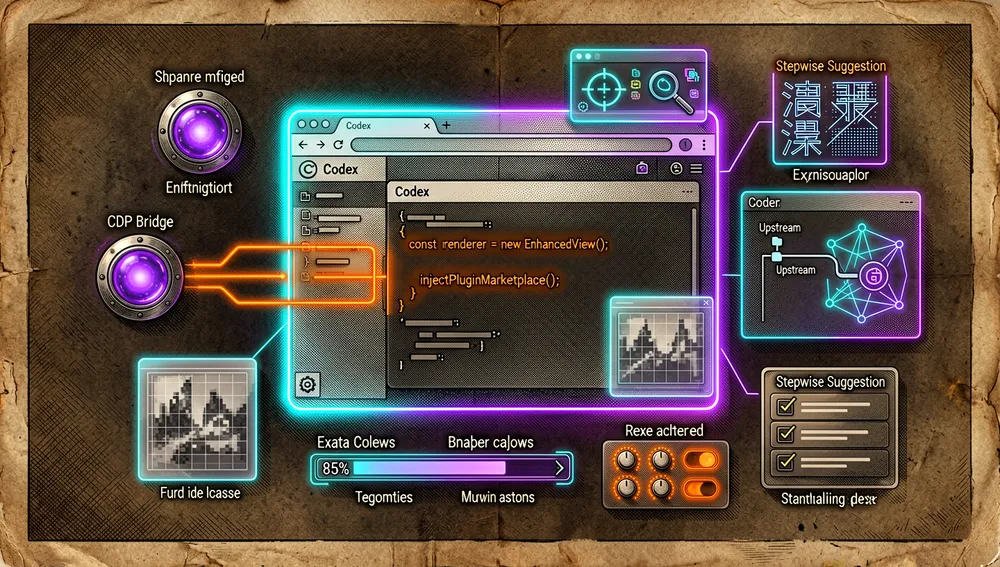
renderer-inject.jsgets injected into the app’s rendering process via CDP; that’s where the interface enhancements live (plugin marketplace unlock, paste-fix, Chinese-language interface, scroll restoration, etc.).
- Providers: each profile can define the protocol (Responses or Chat Completions), base URL, key, model list, per-model context window, and compression threshold. In pure-API or mixed mode, a local proxy converts Chat Completions responses into the Responses protocol Codex consumes. Aggregated mode routes across several providers with fault tolerance, rotation per conversation, per request, or weighted.
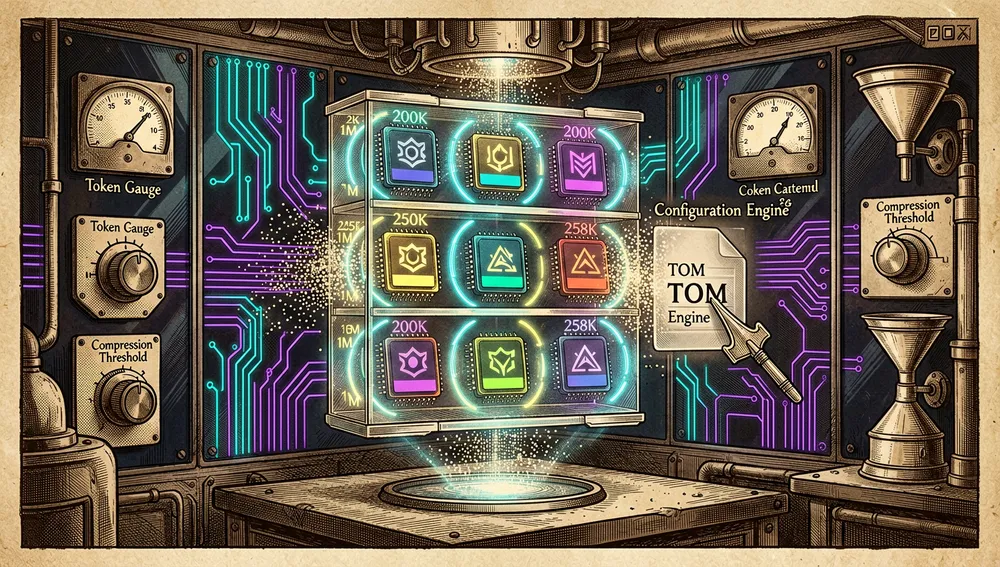
- Per-model context windows: the Codex client ships with a hard-compiled 272,000-token window (roughly 258K); when a provider’s model isn’t on that internal list, the client falls back to that value. The implemented fix (tracked in issues #931 and #1171 and in
docs/research/) has Codex++ generate amodel_catalog_jsoncatalog file with each model’s real window and write a pointer into~/.codex/config.toml. The model list syntax supports suffixes likedeepseek-v4-pro[1M].
- Session data: the panel reads Codex’s local database (
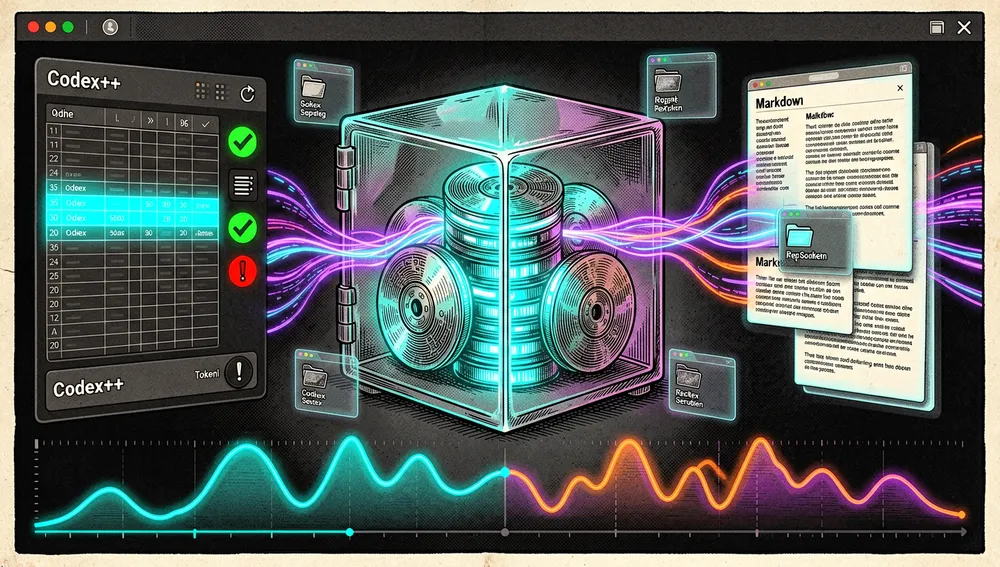
~/.codex/sqlite/*.db, falling back to~/.codex/state_5.sqliteon older versions) to scan, bulk-delete, export to Markdown, and show token history. Codex++‘s own state lives under~/.codex-session-delete/, and provider-sync backups under~/.codex/backups_state/provider-sync.
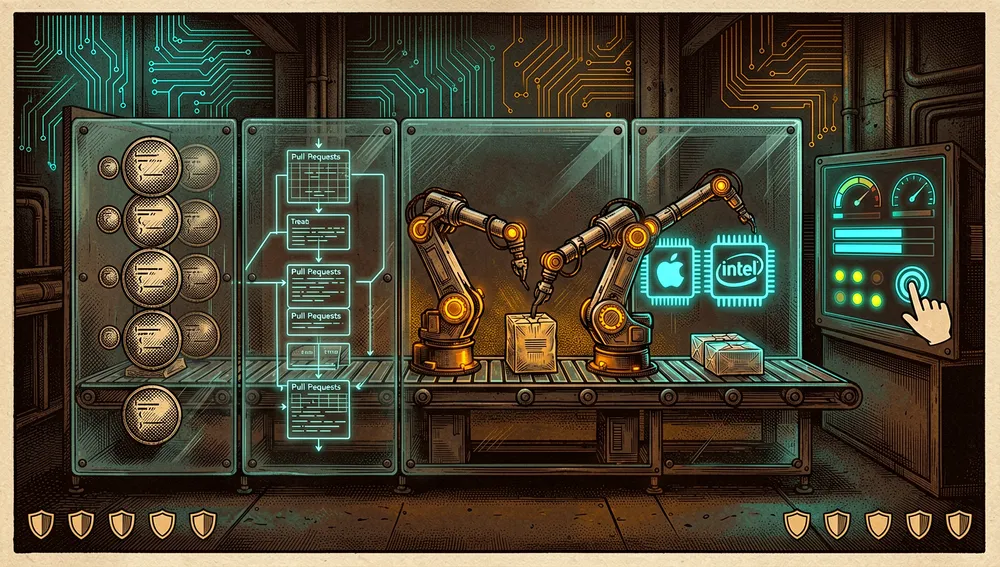
- Updates: installers are published on GitHub Releases (NSIS on Windows, DMG for Intel x64 and Apple Silicon on macOS); the panel can check for and launch updates from its “About” page, and the launcher opens the panel directly when it detects a new version.
The ecosystem
Sibling repositories from the same author
BigPizzaV3/CodexPlusPlusScriptMarket(31 stars, 43 forks): a user-script marketplace the panel can install and activate; the high fork-to-star ratio suggests a “fork and add my script” pattern from the community.BigPizzaV3/CodexPlusPlus-Themes(5 stars, 2 forks): a community marketplace for DreamSkin themes; the description states contributions come via pull requests with themes in “Dream Skin” format.BigPizzaV3/codexplusplus-plugins(5 stars, 1 fork): a catalog of plugins importable in API mode, auto-synced with upstream.BigPizzaV3/ai-status-monitor(3 stars): a self-hosted status monitor for AI endpoints with real model checks; a minor project by the same author, with no direct relation to Codex++.
The author also maintains one-off utilities (e.g. TcpKiller, GpuResourceInspector, cloud-mail), which confirm a personal-tools-developer profile; none are relevant to the Codex++ ecosystem.
Forks and derivatives
The repository has accumulated 1,901 forks. From the fork list sorted by stars retrieved in this research:
ATQQ/CodexPlusPlus(49 stars) is the highest-starred fork; its description matches the original’s, with no evidence of functional divergence.Alunixa-Code/CodexPlusPlusPlus(1 star) is a derivative with its own name (“Codex+++”); its description states it migrated to “Alunixa X” and that Codex+++ version 1.2.67 is the “final autonomous migration bridge version.” It’s the only retrieved fork claiming to be a distinct product.
A GitHub search for codexpp also surfaced HankTheSniper/Chat2ResProxy4Codexpp (0 stars), a helper tool for converting the old Chat Completions API to the Responses API when conversion issues arise; it’s a small complement, not a competitor. No translations or ports to other agents were found: the documented audience is Codex desktop app users, and the project’s own documentation is bilingual Chinese-English in the README.
Relationship to related projects
From cc-switch: the README documents importing profiles from farion1231/cc-switch’s database (130,120 stars, 8,929 forks, created August 2025), and the project’s internal research (docs/research/01-调研结果.md) studies cc-switch’s model-catalog mechanism as an implementation reference; version 1.2.56 additionally lets users customize the cc-switch database path with automatic backup. cc-switch is the closest project and also a functional neighbor: it covers provider switching for Claude Code, Codex, OpenCode, OpenClaw, and Grok Build. Codex++ cites it twice: as the source of importable profiles and as an implementation reference for the model catalog.
obra/superpowers (a development methodology for agents) shows up indirectly: the repository keeps a docs/superpowers/ folder with plans and specs, indicating the team uses it as an internal workflow.
A comparison video titled in Chinese “CC Switch、Codex++、EchoBird 对比:Codex / Claude / OpenClaw 怎么接任意模型?” turned up in YouTube results (channel 刘言的AI世界, 2,365 views per the results page); the “EchoBird” project cited in that title wasn’t directly verified in this research, so nothing further is asserted about it.
Official and semi-official status
Codex++ has no official status: the official site’s FAQ page says so explicitly, answering “Is Codex++ an official OpenAI product?” by stating it’s an external open-source tool maintained by the community. It’s not part of any OpenAI marketplace, doesn’t receive backing from any vendor, and isn’t called a standard in any source retrieved.
Its de facto position, on the other hand, is notable within its niche: it’s the enhancement and provider-switching tool for the Codex desktop app with the most visible adoption in the Chinese ecosystem (29,869 stars, a README sustained by over a dozen API-relay-service sponsors, dozens of YouTube tutorials, and a community organized on QQ, WeChat, and Telegram). In practice it functions as the reference other projects in the same niche compare themselves to (as the comparison video with cc-switch and EchoBird shows), without that implying quality certification or guaranteed compatibility: the macOS packages aren’t notarized, the project depends on the internal details of a third-party app, and its pace of adapting to Codex updates is the main stability factor.

The AGPL-3.0-only license deserves a note for integrators: modified versions distributed or offered to users over a network must publish the corresponding source code, and the license grants no rights over OpenAI’s, ChatGPT’s, or Codex’s trademarks or assets.
Quick-start guide
Installation and first boot
Prerequisites: OpenAI’s Codex / ChatGPT desktop app already installed. Download the matching installer from GitHub Releases:
- Windows:
CodexPlusPlus-*-windows-x64-setup.exe(creates desktop and Start Menu shortcuts). - macOS Apple Silicon:
CodexPlusPlus-*-macos-arm64.dmg. - macOS Intel:
CodexPlusPlus-*-macos-x64.dmg.
After installation there are two entry points: Codex++ (silent boot with the saved configuration) and Codex++ Manager (the panel). The recommended first-use order per the README is: open the Manager, confirm the detected app path and its running state, configure a provider and the desired enhancements, and from then on always launch from the Codex++ entry, not the official app.
Common workflows
- Add an API provider: in the Manager, create a profile with pure-API mode, base URL, key, and protocol (Responses or Chat Completions), define models and their context window, and run the model test or “Provider Doctor” from the details page to validate the connection before switching.
- Switch providers: select the profile and use the apply button; Codex++ saves the current profile before writing the target. The README explicitly warns against hand-copying
auth.jsonbetween pure-API and mixed-login modes, because they use different authentication locations. - Clean up or export sessions: in the sessions section, scan local ones, select several (or all), and bulk-delete with a success/failure count, or export to Markdown; token history is available in the same panel.
- Create a worktree from the upstream branch: the “Upstream worktree” feature is equivalent to updating the remote and running
git worktree add -b <new-branch> <worktree-path> upstream/<base-branch>, so the worktree starts from the updated remote branch rather than the session’s local HEAD; if Codex++ doesn’t recognize the native form of the installed Codex version, the fields (repository path, branch, worktree path, remote, and base branch) are filled in manually from the menu.
Essential configuration
The files and settings a new user touches first:
- Provider profiles in the Manager (authentication modes, protocol, base URL, key, models): the main configuration; each profile is saved separately and activated with one click.
~/.codex/config.toml: configuration read by the Codex app; Codex++ writes it when applying a profile (including themodel_catalog_jsonpointer).~/.codex/auth.json: official authentication state; in pure-API mode the key lives in the profile, not mixed into this file.- Model list with window suffix (e.g.
deepseek-v4-pro[1M],claude-sonnet-4[200K]): triggers the per-model catalog generation. ~/.codex-session-delete/: Codex++‘s own state and logs; useful for diagnostics and debugging.
Common pitfalls and fixes
These are the most documented difficulties in the repository’s issues (1,688 issues in total per the GitHub search endpoint) and the README:
- The Codex++ menu doesn’t appear: happens when the app is opened directly instead of via the
Codex++entry. The README says to check the detected path, boot state, and diagnostic logs on the Manager’s maintenance and “About” pages. - The Codex app updates and injection stops working (issue #1052, 22 comments, closed): because it depends on the app’s internal structure, enhancements can break with every update; the documented fix is updating Codex++ to a version with the matching adaptation, and if there isn’t one yet, waiting for a new release (the project publishes almost daily during its busiest months).
- Context window stuck at 258K with third-party models (issues #931, #1171, #1594, #451): the cause is the fixed value compiled into the Codex client; the fix is the per-model catalog (
[1M]/[200K]suffixes in the model list), implemented and documented as of version 1.2.18. - The macOS app gets blocked as “damaged”: current packages are ad-hoc signed and unnotarized, so Gatekeeper can block them. The Chinese README documents unblocking with
sudo xattr -rd com.apple.quarantineon both installed apps (the Manager app’s name includes the characters 管理工具, meaning “management tool”); the English README additionally recommends allowing the app via System Settings → Privacy & Security. - Conversation history wiped after an update (issue #352, 24 comments, closed): reported on version 1.1.8; that’s why the README asks users to keep backups before modifying provider configuration or session data.
- 401/502 errors using third-party providers (issues #1924, #406): the documented fix flow is running the model test or Provider Doctor and verifying protocol, base URL, key, and test model all match.
config.tomlfails to load after an update (issue #1997, open, version 1.2.53): the community reports TOML write failures on some versions; the recommended practice is keeping backups ofconfig.tomlandauth.json.
Integrations and migration
- Zed Remote: the panel detects projects opened as remotes in Zed and lets you open them, with a recent-projects log for the remote workflow.
- Mobile: the monorepo includes
apps/codex-plus-mobile-relay, a local relay service for controlling or querying Codex from a phone; community issues (e.g. #101 and #1879) show it’s an actively developing flow. - Community scripts and themes: the script marketplace (
BigPizzaV3/CodexPlusPlusScriptMarket) and the DreamSkin theme marketplace (BigPizzaV3/CodexPlusPlus-Themes) install and manage from the panel itself; theme documentation ships as ZIP packages with validation and safe CSS. - Toward manual configuration: since Codex++ writes standard configuration into
~/.codex/config.tomlandauth.json, a user can migrate “downward” (to manual configuration) simply by no longer launching via the launcher; there’s no proprietary format preventing it.
Repo numbers
Measured August 30, 2026, GitHub API.
| Metric | Value |
|---|---|
| Stars | 29,869 |
| Forks | 1,901 |
Real subscribers (subscribers_count) | 67 |
Commits on main | 869 |
Open issues per open_issues_count | 1,011 |
| Total issues (search endpoint, no PRs) | 1,688 |
| Primary language | Rust |
| License | AGPL-3.0-only |
| Created | May 6, 2026 |
| Last push | August 27, 2026 |
| Latest release | v1.2.56, August 27, 2026 (74 releases since v1.0.4 on May 11, 2026) |
The top contributors returned by the API, by contribution count, were BigPizzaV3 (505), jarvislee90s-dot (48), Rat0323 (41), Yuimi-chaya (23), 0xTotoroX (18), kokotao (12), and lennney (12). The project is heavily centered on the author, though with a second and third active contributor.
Measurement caveats: the GitHub API’s open_issues_count includes open pull requests, so 1,011 isn’t an issues-only count; the 1,688 total came from the search endpoint with type:issue (open and closed issues, no pull requests). The 869-commit count came from the final pagination link (rel="last") of the commits endpoint. The general response’s watchers_count field duplicates the star count (29,869); that’s why subscribers_count is reported separately as the real subscriber number.
How to contribute
The repository documents a contribution process in CONTRIBUTING.md:
- Clone the repository and have the Rust toolchain ready (the document asks for 1.70 or higher, though the README badge says 1.85+).
- Create a feature branch (
feat/feature-name). - Write idiomatic Rust code with tests for the new functionality.
- Run
cargo test --all-featuresandcargo clippy, and format withcargo fmt. - Open a pull request with a clear description; issues must include the Rust version, OS, and minimal reproduction steps.
- By contributing, code will be licensed under AGPL-3.0-only.
The README also documents frontend and backend developer checks:
cd apps/codex-plus-manager
npm ci
npm run check
npm run vite:build

cd ../..
cargo fmt --all -- --check
cargo test
cargo build --release
The root AGENTS.md file (written for coding agents) documents the fork workflow: the upstream remote points to the official repository, origin to the personal fork, feature branches are named like codex/per-model-context, and development stays synced via git fetch upstream && git rebase upstream/main before opening the pull request to the main repository. Integration tests live under crates/codex-plus-core/tests/ (e.g. relay_config.rs) and are written in #[test] style plus tempfile, reading the resulting config.toml text for assertions.
How the community received it
Reception concentrates on GitHub and YouTube, in a mostly Chinese-speaking audience. No Hacker News, Reddit, V2EX, or linux.do thread naming the project directly was found (searches for “CodexPlusPlus,” “codexpp,” and “Codex++” returned no dedicated threads; Reddit, V2EX, and linux.do queries were blocked with access challenges, so the absence of results shouldn’t be read as an absence of discussion), nor a Product Hunt page (the search shows “No products found”).
On GitHub, the most active issues combine implicit gratitude for release speed with concrete stability criticism:
- issue #352 (closed, 24 comments): after version 1.1.8, user
LockyJohnreported that all historical conversations disappeared and computer use stopped working. It’s the project’s highest-comment issue. - issue #1052 (closed, 22 comments): user
694248265reported that after a Codex update, Codex++ could no longer inject or open the app; it represents the structural friction of depending on a third-party app. - issue #1879 (open, 21 comments): user
sedate-cxqasks how to configure the WeChat message flow because they can’t start Codex’sapp-server; it shows adoption in automation flows beyond development. - issue #406 (open, 21 comments): user
orangebeck-creepdocuments 502 Bad Gateway errors using DeepSeek models on macOS M1 after updating to 1.1.8. - issue #1859 (closed, 19 comments):
BingBu1reports that conversations started showing every sub-agent conversation. - issue #327 (open, 19 comments):
almaleandereports recurringtool_callserrors in conversations. - issue #1924 (closed, 18 comments):
jaingtianyuty-ossreports 401 Unauthorized. - issue #1594 (open, 12 comments):
zjh012600reports the context window staying fixed at 258K, ignoring the 1M configuration (one of the issues that motivated the per-model catalog feature).
YouTube turned up dozens of Chinese-language tutorials directly citing the project (views per YouTube’s results page, August 30, 2026):
- “Codex++:强大的 Codex 增强工具,插件全解锁,快速切换三方模型,支持历史会话保留,让 Codex 更顺手!” — channel 科技lion, 10,270 views.
- “OpenAI Codex 接入第三方 API 教程|用 Codex++ 一步搞定,支持 DeepSeek 等模型,解锁插件功能!” — channel X超哥, 12,235 views.
- “Codex++实测:让 Codex 接入 DeepSeek 和第三方模型,值不值得用?” — channel 刘言的AI世界, 6,954 views (a hands-on review title, no retrieved conclusion).
- “Codex++:让国内模型轻松接入 + 插件解锁的 Codex App 增强启动器与管理工具” — channel 鲲鹏Talk, 4,369 views.
- “Codex++ 国产模型轻松接入,支持安装插件、手机控制、上下文显示等各种玩法,小白教程” — channel Nicknick, 736 views.
- “Codex++:把 Codex 的中轉、會話與插件管理整理成外部控制層|GitHub雷達” — channel Github雷達, 32 views.
- “CC Switch、Codex++、EchoBird 对比:Codex / Claude / OpenClaw 怎么接任意模型?” — channel 刘言的AI世界, 2,365 views (comparison video).
The general pattern across titles: real adoption revolves around three promises — connecting Chinese or third-party models, unlocking the plugin marketplace, and preserving historical sessions — while the criticism found centers on fragility against official app updates and authentication or protocol-conversion errors with third-party providers.
Codex++ vs. other approaches
| Approach | Verifiable overlap | Verifiable difference |
|---|---|---|
farion1231/cc-switch (130,120 stars) | A desktop manager for switching model providers, with Codex support among other agents (Claude Code, OpenCode, OpenClaw, Grok Build). | cc-switch is multi-agent and focuses on switching provider profiles; Codex++ specializes in the Codex desktop app and adds interface injection, session management over the local database, themes, scripts, and worktrees. Codex++ imports profiles from cc-switch, so the relationship is complementary as well as competitive. |
HankTheSniper/Chat2ResProxy4Codexpp (0 stars) | Addresses the same narrow problem: converting the Chat Completions API to the Responses API for the Codex flow. | A minimal helper tool, not a launcher or manager; surfaces in a GitHub search for “codexpp.” |
| “EchoBird” (mentioned in a comparison video’s title) | Compared to Codex++ in a YouTube tutorial about connecting models to Codex / Claude / OpenClaw. | The repository wasn’t verified in this research; only its presence in the video title is asserted. |
| Codex desktop app (the official product) | It’s the host, not a competitor: Codex++ boots it, enhances it, and configures it. | The official app offers no third-party API provider switching or the class of interface enhancements Codex++ injects; the project’s FAQ makes clear it’s not an OpenAI product. |
The most useful comparison is the first: a team already using cc-switch across several agents can keep it as the profile layer and add Codex++ only where they want the Codex app’s interface enhancements and session management.
Use cases
- Developers using the Codex desktop app who want third-party or regional models: the project’s core reason for existing. Pure-API mode with Chat Completions → Responses conversion lets you use DeepSeek, Kimi, GLM, MiniMax, or another compatible endpoint inside the Codex interface, with real per-model context windows (the
[1M]suffix) and built-in connection tests (Provider Doctor). - Users managing multiple API providers: aggregated mode with fault tolerance, rotation per conversation or per request, and weighting lets you spread traffic across endpoints to control cost or availability without manually reconfiguring the app on every switch.
- Teams accumulating Codex sessions: scanning, bulk deletion, Markdown export, and token history over the local database (
~/.codex/sqlite/*.db) cover maintenance that would otherwise require hand-written SQL queries; provider-metadata sync with backup (~/.codex/backups_state/provider-sync) protects sessions when switching profiles. - People developing with a Chinese-language interface: forced localization of the interface and native menu, plus the DreamSkin theme marketplace, serve a specific audience the official app doesn’t localize on its own.
- Automation and remote-control workflows: the
codex-plus-mobile-relayservice and issues about WeChat flows show its use in automations that boot or query Codex outside the desktop; unlocking the plugin marketplace and script management make it an extension point for anyone deeply customizing their desktop agent. - Zed users working remotely: detecting and opening Zed Remote projects, plus creating worktrees from upstream branches (always starting from the updated remote), integrate the panel into a multi-environment workflow.
In every case there’s the caveat the project itself documents: stability depends on the installed version of the official Codex app, so it’s worth keeping backups of config.toml and auth.json before applying changes, and accepting that an app update may need a new Codex++ release before enhancements work again.
Resources
- Repository: https://github.com/BigPizzaV3/CodexPlusPlus
- Documentation / official site: https://codexpp.cc/ (feature pages, downloads, changelog, and FAQ, in Chinese and English)
- Official changelog: https://github.com/BigPizzaV3/CodexPlusPlus/blob/main/CHANGELOG.md and the changelog page on codexpp.cc
- Official skills / marketplaces: scripts at https://github.com/BigPizzaV3/CodexPlusPlusScriptMarket ; DreamSkin themes at https://github.com/BigPizzaV3/CodexPlusPlus-Themes ; plugins at https://github.com/BigPizzaV3/codexplusplus-plugins
- Reviews / video tutorials (YouTube):
- https://www.youtube.com/watch?v=S9apMT77fVM (科技lion, ~10,270 views)
- https://www.youtube.com/watch?v=XULYcaQUyIM (X超哥, ~12,235 views)
- https://www.youtube.com/watch?v=OqQVJkH5HBE (刘言的AI世界, ~6,954 views)
- https://www.youtube.com/watch?v=GuS2vVS9X98 (鲲鹏Talk, ~4,369 views)
- https://www.youtube.com/watch?v=ApiwQ8klFfk (Nicknick, ~736 views)
- https://www.youtube.com/watch?v=IYP38XmyM5w (刘言的AI世界, cc-switch / Codex++ / EchoBird comparison, ~2,365 views)
- https://www.youtube.com/watch?v=VAOfRNuqSwI (Github雷達, ~32 views)
- Community: Telegram https://t.me/CodexPlusPlus ; QQ group 619480492 (third exchange group) ; WeChat via the QR code in the README ; friendship link to https://linux.do
- Hacker News / Reddit threads: no direct threads naming the project were found in this research; Reddit, V2EX, and linux.do queries were blocked with access challenges.
- Package registries: not published to crates.io (search returned no results); distribution is exclusively via GitHub Releases (NSIS and DMG installers).
Note: this article combines the GitHub repository (README, CHANGELOG, CONTRIBUTING, internal docs/ documentation), the GitHub API, the official codexpp.cc site, and YouTube, Hacker News, Product Hunt, crates.io, and Chinese-forum searches, all checked on August 30, 2026. Star, fork, and commit figures reflect that moment; video view counts are those shown on YouTube’s results page and not an exact measurement. Opinions attributed to issue users are individual opinions and don’t constitute a measure of overall satisfaction.
Comments